Loading...
Done
Actors reenact the famous picture of a sailor kissing a nurse on the 70th anniversary of Victory over Japan Day, near a replica sculpture in New York's Times Square August 14, 2015. The replica is being displayed to celebrate the 70th anniversary of the iconic photograph of the most famous kiss in American history that was captured between an American sailor and nurse on August 14, 1945, marking the end of World War Two. (Photo by Brendan McDermid/Reuters)

Actors reenact the famous picture of a sailor kissing a nurse on the 70th anniversary of Victory over Japan Day, near a replica sculpture in New York's Times Square August 14, 2015. The replica is being displayed to celebrate the 70th anniversary of the iconic photograph of the most famous kiss in American history that was captured between an American sailor and nurse on August 14, 1945, marking the end of World War Two. The actors are hired by a tour bus company to pose for groups to photograph. (Photo by Brendan McDermid/Reuters)
Details
15 Aug 2015 11:55:00
“Cassowaries are large, flightless birds related to emus and (more distantly) to ostriches, rheas, and kiwis”, writes Olivia Judson in the September issue of National Geographic magazine. (Photo by Christian Ziegler/National Geographic)

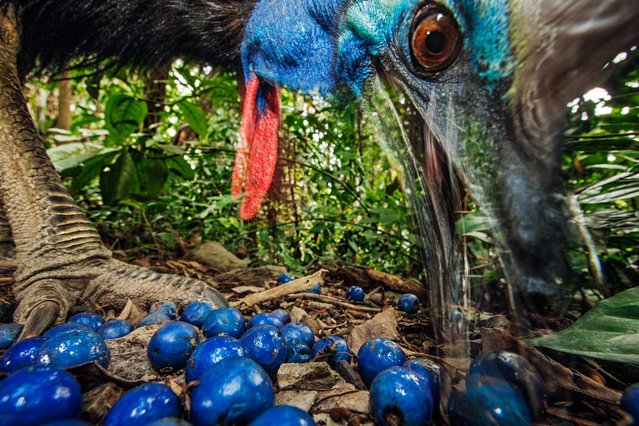
“Cassowaries are large, flightless birds related to emus and (more distantly) to ostriches, rheas, and kiwis”, writes Olivia Judson in the September issue of National Geographic magazine. How large? People-size: Adult males stand well over five foot five and top 110 pounds. Females are even taller, and can weigh more than 160 pounds. Dangerous when roused, they’re shy and peaceable when left alone. But even birds this big and tough are prey to habitat loss. The dense New Guinea and Australia rain forests where they live have dwindled. Today cassowaries might number 1,500 to 2,000. And because they help shape those same forests – by moving seeds from one place to another – “if they vanish”, Judson writes, “the structure of the forest would gradually change” too. (Photo by Christian Ziegler/National Geographic)
Details
06 Jan 2014 12:21:00
An explosion at a petrochemical plant is seen in Rizhao, Shandong province, July 16, 2015. According to Xinhua News Agency, a fire broke out after the explosion, which was caused by a liquified hydrocarbon leak at the plant, on Thursday morning. There was no report of casualties yet. (Photo by Reuters/China Daily)

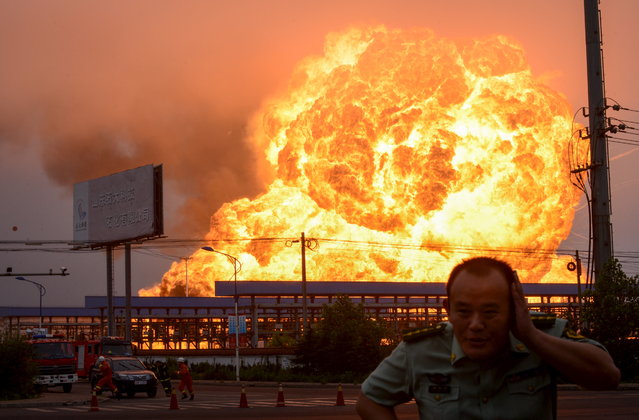
An explosion at a petrochemical plant is seen in Rizhao, Shandong province, July 16, 2015. According to Xinhua News Agency, a fire broke out after the explosion, which was caused by a liquified hydrocarbon leak at the plant, on Thursday morning. There was no report of casualties yet. (Photo by Reuters/China Daily)
Details
17 Jul 2015 14:03:00