Loading...
Done
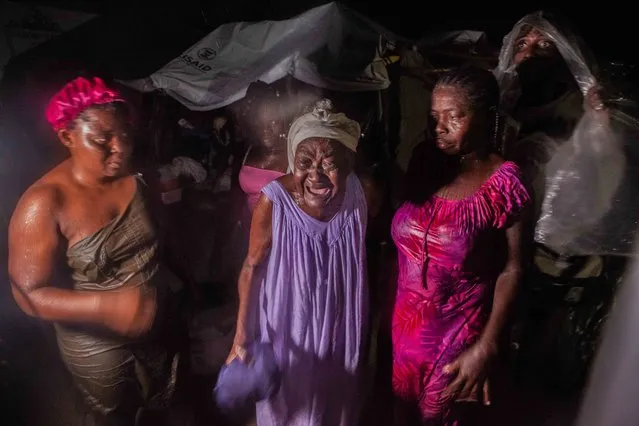
A woman cries as Tropical Storm Grace hits a refugee camp at a football field called Parc Lande de Gabion after a 7.2-magnitude earthquake struck Haiti on August 16, 2021 in Les Cayes, Haiti. (Photo by Richard Pierrin/Getty Images)

A woman cries as Tropical Storm Grace hits a refugee camp at a football field called Parc Lande de Gabion after a 7.2-magnitude earthquake struck Haiti on August 16, 2021 in Les Cayes, Haiti. (Photo by Richard Pierrin/Getty Images)
Details
25 Aug 2021 07:57:00
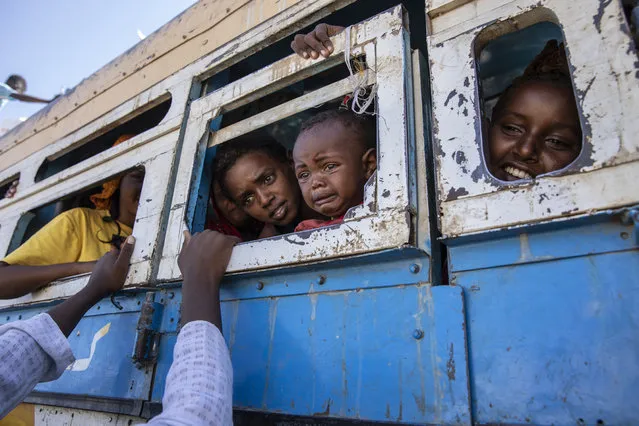
Tigray refugees who fled the conflict in the Ethiopia's Tigray ride a bus going to the Village 8 temporary shelter, near the Sudan-Ethiopia border, in Hamdayet, eastern Sudan, Tuesday, December 1, 2020. (Photo by Nariman El-Mofty/AP Photo)

Tigray refugees who fled the conflict in the Ethiopia's Tigray ride a bus going to the Village 8 temporary shelter, near the Sudan-Ethiopia border, in Hamdayet, eastern Sudan, Tuesday, December 1, 2020. (Photo by Nariman El-Mofty/AP Photo)
Details
04 Dec 2020 00:01:00
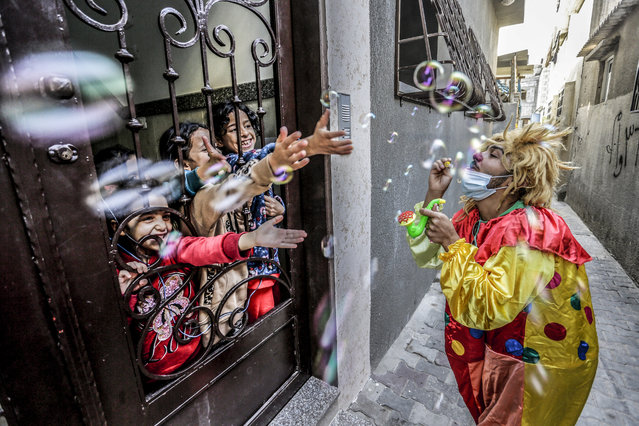
A Palestinian clown wearing a face mask while entertaining children at their home during the lockdown after the outbreak of the COVID-19 pandemic in Jabalia Refugee Camp in northern Gaza Strip on November 18, 2020. (Photo by Mahmoud Issa/Quds Net News/ZUMA Wire/Rex Features/Shutterstock)

A Palestinian clown wearing a face mask while entertaining children at their home during the lockdown after the outbreak of the COVID-19 pandemic in Jabalia Refugee Camp in northern Gaza Strip on November 18, 2020. (Photo by Mahmoud Issa/Quds Net News/ZUMA Wire/Rex Features/Shutterstock)
Details
07 Dec 2020 00:05:00
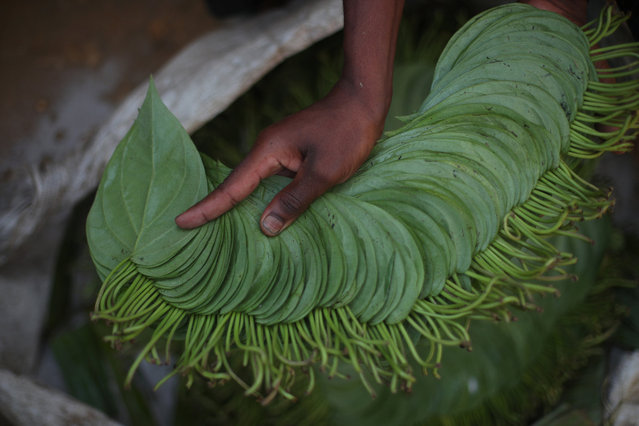
Faruk, 17, a Rohingya refugee trader holds betel leaves which are on sale at a stall in Palong Khali refugee camp near Cox's Bazar, Bangladesh, November 3, 2017. He left his village in Myanmar when the military opened fire towards the Rohingya. “I buy this betel leaf from Palong Khali market, in one bundle there are 160 pieces, I buy it for 80 taka and I sell it for 100 taka. Bangladeshi's and I sell for the same rate in the camp. Outside in the local market it is 80 taka per bundle. My problem is that I don't have money so I can't buy anything to eat, I can't buy fish to eat”, he said. (Photo by Hannah McKay/Reuters)

Faruk, 17, a Rohingya refugee trader holds betel leaves which are on sale at a stall in Palong Khali refugee camp near Cox's Bazar, Bangladesh, November 3, 2017. He left his village in Myanmar when the military opened fire towards the Rohingya. “I buy this betel leaf from Palong Khali market, in one bundle there are 160 pieces, I buy it for 80 taka and I sell it for 100 taka (1 Bangladeshi Taka = 0.012 US Dollar). Bangladeshi's and I sell for the same rate in the camp. Outside in the local market it is 80 taka per bundle. My problem is that I don't have money so I can't buy anything to eat, I can't buy fish to eat”, he said. (Photo by Hannah McKay/Reuters)
Details
27 Nov 2017 08:54:00
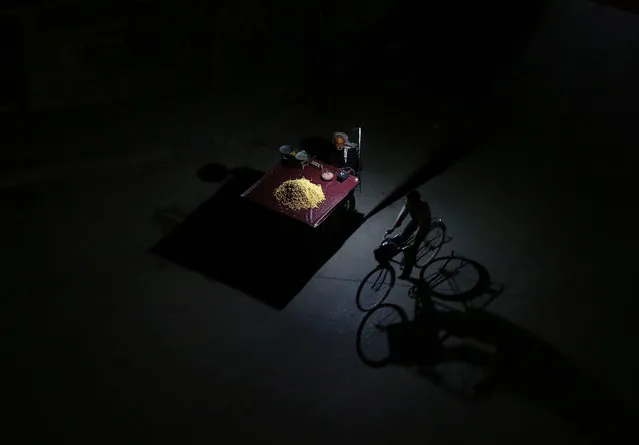
A Syrian man rides his bicycle past a man selling grains during a halt in fighting on February 29, 2016 in Douma, in the Eastern Ghouta region, east of the capital Damascus. A UN-backed ceasefire deal took hold across parts of Syria, bringing relative calm to areas where the Islamic State group and Al-Qaeda's local affiliate are not present. (Photo by Sameer Al-Doumy/AFP Photo)

A Syrian man rides his bicycle past a man selling grains during a halt in fighting on February 29, 2016 in Douma, in the Eastern Ghouta region, east of the capital Damascus. A UN-backed ceasefire deal took hold across parts of Syria, bringing relative calm to areas where the Islamic State group and Al-Qaeda's local affiliate are not present. (Photo by Sameer Al-Doumy/AFP Photo)
Details
07 Mar 2016 10:21:00
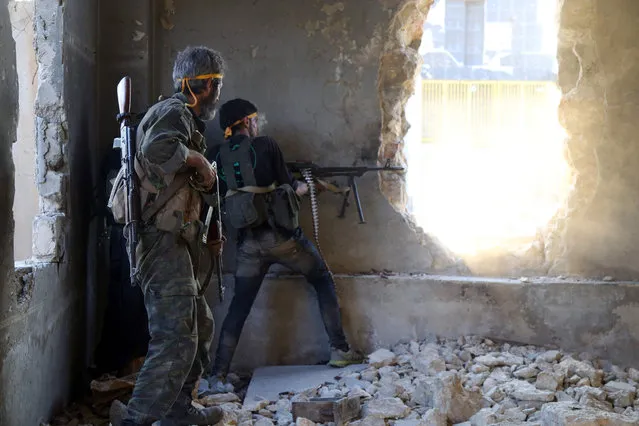
Rebel fighters fire towards positions of regime forces in Ramussa on the southwestern edges of Syria's northern city of Aleppo on August 6, 2016. Syrian rebels said they have broken a three-week government siege of second city Aleppo, turning the tables on Russian-backed regime forces who are now on the defensive. (Photo by Fadi Al-Halabi/AFP Photo)

Rebel fighters fire towards positions of regime forces in Ramussa on the southwestern edges of Syria's northern city of Aleppo on August 6, 2016. Syrian rebels said they have broken a three-week government siege of second city Aleppo, turning the tables on Russian-backed regime forces who are now on the defensive. (Photo by Fadi Al-Halabi/AFP Photo)
Details
08 Aug 2016 10:30:00
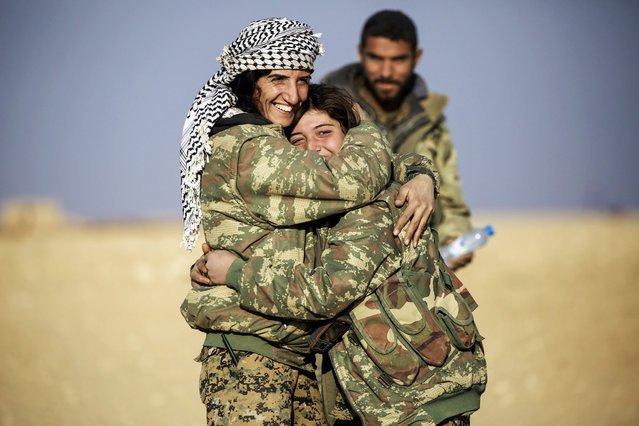
Rougine, a 19-year-old female Arab fighter among the Syrian Democratic Forces, made up of US-backed Kurdish and Arab fighters, stands in fatigues embracing another colleague near the village of al-Torshan, 20 km on the outskirts of Raqa on February 6, 2017. Unlike Syria's Kurds, who have emphasised gender equality in both their militias and nascent autonomous governing institutions in north and northeast Syria, the Arab tribes in the same region are among the more conservative segments of the country's population, and most Arab families find the concept of female fighters “hard to accept”. (Photo by Delil Souleiman/AFP Photo)

Rougine, a 19-year-old female Arab fighter among the Syrian Democratic Forces, made up of US-backed Kurdish and Arab fighters, stands in fatigues embracing another colleague near the village of al-Torshan, 20 km on the outskirts of Raqa on February 6, 2017. (Photo by Delil Souleiman/AFP Photo)
Details
13 Feb 2017 00:05:00
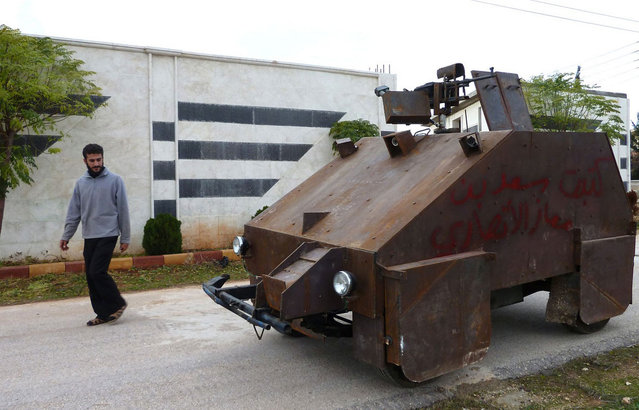
A Syrian rebel walks past Sham 2, a homemade armored vehicle, in Bishqatin, Syria, on December 8, 2012. From a distance it looks rather like a big rusty metal box but closer inspection reveals a homemade armored vehicle waiting to be deployed. Sham II, named after ancient Syria, is built from the chassis of a car and touted by rebels as “100 percent made in Syria”. (Photo by Herve Bar/AFP Photo)

A Syrian rebel walks past Sham 2, a homemade armored vehicle, in Bishqatin, Syria, on December 8, 2012. From a distance it looks rather like a big rusty metal box but closer inspection reveals a homemade armored vehicle waiting to be deployed. Sham II, named after ancient Syria, is built from the chassis of a car and touted by rebels as “100 percent made in Syria”. (Photo by Herve Bar/AFP Photo)
Details
03 Sep 2013 09:30:00