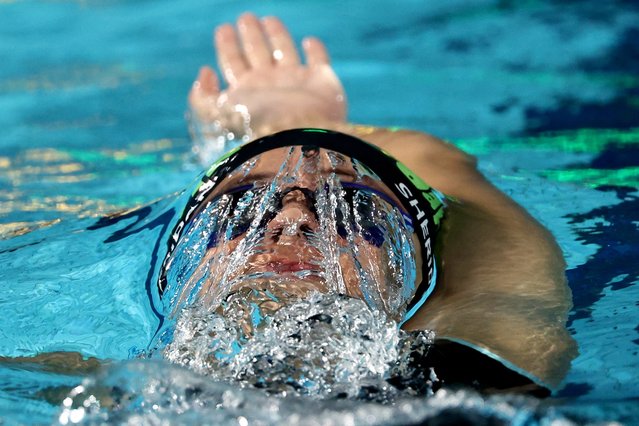
Australia’s Hannah Fredericks competes in the women’s 200m backstroke heats during the Australian Swimming Trials at the Brisbane Aquatic Centre on June 13, 2024. (Photo by David Gray/AFP Photo)
An instructor dances as participants follow the dance steps in a Bihu dance workshop ahead of the Rongali Bihu Festival in Guwahati, India, on April 8, 2025. (Photo by David Talukdar/NurPhoto/Rex Features/Shutterstock)
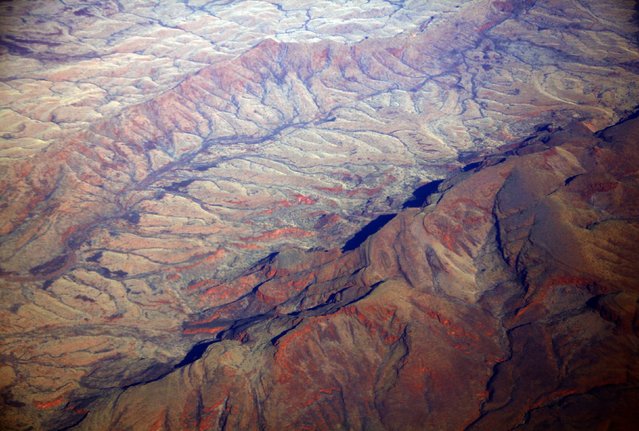
A general view of dried-up rivers in the Pilbara region of Western Australia December 2, 2013. Western Australia's Pilbara region, which is the size of Spain, has the world's largest known deposits of iron ore and supplies nearly 45 percent of global trade in the mineral. (Photo by David Gray/Reuters)
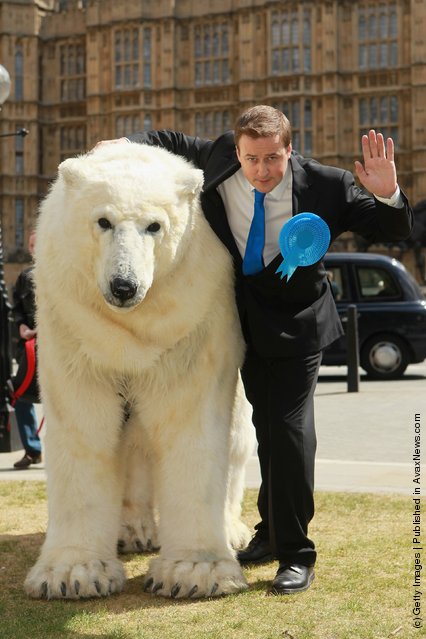
A David Cameron look-alike poses with a polar bear model outside the Houses of Parliament as part of a Greenpeace protest on May 13, 2011 in London, England. The environmental charity Greenpeace arranged the protest to highlight the first anniversary of David Cameron’s speech when he pledged to make his new government the greenest ever. In April 2006 Mr Cameron traveled by huskie-drawn sledge when he visited the island of Svalbard in Norway to witness the effects of climate change. (Photo by Oli Scarff/Getty Images)
Rita Ora performs an intimate gig at the newly relaunched Tezenis store at Oxford Circus crossing to celebrate her recent lingerie collaboration with Tezenis on December 13, 2016 in London, England (Photo by David M. Benett/Dave Benett/Getty Images for Tezenis)
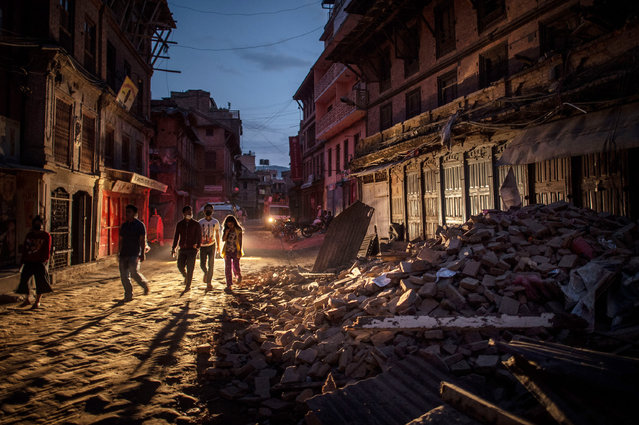
People walk past debris on May 3, 2015 in Bhaktapur, Nepal. A major 7.8 earthquake hit Kathmandu mid-day on Saturday, and was followed by multiple aftershocks that triggered avalanches on Mt. Everest that buried mountain climbers in their base camps. (Photo by David Ramos/Getty Images)
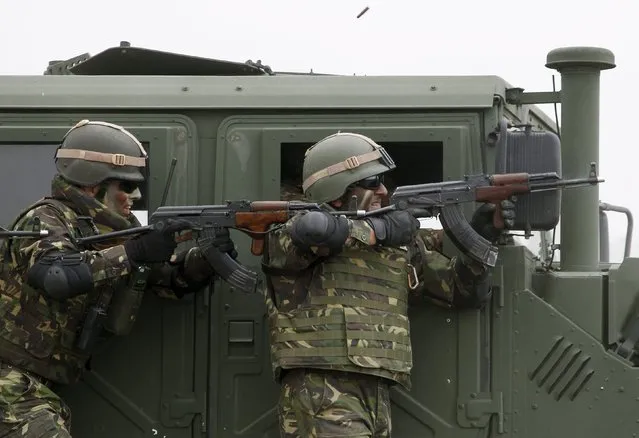
Romanian soldiers take part in a joint military exercise with NATO members, called “Agile Spirit 2015” at the Vaziani military base outside Tbilisi, Georgia, July 21, 2015. Georgian soldiers along with U.S. marines and platoon-size units from Bulgaria, Latvia, Lithuania and Romania are taking part in the exercises at the Vaziani military base outside Tbilisi. (Photo by David Mdzinarishvili/Reuters)
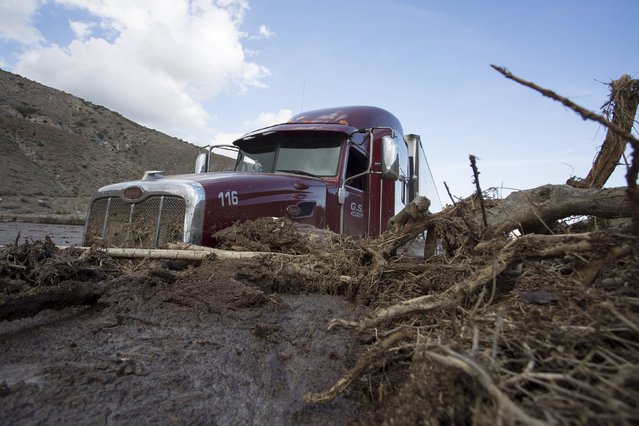
A truck remains mired in mud and debris on State Route 58 near Tehachapi, California, about 60 miles (97 km) outside of Los Angeles October 17, 2015. A mudslide on Thursday left nearly 200 vehicles, including 75 semi-trailer trucks, stuck in up to five feet of mud, local sheriff's spokesman Ray Pruitt said. (Photo by David McNew/Reuters)