Loading...
Done
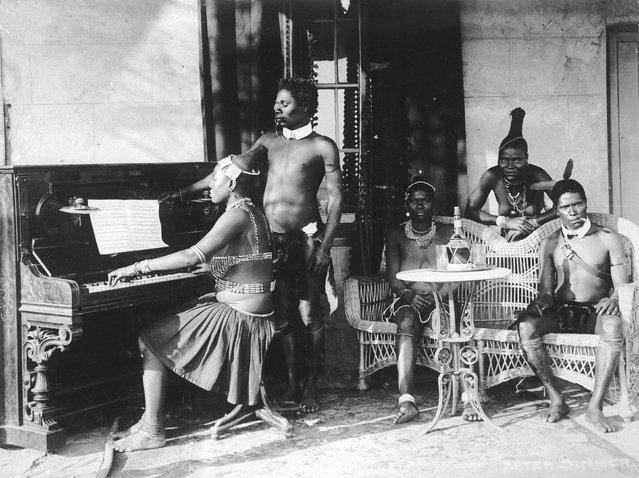
circa 1925:  A Zulu woman playing the piano while a group of others sit and listen.  (Photo by General Photographic Agency/Getty Images)

“The Zulu are the largest South African ethnic group, with an estimated 10–11 million people living mainly in the province of KwaZulu-Natal. Small numbers also live in Zimbabwe, Zambia, and Mozambique. Their language, Zulu, is a Bantu language; more specifically, part of the Nguni subgroup. The Zulu Kingdom played a major role in South African history during the 19th and 20th centuries. Under apartheid, Zulu people were classed as third-class citizens and suffered from state-sanctioned discrimination. They remain today the most numerous ethnic group in South Africa, and now have equal rights along with all other citizens”. – Wikipedia.

Photo: A Zulu woman playing the piano while a group of others sit and listen (to put it briefly, Englishmen scoff over Zulu). South Africa, circa 1925. (Photo by General Photographic Agency)

Details
03 Feb 2014 09:40:00
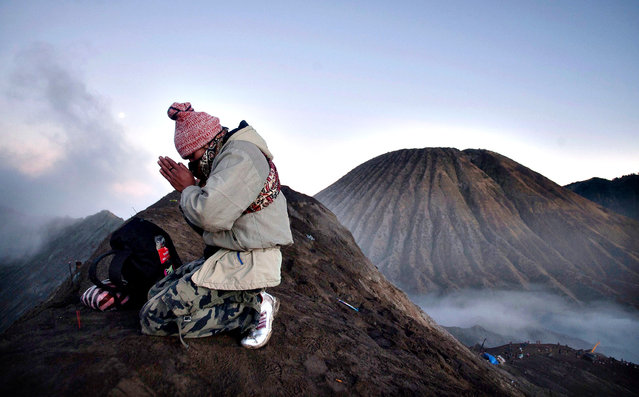
A Tengger tribesman prays at Mount Bromo during the annual Kasada ceremony in East Java on August 12, 2014. The Kasada ceremony is a festival held every 14th day of the Kasada month in the traditional Hindu lunar calender to honour Sang Hyang Widhi (God Almighty) and is based on the legend of Roro Anteng and Joko Seger from the Majapahit Kingdom, from which their Tengger tribe name originates. (Photo by Juni Kriswanto/AFP Photo)

A Tengger tribesman prays at Mount Bromo during the annual Kasada ceremony in East Java on August 12, 2014. The Kasada ceremony is a festival held every 14th day of the Kasada month in the traditional Hindu lunar calender to honour Sang Hyang Widhi (God Almighty) and is based on the legend of Roro Anteng and Joko Seger from the Majapahit Kingdom, from which their Tengger tribe name originates. Hundreds of worshippers from the Tengger tribe offer food and livestock as a symbolic sacrifice which they throw into the crater for the blessings of safety and prosperity to their familyies and community. (Photo by Juni Kriswanto/AFP Photo)
Details
16 Aug 2014 11:19:00
Participants lay down on a street covered by coloured powder during the annual Bangkok Color Run in Bangkok, Thailand April 1, 2017. (Photo by Athit Perawongmetha/Reuters)

Participants lay down on a street covered by coloured powder during the annual Bangkok Color Run in Bangkok, Thailand April 1, 2017. (Photo by Athit Perawongmetha/Reuters)
Details
02 Apr 2017 10:35:00
Two friends take a quick selfie during the Grand National Festival at Aintree Racecourse on April 6, 2017 in Liverpool, England. (Photo by WENN)

Two friends take a quick selfie during the Grand National Festival at Aintree Racecourse on April 6, 2017 in Liverpool, England. (Photo by WENN)
Details
08 Apr 2017 09:30:00
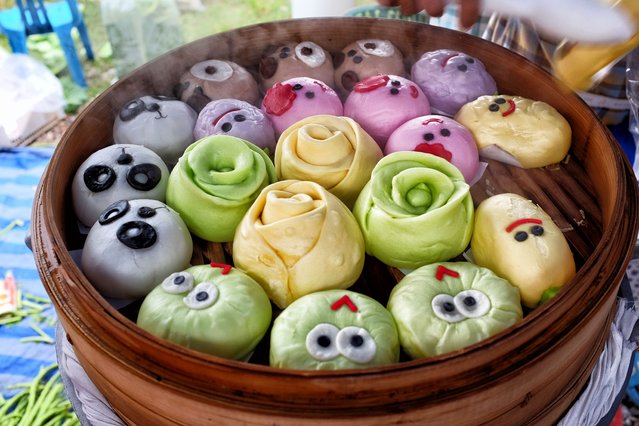
Steamed Chinese-style buns, known locally as salapao, are decorated with faces during the start of the annual 10-day vegetarian festival in Bang Saphan, southern Thailand on October 13, 2015. (Photo by Matthew Richards/Courtesy Image)

Steamed Chinese-style buns, known locally as salapao, are decorated with faces during the start of the annual 10-day vegetarian festival in Bang Saphan, southern Thailand on October 13, 2015. (Photo by Matthew Richards/Courtesy Image)
Details
15 Oct 2015 08:07:00
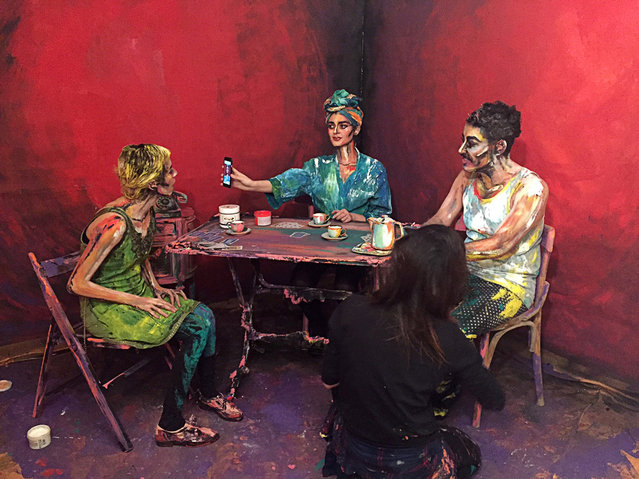
Cairo-based artist Chanel Arif's paints for her art project called After Dinner that uses humans and their surroundings as her canvas, in her gallery in the capital of Cairo, Egypt March 2, 2017. (Photo by Sherif Fahmy/Reuters)

Cairo-based artist Chanel Arif's paints for her art project called After Dinner that uses humans and their surroundings as her canvas, in her gallery in the capital of Cairo, Egypt March 2, 2017. (Photo by Sherif Fahmy/Reuters)
Details
07 Mar 2017 11:01:00
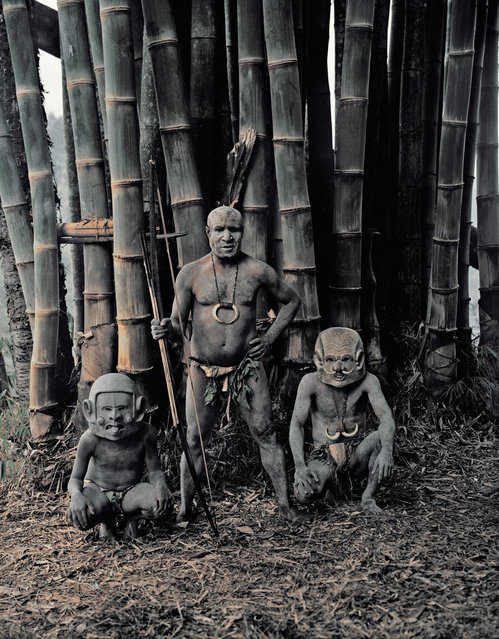
“Asaro from the Eastern Highlands”. The mudmen could not cover their faces with mud because the people of Papua New Guinea thought that the mud from the Asaro river was poisonous. So instead of covering their faces with this alleged poison, they made masks from pebbles that they heated and water from the waterfall, with unusual designs such as long or very short ears either going down to the chin or sticking up at the top, long joined eyebrows attached to the top of the ears, horns and sideways mouths. (Jimmy Nelson)

“Asaro from the Eastern Highlands”. The mudmen could not cover their faces with mud because the people of Papua New Guinea thought that the mud from the Asaro river was poisonous. So instead of covering their faces with this alleged poison, they made masks from pebbles that they heated and water from the waterfall, with unusual designs such as long or very short ears either going down to the chin or sticking up at the top, long joined eyebrows attached to the top of the ears, horns and sideways mouths. (Photo and caption by Jimmy Nelson)
Details
20 Oct 2013 08:54:00
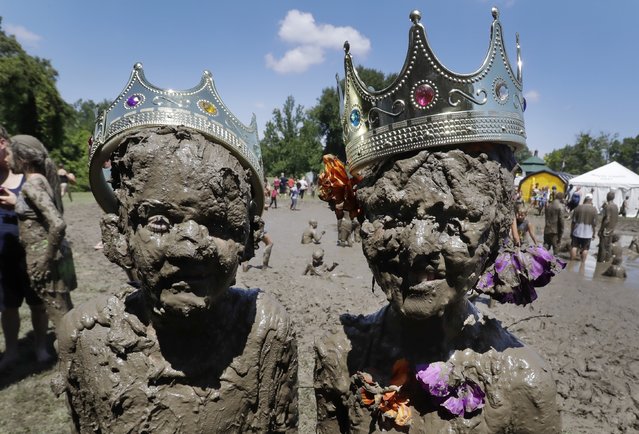
Aiden Haas, left, and Lilli Alcala pose after being crowned Mud King and Mud Queen at the 29th annual Mud Day, Tuesday, July 12, 2016 in Westland, Mich. The event, open to children 12 and younger, was at the Hines Park-Nankin Mills Area west of Detroit. Children 12 and younger were able to slosh around in the pit while participating in mud limbo, wheelbarrow races and other free activities. (Photo by Carlos Osorio/AP Photo)

Aiden Haas, left, and Lilli Alcala pose after being crowned Mud King and Mud Queen at the 29th annual Mud Day, Tuesday, July 12, 2016 in Westland, Mich. The event, open to children 12 and younger, was at the Hines Park-Nankin Mills Area west of Detroit. Children 12 and younger were able to slosh around in the pit while participating in mud limbo, wheelbarrow races and other free activities. (Photo by Carlos Osorio/AP Photo)
Details
14 Jul 2016 09:57:00