Loading...
Done
A Cucumber and a Chuta Cholero hug during the traditional festival “Desentierro del Pepino” (unearthing the Cucumber) to mark the beginning of carnival on January 21, 2024 in La Paz, Bolivia. People dug up the cucumber from the cemetery and walk through the streets with two characters, the Ch'uta and the Chola. (Photo by Gaston Brito/Getty Images)

A Cucumber and a Chuta Cholero hug during the traditional festival “Desentierro del Pepino” (unearthing the Cucumber) to mark the beginning of carnival on January 21, 2024 in La Paz, Bolivia. People dug up the cucumber from the cemetery and walk through the streets with two characters, the Ch'uta and the Chola. (Photo by Gaston Brito/Getty Images)
Details
29 Mar 2025 04:24:00
Clowns Perlita and Tapetito, wearing protective gear amid the new coronavirus pandemic, speak with resident Enrique Zeballos as they arrive to disinfect his home free of charge, in El Alto, Bolivia, Friday, September 11, 2020. The lack of traditional employment for the clowns due to the pandemic has led them towards other avenues of making money. But for people with limited income they provide their disinfection services free of charge. (Photo by Juan Karita/AP Photo)

Clowns Perlita and Tapetito, wearing protective gear amid the new coronavirus pandemic, speak with resident Enrique Zeballos as they arrive to disinfect his home free of charge, in El Alto, Bolivia, Friday, September 11, 2020. The lack of traditional employment for the clowns due to the pandemic has led them towards other avenues of making money. But for people with limited income they provide their disinfection services free of charge. (Photo by Juan Karita/AP Photo)
Details
13 Sep 2020 00:07:00
Aide Choque, wearing a mask amid the COVID-19 pandemic, jumps with her skateboard during a youth talent show in La Paz, Bolivia, Wednesday, September 30, 2020. Young women called “Skates Imillas”, using the Aymara word for girl Imilla, use traditional Indigenous clothing as a statement of pride of their Indigenous culture while playing riding their skateboards. (Photo by Juan Karita/AP Photo)

Aide Choque, wearing a mask amid the COVID-19 pandemic, jumps with her skateboard during a youth talent show in La Paz, Bolivia, Wednesday, September 30, 2020. Young women called “Skates Imillas”, using the Aymara word for girl Imilla, use traditional Indigenous clothing as a statement of pride of their Indigenous culture while playing riding their skateboards. (Photo by Juan Karita/AP Photo)
Details
10 Feb 2021 11:11:00
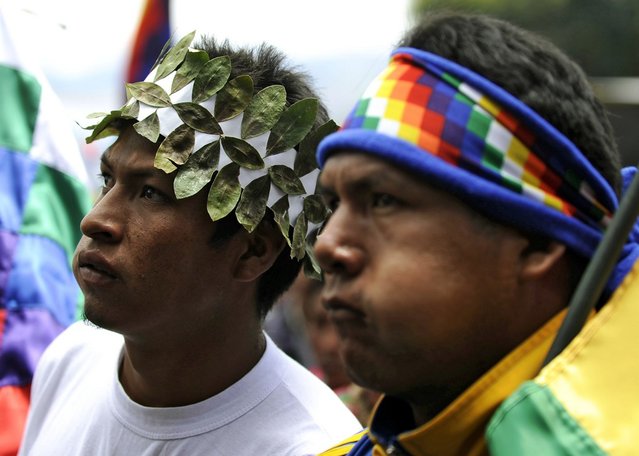
Coca growers chew coca leaves during a celebration for the reincorporation of Bolivia to the UN Convention Against Illicit Traffic in Narcotic Drugs in La Paz on January 14, 2013. "The coca leaf is not any more seen as cocaine (..), it is a victory of our identity" said Bolivian President Evo Morales. AFP PHOTO/Jorge Bernal        (Photo credit should read JORGE BERNAL/AFP/Getty Images)

Coca growers chew coca leaves during a celebration for the reincorporation of Bolivia to the UN Convention Against Illicit Traffic in Narcotic Drugs in La Paz on January 14, 2013. “The coca leaf is not any more seen as cocaine (...), it is a victory of our identity” said Bolivian President Evo Morales. (Photo by Jorge Bernal/AFP Photo)
Details
15 Jan 2013 10:16:00
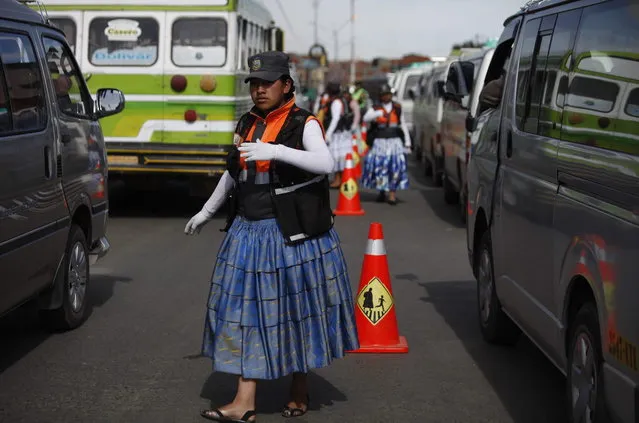
In this December 3, 2013 photo, an Aymara woman cops directs traffic on the streets of El Alto, Bolivia. The women wear the bright petticoats and shawls of indigenous women in the Andes, called cholitas in Bolivian slang, the main difference being that instead of bowler hats they wear khaki green police-style caps. Some don fluorescent traffic vests. (Photo by Juan Karita/AP Photo)

“This city in Bolivia's highlands has hired Aymara women dressed in traditional multilayered Andean skirts and brightly embroidered vests to work as traffic cops and bring order to its road chaos. About 20 of the “traffic cholitas” have been trained to direct cars and buses in El Alto, a teeming, impoverished sister city of La Paz in Bolivia's Andes mountains”. – El Alto via Associated Press. Photo: In this December 3, 2013 photo, an Aymara woman cops directs traffic on the streets of El Alto, Bolivia. The women wear the bright petticoats and shawls of indigenous women in the Andes, called cholitas in Bolivian slang, the main difference being that instead of bowler hats they wear khaki green police-style caps. Some don fluorescent traffic vests. (Photo by Juan Karita/AP Photo)
Details
25 Dec 2013 10:48:00
A wolf looks into the camera at the 30 km (19 miles) exclusion zone around the Chernobyl nuclear reactor in the abandoned village of Orevichi, Belarus, March 2, 2016. (Photo by Vasily Fedosenko/Reuters)

A wolf looks into the camera at the 30 km (19 miles) exclusion zone around the Chernobyl nuclear reactor in the abandoned village of Orevichi, Belarus, March 2, 2016. What happens to the environment when humans disappear? Thirty years after the Chernobyl nuclear disaster, booming populations of wolf, elk and other wildlife in the vast contaminated zone in Belarus and Ukraine provide a clue. (Photo by Vasily Fedosenko/Reuters)
Details
08 Apr 2016 15:13:00
A garbage collector, with his horse and cart, prepares to unload rubbish at the municipal dump in Nezahualcoyotl, on the outskirts of Mexico City, February 18, 2015. (Photo by Henry Romero/Reuters)

A garbage collector, with his horse and cart, prepares to unload rubbish at the municipal dump in Nezahualcoyotl, on the outskirts of Mexico City, February 18, 2015. Hundreds of horse or donkey-drawn carts will disappear from the streets of a municipality in the state of Mexico, located on the outskirts of Mexico City, and will be replaced by motorized vehicles, local authorities said. (Photo by Henry Romero/Reuters)
Details
20 Feb 2015 12:43:00
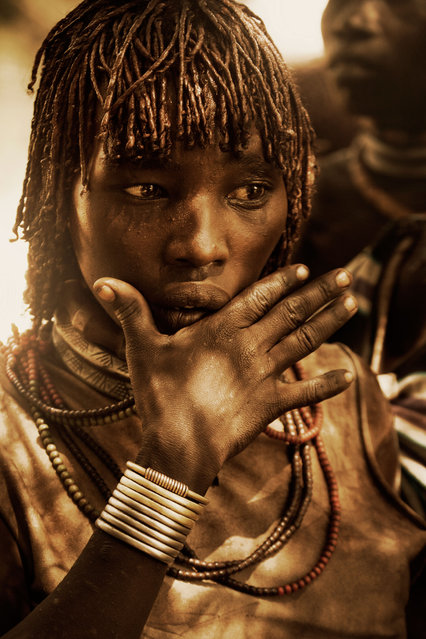
The Hamar people traditionally use red ocher clay to braid the hair of their women. (Photo by Diego Arroyo)

During his time in Ethiopia, New York-based art director and photographer Diego Arroyo spent time with the Hamar, Mursi, Dassanech, and Arbore Tribes. They, along with several others tribes, make up the 200,000 people situated in Africa’s Great Rift Valley. The people of the Omo Valley are still primarily herders and farmers, living an isolated and simple life. While they have yet to be truly touched by globalization, they could soon disappear. Their way of life is being threatened by a massive hydroelectric dam. (Photo by Diego Arroyo)
Details
13 Aug 2014 10:00:00