Loading...
Done
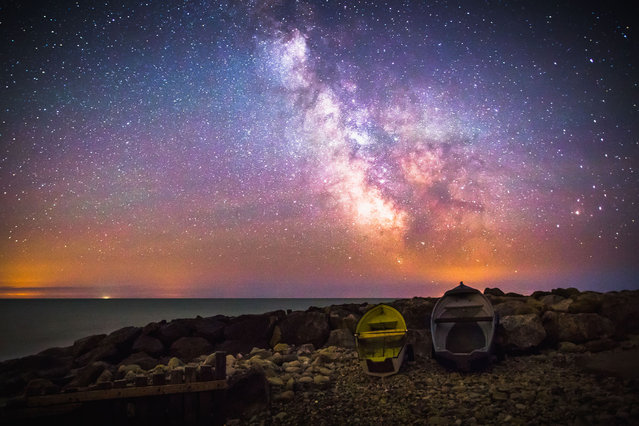
The galactic core of the milky way occupied by two small wooden boats on July 2, 2014, in Isle of Wight, UK. The Milky Way shines in mesmerizing colourful patterns above the Isle of Wight in stunning photographs. (Photo by Chad Powell/Barcroft Media)

The galactic core of the milky way occupied by two small wooden boats on July 2, 2014, in Isle of Wight, UK. The Milky Way shines in mesmerizing colourful patterns above the Isle of Wight in stunning photographs. Chad Powell used a DSLR camera to capture images of the spectacular constellation above the familiar beach scenes of England's largest island. The 22-year-old, who shot the pictures over a year of stargazing on the island, often stayed up until dawn to catch the most dramatic sky-scapes. Chad, a graphic designer from Ventnor, Isle of Wight, used foregrounds of abandoned theme parks, harbors and lighthouses against the illuminated sky. Minor adjustments were made to bring out the contrast and whites in the images. (Photo by Chad Powell/Barcroft Media)
Details
28 Jul 2014 11:31:00
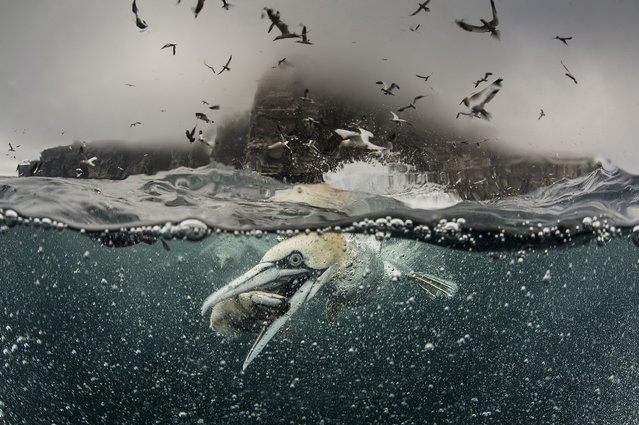
A gannet grabs a fish by its beak, 2014, in Shetland, Scotland. Hundreds of gannets crash into the sea in search of food – leaving a trail of air bubbles in their wake. Richard Shucksmith, 41, on the Shetland Isles, Scotland captured the remarkable scene as he took a boat to feed the large colony of seabirds that nested on the cliffs. The photographer has taken images of the gannets every summer for the last three years as the birds gather on the cliffs to breed. (Photo by Richard Shucksmith/Barcroft media)

A gannet grabs a fish by its beak, 2014, in Shetland, Scotland. Hundreds of gannets crash into the sea in search of food – leaving a trail of air bubbles in their wake. Richard Shucksmith, 41, on the Shetland Isles, Scotland captured the remarkable scene as he took a boat to feed the large colony of seabirds that nested on the cliffs. The photographer has taken images of the gannets every summer for the last three years as the birds gather on the cliffs to breed. (Photo by Richard Shucksmith/Barcroft media)
Details
26 Sep 2014 13:54:00
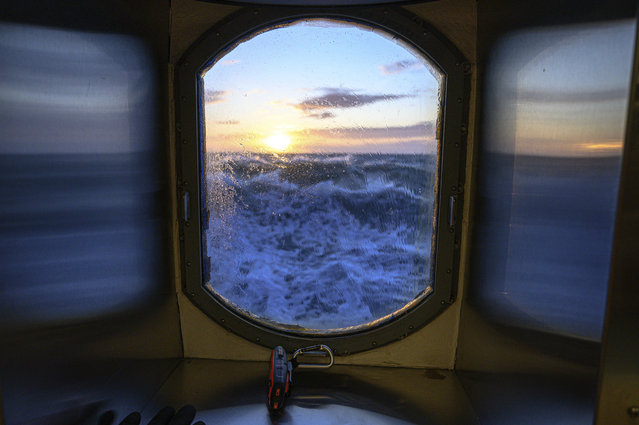
This November 8, 2019, photo provided by John Guillote shows a view from the main lab of the Sikuliaq in the Chukchi Sea. University of Washington scientists onboard the research vessel are studying the changes and how less sea ice will affect coastlines, which already are vulnerable to erosion because increased waves delivered by storms. More erosion would increase the chance of winter flooding in villages and danger to hunters in small boats. (Photo by John Guillote via AP Photo)

This November 8, 2019, photo provided by John Guillote shows a view from the main lab of the Sikuliaq in the Chukchi Sea. University of Washington scientists onboard the research vessel are studying the changes and how less sea ice will affect coastlines, which already are vulnerable to erosion because increased waves delivered by storms. More erosion would increase the chance of winter flooding in villages and danger to hunters in small boats. (Photo by John Guillote via AP Photo)
Details
26 Aug 2021 08:22:00
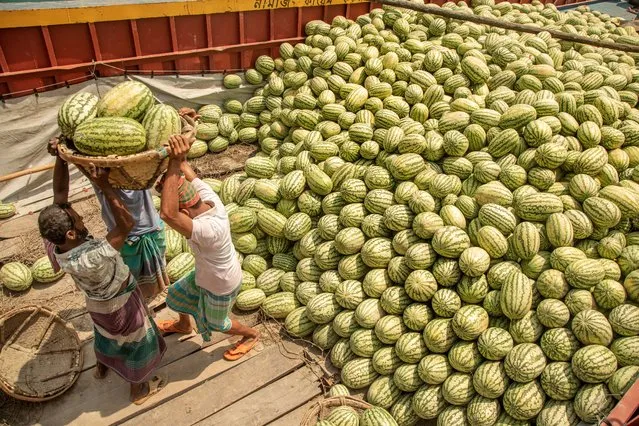
Bangladeshi laborers unload watermelons from a boat at the Buriganga River in Dhaka, Bangladesh, 03 April 2024. Watermelon is in harvesting season and is filling the city markets as it arrives from the southern part of Bangladesh. According to the Department of Agriculture Extension (DAE), Barishal has set an ambitious goal to expand watermelon cultivation to 54,002 hectares across six high-yielding districts in the division, which is 14 percent higher than last year. (Photo by Monirul Alam/EPA/EFE)

Bangladeshi laborers unload watermelons from a boat at the Buriganga River in Dhaka, Bangladesh, 03 April 2024. Watermelon is in harvesting season and is filling the city markets as it arrives from the southern part of Bangladesh. According to the Department of Agriculture Extension (DAE), Barishal has set an ambitious goal to expand watermelon cultivation to 54,002 hectares across six high-yielding districts in the division, which is 14 percent higher than last year. (Photo by Monirul Alam/EPA/EFE)
Details
19 Apr 2024 00:22:00
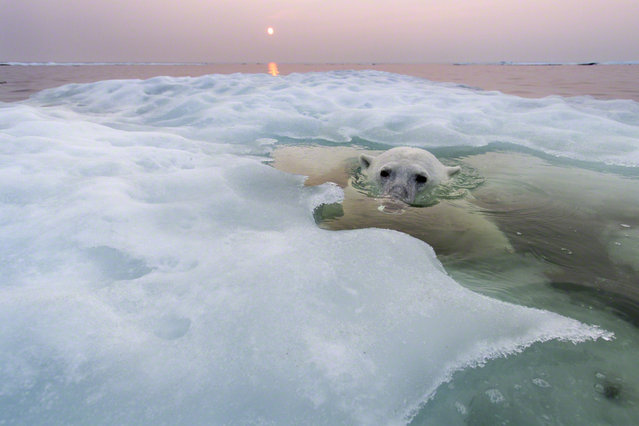
Photographing Polar Bears By Paul Souders

American nature and wildlife photographer Paul Souders is very well-travelled around the globe. In one of his exploits, we have his series of images shot in the ice capped shores of Churchill, Canada. Souders took his Zodiac boat to Hudson Bay in midsummer and waited there for three days before he finally saw a bear, a young female while on sea ice around 30 miles offshore.
Details
29 Aug 2014 13:52:00
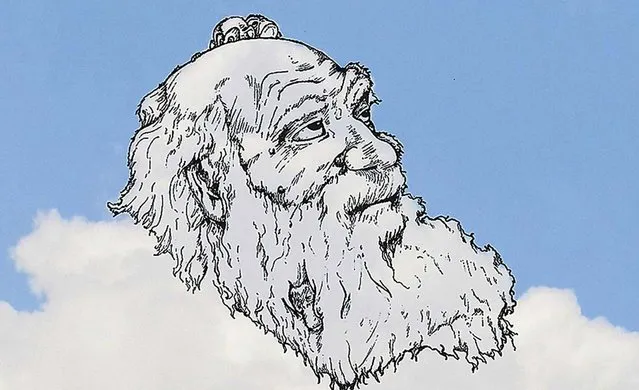
Illustrations Out Of Clouds By Martin Feijoo

Few things are more beautiful than puffy white clouds floating in the bright blue sky. Do you remember the time when you would lay on the soft green grass, look up at the sky, and try to recognize shapes in the clouds floating overhead? Wasn’t it wonderful, just lying there, letting the wind caress your skin, as you imagine that the clouds in the sky are actually mystical or not-so-mystical creatures? Dragons, ducks, teddy bears, dinosaurs, everything was up there. It was good old times. As adults we forget about simple pleasures of life. However, an Argentinian artist Martin Feijoo didn’t forget those times, and took them a step further. After imagining what a particular cloud looks like, he draws that particular shape over the picture of the cloud, allowing the entire world to see what goes on in his mind. (Photo by Martin Feijoo)
Details
02 Nov 2014 10:44:00
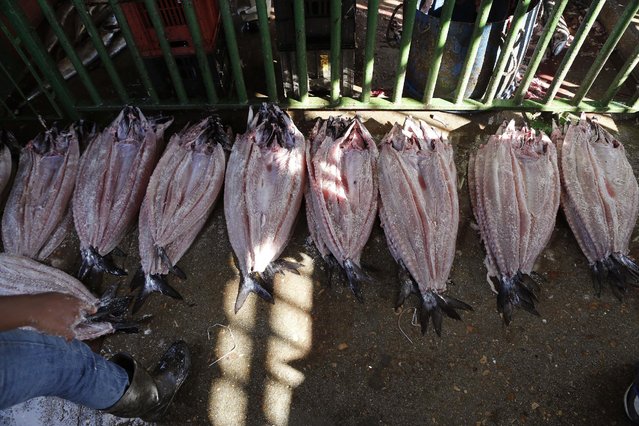
In this photo taken on Saturday, May 16, 2015, Snoek fish with salt on them after they were cleaned  in Lambert's Bay, South Africa. (Photo by Schalk van Zuydam/AP Photo)

In this photo taken on Saturday, May 16, 2015, Snoek fish with salt on them after they were cleaned in Lambert's Bay, South Africa. The boats line up along the jetty, bobbing in the cold south Atlantic waters, bringing in the day's catch in the early afternoon. The long silver snoek fish is one of South Africa's traditional foods, and a main source of income for the town of Lambert's Bay. (Photo by Schalk van Zuydam/AP Photo)
Details
25 May 2015 09:28:00
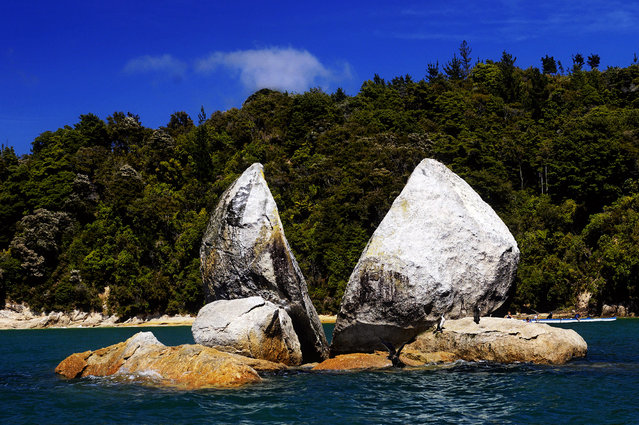
Split Apple Rock

Split Apple Rock is a geological rock formation in The Tasman Bay off the northern coast of the South Island of New Zealand. Made of granite, it is in the shape of an apple which has been cut in half. It is a popular tourist attraction in the waters of the Tasman Sea approximately 50 metres off the coast between Kaiteriteri and Marahau. The rock sits in shallow water at low tide and is accessible by wading. It is also a point of interest for the many tourist boats and pleasure craft which operate along the shores of the Abel Tasman National Park. The cleft to produce two sides of the 'apple' was a natural occurrence. It is unknown when this happened and therefore the cleaving of the rock has attracted mythological explanations.
Details
19 Oct 2013 10:58:00