Loading...
Done
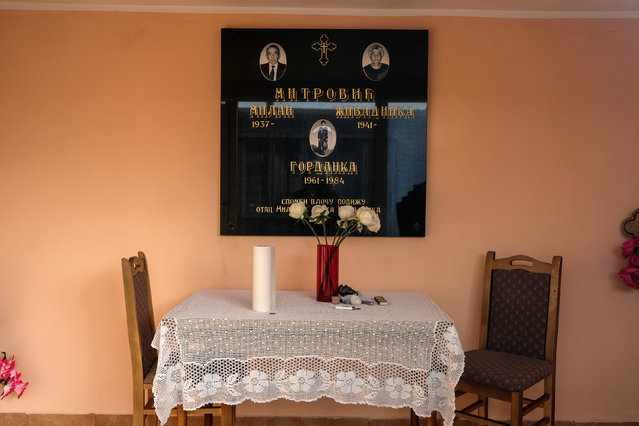
Pictures of deceased people are seen inside a chapel at a cemetery in the village of Smoljinac, Serbia, October 25, 2016. (Photo by Marko Djurica/Reuters)

Pictures of deceased people are seen inside a chapel at a cemetery in the village of Smoljinac, Serbia, October 25, 2016. From a distance, the cemetery in the eastern Serbian village of Smoljinac looks like a residential neighbourhood eerily placed among graves. But once inside the grounds, after passing a section with the usual stone slabs, visitors find rows of small bungalows painted in pastel colours. They have one or two rooms, large windows and ornate plaques – some inside, some outside – memorialising the deceased. These are the burial chapels of Smoljinac, cosy cabins with a furnished room inside, a storage place for wreaths and funeral paraphernalia, and the family crypt below. Some even have electric power inside. (Photo by Marko Djurica/Reuters)
Details
12 Nov 2016 10:37:00
Britain's Mo Farah reacts as he wins the men's 5000m final at the London 2012 Olympic Games at the Olympic Stadium in Britain August 11, 2012. Lucy Nicholson: “When Mo Farah was rounding the final corner for the 5000m the huge stadium was electric, everybody was on their feet and he knew he was going to win as he came into that final stretch. All the photographers were excited because we knew he was going to react in a very dramatic way so it was a lovely sequence of photos as he crossed the finish line – he put his hands over his head, he wrapped himself in the British flag, it was a very long celebration sequence, which is all you can really wish for as a photographer”. (Photo by Lucy Nicholson/Reuters)

The Rio de Janeiro Olympics kick off on August 5 for some two weeks of competitive games drawing athletes as well as audiences from around the world. As they prepare to cover the event, Reuters photographers look back on their favourite pictures from past Olympics where they captured the action on the ground as well as the participants' tears and joy that followed. (Photo by Lucy Nicholson/Reuters)
Details
03 Aug 2016 11:19:00


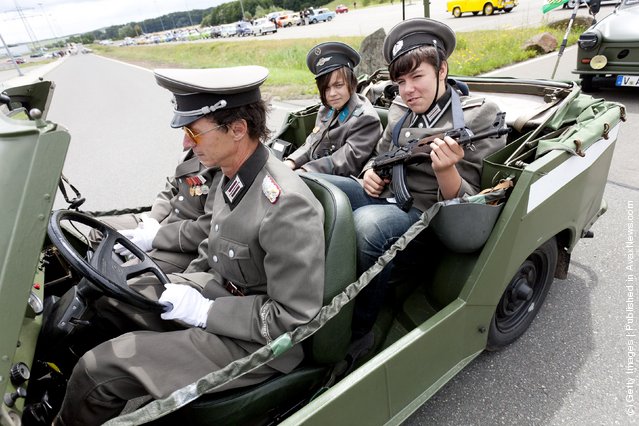
“The Trabant is a car that was produced by former East German auto maker VEB Sachsenring Automobilwerke Zwickau in Zwickau, Sachsen. It was the most common vehicle in East Germany, and was also exported to countries both inside and outside the communist bloc. The main selling points was that it had room for four adults and luggage in a compact, light and durable shell and that it was fast (when introduced) and durable. With its mediocre performance, smoky two-stroke engine, and production shortages, the Trabant is often cited as an example of the disadvantages of centralized planning; on the other hand, it is regarded with derisive affection as a symbol of the failed former East Germany and of the fall of communism (in former West Germany, as many East Germans streamed into West Berlin and West Germany in their Trabants after the opening of the Berlin Wall in 1989). It was in production without any significant changes for nearly 30 years with 3,096,099 Trabants produced in total”. – Wikipedia

Photo: Enthusiasts weared in uniforms of the former eastern german army trive in a military Trabant car as fans and owners of East German-era Trabant cars gather at the 2011 International Trabantfahrer Treffen (International Trabant Drivers Meeting) on June 26, 2011 in Zwickau, Germany. The Trabant, also known as the Trabi, was among the main cars produced in communist East Germany and built by VEB Sachsenring Automobilwerke in Zwickau for 30 years until 1989. Today the car has cult status for many followers and one company, IndiKar, is even seeking to revive the brand in a modern, electric version. (Photo by Carsten Koall/Getty Images)

Details
27 Jun 2011 12:21:00
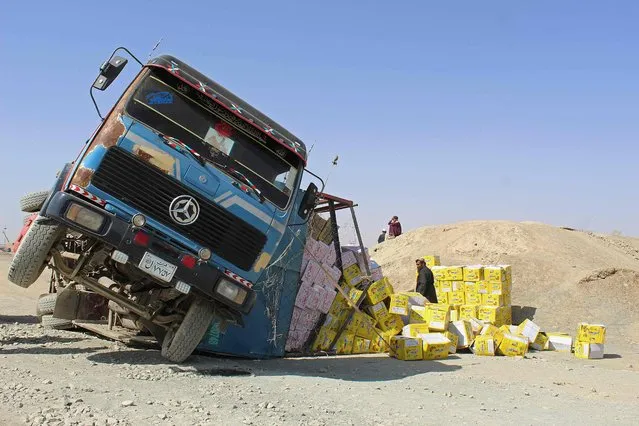
An Afghan driver stands amid boxes of dry food next to his damaged truck at the site of an accident near the Pakistan-Afghanistan border crossing point in Chaman, Pakistan on August 20, 2021. (Photo by AFP Photo/Stringer Network)

An Afghan driver stands amid boxes of dry food next to his damaged truck at the site of an accident near the Pakistan-Afghanistan border crossing point in Chaman, Pakistan on August 20, 2021. (Photo by AFP Photo/Stringer Network)
Details
17 Sep 2021 09:18:00
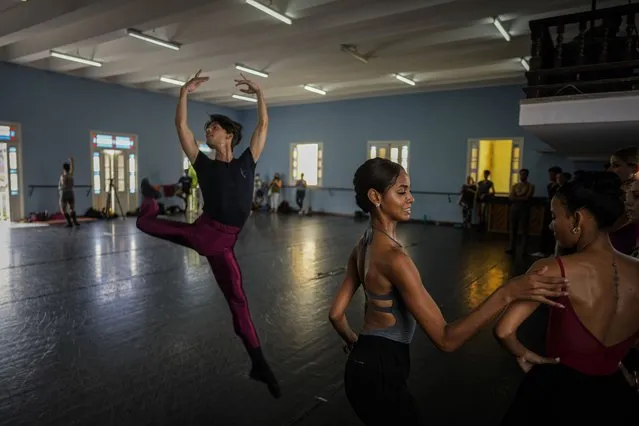
Dancers from Cuba's National Ballet rehearse under the leadership of U.S. choreographer Jessica Lang as they prepare next month's International Ballet Festival in Havana, Cuba, Thursday, September 1, 2022. (Photo by Ramon Espinosa/AP Photo)

Dancers from Cuba's National Ballet rehearse under the leadership of U.S. choreographer Jessica Lang as they prepare next month's International Ballet Festival in Havana, Cuba, Thursday, September 1, 2022. (Photo by Ramon Espinosa/AP Photo)
Details
08 Sep 2022 04:20:00
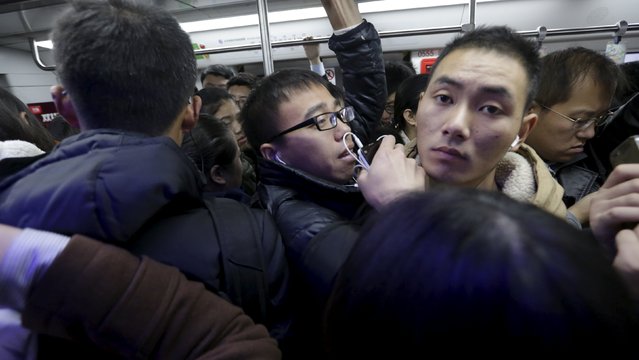
An Zi, is squashed amongst other commuters in a subway train on his way to work in Beijing, China, November 12, 2015. An, a movie producer, moved to Dongsanqi village in Changping this year. His commute to work can take about 2 hours, with transportation costs topping 200 yuan a month, or about a fifth of his monthly rent. (Photo by Jason Lee/Reuters)

An Zi, is squashed amongst other commuters in a subway train on his way to work in Beijing, China, November 12, 2015. An, a movie producer, moved to Dongsanqi village in Changping this year. His commute to work can take about 2 hours, with transportation costs topping 200 yuan a month, or about a fifth of his monthly rent. (Photo by Jason Lee/Reuters)
Details
28 Nov 2015 08:00:00
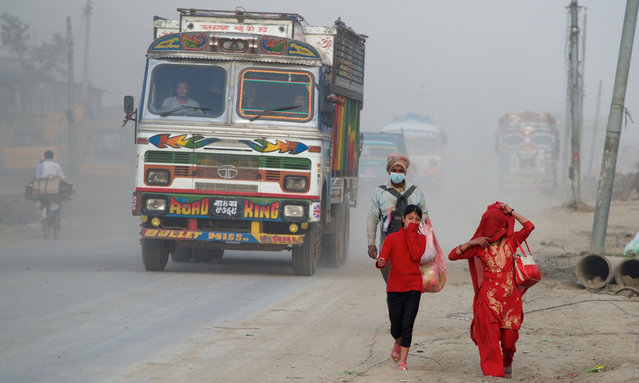
People in Kathmandu joke that the face mask has now become part of the national dress – an indispensable accessory in an effort to protect themselves from the dust. Nepal has the worst air quality in the world, according to the Environmental Performance Index. (Photo by Pete Pattisson/The Guardian)

People in Kathmandu joke that the face mask has now become part of the national dress – an indispensable accessory in an effort to protect themselves from the dust. Nepal has the worst air quality in the world, according to the Environmental Performance Index. (Photo by Pete Pattisson/The Guardian)
Details
22 Jun 2018 00:05:00
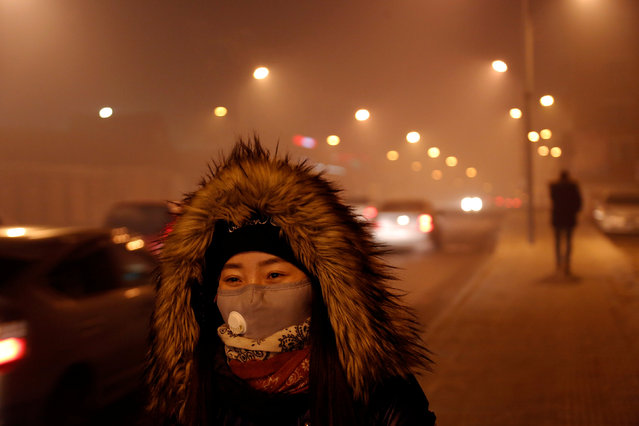
A woman wears a face mask in the part of the city near neighbourhoods known for burning coal for heating in Ulaanbaatar, Mongolia January 26, 2017. Not many people in Ulaanbaatar wear masks to protect themselves against pollution. (Photo by B. Rentsendorj/Reuters)

A woman wears a face mask in the part of the city near neighbourhoods known for burning coal for heating in Ulaanbaatar, Mongolia January 26, 2017. Not many people in Ulaanbaatar wear masks to protect themselves against pollution. (Photo by B. Rentsendorj/Reuters)
Details
09 Feb 2017 00:00:00