Loading...
Done
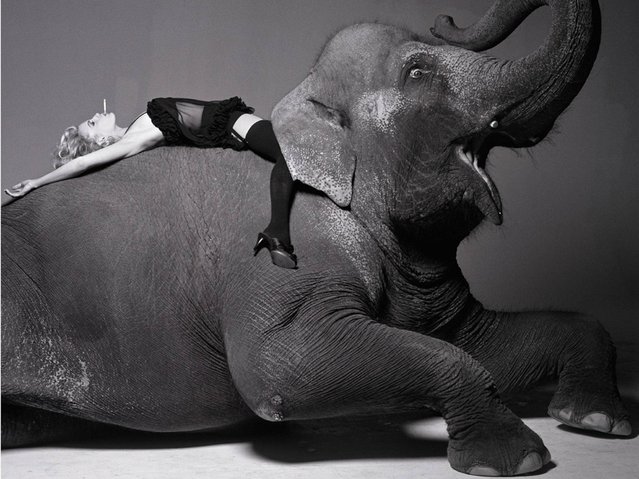
Art photography gallery Lumas has opened its doors to “Masterpieces of Fashion Photography” exhibition at its London flagship space, showcasing previously unreleased images by legends such as Horst P. Horst, Edward Steichen, Bert Stern and Arthur Elgort. Here: Darryl Hannah on elephant, 1992. (Photo by Michel Comte/Vogue Archive Collection)

Art photography gallery Lumas has opened its doors to “Masterpieces of Fashion Photography” exhibition at its London flagship space, showcasing previously unreleased images by legends such as Horst P. Horst, Edward Steichen, Bert Stern and Arthur Elgort. Here: Darryl Hannah on elephant, 1992. (Photo by Michel Comte/Vogue Archive Collection)
Details
29 Mar 2015 12:30:00
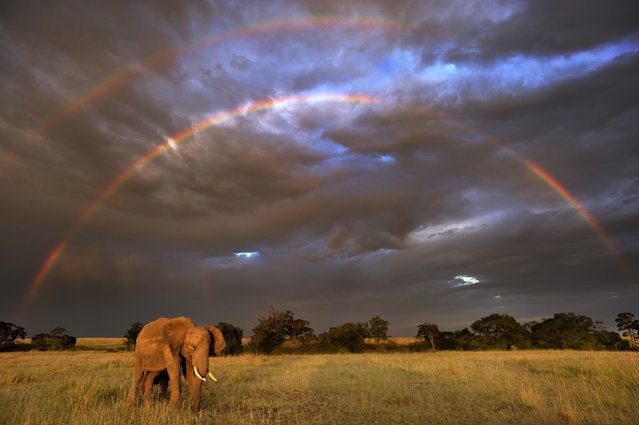
This photo provided by Netflix/naturepl.com and WWF-International shows an African Elephant (Loxodonta africana) in front of double rainbow, in Masai Mara, Kenya, included in the Netflix natural history series, “Our Planet”, in collaboration with Silverback Films and WWF. The eight-part series debuts in 2019. (Photo by Andy Rouse/Naturepl.com/WWF-International/Netflix via AP Photo)

This photo provided by Netflix/naturepl.com and WWF-International shows an African Elephant (Loxodonta africana) in front of double rainbow, in Masai Mara, Kenya, included in the Netflix natural history series, “Our Planet”, in collaboration with Silverback Films and WWF. The eight-part series debuts in 2019. (Photo by Andy Rouse/Naturepl/WWF-International/Netflix via AP Photo)
Details
09 Oct 2015 08:05:00


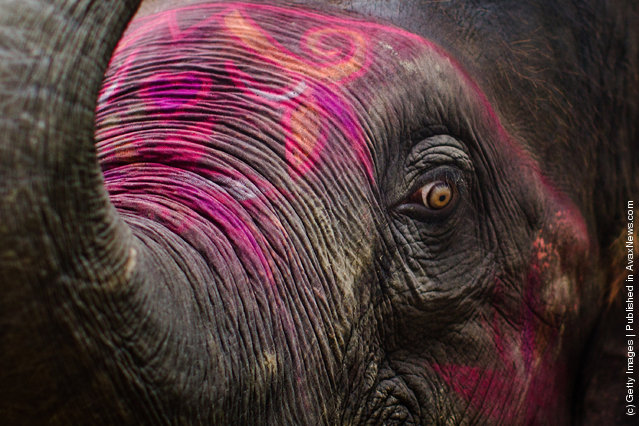
SONEPUR, INDIA - NOVEMBER 15: An elephant is painted in decorative colours during the Sonepur Mela on November 15, 2011 in Sonepur near Patna, India. The cattle fair, held in the Indian state of Bihar, has its origins during ancient times, when people traded elephants and horses across the auspicious river Ganges. The mela used to attract traders from places as distant as Central Asia. It is one of Asia's largest cattle fairs and lasts for a fortnight. (Photo by Daniel Berehulak/Getty Images)
Details
16 Nov 2011 02:42:00
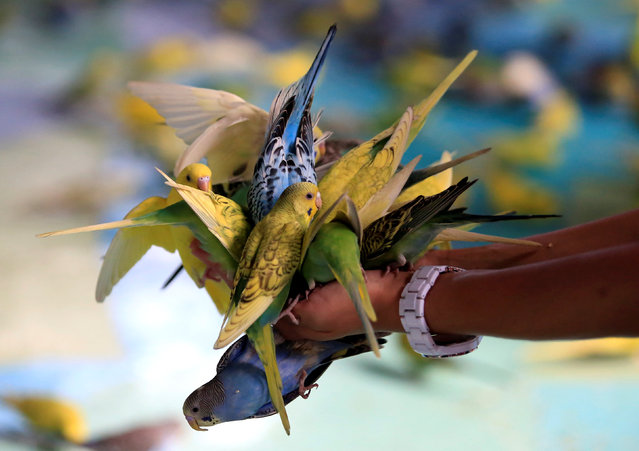
Budgies feed on seeds from a local visitor's hands at Ocean Park in metro Manila, Philippines September 10, 2016. (Photo by Romeo Ranoco/Reuters)

Budgies feed on seeds from a local visitor's hands at Ocean Park in metro Manila, Philippines September 10, 2016. (Photo by Romeo Ranoco/Reuters)
Details
11 Sep 2016 09:47:00
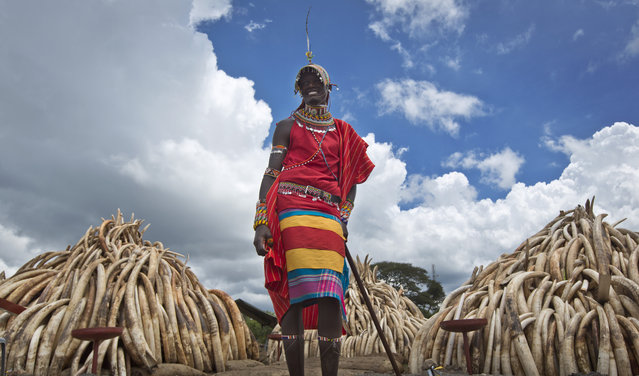
A Maasai man in ceremonial dress poses for visitors to take photographs of him in front of one of around a dozen pyres of ivory, in Nairobi National Park, Kenya Thursday, April 28, 2016. The Kenya Wildlife Service (KWS) has stacked 105 tons of ivory consisting of 16,000 tusks, and 1 ton of rhino horn, from stockpiles around the country, in preparation for it to be torched on Saturday to encourage global efforts to help stop the poaching of elephants and rhinos. (Photo by Ben Curtis/AP Photo)

A Maasai man in ceremonial dress poses for visitors to take photographs of him in front of one of around a dozen pyres of ivory, in Nairobi National Park, Kenya Thursday, April 28, 2016. The Kenya Wildlife Service (KWS) has stacked 105 tons of ivory consisting of 16,000 tusks, and 1 ton of rhino horn, from stockpiles around the country, in preparation for it to be torched on Saturday to encourage global efforts to help stop the poaching of elephants and rhinos. (Photo by Ben Curtis/AP Photo)
Details
29 Apr 2016 11:58:00
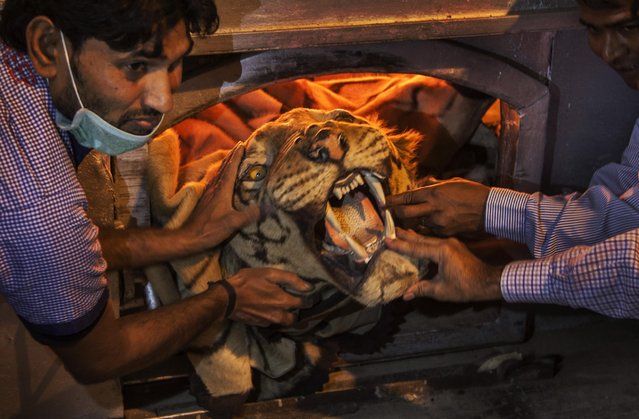
Indian authorities hold a tiger skin as they set fire to a stockpile of illegal wildlife parts at the Delhi Zoo in New Delhi, India, Sunday, November 2, 2014. A stockpile of tiger skins, elephant tusks, rhino horns and other illegal animal parts were burned Sunday in an effort to discourage wildlife smuggling in South Asia. (Photo by Tsering Topgyal/AP Photo)

Indian authorities hold a tiger skin as they set fire to a stockpile of illegal wildlife parts at the Delhi Zoo in New Delhi, India, Sunday, November 2, 2014. A stockpile of tiger skins, elephant tusks, rhino horns and other illegal animal parts were burned Sunday in an effort to discourage wildlife smuggling in South Asia. (Photo by Tsering Topgyal/AP Photo)
Details
03 Nov 2014 12:44:00
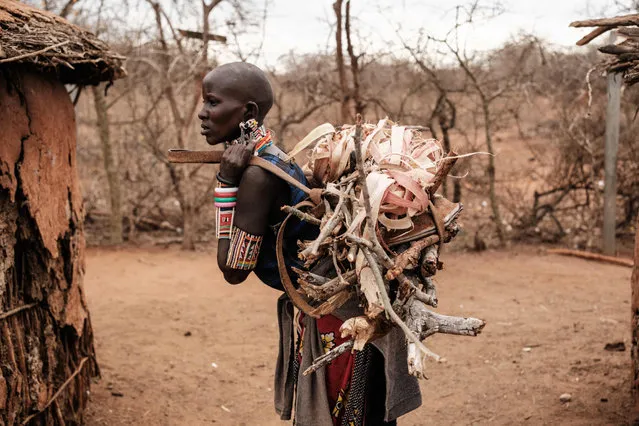
A Maasai woman arrives with collected firewoods at a village nearby Selenkay Conservancy, a community-owned conservation area running by a private company, in Amboseli, Kenya, on June 22, 2022. The camp's ten luxurious tents see tourists flocking again, after the shutdown linked to Covid-19. They observe in small groups elephants, giraffes, antelopes or lions on 5,000 hectares, located on the edge of Amboseli National Park, in the south of the country, and have a glimpse of the life of the Masai, the owners of the land. (Photo by Yasuyoshi Chiba/AFP Photo)

A Maasai woman arrives with collected firewoods at a village nearby Selenkay Conservancy, a community-owned conservation area running by a private company, in Amboseli, Kenya, on June 22, 2022. The camp's ten luxurious tents see tourists flocking again, after the shutdown linked to Covid-19. They observe in small groups elephants, giraffes, antelopes or lions on 5,000 hectares, located on the edge of Amboseli National Park, in the south of the country, and have a glimpse of the life of the Masai, the owners of the land. (Photo by Yasuyoshi Chiba/AFP Photo)
Details
22 Jul 2022 04:32:00
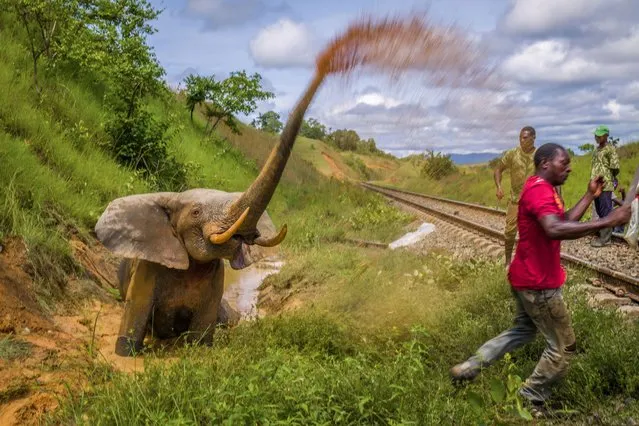
Grand prize winner: environmental photographer of the year 2023; also 1st place in the humanity v nature category; and winner of the 2023 public award. Lopé national park, Gabon, 2021. An angry elephant tries to defend itself after it was hit by a train that crosses paths the animals use within Lopé national park. Park officials decided the elephant was too severely injured to be saved. After it was killed, the park director distributed the meat to local people. As the forest loses its carrying capacity to sustain its megafauna, this kind of human-wildlife conflict is increasing. (Photo by Jasper Doest/Environmental Photography Award)

Grand prize winner: environmental photographer of the year 2023; also 1st place in the humanity v nature category; and winner of the 2023 public award. Lopé national park, Gabon, 2021. An angry elephant tries to defend itself after it was hit by a train that crosses paths the animals use within Lopé national park. Park officials decided the elephant was too severely injured to be saved. After it was killed, the park director distributed the meat to local people. As the forest loses its carrying capacity to sustain its megafauna, this kind of human-wildlife conflict is increasing. (Photo by Jasper Doest/Environmental Photography Award)
Details
09 Jul 2023 03:06:00