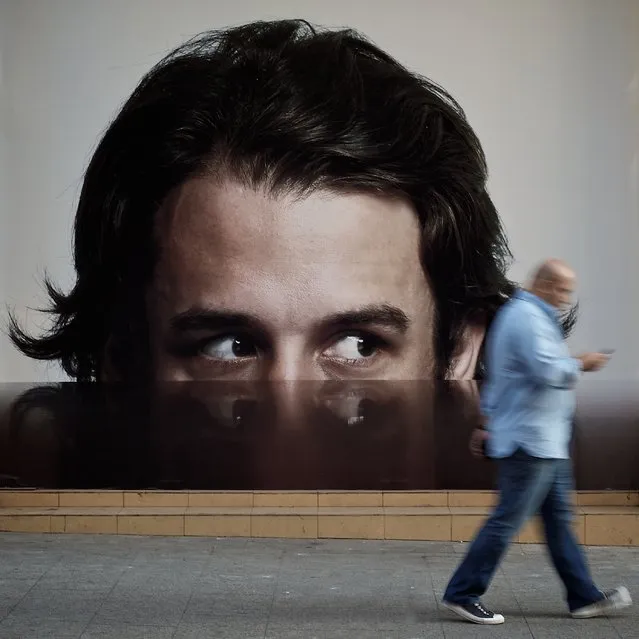
09 Jun 2013 12:09:00,post received
0 comments

Details
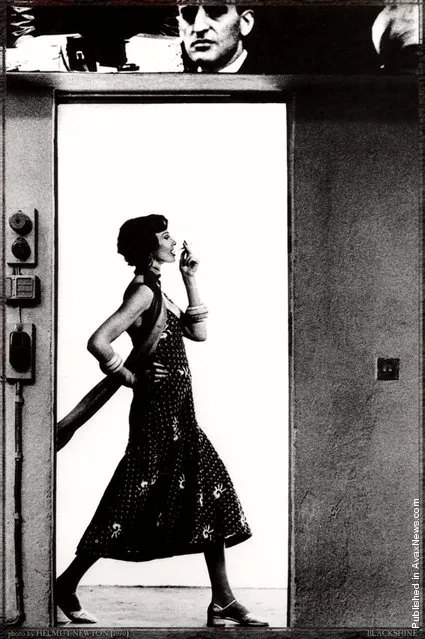
“Newton was born in Berlin, the son of Klara “Claire” (Marquis) and Max Neustädter, a button factory owner. His family was Jewish. Newton attended the Heinrich-von-Treitschke-Realgymnasium and the American School in Berlin. Interested in photography from the age of 12 when he purchased his first camera, he worked for the German photographer Yva (Elsie Neulander Simon) from 1936. The increasingly oppressive restrictions placed on Jews by the Nuremberg laws meant that his father lost control of the factory in which he manufactured buttons and buckles; he was briefly interned in a concentration camp on “Kristallnacht”, November 9, 1938, which finally compelled the family to leave Germany. Newton's parents fled to South America. He was issued with a passport just after turning 18, and left Germany on December 5, 1938. At Trieste he boarded the “Conte Rosso” (along with about 200 others escaping the Nazis) intending to journey to China. After arriving in Singapore he found he was able to remain there, first and briefly as a photographer for the Straits Times and then as a portrait photographer”. – Wikipedia
Photo: Sigourney Weaver by Helmut Newton, 1995.
Photo: Sigourney Weaver by Helmut Newton, 1995.
08 Apr 2012 13:49:00,post received
0 comments

“Alice in Waterland” is a beautiful series of photographs re-imagining the Lewis Carroll classic underwater. It’s a creation of photographer Elena Kalis, who lives on a small island in The Bahamas, surrounded, she says, “by pristine clear warm water. Underwater is where I spend a lot of time; snorkeling, diving, photographing. It is fascinating how the world changes down below: light, sound, gravity and proportions are different from what we are used to”. (Photo by Elena Kalis)
02 Aug 2013 10:31:00,post received
0 comments
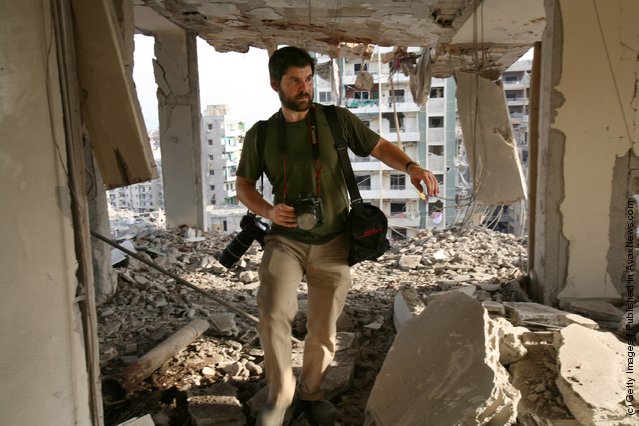
In this publication you can see some best pictures of photographer Chris Hondros, who was killed on April 20, 2011 by a rocket-propelled grenade (RPG) in Misrata, Libya.
Photo: “Getty Images” photographer Chris Hondros (1970–2011) walks the ruins of a building August 21, 2006 in southern Beirut, Lebanon. (Photo by Getty Images)
Photo: “Getty Images” photographer Chris Hondros (1970–2011) walks the ruins of a building August 21, 2006 in southern Beirut, Lebanon. (Photo by Getty Images)
23 Apr 2011 11:13:00,post received
0 comments
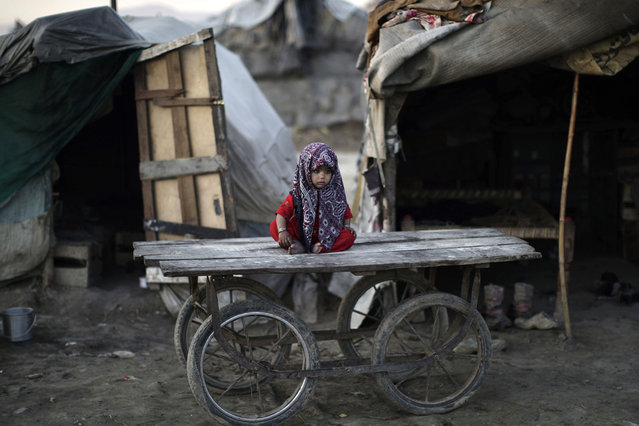
A Pakistani child, whose family was displaced by 2010 floods from a village in Pakistan's Sindh province, sits on a wooden cart outside her family's makeshift home, in a slum on the outskirts of Islamabad, on February 8, 2013. (Photo by Muhammed Muheisen/AP Photo)
29 Apr 2013 11:49:00,post received
0 comments

Denis Rouvre is a portraitist, living and working in France. His photos have been nationally and internationally published. Rouvre’s photo series have been widely exhibited in France and abroad. He has also published several books, and his numerous prizes include World Press Photo award, and a Sony World Photography Award. Photo: Asia Argento. (Photo by Denis Rouvre)
19 Nov 2013 08:01:00,post received
0 comments

“Potholes” is a series of photographs depicting the concave street cracks and holes as a collection of imaginative tableaux in the city. Captured within the backdrops of New York City, Los Angeles, Toronto and Montreal, the sets explore the urban flaws as a playground creating a multitude of uses out of the potholes. Directly engaging the street and the city, the highly imaginative series transforms the bad into good, creating a tongue-in-cheek collection that is at once contextual and surreal”. (Photo and caption by Davide Luciano)
03 Dec 2013 06:15:00,post received
0 comments
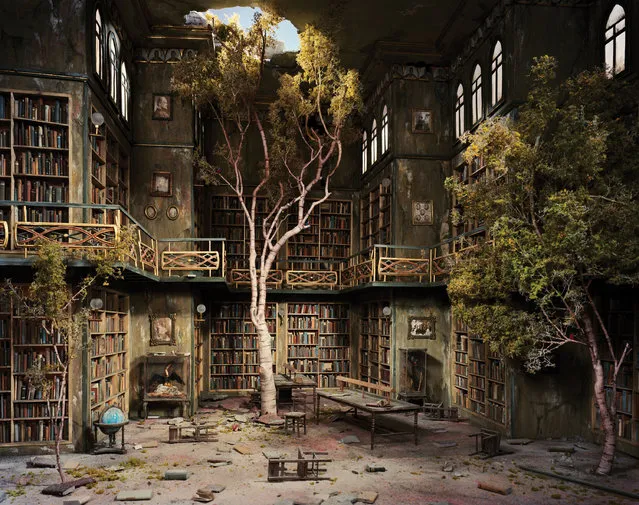
Photographer Lori Nix hand-crafted dioramas are fictional scenes of a post-apocalyptic world in which plants and decay reclaim both grand and mundane structures. Each structure is built in Nix's living room and can take over half a year to build. Photo: Library, 2007. Photographer Lori Nix says this is the most popular image she has made for this project that she calls “The City”. (Photo by Lori Nix)
18 Apr 2014 10:02:00,post received
0 comments