Loading...
Done
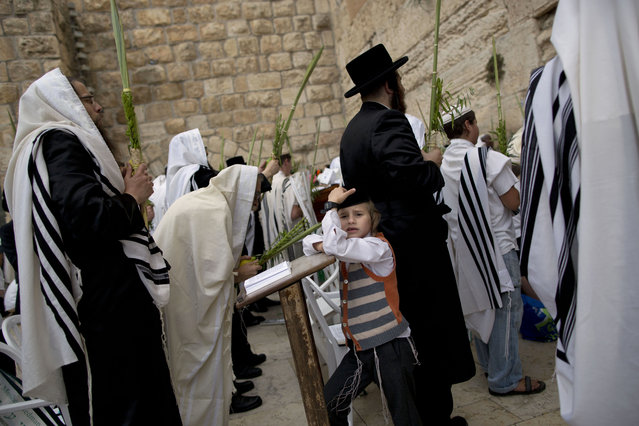
Covered in prayer shawls, Ultra-Orthodox Jewish men participate in a blessing during the holiday of Sukkot, in front of the Western Wall, the holiest site where Jews can pray in Jerusalem's Old City, Wednesday, September 30, 2015. The Cohanim, believed to be descendants of priests who served God in the Jewish Temple before it was destroyed, perform a blessing ceremony of the Jewish people three times a year during the festivals of Passover, Shavuot and Sukkot. (Photo by Oded Balilty/AP Photo)

Covered in prayer shawls, Ultra-Orthodox Jewish men participate in a blessing during the holiday of Sukkot, in front of the Western Wall, the holiest site where Jews can pray in Jerusalem's Old City, Wednesday, September 30, 2015. The Cohanim, believed to be descendants of priests who served God in the Jewish Temple before it was destroyed, perform a blessing ceremony of the Jewish people three times a year during the festivals of Passover, Shavuot and Sukkot. (Photo by Oded Balilty/AP Photo)
Details
03 Oct 2015 08:00:00
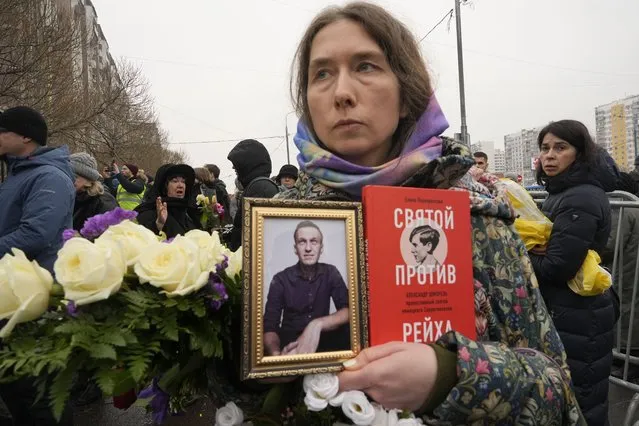
A woman holds a portrait of Alexei Navalny and a book titled “A saint against the Reich” as people gather outside the Church of the Icon of the Mother of God Soothe My Sorrows, in Moscow, Russia, Friday, March 1, 2024. Relatives and supporters of Alexei Navalny are bidding farewell to the opposition leader at a funeral in southeastern Moscow, following a battle with authorities over the release of his body after his still-unexplained death in an Arctic penal colony. (Photo by AP Photo)

A woman holds a portrait of Alexei Navalny and a book titled “A saint against the Reich” as people gather outside the Church of the Icon of the Mother of God Soothe My Sorrows, in Moscow, Russia, Friday, March 1, 2024. Relatives and supporters of Alexei Navalny are bidding farewell to the opposition leader at a funeral in southeastern Moscow, following a battle with authorities over the release of his body after his still-unexplained death in an Arctic penal colony. (Photo by AP Photo)
Details
02 Mar 2024 00:49:00
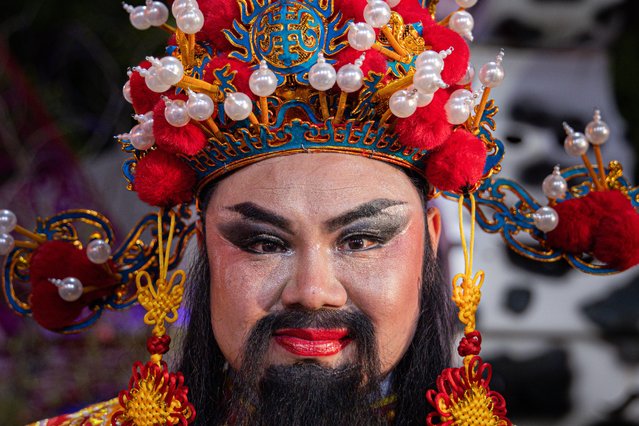
God of Wealth arrives at the Lunar New Year celebration at Thean Hou Temple on February 10, 2024, in Kuala Lumpur, Malaysia. Chinese New Year in Malaysia is marked by family gatherings, festive adornments and traditional rituals embodying a spirit of hope and renewal for the year ahead, and aims to bring joy and prosperity to all while fostering a sense of unity and hope for a successful Year of the Dragon. (Photo by Annice Lyn/Getty Images)

God of Wealth arrives at the Lunar New Year celebration at Thean Hou Temple on February 10, 2024, in Kuala Lumpur, Malaysia. Chinese New Year in Malaysia is marked by family gatherings, festive adornments and traditional rituals embodying a spirit of hope and renewal for the year ahead, and aims to bring joy and prosperity to all while fostering a sense of unity and hope for a successful Year of the Dragon. (Photo by Annice Lyn/Getty Images)
Details
18 May 2024 00:19:00
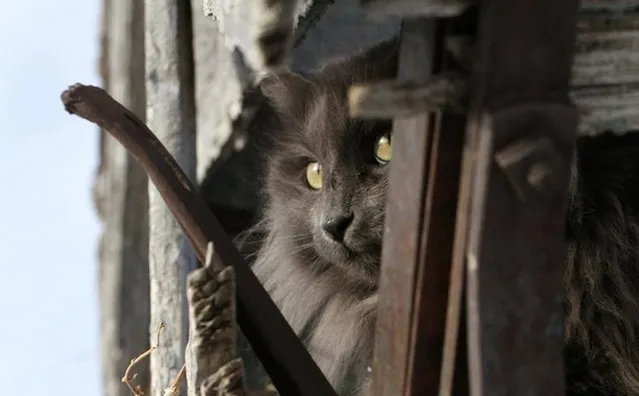
Sygmond The Grey Majestic Cat

Meet Sygmond the grey. He had the face of a king when he was a kitten. This majestic cat is even fluffier today fully grown and whenever he goes, he makes it epic.
Details
01 Apr 2014 14:43:00
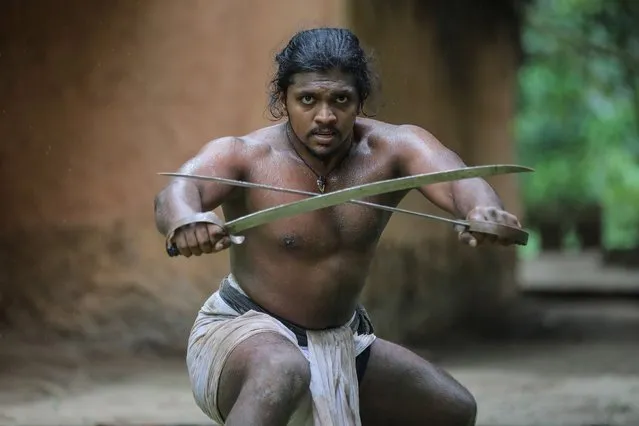
A student of the Sri Lankan ancient martial art “Angampora” performs during a practice session at the angam maduwa or fighting field, in Korathota, a suburb of Colombo, Sri Lanka, 07 September 2022. Sri Lanka's ancient martial art, Angampora, is thought to be thousands of years old. Anga translates to “body parts” and Angampora is a fighting art that uses body parts. Martial arts practitioners in Angampora were mostly in the king's service, and they were tasked with protecting the king and his kingdom. Angampora was practiced in secret for most centuries because the British, who colonized Sri Lanka, banned it in 1818 after seeing it as a threat. (Photo by Chamila Karunarathne/EPA/EFE)

A student of the Sri Lankan ancient martial art “Angampora” performs during a practice session at the angam maduwa or fighting field, in Korathota, a suburb of Colombo, Sri Lanka, 07 September 2022. Sri Lanka's ancient martial art, Angampora, is thought to be thousands of years old. Anga translates to “body parts” and Angampora is a fighting art that uses body parts. Martial arts practitioners in Angampora were mostly in the king's service, and they were tasked with protecting the king and his kingdom. Angampora was practiced in secret for most centuries because the British, who colonized Sri Lanka, banned it in 1818 after seeing it as a threat. (Photo by Chamila Karunarathne/EPA/EFE)
Details
14 Oct 2022 04:47:00
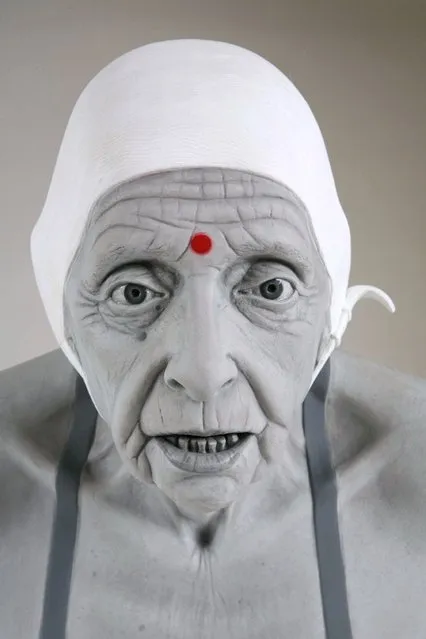
Dive by Tip Toland

Tip Toland is a sculptor and instructor living in the Seattle, Washington area. Her current focus is figurative ceramic sculpture. Tip is represented by the Nancy Margolis Gallery in New York City.

Photo: “Letter to God”, 2011. Stoneware, paint, chalk pastel, hair. (Photo by Tip Toland/Marie-Andrée Côté)
Details
02 Jun 2012 11:16:00


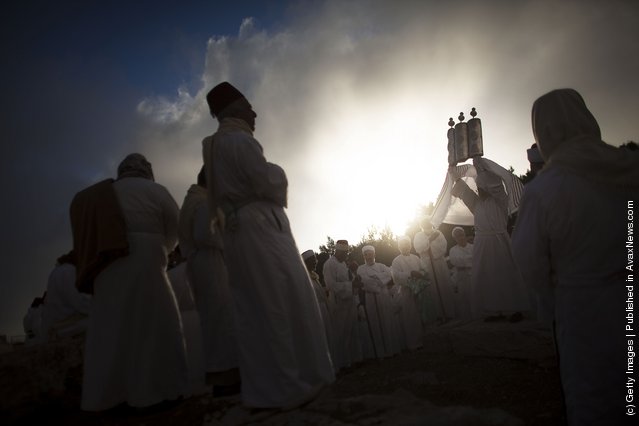
A priest of the ancient Samaritan community, wrapped in a prayer shawl, holds up a Tora scroll as worshippers pray during the holy day of Shavuot on Mount Gerizim on June 12, 2011 in Nablus, West Bank. Shavuot is a Jewish religious holiday and commemorates the anniversary of the day God is said to have given the Torah to the Israelites. (Photo by Uriel Sinai/Getty Images)
Details
13 Jun 2011 07:44:00
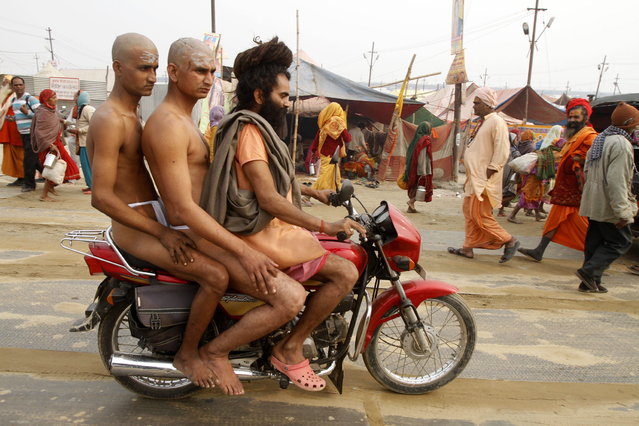
Two Hindu holy men of the Juna Akhara sect  are being take on a motorcycle by their teacher as they got delayed for a rituals that are believed to rid them of all ties in this life and dedicate themselves to serving God as a “Naga” or naked holy men, at Sangam, the confluence of the Ganges and Yamuna River during the Maha Kumbh festival in Allahabad, India, Wednesday, February 6, 2013. (Photo by Rajesh Kumar Singh/AP Photo)

Two Hindu holy men of the Juna Akhara sect are being take on a motorcycle by their teacher as they got delayed for a rituals that are believed to rid them of all ties in this life and dedicate themselves to serving God as a “Naga” or naked holy men, at Sangam, the confluence of the Ganges and Yamuna River during the Maha Kumbh festival in Allahabad, India, Wednesday, February 6, 2013. The significance of nakedness is that they will not have any worldly ties to material belongings, even something as simple as clothes. This ritual that transforms selected holy men to Naga can only be done at the Kumbh festival. (Photo by Rajesh Kumar Singh/AP Photo)
Details
07 Feb 2013 10:11:00