Loading...
Done
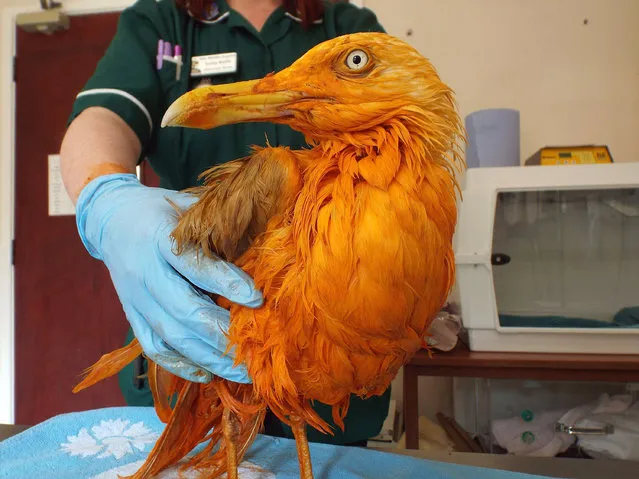
A seagull who turned bright orange after he plunged into a vat of chicken tikka masala in Beckford, England on June 9, 2016. The bird fell into a container of the food while trying to scavenge a piece of meat from a food factory bin in Wales. (Photo by Vale Wildlife Hospital/PA Wire)

A seagull who turned bright orange after he plunged into a vat of chicken tikka masala in Beckford, England on June 9, 2016. The bird fell into a container of the food while trying to scavenge a piece of meat from a food factory bin in Wales. (Photo by Vale Wildlife Hospital/PA Wire)
Details
12 Jun 2016 10:11:00
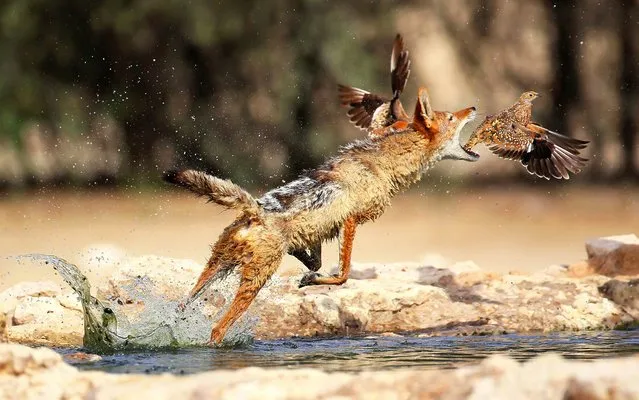
Against the scorching sun, a hungry jackal chases a flock of birds looking for a quick morning snack. Taken in South Africa's Kgalagadi Transfrontier National Park, these images capture the moment a lone hunter tries, and then succeeds, in his pursuit. (Photo by John Mullineux/Solent News)

Against the scorching sun, a hungry jackal chases a flock of birds looking for a quick morning snack. Taken in South Africa's Kgalagadi Transfrontier National Park, these images capture the moment a lone hunter tries, and then succeeds, in his pursuit. (Photo by John Mullineux/Solent News)
Details
15 Mar 2014 11:03:00
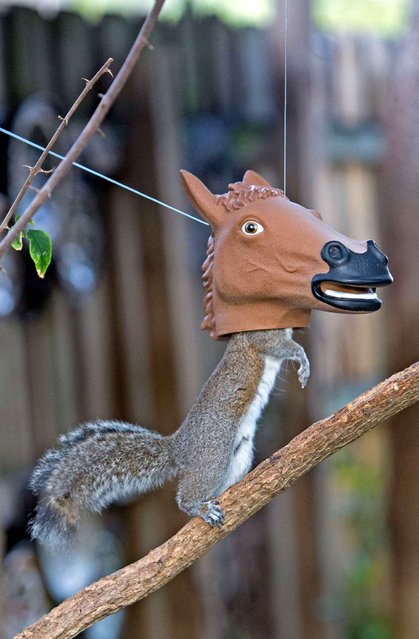
Photographer Jim Zielinski from Florida, USA, captured this hilarious moment when a squirrel spied a tasty treat inside a novelty horse's head bird feeder in his back garden. (Photo by Jim Zielinski/Caters News)

Photographer Jim Zielinski from Florida, USA, captured this hilarious moment when a squirrel spied a tasty treat inside a novelty horse's head bird feeder in his back garden. (Photo by Jim Zielinski/Caters News)
Details
24 Mar 2014 06:55:00


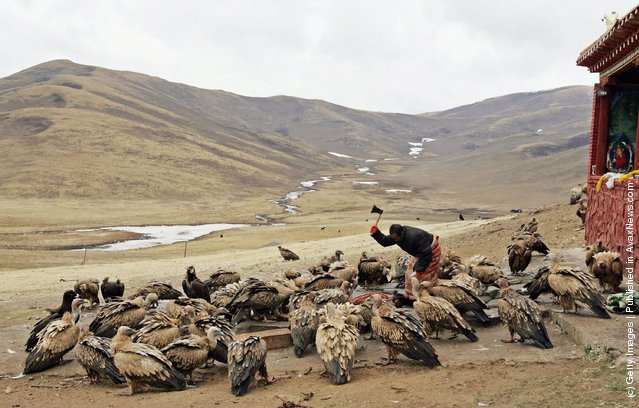
“Sky burial or ritual dissection was once a common funerary practice in Tibet wherein a human corpse is cut in specific locations and placed on a mountaintop, exposing it to the elements or the mahabhuta and animals – especially to birds of prey. The location of the sky burial preparation and place of execution are understood in the Vajrayana traditions as charnel grounds. In Tibet the practice is known as jhator, which literally means, «giving alms to the birds»”. – Wikipedia

Photo: A burial master chops bones of a body to feed vultures during a celestial burial ceremony on April 19, 2006 in Dari County of Guoluo Prefecture, Qinghai Province, northwest China. Celestial burial is a traditional funeral of Tibetan people, which began in the 7th century. (Photo by China Photos/Getty Images)
Details
18 Jun 2011 12:12:00
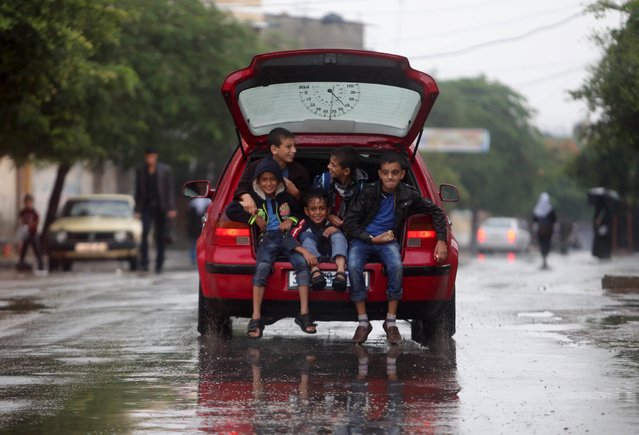
Palestinian schoolboys sit in the trunk of a car as they go to school on a rainy day in Khan Younis, in the southern Gaza Strip, October 7, 2015. (Photo by Ibraheem Abu Mustafa/Reuters)

Palestinian schoolboys sit in the trunk of a car as they go to school on a rainy day in Khan Younis, in the southern Gaza Strip, October 7, 2015. (Photo by Ibraheem Abu Mustafa/Reuters)
Details
22 Nov 2015 08:02:00
Courtney Stodden attends the finale of “Celebs Go Dating” TV show filming at Dirty Martini in London, England on July 26, 2017. (Photo by Beretta/Sims/Rex Features/Shutterstock)

Courtney Stodden attends the finale of “Celebs Go Dating” TV show filming at Dirty Martini in London, England on July 26, 2017. (Photo by Beretta/Sims/Rex Features/Shutterstock)
Details
30 Jul 2017 05:31:00
Partners Juliet Hockaday (22) and Sarah Poole (22) pose for a portrait at All Things Go on the first day of the music festival, on September 28, 2024 in Columbia, MD. (Photo by Maansi Srivastava for the Washington Post)

Partners Juliet Hockaday (22) and Sarah Poole (22) pose for a portrait at All Things Go on the first day of the music festival, on September 28, 2024 in Columbia, MD. (Photo by Maansi Srivastava for the Washington Post)
Details
09 Oct 2024 04:23:00
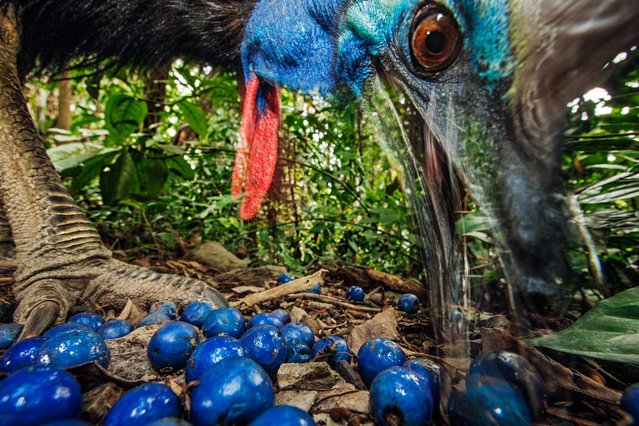
“Cassowaries are large, flightless birds related to emus and (more distantly) to ostriches, rheas, and kiwis”, writes Olivia Judson in the September issue of National Geographic magazine. (Photo by Christian Ziegler/National Geographic)

“Cassowaries are large, flightless birds related to emus and (more distantly) to ostriches, rheas, and kiwis”, writes Olivia Judson in the September issue of National Geographic magazine. How large? People-size: Adult males stand well over five foot five and top 110 pounds. Females are even taller, and can weigh more than 160 pounds. Dangerous when roused, they’re shy and peaceable when left alone. But even birds this big and tough are prey to habitat loss. The dense New Guinea and Australia rain forests where they live have dwindled. Today cassowaries might number 1,500 to 2,000. And because they help shape those same forests – by moving seeds from one place to another – “if they vanish”, Judson writes, “the structure of the forest would gradually change” too. (Photo by Christian Ziegler/National Geographic)

Details
06 Jan 2014 12:21:00