Loading...
Done
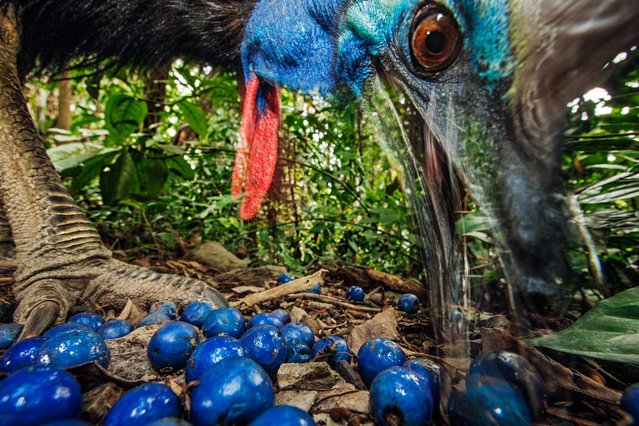
“Cassowaries are large, flightless birds related to emus and (more distantly) to ostriches, rheas, and kiwis”, writes Olivia Judson in the September issue of National Geographic magazine. (Photo by Christian Ziegler/National Geographic)

“Cassowaries are large, flightless birds related to emus and (more distantly) to ostriches, rheas, and kiwis”, writes Olivia Judson in the September issue of National Geographic magazine. How large? People-size: Adult males stand well over five foot five and top 110 pounds. Females are even taller, and can weigh more than 160 pounds. Dangerous when roused, they’re shy and peaceable when left alone. But even birds this big and tough are prey to habitat loss. The dense New Guinea and Australia rain forests where they live have dwindled. Today cassowaries might number 1,500 to 2,000. And because they help shape those same forests – by moving seeds from one place to another – “if they vanish”, Judson writes, “the structure of the forest would gradually change” too. (Photo by Christian Ziegler/National Geographic)
Details
06 Jan 2014 12:21:00
Spectators dressed as leprechauns attend St Patrick's Day parade in Dublin on March 17, 2014. (Photo by Peter Muhly/AFP Photo)

Spectators dressed as leprechauns attend St Patrick's Day parade in Dublin on March 17, 2014. (Photo by Peter Muhly/AFP Photo)
Details
18 Mar 2014 09:12:00
Pedestrians look at “doll” model Lulu Hashimoto standing on the street during a photo opportunity for Reuters in Tokyo, Japan August 23, 2017. (Photo by Kim Kyung-Hoon/Reuters)

Pedestrians look at “doll” model Lulu Hashimoto standing on the street during a photo opportunity for Reuters in Tokyo, Japan August 23, 2017. (Photo by Kim Kyung-Hoon/Reuters)
Details
25 Aug 2017 08:27:00
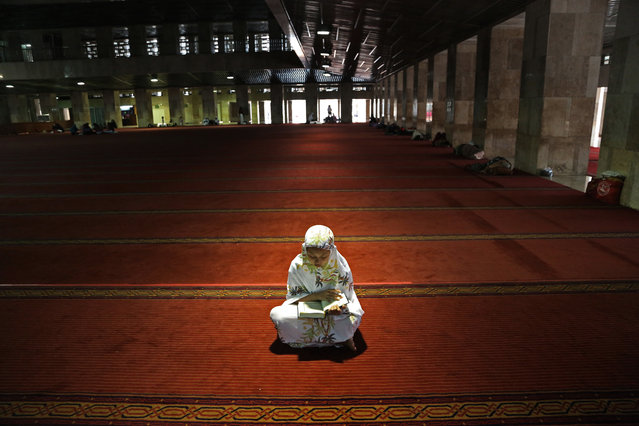
A Muslim woman reads the Quran following noon prayers on the first day of the holy fasting month of Ramadan at Istiqlal Mosque in Jakarta, Indonesia, Monday, June 6, 2016. (Photo by Tatan Syuflana/AP Photo)

A Muslim woman reads the Quran following noon prayers on the first day of the holy fasting month of Ramadan at Istiqlal Mosque in Jakarta, Indonesia, Monday, June 6, 2016. Devout Muslims began to celebrate Ramadan, the holiest month in the Islamic calendar, refraining from eating, drinking, smoking and sеx from sunrise to sunset. (Photo by Tatan Syuflana/AP Photo)
Details
07 Jun 2016 13:04:00
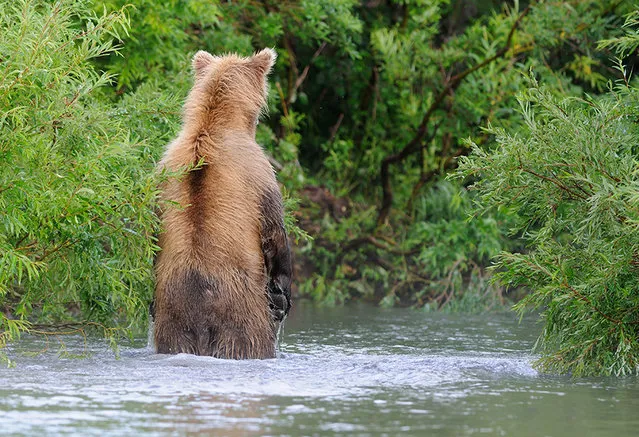
Where's the fish?/n. South Kamchatka Sanctuary<><>South Kamchatka Sanctuary; Kuril Lake; Kamchatka; bear; salmon; spawning

Igor Shpilenok works in the reserve at Kamchatka, Russia. Igor is a fellow of the International League of Conservation Photographers and a winner of the 2006 BBC Wildlife Photographer Competition. Igor’s work has been published in numerous international and Russian magazines, including Smithsonian, National Wildlife, Geo, and BBC Wildlife.

“How does a bear behave when encounter a human? In most cases he runs away. But before running he almost always would rise to stand on his rear feet. And this behavior does not indicate the attack, as many people think...” – Igor Shpilenok. (Photo by Igor Shpilenok via Wildlife Photo Russia)
Details
16 Sep 2012 12:54:00
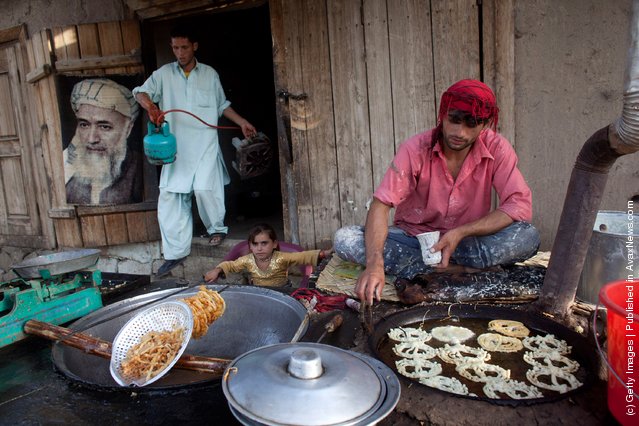
Afghans Prepare For Eid ul-Fitr

“Eid ul-Fitr, Eid al-Fitr, Id-ul-Fitr, or Id al-Fitr, often abbreviated to Eid, is a Muslim holiday that marks the end of Ramadan, the Islamic holy month of fasting (sawm). Eid is an Arabic word meaning “festivity”, while Fiṭr means “breaking (the fast)”. The holiday celebrates the conclusion of the twenty nine or thirty days of dawn-to-sunset fasting during the entire month of Ramadan. The first day of Eid, therefore, falls on the first day of the month Shawwal”. – Wikipedia
Details
30 Aug 2011 12:05:00
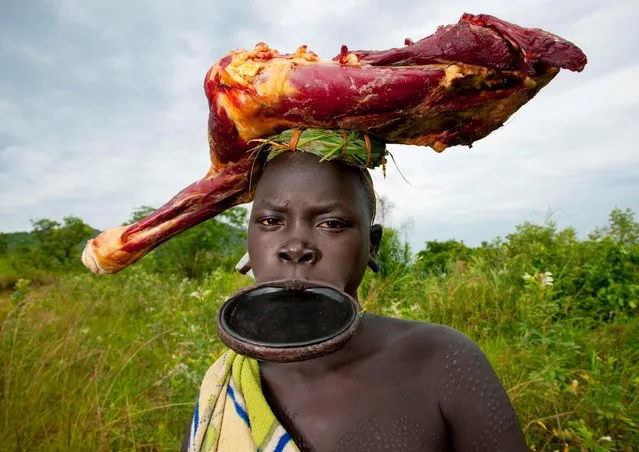
A tribeswoman sporting a huge lip plate and wearing a skinned animal carcass on her head. (Photo by Eric Lafforgue/Exclusivepix Media)

Warriors from the Suri tribe in Ethiopia still stage the savage “Donga” battles – even after many fighters have been died from their injuries. Donga stick fights take place after the harvests, the Surmas count days owing to knots on a long stem of grass or jags on the trunk of a tree dedicated to that specific use. Here: A tribeswoman sporting a huge lip plate and wearing a skinned animal carcass on her head. (Photo by Eric Lafforgue/Exclusivepix Media)
Details
22 Apr 2017 09:30:00
In this Tuesday, July 14, 2015, photo, Phoe Thaw, center, a member of the White New Blood lethwei fighters club, a Myanmar traditional martial-arts club which practices a rough form of kickboxing, stretches during a practice session in their gym on a street in Oakalarpa, north of Yangon, Myanmar. (Photo by Gemunu Amarasinghe/AP Photo)

In this Tuesday, July 14, 2015, photo, Phoe Thaw, center, a member of the White New Blood lethwei fighters club, a Myanmar traditional martial-arts club which practices a rough form of kickboxing, stretches during a practice session in their gym on a street in Oakalarpa, north of Yangon, Myanmar. Three of the club's members competed this summer on a stage a world away from the street gym: a mixed-martial-arts “One Championship” event broadcast globally on cable television networks, where fighters could receive $1,000 for each fight, according to coach Myint Zaw who started the traditional fighters' club 15 years ago. (Photo by Gemunu Amarasinghe/AP Photo)
Details
07 Sep 2015 14:00:00