A boy doing chin-ups as he takes entrance exams at the Moscow Suvorov Military School in Moscow, Russia on July 11, 2019. (Photo by Sergei Karpukhin/Russian News Agency TASS via Getty Images)
A reveller from Unidos do Viradouro samba school performs during the first night of the Carnival parade at the Sambadrome in Rio de Janeiro, Brazil, April 23, 2022. (Photo by Amanda Perobelli/Reuters)
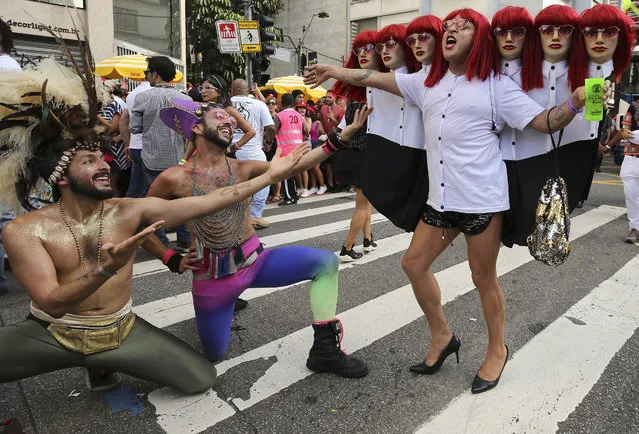
Carnival revelers perform during the Academicos do Baixo Augustaa carnival “bloco” parade in Sao Paulo, Brazil, Sunday, February 24, 2019. (Photo by Andre Penner/AP Photo)
English actress Lily James treats herself to a bougie beverage while getting ready for the London premiere of her new film “What's Love Got to Do With It?” in the second decade of February 2023. (Photo by Instagram)
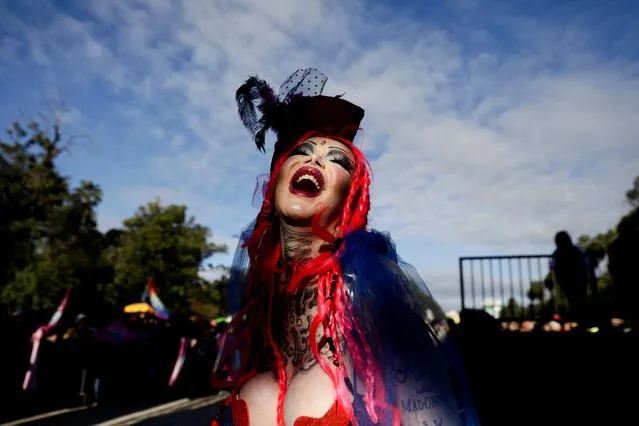
A reveller takes part in the “Free Parade” during LGBTIQ Pride Month in Porto Alegre, state of Rio Grande do Sul, Brazil on June 12, 2022. (Photo by Diego Vara/Reuters)
“There’s so much that Snow White has been deprived of in terms of having the proper time to really develop and hone who she is. She’s put in jail at the beginning of her life, so she’s a stunted person. She has a really idealized concept of what the world is, and how people should live, and how wonderful things all can be, and there is this debilitating isolation that she feels because she has been locked away in a little cell for seven years. ...
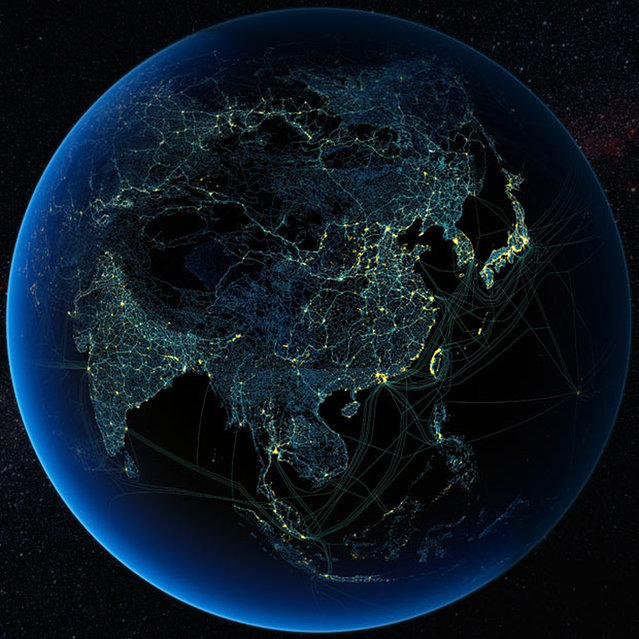
Defined according to wikipedia it is “a recent and informal geologic chronological term that serves to mark the evidence and extent of human activities that have had a significant global impact on the Earth’s ecosystems. The term was coined by ecologist Eugene Stoermer but has been widely popularized by the Nobel Prize-winning atmospheric chemist Paul Crutzen.”
The images here where created by Felix Pharand-Deschenes depicting how various human influences, from road and rail, to internet cables and airlines create significant patterns covering the Earth. What can we learn from these patterns in how they are influencing the environment
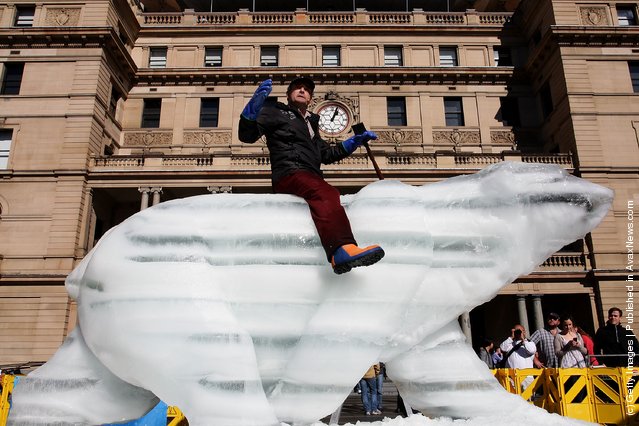
British artist, Mark Coreth sits on top of the “Sydney Ice Bear” carved from a 10 tonne block of ice to illustrate how humans affect climate change in the Arctic at Customs House on June 3, 2011 in Sydney, Australia. The public will be welcomed to touch the bear, and leave an imprint which will begin the melting process and act as a metaphor for how humans affect the environment. The ice bear's has visited six cities on it's global tour since 2009; the visit to Sydney coincides with World Environment Day on June 5. (Photo by Lisa Maree Williams/Getty Images)