Loading...
Done
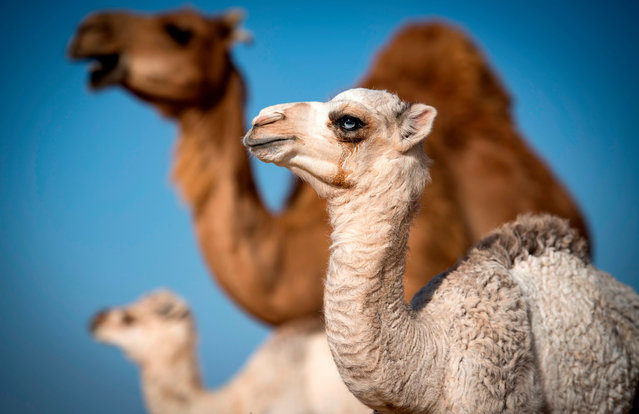
A camel calf is seen among a herd in the desert near Dakhla in Morocco-administered Western Sahara, on October 13, 2019. In the Oued Eddahab desert in Western Sahara, Habiboullah Dlimi raises dairy and racing camels just like his ancestors used to, but with a little help from modern technology. While his animals roam free and are milked traditionally, by hand, at dawn and dusk, they are watched over by hired herders and Dlimi follows GPS coordinates across the desert in a 4X4 vehicle to reach them. (Photo by Fadel Senna/AFP Photo)

A camel calf is seen among a herd in the desert near Dakhla in Morocco-administered Western Sahara, on October 13, 2019. In the Oued Eddahab desert in Western Sahara, Habiboullah Dlimi raises dairy and racing camels just like his ancestors used to, but with a little help from modern technology. While his animals roam free and are milked traditionally, by hand, at dawn and dusk, they are watched over by hired herders and Dlimi follows GPS coordinates across the desert in a 4X4 vehicle to reach them. (Photo by Fadel Senna/AFP Photo)
Details
24 Nov 2019 00:03:00
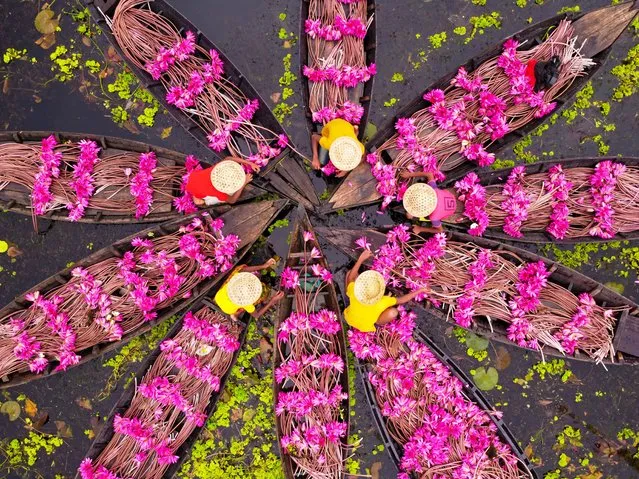
Farmers arrange bunches of water lilies after harvesting them from the wetlands in Barishal, Bangladesh on March 21, 2023. Floating through 10,000 acres of canal, farmers use their little boats to fetch the flowers. They break through the layer of water lilies on the surface of the water as they practice the traditional craft of picking water lilies by hand. Every flower is carefully hand-picked, collected inside the farmers' little wooden boat, tied in bundles, and sold to markets. After working for an entire day, a farmer can pick around 80 to 120 bundles of water lilies. Water lily harvesting is a major source of income for more than 250 families in the area. (Photo by Joy Saha/Cover Images)

Farmers arrange bunches of water lilies after harvesting them from the wetlands in Barishal, Bangladesh on March 21, 2023. Floating through 10,000 acres of canal, farmers use their little boats to fetch the flowers. (Photo by Joy Saha/Cover Images)
Details
01 May 2023 04:00:00
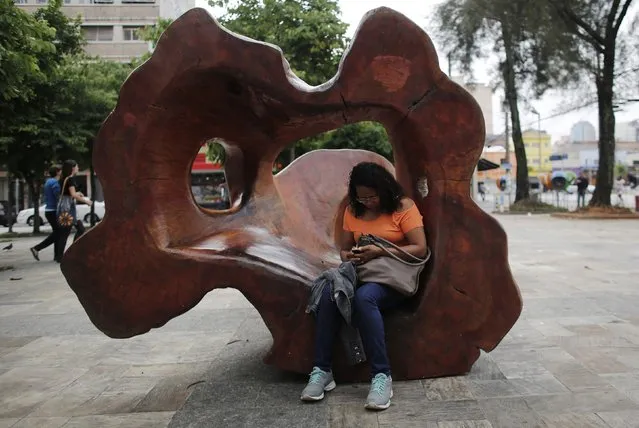
A resident types a text message on her mobile phone, as she sits on a bench made from a tree, which is a creation by Brazilian artist Hugo Franca at Largo da Batata square in Sao Paulo March 17, 2015. (Photo by Nacho Doce/Reuters)

A resident types a text message on her mobile phone, as she sits on a bench made from a tree, which is a creation by Brazilian artist Hugo Franca at Largo da Batata square in Sao Paulo March 17, 2015. Franca, a designer from Sao Paulo is working with the city to make use of fallen trees to turn them into sculpture furniture to line the city's parks, streets and plazas. Brazil's largest city was slammed by several strong storms this rainy season that brought with them heavy rain, lightning and winds as high as 90 kilometres (55 miles) per hour. (Photo by Nacho Doce/Reuters)
Details
20 Mar 2015 11:34:00
Anatomical Toys By Jason Freeny

New York based artist Jason Freeny slices open pop-culture characters to reveal their insides. He takes vinyl toys of annimated icons such as Stewie Griffin, Nemo and Mario, and stuffs them with Sculpey modelling clay. He then carves out bones aqnd organs using dental tools.
Details
17 Aug 2013 07:10:00
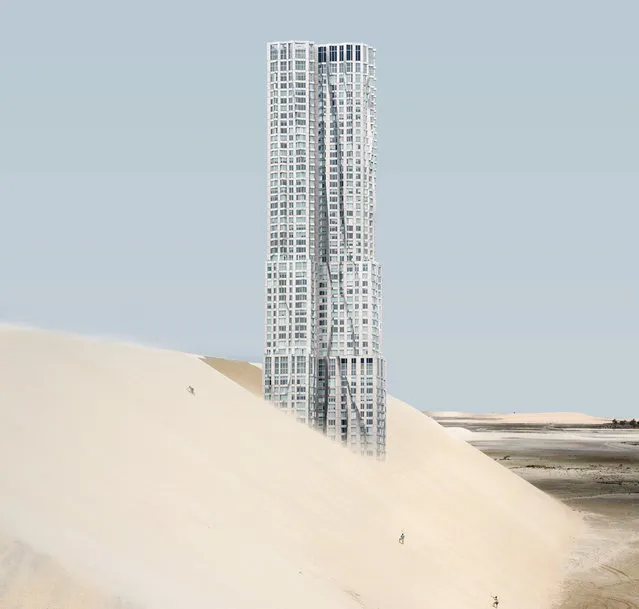
8 Spruce Street/New York By Gehry. Repponen has designed everything from skateboards and milk bottles to concepts for Estonia’s Olympic uniforms. (Photo by Anton Repponen/The Guardian)

Using digital editing, designer Anton Repponen places Manhattan buildings in desolate landscapes, “inviting viewers to see them as if for the first time”. Here: 8 Spruce Street/New York By Gehry. Photo by Anton Repponen/The Guardian)
Details
14 Jun 2016 12:42:00
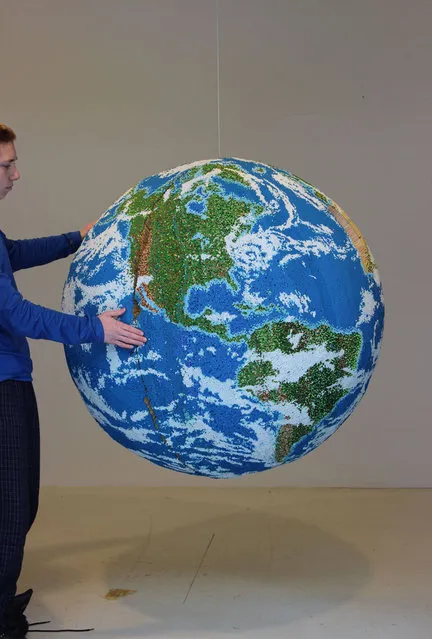
Giant Globe Made From Matches By Andy Yoder

Do you ever get the irresistible urge to light matches on fire, especially if there are many of them in one place? If you do, you shouldn’t come near the giant globe made by an American artist Andy Yoder. The thing is, this 42” globe is made entirely out of matches on the outside, while the center was made using plywood, foam, and cardboard. It took Andy two years to complete his work, finally finishing in 2014. Each of the matches used was hand-painted and then glued in place. Also, in order to prevent his masterpiece from catching fire, Andy Yoder has doused his work with a flame repellant.
Details
27 Feb 2015 03:32:00
All In By Graham MacIndoe

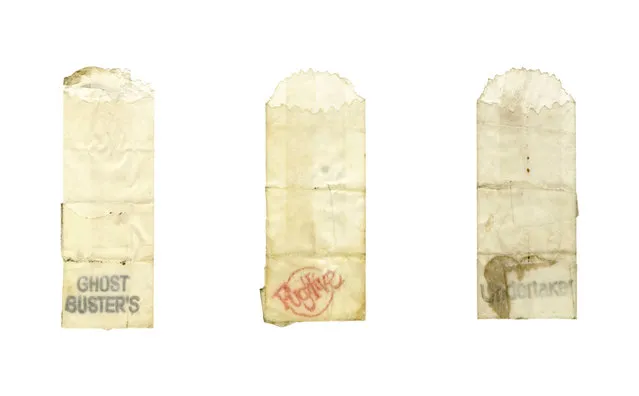
In order to get a glimpse into the visual culture of drug trade in New York City, a British photographer Graham MacIndoe collected more than one hundred bags, which were used to sell heroin. These bags feature references to various movies, fast-food restaurants, and luxury brands. This could be a way to mark various purities of heroin, or maybe different drug dealers use different markers to distinguish between each other. We can only wonder where Graham has acquired all these heroin bags. Hopefully, he picked them up after their contents were emptied. (Photo by Graham MacIndoe)
Details
01 Dec 2014 14:15:00
Food In Faces By Victor Nunes

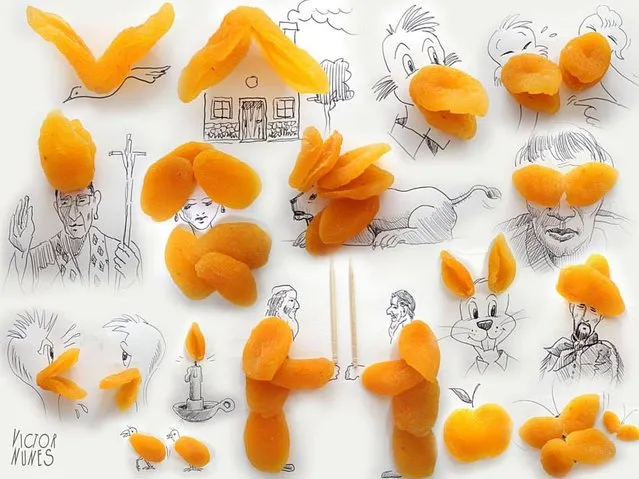
Artist Victor Nunes combines every-day objects with simple illustrations to turn them into pictures of faces, animals and other playful scenes. His images invite us to look at the world differently and find creative images in our surroundings. Nunes’ art is a great example of pareidolia, which is our propensity to give meaning to random objects (like in this post about seeing faces in random objects). It’s the reason why we associate a smiley face with a human face and why some of Nunes’ pieces of popcorn or bread resemble faces to us.
Details
02 Feb 2014 11:58:00