Loading...
Done
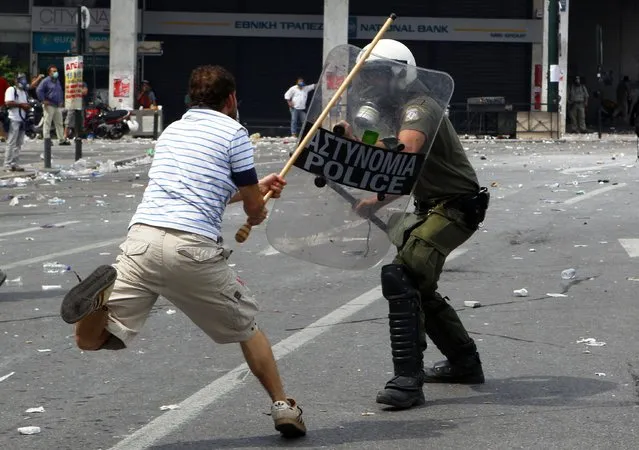
A protester clashes with a police officer in Athens' central Syntagma (Constitution) Square in this June 15, 2011 file photo. Greece triggered the regional financial crisis in 2009 when a far higher budget deficit than previously calculated emerged. (Photo by Yannis Behrakis/Reuters)

A protester clashes with a police officer in Athens' central Syntagma (Constitution) Square in this June 15, 2011 file photo. Greece triggered the regional financial crisis in 2009 when a far higher budget deficit than previously calculated emerged. The collapse of talks with creditors in Paris last November set off a month-long sequence of events leading to elections this week and proving Greece is still the region's weak link. The vote is expected to be won by Syriza, a far-left party opposed to the bailout, worrying investors and creditors alike. (Photo by Yannis Behrakis/Reuters)
Details
22 Jan 2015 13:44:00
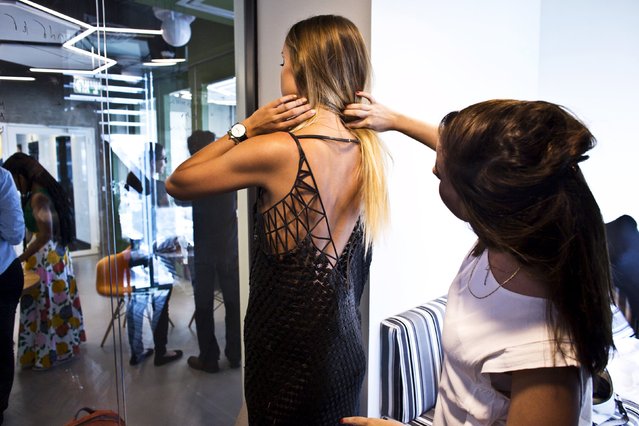
Israeli fashion design student from the Shenkar College of Engineering and Design Danit Peleg (R) assists a fashion blogger to wear an outfit from her graduate collection during a conference on 3-D printing in Tel Aviv, Israel September 3, 2015. (Photo by Nir Elias/Reuters)

Israeli fashion design student from the Shenkar College of Engineering and Design Danit Peleg (R) assists a fashion blogger to wear an outfit from her graduate collection during a conference on 3-D printing in Tel Aviv, Israel September 3, 2015. Peleg, 27, says she spent over 2000 hours to create her graduate collection which is made solely from home 3-D printers. International fashion bloggers, taking part in a project supported by “Stand With Us Israel fellowship”, a non-profit organisation, attended the conference and tried on Peleg's clothing before listening to her talk about her collection. (Photo by Nir Elias/Reuters)
Details
05 Sep 2015 12:08:00
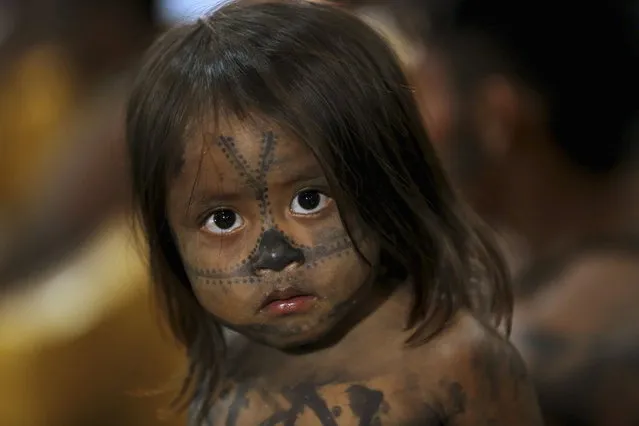
A Munduruku Indian child is pictured at the Planalto Palace, where a meeting with Minister of the General Secretariat of the Presidency of Brazil Gilberto Carvalho was being held with other Munduruku Indians, in Brasilia, June 4, 2013. (Photo by Ueslei Marcelino/Reuters)

A Munduruku Indian child is pictured at the Planalto Palace, where a meeting with Minister of the General Secretariat of the Presidency of Brazil Gilberto Carvalho was being held with other Munduruku Indians, in Brasilia, June 4, 2013. President Dilma Rousseff's government sought on Tuesday to defuse mounting conflicts with indigenous groups over its decision to stop setting aside farm land for Indians and plans to build more hydroelectric dams in the Amazon. The government flew 144 Munduruku Indians to Brasilia for talks to end a week-long occupation of the controversial Belo Monte dam on the Xingu river, a huge project aimed at feeding Brazil's fast-growing demand for electricity. (Photo by Ueslei Marcelino/Reuters)
Details
06 Jun 2013 09:25:00
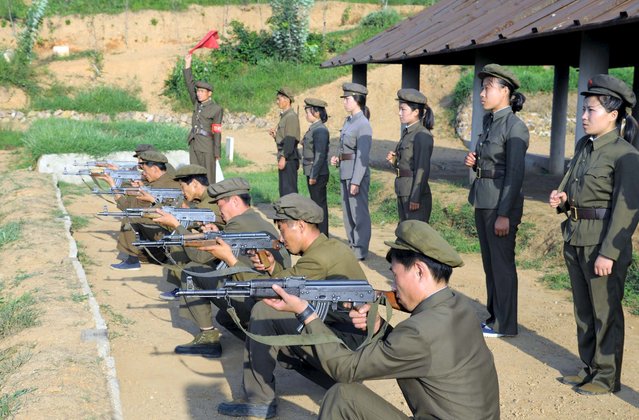
North Koreans who signed up to join the army train in the midst of political tension with South Korea, in this undated photo released by North Korea's Korean Central News Agency (KCNA) in Pyongyang August 23, 2015. (Photo by Reuters/KCNA)

North Koreans who signed up to join the army train in the midst of political tension with South Korea, in this undated photo released by North Korea's Korean Central News Agency (KCNA) in Pyongyang August 23, 2015. Top aides to the leaders of North and South Korea resumed talks on Sunday after negotiating through the night in a bid to ease tensions involving an exchange of artillery fire that brought the peninsula to the brink of armed conflict. (Photo by Reuters/KCNA)
Details
25 Aug 2015 10:08:00
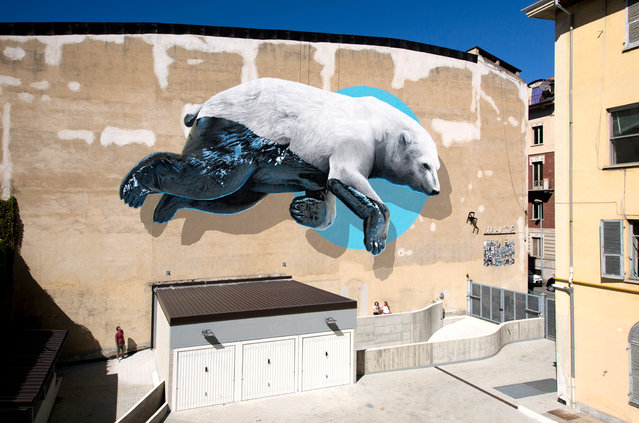
A polar bear whose bottom half is caked in oily black gunk. A whale wrapped in striped fabric: a pseudo straightjacket. These are the messes climate change leaves behind, the things we know are happening but often don’t have the opportunity to see with our own eyes. Swiss street art duo Christian Rebecchi and Pablo Togni, otherwise known as NeverCrew, met in art school when they were 15 and started making work together soon after. As a team, the artists adorn the world with eye-popping and gut-wrenching images depicting the consequences of humanity’s actions on earth. Here: “Black machine” mural painting and installation on the Colosseo theater in Turin, Italy, in September 2015. (Photo by NeverCrew/The Huffington Post)

A polar bear whose bottom half is caked in oily black gunk. A whale wrapped in striped fabric: a pseudo straightjacket. These are the messes climate change leaves behind, the things we know are happening but often don’t have the opportunity to see with our own eyes. Swiss street art duo Christian Rebecchi and Pablo Togni, otherwise known as NeverCrew, met in art school when they were 15 and started making work together soon after. As a team, the artists adorn the world with eye-popping and gut-wrenching images depicting the consequences of humanity’s actions on earth. (Photo by NeverCrew/The Huffington Post)
Details
13 Aug 2016 11:09:00
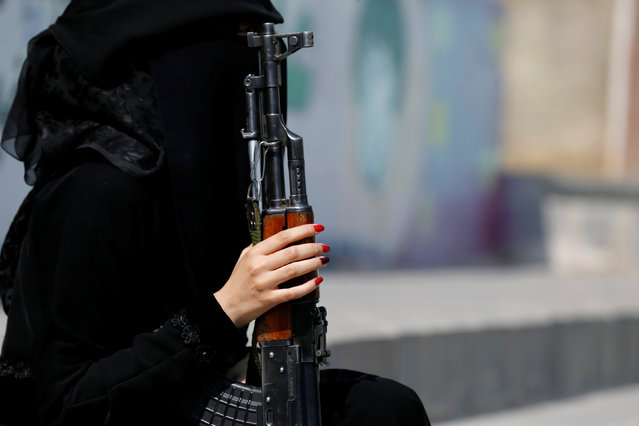
A woman loyal to the Houthi movement holds a rifle as she takes part in a parade to show support to the movement in Sanaa, Yemen September 6, 2016. Dressed in the head to toe garments which obscured their faces, the female fighters brandished machine guns, rocket launchers and grenades. The women also wore hats as they showed support for the Shiite Houthi rebels. The Saudi-led Arab coalition launched a military campaign against the Houthis and their allies in March 2015. It was after the rebels closed in on Gulf-backed President Abedrabbo Mansour Hadi in his southern refuge of Aden, forcing him into exile. The female protesters have pledged to remain supportive and do whatever they can to back the ongoing resistance against the kingdom. Yemen is in the grip of its most severe crisis in years, and is on the brink of civil war. (Photo by Khaled Abdullah/Reuters)

A woman loyal to the Houthi movement holds a rifle as she takes part in a parade to show support to the movement in Sanaa, Yemen September 6, 2016. The Saudi-led Arab coalition launched a military campaign against the Huthis and their allies in March 2015, after the rebels closed in on Gulf-backed President Abedrabbo Mansour Hadi in his southern refuge of Aden, forcing him into exile. (Photo by Khaled Abdullah/Reuters)
Details
07 Sep 2016 10:24:00
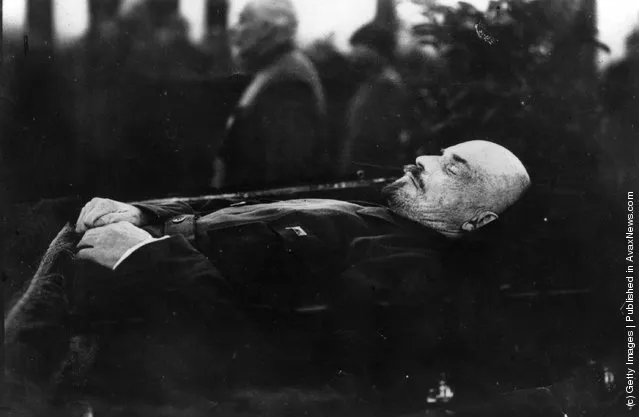
1924:  Vladimir Ilyich Lenin lying in state in the Kremlin

Photo: Vladimir Ilyich Lenin (1870 – 1924) lying in state in the Kremlin. (Photo by Hulton Archive/Getty Images). 1924

Important! For the same article in Russian language click here.

Something quite intriguing is happening within Russian-speaking internet during the last few – should you type a fully academic inquiry (at least, according to Russian academic requirements) in national search engines for "Lenin's mausoleum" – the first thing you get (even in top 10 searches) is website pages talking about black magic and occult. Website authors view this construction differently, but unconditionally agree on one thing: the mausoleum of the "leader of the world proletariat” – the essence of a magical artifact, a sort of “energy vampire”. It was built with a certain purpose: to drain the energy out of miserable Soviet citizens on one hand; and to poison the anthroposphere of one-sixth part of the earth with its vibes (the exact territory that was occupied by the former Soviet Union), depriving the Russian people of will to resist on the other hand. Complete nonsense? No doubt. Nevertheless, an intriguing one. Well, probably because some oddities do exist in mausoleum's history. These oddities are the thing we are going to discuss this time. First, let me refresh you memory on the subject.
Details
16 Oct 2011 11:27:00
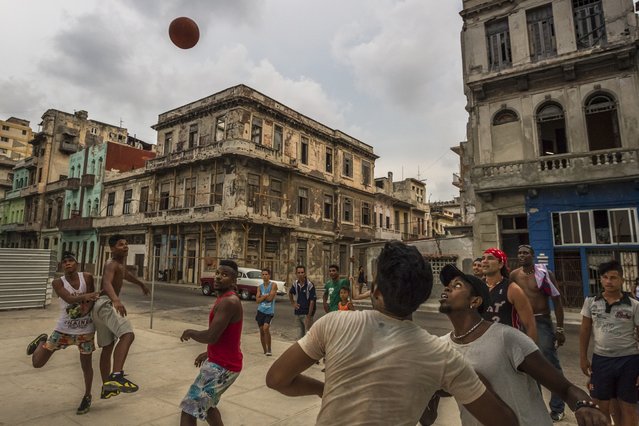
Young men play basketball on an improvised court wedged between a construction site and the shells of once grand colonial homes in Havana, July 20, 2015. As much as the young in Cuba welcome political opening and economic reform, such changes are unlikely to filter down to their lives anytime soon. (Photo by Meridith Kohut/The New York Times)

Young men play basketball on an improvised court wedged between a construction site and the shells of once grand colonial homes in Havana, July 20, 2015. As much as the young in Cuba welcome political opening and economic reform, such changes are unlikely to filter down to their lives anytime soon. (Photo by Meridith Kohut/The New York Times)
Details
07 Aug 2015 11:11:00