Loading...
Done
A woman wears a mask while carrying a dog in the street on January 22, 2020 in Wuhan, Hubei province, China. A new infectious coronavirus known as “2019-nCoV” was discovered in Wuhan as the number of cases rose to over 400 in mainland China. Health officials stepped up efforts to contain the spread of the pneumonia-like disease which medicals experts confirmed can be passed from human to human. The death toll has reached 17 people as the Wuhan government issued regulations today that residents must wear masks in public places. Cases have been reported in other countries including the United States, Thailand, Japan, Taiwan, and South Korea. (Photo by Getty Images/China Stringer Network)

A woman wears a mask while carrying a dog in the street on January 22, 2020 in Wuhan, Hubei province, China. A new infectious coronavirus known as “2019-nCoV” was discovered in Wuhan as the number of cases rose to over 400 in mainland China. Health officials stepped up efforts to contain the spread of the pneumonia-like disease which medicals experts confirmed can be passed from human to human. The death toll has reached 17 people as the Wuhan government issued regulations today that residents must wear masks in public places. Cases have been reported in other countries including the United States, Thailand, Japan, Taiwan, and South Korea. (Photo by Getty Images/China Stringer Network)
Details
31 Dec 2020 00:01:00


A North Korean soldier looks through a window at Australian Prime Minister Julia Gillard (L) and her partner Tim Mathieson (C) while they visit the United Nations Command Military Armistice Commission (UNCMAC) meeting room at the border village of Panmunjom, between South and North Korea, on April 24, 2011 South Korea. Gillard will visit Japan, the Republic of Korea and China during a bilateral tour of North Asia from April 20-27. (Photo by Jeon Heon-Kyun-pool/Getty Images)
Details
26 Apr 2011 06:48:00


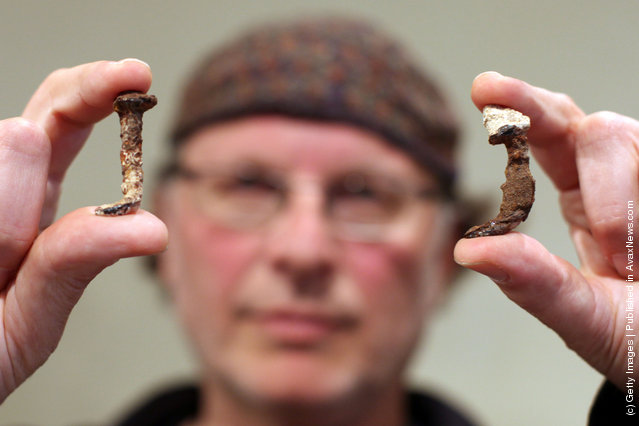
Canadian-Israeli film director Simcha Jacobovici holds two nails during a press conference on April 12, 2011. Jacobovici believes that the two nails discovered in a Jerusalem cave were used in the crucifixion of Jesus Christ. Jacobovici claims that the nails were tracked to an archeology laboratory in Tel Aviv, and though cannot be 100 per cent certain that they are the nails used in the crucifixion of Jesus, he claims if “you put two and two together and they seem to imply that these are the nails”. Experts at the Israel Antiquities Authority though cast doubt on Jacobovici's claims, and suggest that nails are commonly found in such locations. (Photo by Lior Mizrahi/Getty Images)
Details
13 Apr 2011 06:48:00


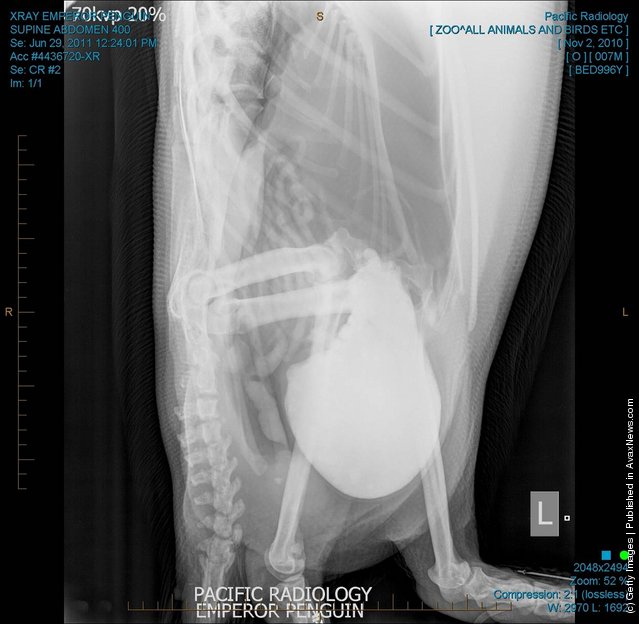
“Happy Feet” the emperor penguin that washed up on the Kapiti Coast last week, undergoes a medical examination at Wellington Zoo on June 29, 2011 in Wellington, New Zealand. The young penguin landed on NZ shores last week, after traveling over 3,000 kilometres from the antarctic. The ill penguin was operated on at Wellington Zoo several times this week to remove sand and sticks from it's stomach with hopes it will recover fully. A team of experts is likely to decide today, whether the bird will remain in captivity in New Zealand, or be transported back the the antarctic. (Photo by Hagen Hopkins/Getty Images)
Details
29 Jun 2011 11:26:00
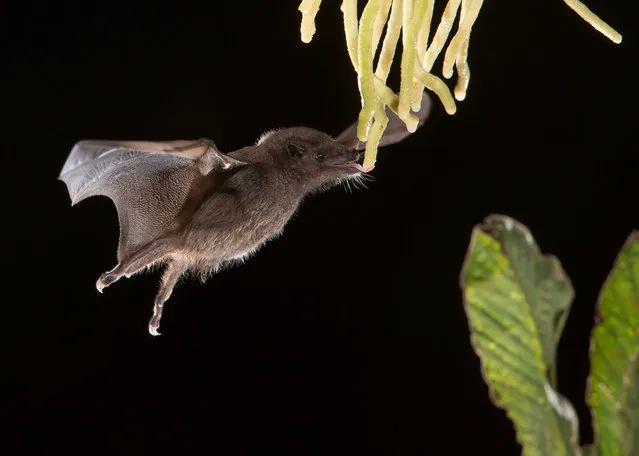
Anoura Geoffroy’s tailless bat by Nicolas Reusens. The Perfect Moment category; Adult runner up. (Photo by Nicolas Reusens/ZSL Animal Photography Prize 2015)

Attracting more than 450 entries from around the world, the winners are selected by a panel of expert judges including ZSL honorary conservation fellow and television presenter Kate Humble, and renowned ornithologist Bill Oddie. Here: Anoura Geoffroy’s tailless bat by Nicolas Reusens. The Perfect Moment category; Adult runner up. (Photo by Nicolas Reusens/ZSL Animal Photography Prize 2015)
Details
22 Nov 2015 08:04:00
A worker stands by a historic building as it is moved down the block on wheels on New York Avenue to make way for a new construction July 28, 2014 in Washington, DC. (Photo by Brendan Smialowski/AFP Photo)

A worker stands by a historic building as it is moved down the block on wheels on New York Avenue to make way for a new construction July 28, 2014 in Washington, DC. A team from Expert House Movers have been moving the historic building near 4th Street which is one of the largest structures in the DC area to be moved. (Photo by Brendan Smialowski/AFP Photo)
Details
31 Jul 2014 09:48:00
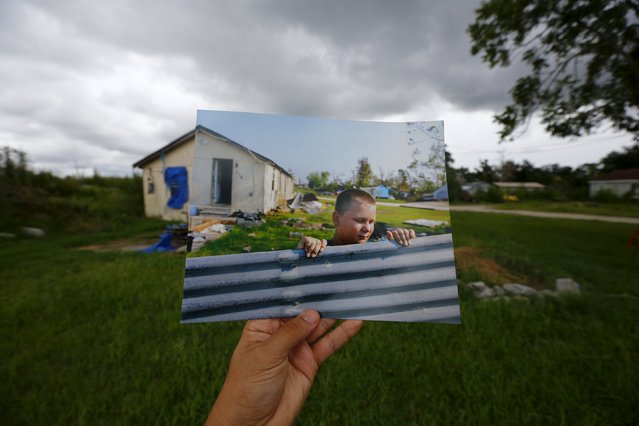
Photographer Carlos Barria holds a print of a photograph he took in 2005, as he matches it up at the same location 10 years on, in Lafitte, south of New Orleans, United States, August 16, 2015. The print shows Tyler Teal cleaning up his home, September 14, 2005, after Hurricane Katrina struck. (Photo by Carlos Barria/Reuters)

Photographer Carlos Barria holds a print of a photograph he took in 2005, as he matches it up at the same location 10 years on, in Lafitte, south of New Orleans, United States, August 16, 2015. The print shows Tyler Teal cleaning up his home, September 14, 2005, after Hurricane Katrina struck. In 2005, Hurricane Katrina triggered floods that inundated New Orleans and killed more than 1,500 people as storm waters overwhelmed levees and broke through floodwalls. (Photo by Carlos Barria/Reuters)
Details
23 Aug 2015 10:00:00
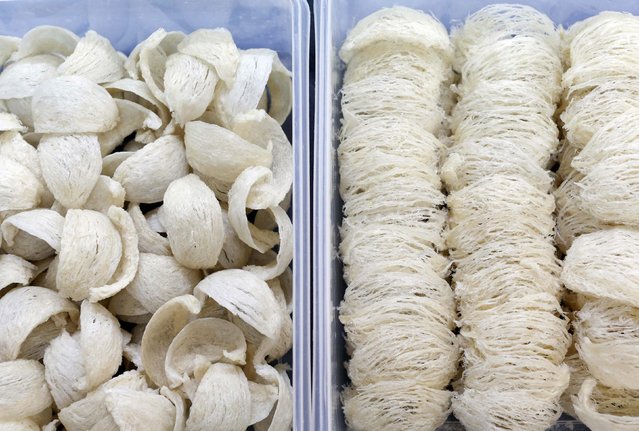
Two styles of cleaned bird's nest, Yan Zhan (L) and Su Zhan (R) await repacking at a processing plant in Kuala Lumpur, February 17, 2015. Prized in China for is alleged health benefits for hundreds of years, nests made from swiftlets' saliva are being mixed into coffee and cereal as the Southeast Asian producers of the delicacy seek to broaden its appeal, and their profit margins. (Photo by Olivia Harris/Reuters)

Two styles of cleaned bird's nest, Yan Zhan (L) and Su Zhan (R) await repacking at a processing plant in Kuala Lumpur, February 17, 2015. Prized in China for is alleged health benefits for hundreds of years, nests made from swiftlets' saliva are being mixed into coffee and cereal as the Southeast Asian producers of the delicacy seek to broaden its appeal, and their profit margins. The nests are among the world's most expensive foods, selling for up to $2,500 a kg and the swiftlets that weave them are indigenous to Indonesia, Malaysia, Thailand and Vietnam. (Photo by Olivia Harris/Reuters)
Details
24 Feb 2015 13:57:00