Loading...
Done
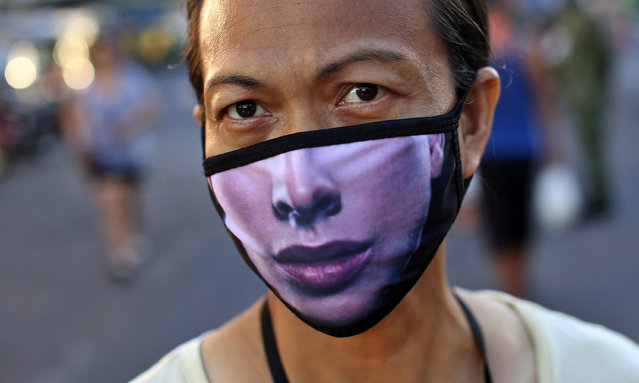
A Filipino woman wears a mask to try and protect against the spread of coronavirus in Malate district, Manila City on March 24, 2020. The Philippines has taken drastic measures to combat the spread of Covid-19. The entire country is under strict quarantine and the army is on the streets to monitor compliance. According to official figures, there are 462 positive cases and 33 dead in the Philippines, but it is thought that thousands of cases remain undetected due to lack of resources in a country where millions of people have no access to health care. In the poorest and most crowded areas, it’s almost impossible to adhere to the physical distancing required during quarantine. (Photo by Alejandro Ernesto/The Guardian)

A Filipino woman wears a mask to try and protect against the spread of coronavirus in Malate district, Manila City on March 24, 2020. The Philippines has taken drastic measures to combat the spread of Covid-19. The entire country is under strict quarantine and the army is on the streets to monitor compliance. According to official figures, there are 462 positive cases and 33 dead in the Philippines, but it is thought that thousands of cases remain undetected due to lack of resources in a country where millions of people have no access to health care. In the poorest and most crowded areas, it’s almost impossible to adhere to the physical distancing required during quarantine. (Photo by Alejandro Ernesto/The Guardian)
Details
08 Apr 2020 00:01:00
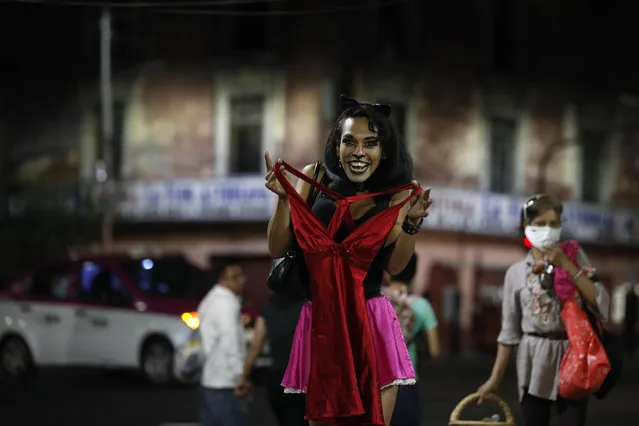
Sеx worker Geraldine, wearing cat make-up, excitedly holds up a dress she is thinking of buying from a street vendor, so that her partner, sitting nearby to keep her company, can see it, as she waits for clients outside the Revolution subway station, in Mexico City, Saturday, March 13, 2021. According to Geraldine, 30, the pandemic has cut clients and increased risks to the sеx workers but has also brought out more assistance for them too, both from dedicated organizations such as the activist group Brigada Callejera or “The Street Brigade” and from individuals who have donated food or clothing. (Photo by Rebecca Blackwell/AP Photo)

Sеx worker Geraldine, wearing cat make-up, excitedly holds up a dress she is thinking of buying from a street vendor, so that her partner, sitting nearby to keep her company, can see it, as she waits for clients outside the Revolution subway station, in Mexico City, Saturday, March 13, 2021. According to Geraldine, 30, the pandemic has cut clients and increased risks to the sеx workers but has also brought out more assistance for them too, both from dedicated organizations such as the activist group Brigada Callejera or “The Street Brigade” and from individuals who have donated food or clothing. (Photo by Rebecca Blackwell/AP Photo)
Details
25 Apr 2021 07:38:00
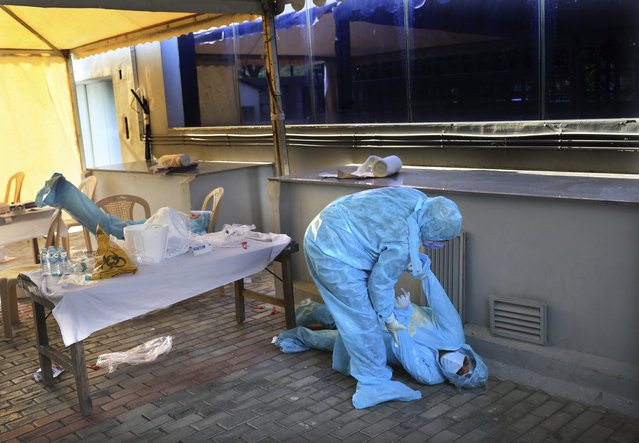
In this April 27, 2020 photo, a health worker helps another as she fainted because of exhaustion and long working hours during a swab test drive for COVID 19, in New Delhi, India. Two and a half months of nationwide lockdown kept numbers of infections relatively low in India. But with restrictions easing in recent weeks, cases have shot up, raising questions about whether authorities have done enough to avert catastrophe. Half of Delhi’s 8,200 hospital beds dedicated to COVID-19 patients are already full and officials are projecting more than half a million cases in the city alone by July 31. (Photo by Manish Swarup/AP Photo)

In this April 27, 2020 photo, a health worker helps another as she fainted because of exhaustion and long working hours during a swab test drive for COVID 19, in New Delhi, India. Two and a half months of nationwide lockdown kept numbers of infections relatively low in India. But with restrictions easing in recent weeks, cases have shot up, raising questions about whether authorities have done enough to avert catastrophe. Half of Delhi’s 8,200 hospital beds dedicated to COVID-19 patients are already full and officials are projecting more than half a million cases in the city alone by July 31. (Photo by Manish Swarup/AP Photo)
Details
08 Jan 2021 00:01:00
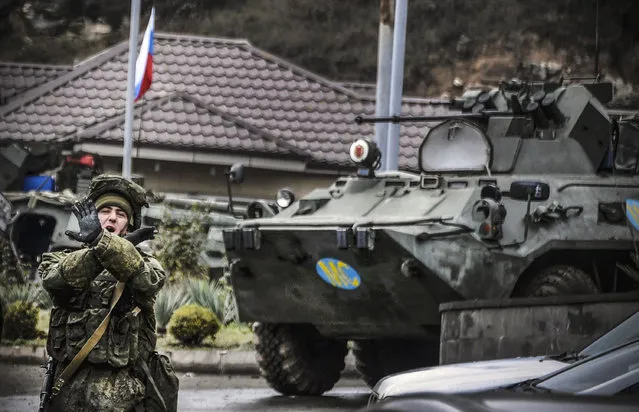
A Russian peacekeeper shouts “No pictures!” at a checkpoint outside the city of Stepanakert on November 13, 2020, during a ceasefire in the military conflict between Armenia and Azerbaijan over the breakaway region of Nagorno-Karabakh. Russian began deploying 2,000 peacekeepers to Nagorno-Karabakh on November 10 after Armenia and Azerbaijan agreed a peace deal to end weeks of fierce fighting over the disputed region. The Moscow-brokered agreement came after a string of Azerbaijani victories in its fight to retake the ethnic Armenian enclave. It sparked celebrations in Azerbaijan but fury in Armenia, where protesters took to the streets to denounce their leaders for losses in the territory, which broke from Azerbaijan's control during a war in the early 1990s. (Photo by Alexander Nemenov/AFP Photo)

A Russian peacekeeper shouts “No pictures!” at a checkpoint outside the city of Stepanakert on November 13, 2020, during a ceasefire in the military conflict between Armenia and Azerbaijan over the breakaway region of Nagorno-Karabakh. Russian began deploying 2,000 peacekeepers to Nagorno-Karabakh on November 10 after Armenia and Azerbaijan agreed a peace deal to end weeks of fierce fighting over the disputed region. (Photo by Alexander Nemenov/AFP Photo)
Details
15 Nov 2020 00:07:00
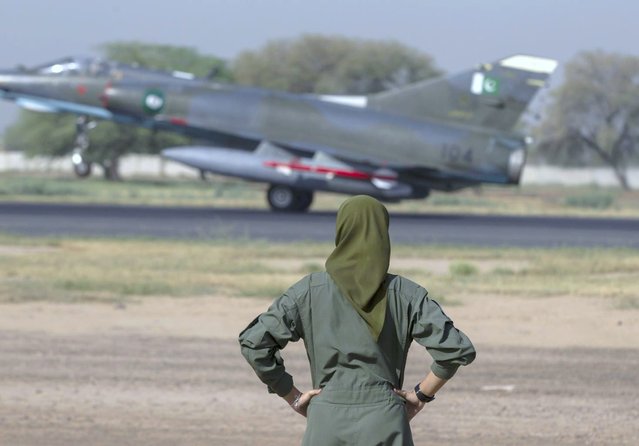
Ayesha Farooq, 26, Pakistan's only female war-ready fighter pilot watches an airforce jet about to take off at Mushaf base in Sargodha, north Pakistan June 7, 2013. (Photo by Zohra Bensemra/Reuters)

Ayesha Farooq, 26, Pakistan's only female war-ready fighter pilot watches an airforce jet about to take off at Mushaf base in Sargodha, north Pakistan June 7, 2013. Farooq, from Punjab province's historic city of Bahawalpur, is one of 19 women who have become pilots in the Pakistan Air Force over the last decade – there are five other female fighter pilots, but they have yet to take the final tests to qualify for combat. A growing number of women have joined Pakistan's defence forces in recent years as attitudes towards women change. (Photo by Zohra Bensemra/Reuters)
Details
16 Jun 2013 10:21:00
Wang Jia Yun (王嘉韻 or 왕지아인). (Photo by Wang Jia Yun)

Wang Jiayun, born June 18 1993. Wang’s height is 164cm, her weight 42kg. Wang Jiayun says she was born in Kowloon of Hong Kong Special Administrative Region, and presently lives in Shenzhen City of Guangdong province in China. Identity: High school student. Wang's large eyes, pale face, perfectly structured nose and extremely slim figure resemble a brand of human-sized blow-up doll popular with Korean men. This cute and s*xy barbie doll look a like is hot property. She recently became the No.1 searched name in the country's top search engine, Naver.com. Photo: Wang Jia Yun (王嘉韻 or 왕지아인). (Photo by Wang Jia Yun)
Details
06 Sep 2013 09:28:00
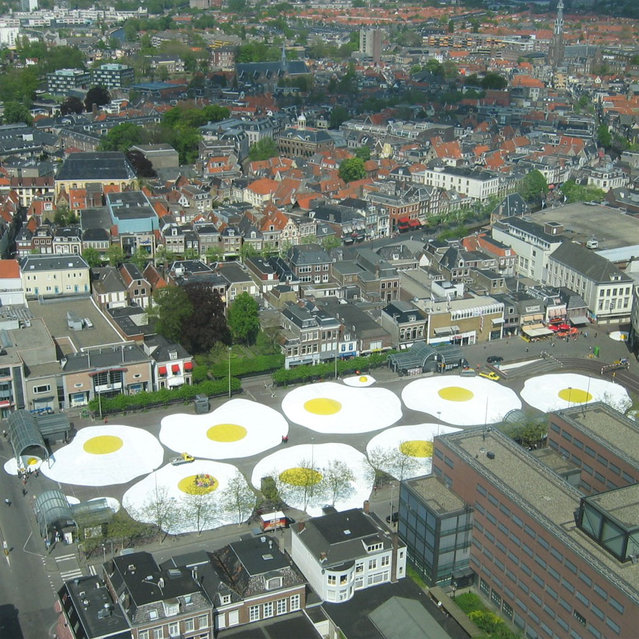
Art Eggcident By Henk Hofstra

With "Art Eggcident," Dutch artist Henk Hofstra demonstrates what it would look like if God threw giant eggs down at us. The eight large, sunny side up eggs measure almost 100 feet wide in diameter. The installation took place in Leeuwarden, a city in the north of the Netherlands.
"I hope it becomes a meeting place with room for art," says Henk. "Art that is different than a framed picture on the wall or a boring bronze sculpture. Art that shows us a different look, surprises us, or makes us angry or happy. Art that allows photographers to grab their cameras and arouses journalists. Art that evokes emotion, or provokes wild laughter."
Details
07 May 2014 10:54:00
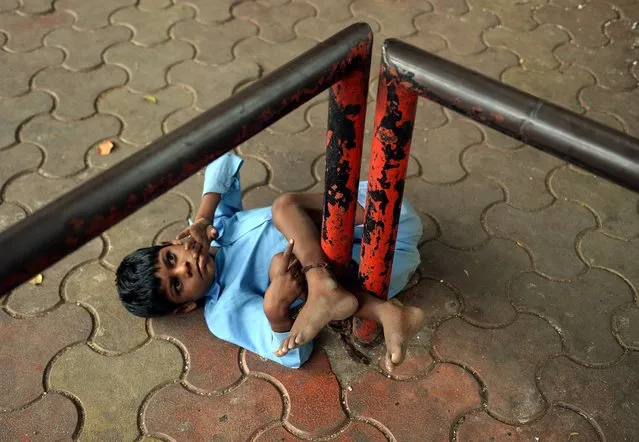
In this photograph taken on May 20, 2014 nine year old Indian boy Lakhan Kale is tied with a cloth rope around his ankle, to a bus-stop pole in Mumbai. (Photo by Punit Paranjpe/AFP Photo)

In this photograph taken on May 20, 2014 nine year old Indian boy Lakhan Kale is tied with a cloth rope around his ankle, to a bus-stop pole in Mumbai. The nine-year-old boy dressed in blue lay listlessly on the pavement in the scorching Mumbai summer afternoon, his ankle tethered with rope to a bus stop, unheeded by pedestrians strolling past. Lakhan Kale cannot hear or speak and suffers from cerebral palsy and epilepsy, so his grandmother and carer tied him up to keep him safe while she went to work, selling toys and flower garlands on the city's roadsides. (Photo by Punit Paranjpe/AFP Photo)
Details
04 Jul 2014 09:54:00