Loading...
Done
Tridacna Gigas, or Giant Clams

“The giant clam, Tridacna gigas (known as pā’ua in Cook Islands Māori), is the largest living bivalve mollusc. T. gigas is one of the most endangered clam species. It was mentioned as early as 1825 in scientific reports. One of a number of large clam species native to the shallow coral reefs of the South Pacific and Indian oceans, they can weigh more than 200 kilograms (440 lb) measure as much as 120 cm (47 in) across, and have an average lifespan in the wild of 100 years or more”. – Wikipedia

Photo: Tridacna Gigas, or Giant Clams spew water as a traditional fisherman passes by a small sanctuary on January 23, 2004 near Bolinao in the Northern Philippines. The clams, prime builders for coral reefs and providing shelter for spawning fish and other marine life, are exposed by low tides in the sanctuary. Overfishing and pollution throughout the country are not only threatening food security, but are also starting to choke one of the few working clam sanctuaries in the world. (Photo by David Greedy/Getty Images)
Details
01 Oct 2011 13:10:00
Heesco, Windsor. Born and raised in Mongolia and now living and working in Melbourne, Heesco is well known for his skill in rendering photo-realistic portraits. They speak to the viewer in a way that the subtext is enjoyable to decipher. Just what is the Blue Lady’s message? The sunglasses might mask the confronting gaze but her body language fills in the gaps. Heesco’s characters often wear traditional jewellery and clothing that remind us of his Mongolian cultural heritage. (Photo by Lou Chamberlin/The Guardian)

Heesco, Windsor. Born and raised in Mongolia and now living and working in Melbourne, Heesco is well known for his skill in rendering photo-realistic portraits. They speak to the viewer in a way that the subtext is enjoyable to decipher. Just what is the Blue Lady’s message? The sunglasses might mask the confronting gaze but her body language fills in the gaps. Heesco’s characters often wear traditional jewellery and clothing that remind us of his Mongolian cultural heritage. (Photo by Lou Chamberlin/The Guardian)
Details
26 Dec 2017 08:28:00
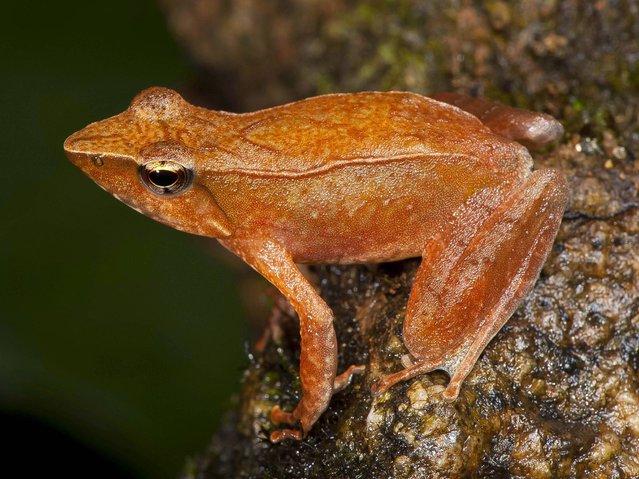
Orange dancing frog discovered by a team headed by University of Delhi professor Sathyabhama Das Biju in the jungle mountains of southern India. (Photo by Satyabhama Das Biju/AP Photo)

This undated photograph shows one of the 14 new species of so-called dancing frogs discovered by a team headed by University of Delhi professor Sathyabhama Das Biju in the jungle mountains of southern India. The study listing the new species brings the number of known Indian dancing frogs to 24 and attempts the first near-complete taxonomic sampling of the single-genus family found exclusively in southern India's lush mountain range called the Western Ghats, which stretches 1,600 kilometers (990 miles) from the west state of Maharashtra down to the country's southern tip. (Photo by Satyabhama Das Biju/AP Photo)
Details
09 May 2014 08:50:00
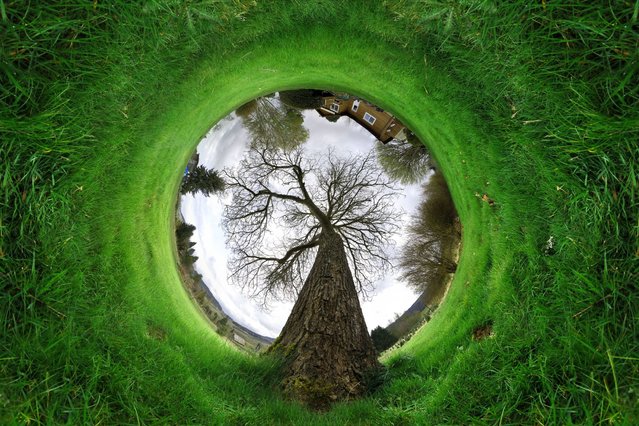
This incredible panoramic photographs are distorted to create miniature worlds and terrifying tunnels. (Photo by Caters News)

This incredible panoramic photographs are distorted to create miniature worlds and terrifying tunnels. (Photo by Caters News)
Details
25 Jan 2014 12:16:00
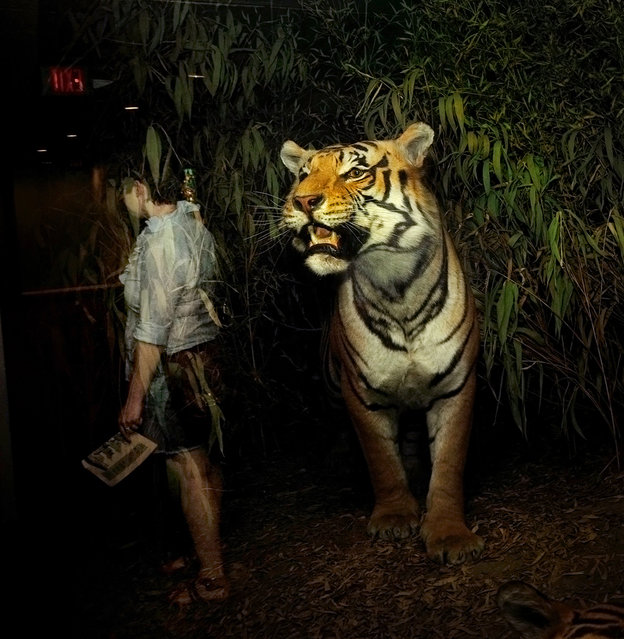
“Natural History”: Tiger. (Photo by Traer Scott)

“Natural History” is a series of completely candid single exposure images that merge the living and the dead to create allegorical narratives of our troubled co-existence with nature. Ghost-like reflections of modern visitors viewing wildlife dioramas are juxtaposed against the antique taxidermied subjects housed behind thick glass, their faces molded into permanent expressions of fear, aggression or fleeting passivity. After decades of over-hunting, climate change, poaching and destruction of habitat, many of these long dead diorama specimens now represent endangered or completely extinct species”. – Traer Scott. (Photo by Traer Scott)
Details
27 Oct 2014 11:39:00
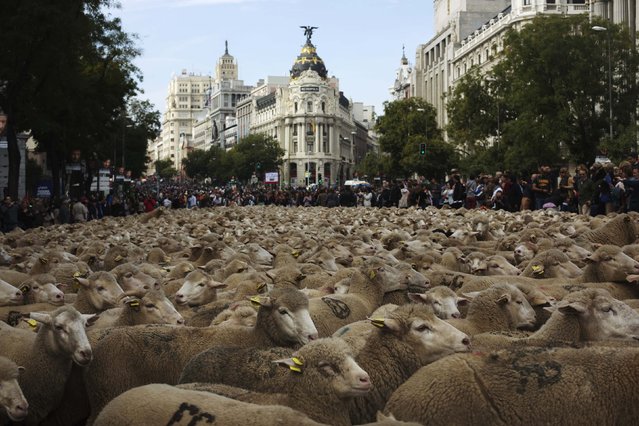
Sheep are herded during the annual sheep parade through Madrid November 2, 2014. (Photo by Susana Vera/Reuters)

Sheep are herded during the annual sheep parade through Madrid November 2, 2014. Shepherds parade the sheep through the city every year in order to exercise their right to use traditional routes to migrate their livestock from northern Spain to winter grazing pasture land in southern Spain. (Photo by Susana Vera/Reuters)
Details
03 Nov 2014 12:23:00
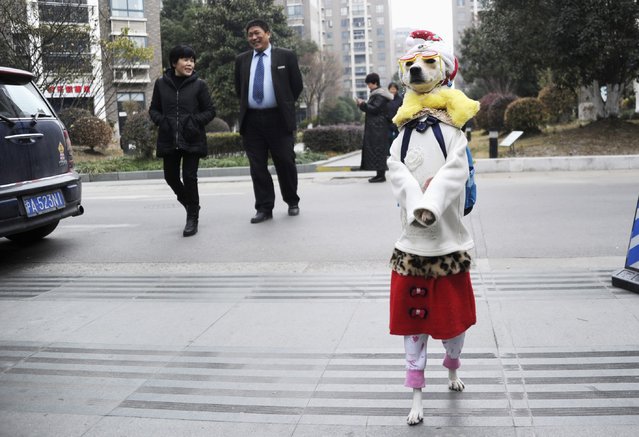
Dog Xiaoniu dressed in clothes walks across a street with its owner (not pictured) in Shanghai, December 19, 2014. According to local media, Xiaoniu accompanies its owner to the food market everyday and is able to walk with its hind legs for up to about an hour. (Photo by Reuters/Stringer)

Dog Xiaoniu dressed in clothes walks across a street with its owner (not pictured) in Shanghai, December 19, 2014. According to local media, Xiaoniu accompanies its owner to the food market everyday and is able to walk with its hind legs for up to about an hour. (Photo by Reuters/Stringer)
Details
27 Dec 2014 12:03:00
A woman walks in front of an art installation made of artificial fruits and vegetables during the  “Moscow Autumn” festival in central Moscow, September 14, 2015. (Photo by Maxim Zmeyev/Reuters)

A woman walks in front of an art installation made of artificial fruits and vegetables during the “Moscow Autumn” festival in central Moscow, September 14, 2015. (Photo by Maxim Zmeyev/Reuters)
Details
15 Sep 2015 14:58:00