Loading...
Done
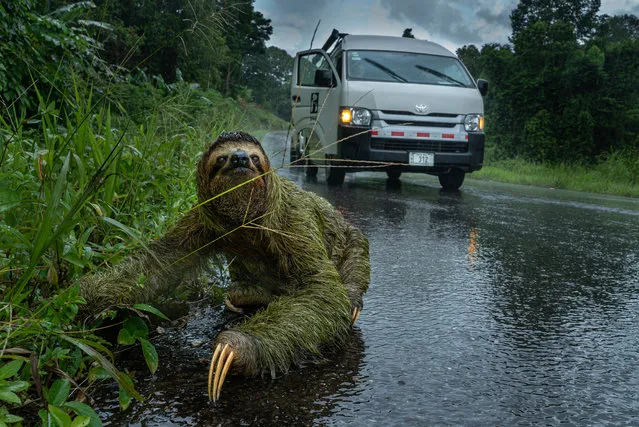
People and Nature category winner: Why did the sloth cross the road? by Andrew Whitworth (Osa Conservation and University of Glasgow), taken in Osa Peninsula, Costa Rica. “I was driving out from the Osa Peninsula, located on the southern Pacific coast of Costa Rica on a dark, stormy day. This female three-toed sloth (Bradypus variegatus) had luckily just about made it across the road, and the drivers of the Toyota on this occasion had spotted her in good time”. (Photo by Andrew Whitworth/2019 British Ecological Society Photography Competition)

People and Nature category winner: Why did the sloth cross the road? by Andrew Whitworth (Osa Conservation and University of Glasgow), taken in Osa Peninsula, Costa Rica. “I was driving out from the Osa Peninsula, located on the southern Pacific coast of Costa Rica on a dark, stormy day. This female three-toed sloth (Bradypus variegatus) had luckily just about made it across the road, and the drivers of the Toyota on this occasion had spotted her in good time”. (Photo by Andrew Whitworth/2019 British Ecological Society Photography Competition)
Details
30 Nov 2019 00:05:00
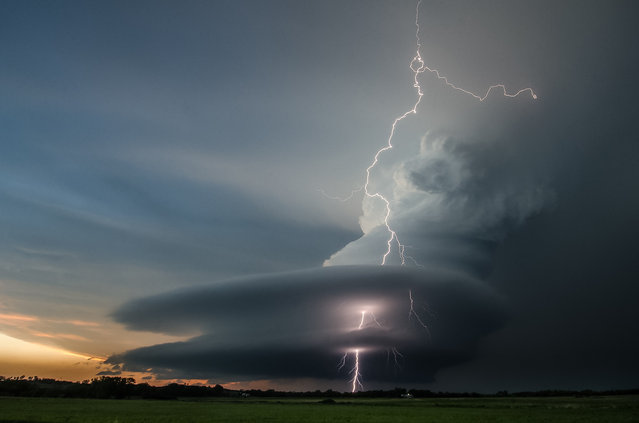
“Strike Through The Mothership”. Every May for the last 3 years I have driven down to Tornado Alley to capture some amazing storms. This supercell held so much promise to drop a tornado but one small shift in the atmosphere and all that it produced was an extreme lightning show. Photo location: Broken Bow, Nebraska. (Photo and caption by Vanessa Neufeld/National Geographic Photo Contest)

“Strike Through The Mothership”. Every May for the last 3 years I have driven down to Tornado Alley to capture some amazing storms. This supercell held so much promise to drop a tornado but one small shift in the atmosphere and all that it produced was an extreme lightning show. Photo location: Broken Bow, Nebraska. (Photo and caption by Vanessa Neufeld/National Geographic Photo Contest)
Details
06 May 2014 09:37:00
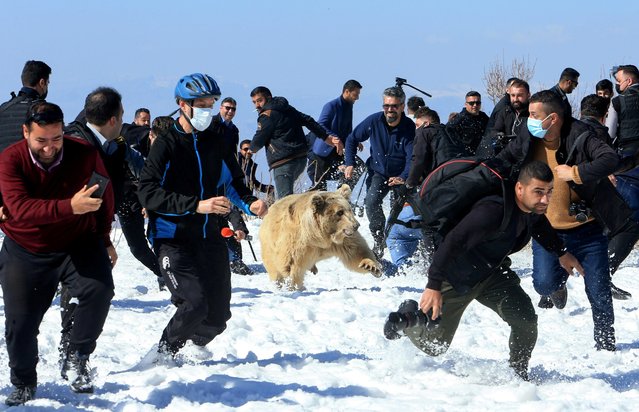
People and security members run away as Kurdish animal rights activists release a bear into the wild after rescuing bears from captivity in people homes, in Dohuk, Iraq on February 11, 2021. (Photo by Ari Jalal/Reuters)

People and security members run away as Kurdish animal rights activists release a bear into the wild after rescuing bears from captivity in people homes, in Dohuk, Iraq on February 11, 2021. (Photo by Ari Jalal/Reuters)
Details
13 Mar 2021 10:18:00
Takeoka Chisaka, Hiroshima, Japan. “One morning in August 1945, I was walking home from the night shift at a factory in Hiroshima. As I reached my door, there was a huge explosion. When I came to, my head was bleeding and I had been blasted 30m away”. (Photo and caption by Sasha Maslov)

Takeoka Chisaka, Hiroshima, Japan. “One morning in August 1945, I was walking home from the night shift at a factory in Hiroshima. As I reached my door, there was a huge explosion. When I came to, my head was bleeding and I had been blasted 30m away. The atomic bomb had detonated. When I found my mother, her eyes were badly burned. A doctor said they had to come out, but he didn’t have the proper tools so used a knife instead. It was hellish. I became a peace-worker after the war. In the 1960s, at a meeting at the UN, I met one of the people who created the atomic bomb. He apologised”. (Photo and caption by Sasha Maslov)
Details
11 May 2015 11:56:00
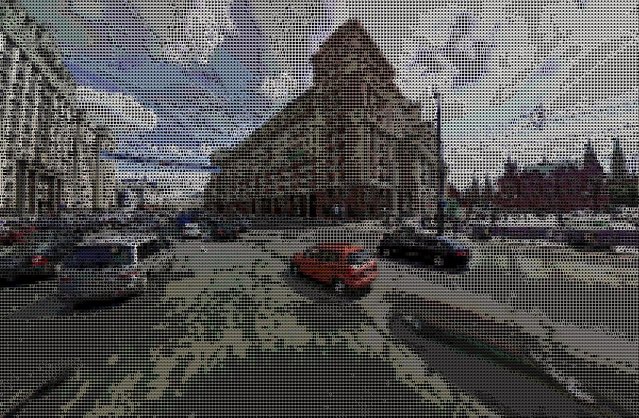
ASCII Street View

Real-time ASCII (a character-encoding scheme originally based on the English alphabet) Google Street View.
Details
14 Aug 2012 08:49:00
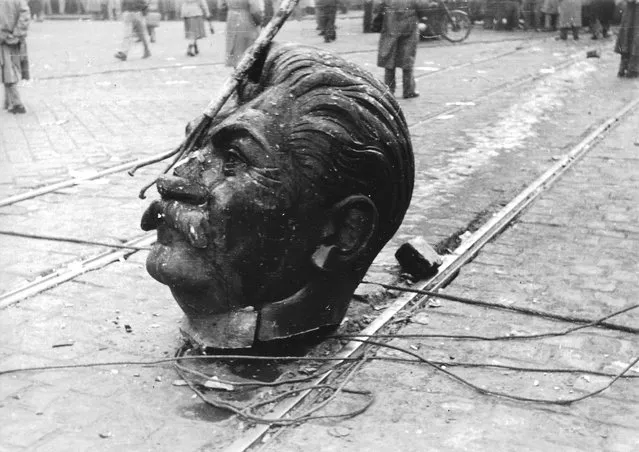
Josef Stalin's head is left in a Budapest street after a statue to the communist dictator was torn from its plinth during the Hungarian Revolution in 1956. (Photo by Robert Hofbauer/Radio Free Europe/Radio Liberty)

Josef Stalin's head is left in a Budapest street after a statue to the communist dictator was torn from its plinth during the Hungarian Revolution in 1956. (Photo by Robert Hofbauer/Radio Free Europe/Radio Liberty)
Details
01 Aug 2020 00:05:00
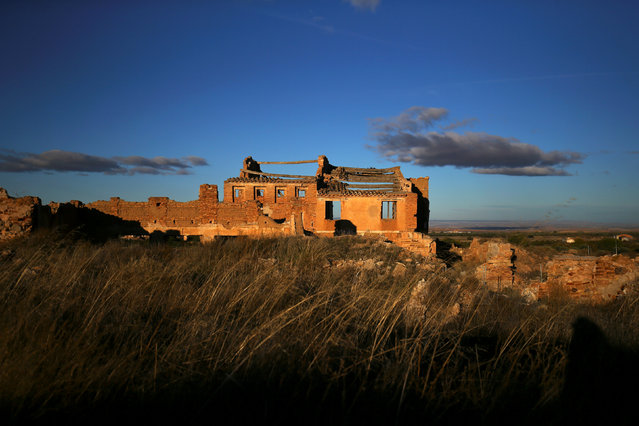
Ruins of a building are seen in the old village of Belchite, in northern Spain, November 13, 2016. (Photo by Andrea Comas/Reuters)

Ruins of a building are seen in the old village of Belchite, in northern Spain, November 13, 2016. Almost 80 years ago Tomas Ortin fled under the cover of night from his home in the small town of Belchite on Spain's northern plains to escape with hundreds of others from one of the bloodiest battles of the country's civil war. At 94 years old, Ortin now lives just across the road from Belchite, which has lain in ruins since Republican forces attacked it, a symbol of the destruction caused by the 1936-1939 war in which an estimated 500,000 people died. (Photo by Andrea Comas/Reuters)
Details
30 Nov 2016 12:31:00
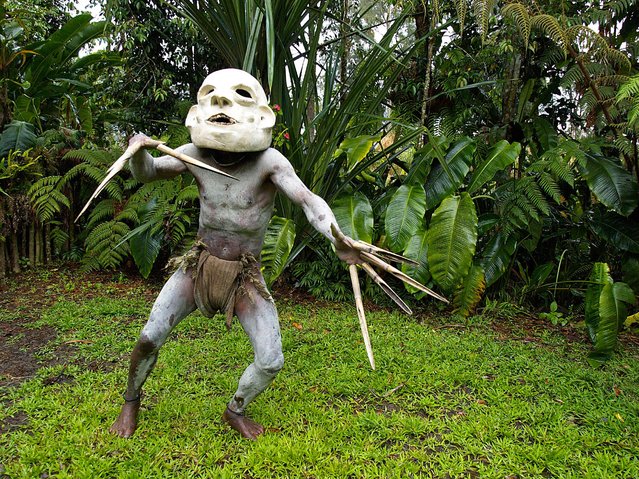
The mudmen come from the country’s western highlands, where there are virtually no roads, cars, electricity or shops. (Photo by Jeremy Hunter/Exclusivepix Media)

For centuries the Highlands peoples of Papua New Guinea fought over land, women and pigs. Sorcery and battle skills could elevate a clan to Bigmanship, where the bigger the “presentation”, the bigger the man. Clans therefore would paint their bodies and create fearsome masks as part of their psy. Here: These are the terrifying tribe of “mudmen” from a remote part of Papua New Guinea. (Photo by Jeremy Hunter/Exclusivepix Media)
Details
08 May 2017 08:12:00