Loading...
Done
South Korea Marks The 66th Independence Day

A woman surrounded by South Korean national flags set up to celebrate the 66th Independence Day on August 15, 2011 in Seoul, South Korea. Korea was liberated from Japan's 35-year colonial rule in 1945. (Photo by Chung Sung-Jun/Getty Images)
Details
15 Aug 2011 11:48:00
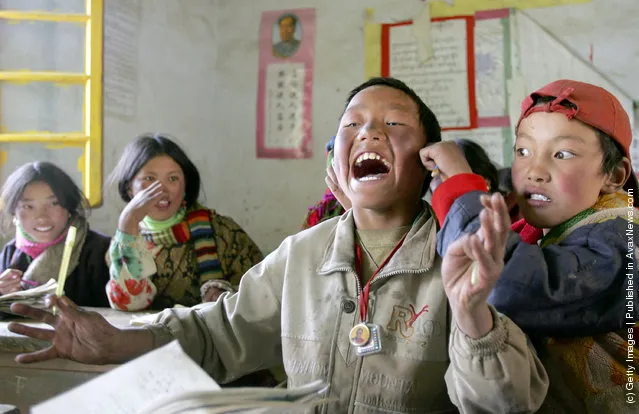
Free Xiangnong Primary School At Ganzi Tibetan

Tibetan students play at a class break at the Xiangnong primary school on April 15, 2005 in Kangding County of Ganzi Tibetan Autonomous Prefecture, Sichuan Province, southwest China. There is only one teahcer in the Tagong Village, 12 Tibetan students get free education from him in Xiangnong primary school. (Photo by China Photos/Getty Images)
Details
27 Aug 2011 14:40:00
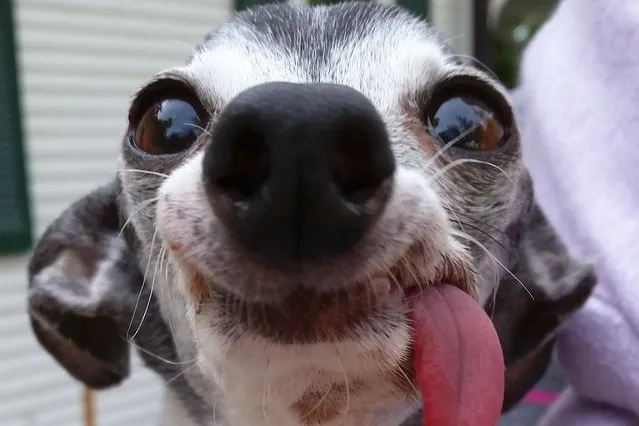
Zappa Dog With A Floppy Tongue

Zappa, a toothless 15-year-old Italian greyhound that looks surprisingly like Sid the Sloth from the animated movie Ice Age, is redefining dog beauty. Owners Sadie and Rosalie Millen, of Pewaukee, Wisconsin, say that Zappa started sticking her tongue out a few years ago when she lost her teeth.
Details
10 Jun 2015 10:16:00
Adriana Barahona, known as " Madame Barocle," wearing clothing of the Victorian era, walks along a central avenue in San Jose, Costa Rica June 4, 2015. Barahona says she has been passionate about clothing from the era of Britain's Queen Victoria (1837-1901), and has been making and wearing them since the age of 15. REUTERS/Juan Carlos Ulate

Adriana Barahona, known as "Madame Barocle", wearing clothing of the Victorian era, walks along a central avenue in San Jose, Costa Rica June 4, 2015. Barahona says she has been passionate about clothing from the era of Britain's Queen Victoria (1837-1901), and has been making and wearing them since the age of 15. REUTERS/Juan Carlos Ulate
Details
17 Jun 2015 13:25:00


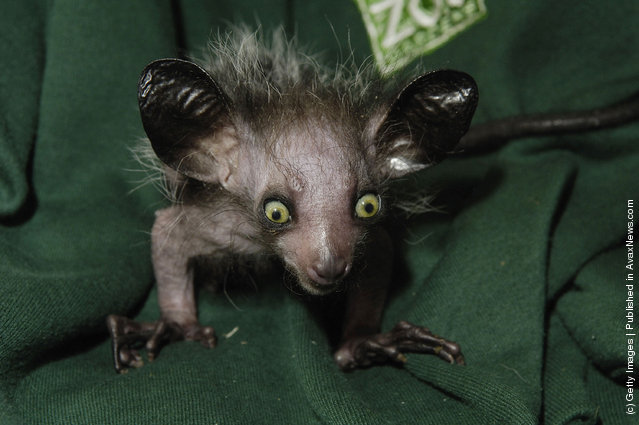
“The aye-aye (Daubentonia madagascariensis) is a lemur, a strepsirrhine primate native to Madagascar that combines rodent-like teeth and a special thin middle finger to fill the same ecological niche as a woodpecker. It is the world's largest nocturnal primate, and is characterized by its unusual method of finding food; it taps on trees to find grubs, then gnaws holes in the wood and inserts its narrow middle finger to pull the grubs out. The only other animal species known to find food in this way is the striped possum. From an ecological point of view the aye-aye fills the niche of a woodpecker as it is capable of penetrating wood to extract the invertebrates within”. – Wikipedia

Photo: In this handout image from Bristol Zoo is seen the first captive bred aye-aye in the UK named “Kintana” (meaning star in Malagasy) April 15, 2005 at Bristol Zoo Gardens, England. The zoo announced today only the second baby aye-aye to be hand-reared in the world (the first was in Jersey Zoo) and has now made his first public appearance since his birth on 11 February 2005. (Photo by Rob Cousins/Bristol Zoo via Getty Images)
Details
13 Apr 2011 13:33:00
A couple wearing masks as a precaution against the spread of the new coronavirus walk on the Malecon seawall at sunset in Havana, Cuba, Monday, August 31, 2020. Cuban authorities will introduce new measures starting tomorrow Tuesday aimed at containing the spread of the coronavirus in Havana among others a curfew from 7 pm until 5 am and no one without special permission will be able to enter or leave the province. The new measures will last at least 15 days. (Photo by Ramon Espinosa/AP Photo)

A couple wearing masks as a precaution against the spread of the new coronavirus walk on the Malecon seawall at sunset in Havana, Cuba, Monday, August 31, 2020. Cuban authorities will introduce new measures starting tomorrow Tuesday aimed at containing the spread of the coronavirus in Havana among others a curfew from 7 pm until 5 am and no one without special permission will be able to enter or leave the province. The new measures will last at least 15 days. (Photo by Ramon Espinosa/AP Photo)
Details
22 Oct 2020 00:05:00
Men wear masks as they sit in the metro in Prague, Czech Republic, 17 March 2020. According to media reports, the Czech government decided to impose a two-week quarantine in the country on the evening of 15 March, and ban all international travel from 16 March 2020. Currently 383 cases of the coronavirus SARS-CoV-2, which causes the Covid-19 disease, have been officially confirmed in Czech Republic. (Photo by Martin Divisek/EPA/EFE)

Men wear masks as they sit in the metro in Prague, Czech Republic, 17 March 2020. According to media reports, the Czech government decided to impose a two-week quarantine in the country on the evening of 15 March, and ban all international travel from 16 March 2020. Currently 383 cases of the coronavirus SARS-CoV-2, which causes the Covid-19 disease, have been officially confirmed in Czech Republic. (Photo by Martin Divisek/EPA/EFE)
Details
19 Mar 2020 00:07:00
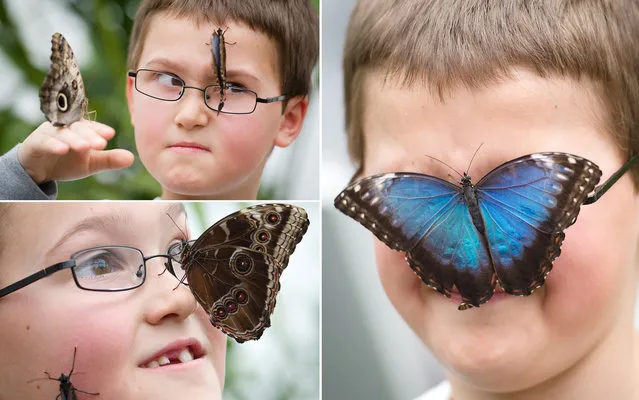
A boy poses with a butterfly on his face during a photocall to promote the "Sensational Butterflies" exhibition at the Natural History Museum in central London, on March 25, 2013.  With around 400 live tropical butterflies and moths living in the temporary facility, visitors will get the chance to see them flying freely as well as looking for emerging butterflies at the hatchery window. Running from March 29 to September 15, 2013, the exhibition is housed in a structure in the museum grounds. (Photo by Leon Neal/AFP Photo)

A boy poses with a butterfly on his face during a photocall to promote the “Sensational Butterflies” exhibition at the Natural History Museum in central London, on March 25, 2013. With around 400 live tropical butterflies and moths living in the temporary facility, visitors will get the chance to see them flying freely as well as looking for emerging butterflies at the hatchery window. Running from March 29 to September 15, 2013, the exhibition is housed in a structure in the museum grounds. (Photo by Leon Neal/AFP Photo)
Details
26 Mar 2013 13:37:00