Loading...
Done
A Manipuri woman sells smoked and dry fish in Ima market - the world's largest all women market - in Imphal city, Manipur state, 06 January 2016. The 150-year-old Ima Keithel or 'Mothers's market' complex, which is run exclusively by women and was damaged in the 04 January 2016 earthquake, is returning back to normal. Nine deaths have been reported from in and around Imphal due to falling debris. (Photo by EPA/Stringer)

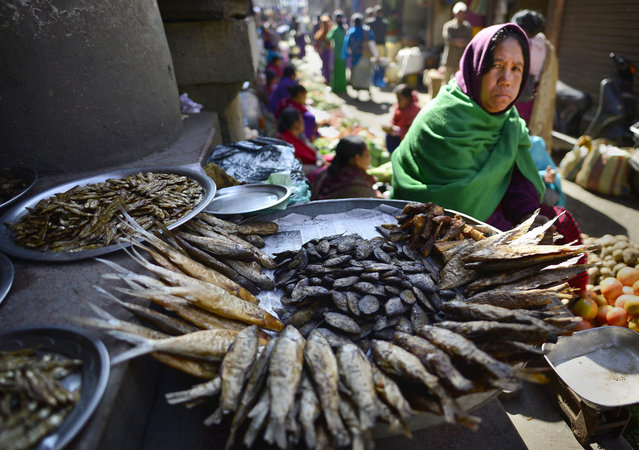
A Manipuri woman sells smoked and dry fish in Ima market - the world's largest all women market – in Imphal city, Manipur state, 06 January 2016. The 150-year-old Ima Keithel or “Mothers's market” complex, which is run exclusively by women and was damaged in the 04 January 2016 earthquake, is returning back to normal. Nine deaths have been reported from in and around Imphal due to falling debris. Imphal has a population of some 270,000 and people were jolted from their sleep and ran out of their homes in panic when the earth shook 04 January, reports say. (Photo by EPA/Stringer)
Details
08 Jan 2016 08:04:00
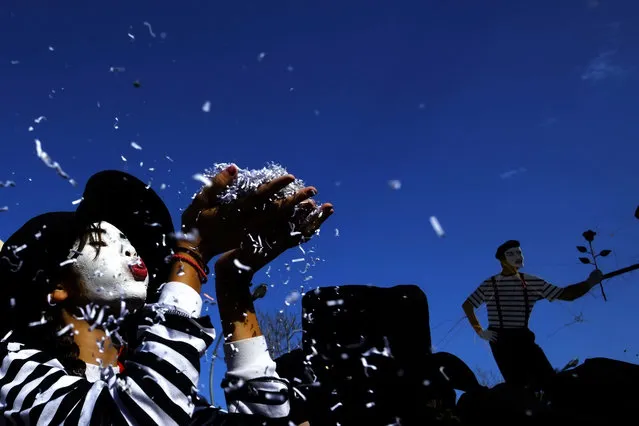
A child blowing confetti from her hands during a Carnival parade in Cyprus' coastal city of Limassol, Sunday, March 13, 2016. Limassol's long-established parade is Cyprus' biggest and most famous, drawing revelers from across the east Mediterranean island. This year's parade drew huge crowds as people sought lighthearted reprieve from the bailed-out country's recession. The parade marks the start of the 40-day fasting period of Lent in the run-up to the Orthodox Christian Easter. (Photo by Petros Karadjias/AP Photo)

A child blowing confetti from her hands during a Carnival parade in Cyprus' coastal city of Limassol, Sunday, March 13, 2016. Limassol's long-established parade is Cyprus' biggest and most famous, drawing revelers from across the east Mediterranean island. This year's parade drew huge crowds as people sought lighthearted reprieve from the bailed-out country's recession. The parade marks the start of the 40-day fasting period of Lent in the run-up to the Orthodox Christian Easter. (Photo by Petros Karadjias/AP Photo)
Details
14 Mar 2016 10:21:00
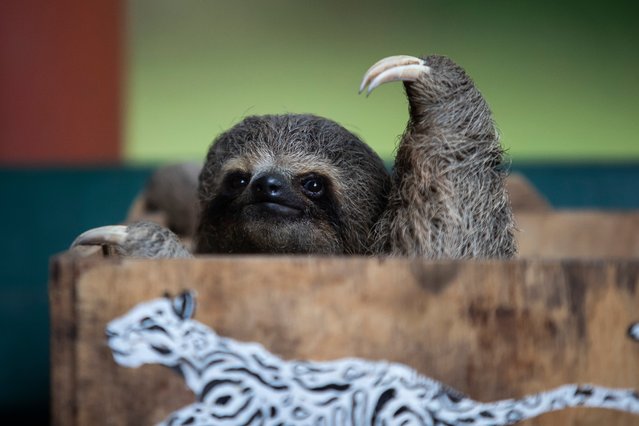
A young sloth named Gloria, that was rescued after being stolen from the wild destined for trafficking, peeks out of the box it is being taken to be released at the city's Botanical Garden in Rio de Janeiro, Brazil, Monday, March 13, 2023. Gloria was cared for by the Free Life Institute NGO that rehabilitates injured wildlife found in the surrounding Rio area and returns them, when possible, back to the wild. Those that are too injured to be released are sent to other rehab centers or sanctuaries to live out their lives in protected environments. (Photo by Bruna Prado/AP Photo)

A young sloth named Gloria, that was rescued after being stolen from the wild destined for trafficking, peeks out of the box it is being taken to be released at the city's Botanical Garden in Rio de Janeiro, Brazil, Monday, March 13, 2023. Gloria was cared for by the Free Life Institute NGO that rehabilitates injured wildlife found in the surrounding Rio area and returns them, when possible, back to the wild. Those that are too injured to be released are sent to other rehab centers or sanctuaries to live out their lives in protected environments. (Photo by Bruna Prado/AP Photo)
Details
16 Jul 2024 04:01:00
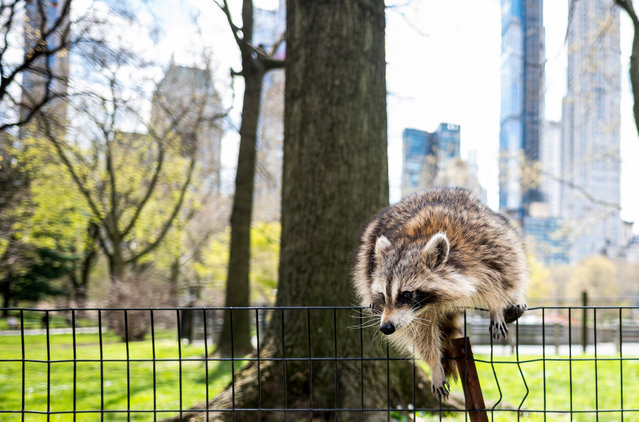
A racoon jumps over a fence in almost deserted Central Park in Manhattan on April 16, 2020 in New York City. Gone are the softball games, horse-drawn carriages and hordes of tourists. In their place, pronounced birdsong, solitary walks and renewed appreciation for Central Park's beauty during New York's coronavirus lockdown. The 843-acre (341-hectare) park – arguably the world's most famous urban green space – normally bustles with human activity as winter turns to spring, but this year due to Covid-19 it's the wildlife that is coming out to play. (Photo by Johannes Eisele/AFP Photo)

A racoon jumps over a fence in almost deserted Central Park in Manhattan on April 16, 2020 in New York City. Gone are the softball games, horse-drawn carriages and hordes of tourists. In their place, pronounced birdsong, solitary walks and renewed appreciation for Central Park's beauty during New York's coronavirus lockdown. The 843-acre (341-hectare) park – arguably the world's most famous urban green space – normally bustles with human activity as winter turns to spring, but this year due to Covid-19 it's the wildlife that is coming out to play. (Photo by Johannes Eisele/AFP Photo)
Details
14 Dec 2025 07:04:00
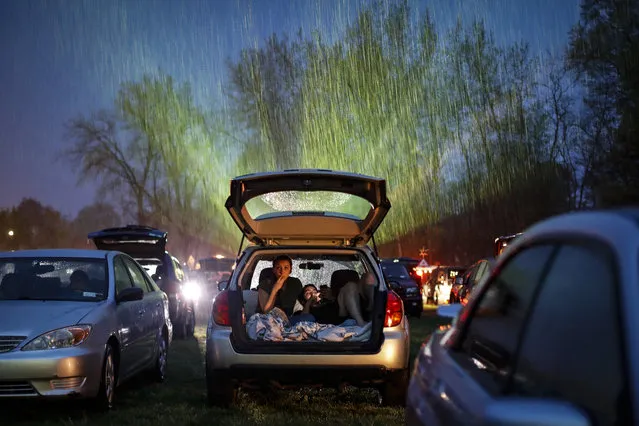
Guests watch “Trolls World Tour”, in the rain at the Four Brothers Drive In Theatre amid the coronavirus pandemic, Friday, May 15, 2020, in Amenia, N.Y. (Photo by John Minchillo/AP Photo)

Guests watch “Trolls World Tour”, in the rain at the Four Brothers Drive In Theatre amid the coronavirus pandemic, Friday, May 15, 2020, in Amenia, N.Y. (Photo by John Minchillo/AP Photo)
Details
17 May 2020 00:07:00
Trees grow through the windshield of a 1937 Chrysler Imperial as it sits at Old Car City, the world's largest known classic car junkyard Thursday, July 16, 2015, in White, Ga. Many of the cars have never moved in over 30 years and in some cases, trees now grow through them, even lifting some off the ground. (Photo by David Goldman/AP Photo)

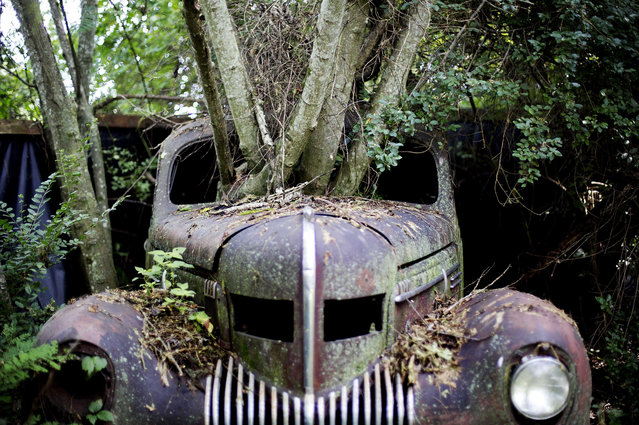
Trees grow through the windshield of a 1937 Chrysler Imperial as it sits at Old Car City, the world's largest known classic car junkyard Thursday, July 16, 2015, in White, Ga. Over 4,000 classic cars decorate 32 acres of forest which have been turned into a junkyard museum by owner Walter Dean Lewis. The two grew up playing in the cars on the lot which started as a general store selling auto parts in 1931 by Lewis' parents. Lewis stopped selling parts about six years ago when he realized he could sustain the business more as a museum, charging $15 for visitors just looking, and $25 for photographers. Many of the cars have never moved in over 30 years and in some cases, trees now grow through them, even lifting some off the ground. (Photo by David Goldman/AP Photo)
Details
17 Jul 2015 13:14:00
In this March 7, 1991 file photo, a U.S. Marine patrol walks across the charred oil landscape near a burning well during perimeter security patrol near Kuwait City. Twenty five years after the first U.S. Marines swept across the border into Kuwait in the 1991 Gulf War, American forces find themselves battling the extremist Islamic State group, born out of al-Qaida, in the splintered territories of Iraq and Syria. The Arab allies that joined the 1991 coalition are fighting their own conflicts both at home and abroad, as Iran vies for greater regional power following a nuclear deal with world powers. (Photo by John Gaps III/AP Photo)

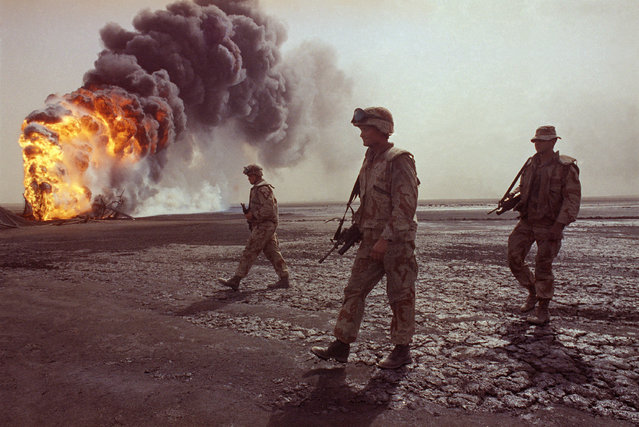
In this March 7, 1991 file photo, a U.S. Marine patrol walks across the charred oil landscape near a burning well during perimeter security patrol near Kuwait City. Twenty five years after the first U.S. Marines swept across the border into Kuwait in the 1991 Gulf War, American forces find themselves battling the extremist Islamic State group, born out of al-Qaida, in the splintered territories of Iraq and Syria. The Arab allies that joined the 1991 coalition are fighting their own conflicts both at home and abroad, as Iran vies for greater regional power following a nuclear deal with world powers. (Photo by John Gaps III/AP Photo)
Details
23 Feb 2016 11:43:00
The Wadi al-Salam cemetery, Arabic for “Peace Valley”, is seen in Najaf, south of Baghdad, Iraq August 3, 2016. The world's largest cemetery, in Iraq's Shi'ite holy city of Najaf, is expanding at double its usual rate as Shi'ite militias bury their dead from the war against Islamic State. The Wadi al-Salam cemetery, Arabic for “Peace Valley” has a special place in the hearts of Shi'ite Muslims as it surrounds the Mausoleum of their first imam, Ali Bin Abi Talib, a cousin and son-in-law of Prophet Mohammad. (Photo by Alaa Al-Marjani/Reuters)

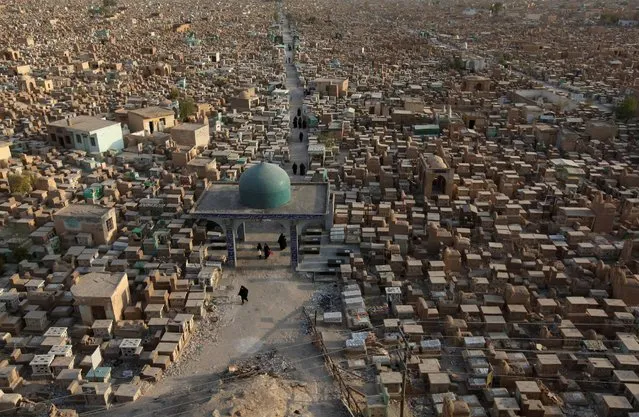
The Wadi al-Salam cemetery, Arabic for “Peace Valley”, is seen in Najaf, south of Baghdad, Iraq August 3, 2016. The world's largest cemetery, in Iraq's Shi'ite holy city of Najaf, is expanding at double its usual rate as Shi'ite militias bury their dead from the war against Islamic State. The Wadi al-Salam cemetery, Arabic for “Peace Valley” has a special place in the hearts of Shi'ite Muslims as it surrounds the Mausoleum of their first imam, Ali Bin Abi Talib, a cousin and son-in-law of Prophet Mohammad. (Photo by Alaa Al-Marjani/Reuters)
Details
24 Aug 2016 11:38:00