Loading...
Done


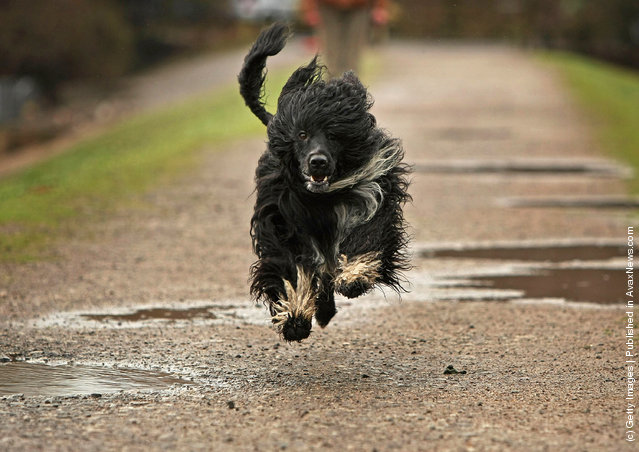
“The Portuguese Water Dog is a breed of working dog as classified by the American Kennel Club. Portuguese Water Dogs are originally from the Portuguese region of the Algarve, from where the breed expanded to all around Portugal's coast, where they were taught to herd fish into fishermen's nets, to retrieve lost tackle or broken nets, and to act as couriers from ship to ship, or ship to shore. Portuguese Water Dogs rode in bobbing fishing trawlers as they worked their way from the warm Atlantic waters of Portugal to the frigid fishing waters off the coast of Iceland where the fleets caught cod to bring home. Portuguese Water Dogs were often taken with sailors during the Portuguese discoveries”. – Wikipedia

Photo: Kix, a Portuguese Water Dog , enjoys a walk around the muddy fields near his home before the grooming and preparation starts for this years Crufts on March 3, 2009 in Telford, England. (Photo by Christopher Furlong/Getty Images)
Details
26 Jul 2011 11:27:00
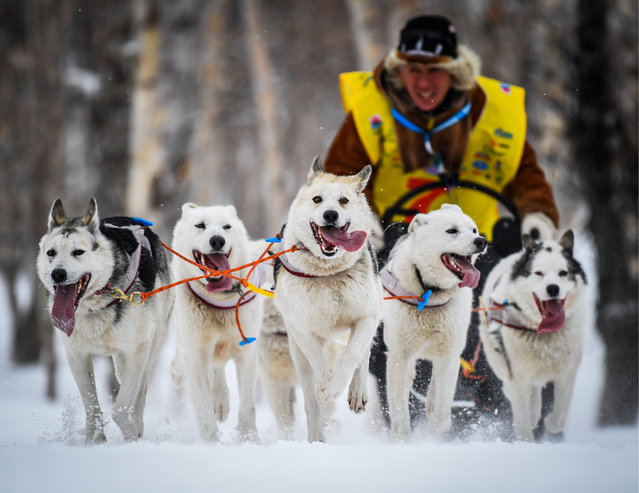
A 10 km prologue dog sled race on the eve of the 2018 Beringia dog sled race in Russia' s Far East; the prologue race is part of the 2018 Russian Winter Dog Powered Sports Cup in Petropavlovsk-Kamchatsky, Russia on March 4, 2018. (Photo by Yuri Smityuk/TASS)

A 10 km prologue dog sled race on the eve of the 2018 Beringia dog sled race in Russia' s Far East; the prologue race is part of the 2018 Russian Winter Dog Powered Sports Cup in Petropavlovsk-Kamchatsky, Russia on March 4, 2018. (Photo by Yuri Smityuk/TASS)
Details
07 Mar 2018 00:03:00
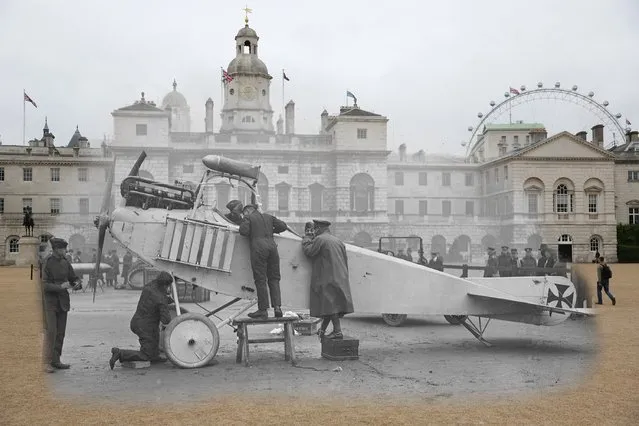
British soldiers inspect a captured German place in the Horseguards' Parade, London during World War I in November 1914, with the London Eye in the background as a reminder of just how much has changed in the last 100 years. (Photo by Peter Macdiarmid/Getty Images)

British soldiers inspect a captured German place in the Horseguards' Parade, London during World War I in November 1914, with the London Eye in the background as a reminder of just how much has changed in the last 100 years. (Photo by Peter Macdiarmid/Getty Images)
Details
29 Jul 2014 12:09:00
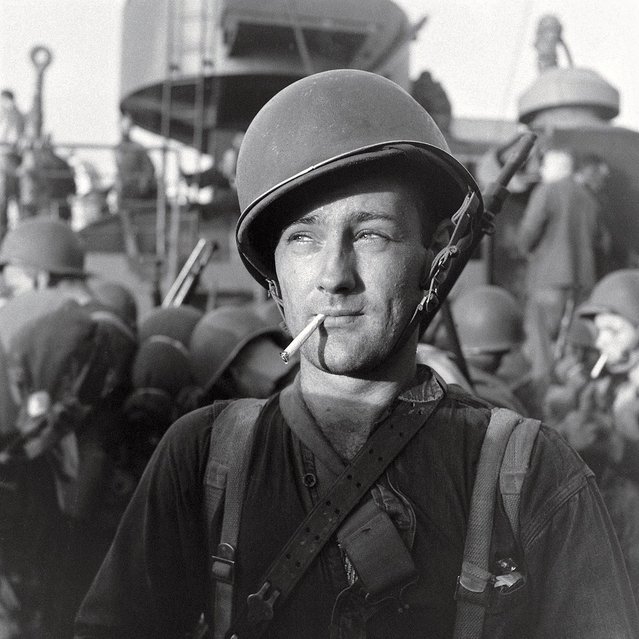
An American Marine readies to land on Guadalcanal during the five-month struggle for the island between late 1942 and early 1943. Three thousand miles south of Tokyo, Guadalcanal was a major shipping point for military supplies. The Allied victory there in February, 1943, marked a major turning point in the war after a string of Japanese victories in the Pacific. (Photo by Joe Scherschel/Time & Life Pictures)

An American Marine readies to land on Guadalcanal during the five-month struggle for the island between late 1942 and early 1943. Three thousand miles south of Tokyo, Guadalcanal was a major shipping point for military supplies. The Allied victory there in February, 1943, marked a major turning point in the war after a string of Japanese victories in the Pacific. (Photo by Joe Scherschel/Time & Life Pictures)
Details
10 Mar 2013 12:50:00
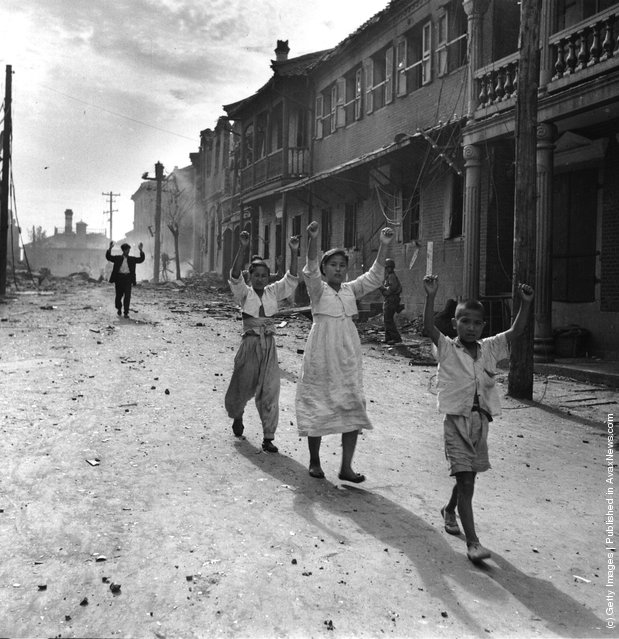
Residents of the Korean port of Inchon surrender to American troops

Residents of the Korean port of Inchon surrender to American troops. (Photo by Bert Hardy/Getty Images). 1950
Details
07 May 2011 10:24:00
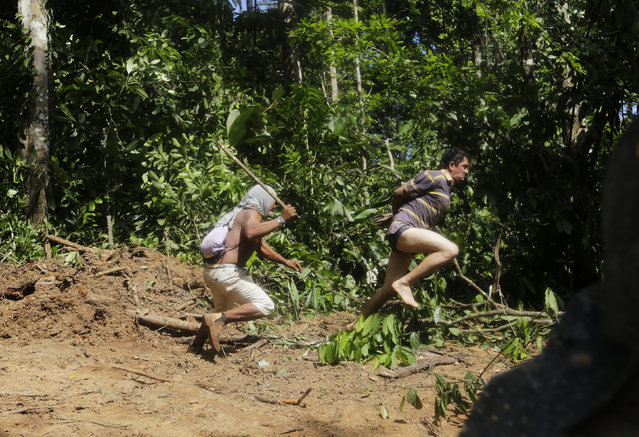
A Ka'apor Indian warrior (L) chases a logger who tried to escape after they captured him during a jungle expedition to search for and expel loggers from the Alto Turiacu Indian territory, near the Centro do Guilherme municipality in the northeast of Maranhao state in the Amazon basin, August 7, 2014. (Photo by Lunae Parracho/Reuters)

A Ka'apor Indian warrior (L) chases a logger who tried to escape after they captured him during a jungle expedition to search for and expel loggers from the Alto Turiacu Indian territory, near the Centro do Guilherme municipality in the northeast of Maranhao state in the Amazon basin, August 7, 2014. Tired of what they say is a lack of sufficient government assistance in keeping loggers off their land, the Ka'apor Indians, who along with four other tribes are the legal inhabitants and caretakers of the territory, have sent their warriors out to expel all loggers they find and set up monitoring camps in the areas that are being illegally exploited. (Photo by Lunae Parracho/Reuters)
Details
05 Sep 2014 11:41:00
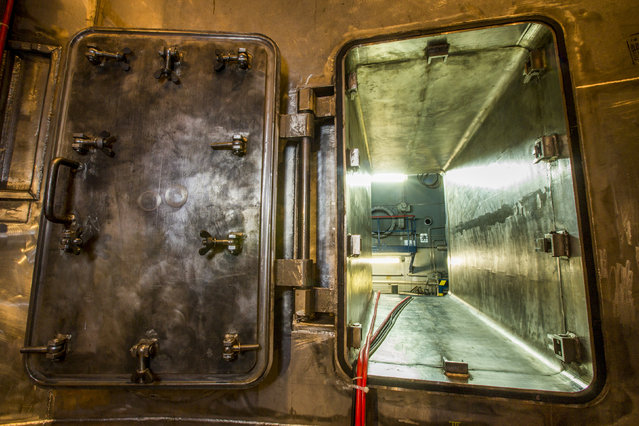
A view of an entrance to the concrete case surrounding the pressure vessel of the reactor is seen inside the decommissioned Unit Six of the Greifswald nuclear power station outside Lubmin August 5, 2014. (Photo by Thomas Peter/Reuters)

A view of an entrance to the concrete case surrounding the pressure vessel of the reactor is seen inside the decommissioned Unit Six of the Greifswald nuclear power station outside Lubmin August 5, 2014. Unit Six was a part of East Germany's largest nuclear power plant that was nearly completed in 1990, when the country's re-unification halted construction. (Photo by Thomas Peter/Reuters)
Details
22 Sep 2014 11:33:00
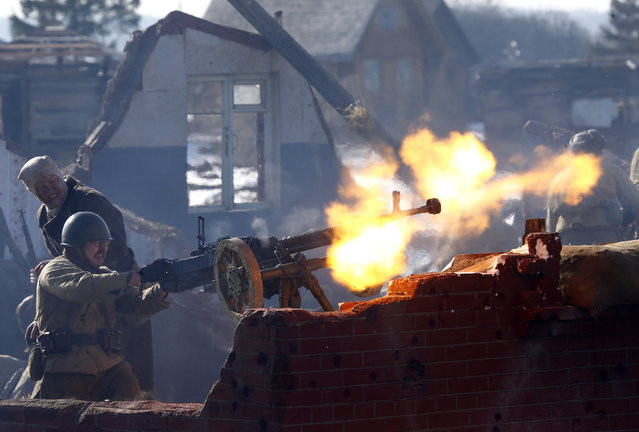
Military enthusiasts take part in a re-enactment of the World War II battle of Stalingrad at the “Stalin Line” memorial, near the village of Goroshki, Belarus, February 27, 2016. (Photo by Vasily Fedosenko/Reuters)

Military enthusiasts take part in a re-enactment of the World War II battle of Stalingrad at the “Stalin Line” memorial, near the village of Goroshki, Belarus, February 27, 2016. (Photo by Vasily Fedosenko/Reuters)
Details
28 Feb 2016 10:32:00