Raquel Poti poses for photographers during the “Amigos da Onça” street party on the second day of Carnival on February 10, 2024 in Rio de Janeiro, Brazil. (Photo by Buda Mendes/Getty Images)
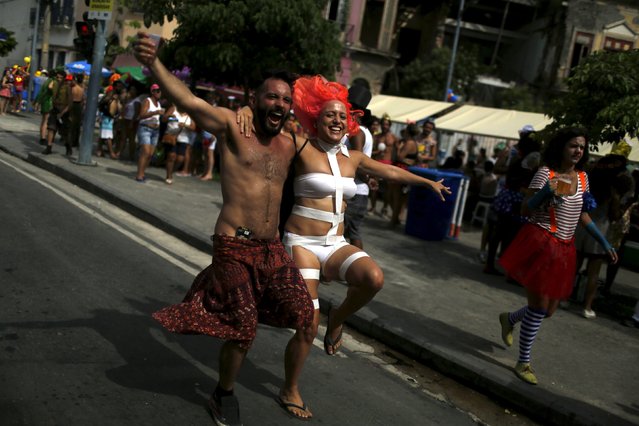
Revellers take part in an annual block party known as “Cordao de Prata Preta”, one of the many carnival parties to take place in the neighbourhoods of Rio de Janeiro, February 6, 2016. (Photo by Pilar Olivares/Reuters)
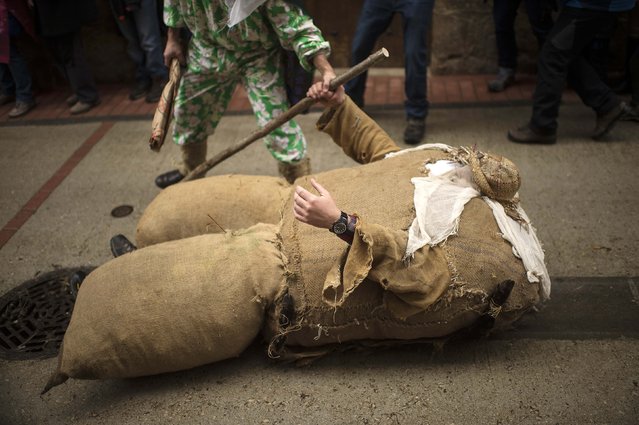
Ziripot, a traditional figure stuffed with straw, is helped up during Carnival celebrations in the Navarran village of Lantz, on February 16, 2015. (Photo by Vincent West/Reuters)
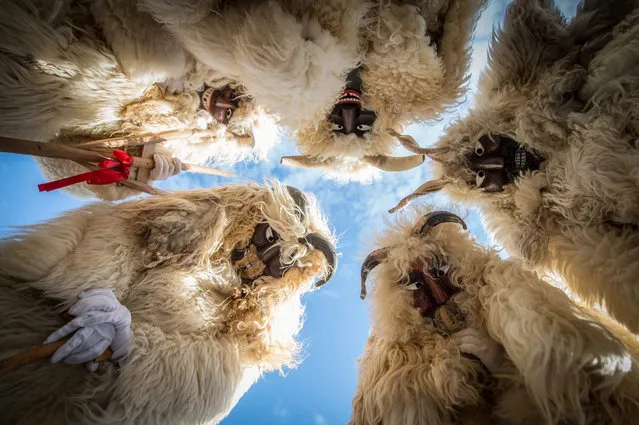
Participants wearing costumes and masks take part in the first day of the traditional carnival parade in Mohacs, Hungary, 23 February 2017. The carnival parade of so-called busos, dressed in costumes with frightening wooden masks and using various noisy wooden rattlers, is traditionally held on the seventh weekend before Easter to drive away winter. (Photo by Sandor Ujvari/EPA)
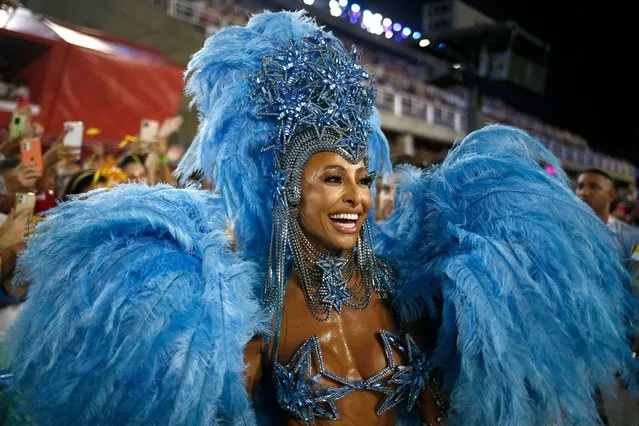
Queen of drums, Sabrina Sato of Unidos de Vila Isabel samba school during the Champions Parade on the last day of Rio de Janeiro 2022 Carnival at Marques de Sapucai Sambadrome on May 01, 2022 in Rio de Janeiro, Brazil. Rio de Janeiro's iconic carnival returns to the sambodrome after a two year suspension and postponements due to the coronavirus pandemic. (Photo by Wagner Meier/Getty Images)
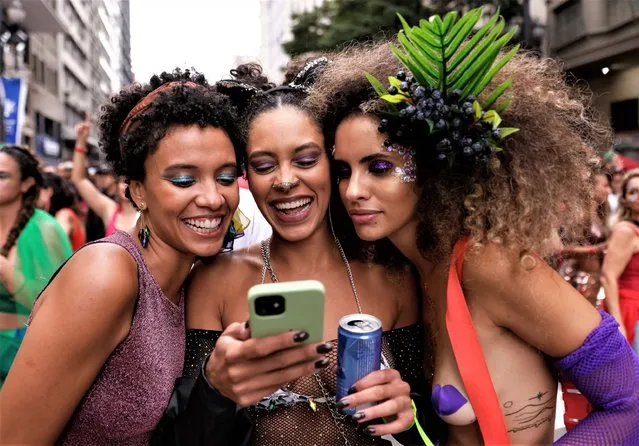
Revelers look at a cellphone during the annual street block party know as “Explode Coracao” on the third day of Carnival on February 19, 2023 in Sao Paulo, Brazil. According to the São Paulo City Council, during Carnival week more than 500 street blocks (blocos de rua) are held and more than 15 million people are expected to participate in them. Created in 2017, Explode Coracao is one of the most popular street blocks and attracted 150,000 revelers in its last edition, before the pandemic, in 2020. (Photo by Alexandre Schneider/Getty Images)
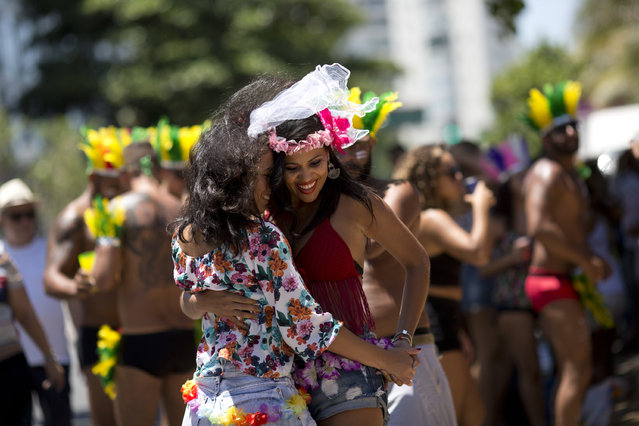
In this February 19, 2017 photo, a couple dances during the “If you don't give me....then you lend me” Carnival street party on Ipanema beach, in Rio de Janeiro, Brazil. The typical view of Carnival in Brazil is anything goes, with no headdress too big, no outfit too small, no song too ribald, but this year some organizers of the world's best known party are drawing the line at lyrics that are sexist, homophobic or racist. (Photo by Silvia Izquierdo/AP Photo)
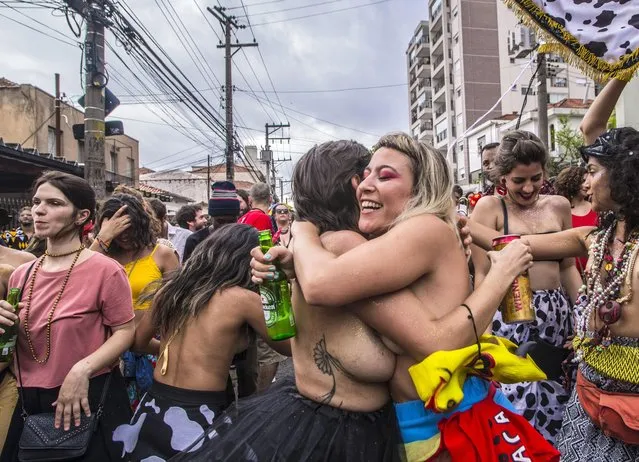
People enjoy carnival while shouting slogans of female empowerment and anti harrassment in Sao Paulo, Brazil on January 28, 2018. The carnival is marked by a lot of fun, but also has space to talk about more serious things – without losing the good mood. Parading for the first time in São Paulo, the Vaca Profana block proposed a reflection on sieges and machismo. (Photo by Cris Faga/Rex Features/Shutterstock)