Loading...
Done
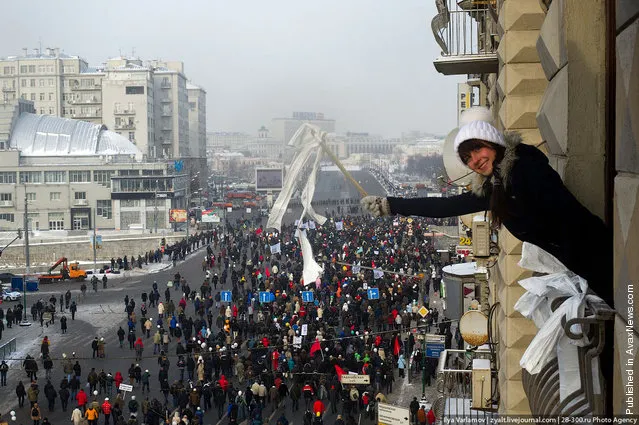
Russian oppostion activists take part in a rally and march to Bolotnaya Square on February 4, 2012 in Moscow, Russia

Russian oppostion activists take part in a rally and march to Bolotnaya Square on February 4, 2012 in Moscow, Russia. Demonstrators braved temperatures as low as -20 degrees celsius as they took to the streets exactly one month before the presidential elections in protest against Vladimir Putin's efforts to return to the Kremlin for an unprecedented third term as President. (Photo by: Ilya Varlamov; Source: LiveJournal)
Details
05 Feb 2012 13:07:00
The Silence of Dogs in Cars

At first, British photographer Martin Usborne just wanted to do some reporting on people who leave their dogs locked up in cars. But as he went around scouring parking lots, “making barking noises to try and awaken sleeping dogs that were not actually there,” his project took on a new artistic direction. “The Silence of Dogs in Cars” was inspired by a “childhood memory of waiting in a car whilst his parents were shopping in a supermarket, and the youthful fear that they would not return.”
Details
08 Jul 2013 08:57:00
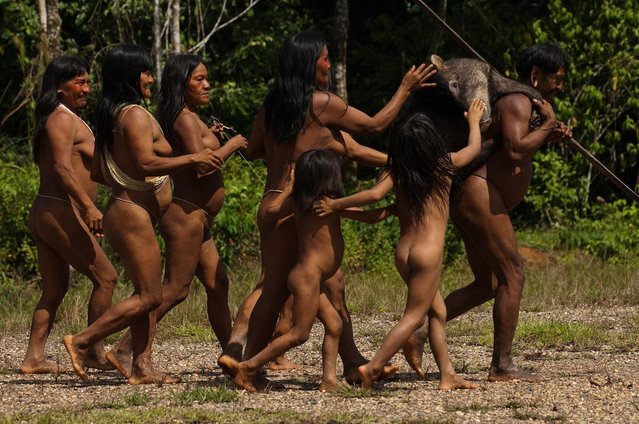
Spectacular images offering insight into the lives of the Huaorani people in the Ecuadorian Amazon have been revealed showing how they use traditional methods to hunt monkeys for food. The stunning pictures were taken by conservation photographer Pete Oxford from Torquay, Devon in the Ecuadorian Amazon. “The Huaorani Indians are a forest people highly in tune with their environment. Many are now totally acculturated since the 1950s by missionaries”, said Pete. “Today they face radical change to their culture to the proximity of oil exploration within their territory and the Yasuni National Park and Biosphere Reserve, they are vastly changed. Some still live very traditionally and for this shoot, through my Huaorani friend, a direct relative of those photographed he wanted to depict them as close to their original culture as possible. They still largely hunt with blow pipes and spears eating a lot of monkeys and peccaries”. The Huaorani are also known as the Waorani, Waodani or the Waos and are native Amerindians. Their lands are located between the Curaray and Napo rivers and speak the Huaorani language. Pete says that during his visit he was welcomed into the group and hopes that ancient cultures can be saved. Here: The tribe were seen celebrating after a hunter returned to camp with a wild pig. (Photo by Pete Oxford/Mediadrumworld.com)

Spectacular images offering insight into the lives of the Huaorani people in the Ecuadorian Amazon have been revealed showing how they use traditional methods to hunt monkeys for food. The stunning pictures were taken by conservation photographer Pete Oxford from Torquay, Devon in the Ecuadorian Amazon. Here: The tribe were seen celebrating after a hunter returned to camp with a wild pig. (Photo by Pete Oxford/Mediadrumworld.com)
Details
20 Jan 2017 07:58:00
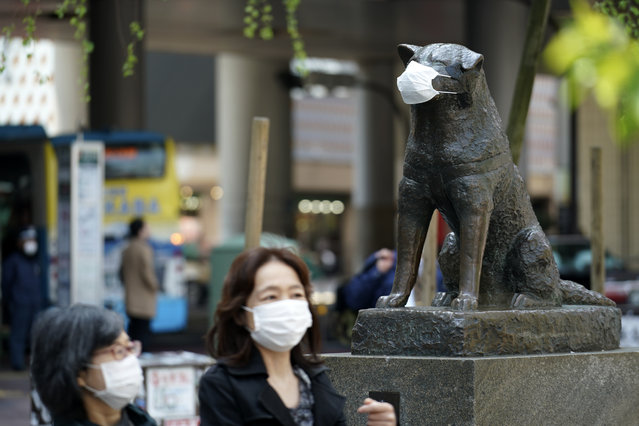
A statue of a Japanese Akita dog named “Hachiko” wearing a face mask is seen near Shibuya Station Wednesday, April 8, 2020, in Tokyo. Japanese Prime Minister Shinzo Abe declared a state of emergency on Tuesday for Tokyo and six other prefectures to ramp up defenses against the spread of the new coronavirus. Hachiko has waited for his owner University of Tokyo Prof. Eizaburo Ueno at the same place by the station every afternoon, expecting him to return home for nearly 11 years even after Ueno's death at work. (Photo by Eugene Hoshiko/AP Photo)

A statue of a Japanese Akita dog named “Hachiko” wearing a face mask is seen near Shibuya Station Wednesday, April 8, 2020, in Tokyo. Japanese Prime Minister Shinzo Abe declared a state of emergency on Tuesday for Tokyo and six other prefectures to ramp up defenses against the spread of the new coronavirus. Hachiko has waited for his owner University of Tokyo Prof. Eizaburo Ueno at the same place by the station every afternoon, expecting him to return home for nearly 11 years even after Ueno's death at work. (Photo by Eugene Hoshiko/AP Photo)
Details
15 Apr 2020 00:05:00


“Haile Selassie I (23 July 1892 – 27 August 1975), born Tafari Makonnen, was Ethiopia's regent from 1916 to 1930 and Emperor of Ethiopia from 1930 to 1974. The heir to a dynasty that traced its origins to the 13th century, and from there by tradition back to King Solomon and Queen Makeda, Empress of Axum, known in the Abrahamic tradition as the Queen of Sheba. Haile Selassie is a defining figure in both Ethiopian and African history.

Haile Selassie is revered as the returned Messiah of the Bible, God incarnate, among the Rastafari movement, the number of followers of which is estimated between 200,000 and 800,000. Begun in Jamaica in the 1930s, the Rastafari movement perceives Haile Selassie as a messianic figure who will lead a future golden age of eternal peace, righteousness, and prosperity. He himself remained an Ethiopian Orthodox Christian throughout his life”. – Wikipedia

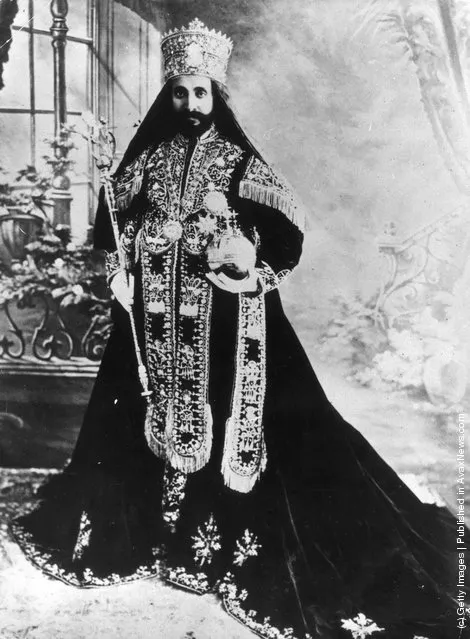
Photo: Negusa Negasti, Emperor of Ethiopia Haile Selassie I, known as “Lord of Lords”, “The Conquering Lion of the tribe of Judah”, “Light of the world”, “Elect of God”, in full ceremonial regalia following his coronation. (Photo by Hulton Archive/Getty Images)

Details
21 Jun 2011 11:04:00
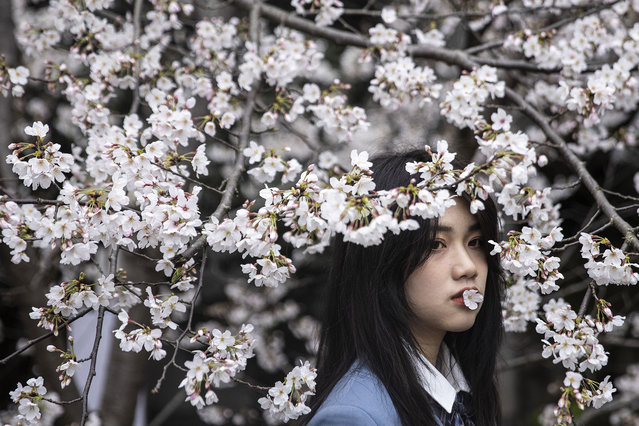
A girl holds a blossom in her mouth while posing for photos under cherry blossom trees at Wuhan University on March 11, 2021 in Wuhan, China. Tourists come to view cherry blossoms at the university during the spring. Wuhan University, first founded in 1893, is widely known as one of the most beautiful universities in China. Last year Wuhan University did not receive guests due to the pandemic lockdown. Currently the limit is 10,000 tourists a day. With no recorded cases of community transmission since May 2020, life for residents is gradually returning to normal. (Photo by Getty Images/China Stringer Network)

A girl holds a blossom in her mouth while posing for photos under cherry blossom trees at Wuhan University on March 11, 2021 in Wuhan, China. Tourists come to view cherry blossoms at the university during the spring. Wuhan University, first founded in 1893, is widely known as one of the most beautiful universities in China. (Photo by Getty Images/China Stringer Network)
Details
16 Mar 2021 09:45:00
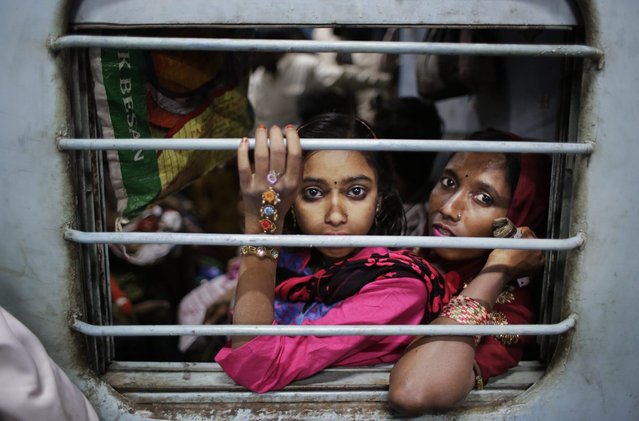
In this November 18, 2014 photo, Murshida, 12, sits on the lap of her mother Marjina as the train leaves for their village in West Bengal, at a railway station in New Delhi, India. Six months ago, Marjina stepped off a train in New Delhi with her two children, hoping to find a better life after her husband abandoned them without so much as a goodbye. (Photo by Altaf Qadri/AP Photo)

In this November 18, 2014 photo, Murshida, 12, sits on the lap of her mother Marjina as the train leaves for their village in West Bengal, at a railway station in New Delhi, India. Six months ago, Marjina stepped off a train in New Delhi with her two children, hoping to find a better life after her husband abandoned them without so much as a goodbye. The family spent their days at a landfill picking through other people’s garbage to find salvageable bits to resell or recycle. After six months of poverty, illness and shame, they returned to that train station in New Delhi, headed back to an uncertain future to their hometown in West Bengal. (Photo by Altaf Qadri/AP Photo)
Details
09 Dec 2014 09:47:00
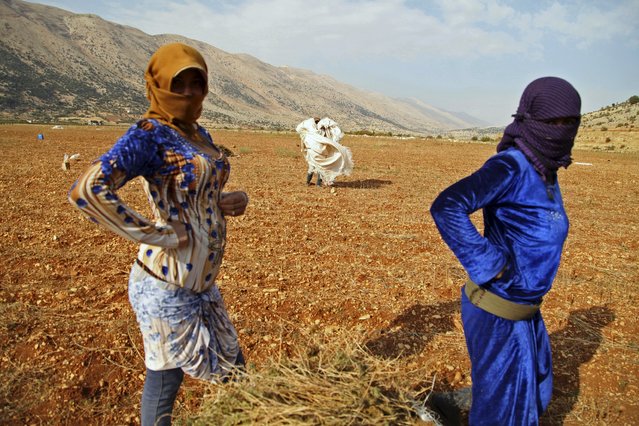
Aisha, 15, (L) (who asked to withhold her last name), a Syrian refugee from Raqqa, waits with a fellow refugee while harvesting cannabis in the Bekaa valley, Lebanon October 19, 2015. Syrian refugees work to harvest and process spiky-leafed cannabis plants in neighbouring Lebanon’s Bekaa Valley. (Photo by Alia Haju/Reuters)

Aisha, 15, (L) (who asked to withhold her last name), a Syrian refugee from Raqqa, waits with a fellow refugee while harvesting cannabis in the Bekaa valley, Lebanon October 19, 2015. Syrian refugees work to harvest and process spiky-leafed cannabis plants in neighbouring Lebanon’s Bekaa Valley. Often farmers of cotton and wheat back home in Raqqa province – now the de facto capital of Islamic State – the conflict in Syria drove them to seek safety in a region where Syrian migrant workers used to spend a few months a year before returning home. (Photo by Alia Haju/Reuters)
Details
24 Dec 2015 08:03:00