Loading...
Done
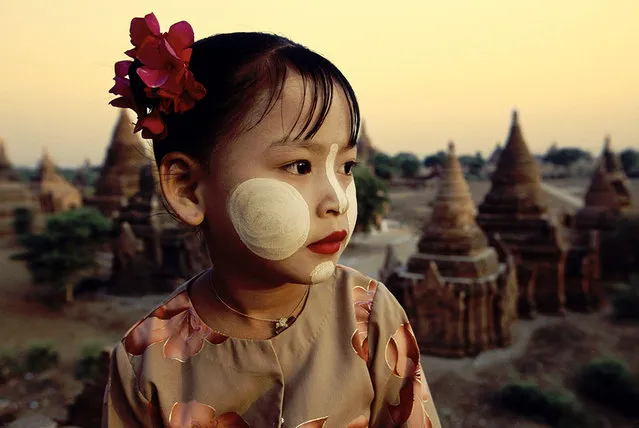
Pagan Kingdom, Myanmar

The Kingdom of Pagan (also commonly known as the Pagan Dynasty and the Pagan Empire) was the first kingdom to unify the regions that would later constitute modern-day Burma (Myanmar). Pagan's 250-year rule over the Irrawaddy valley and its periphery laid the foundation for the ascent of Burmese language and culture, the spread of Burman ethnicity in Upper Burma, and the growth of Theravada Buddhism in Burma and in mainland Southeast Asia.
Details
22 Feb 2014 15:14:00


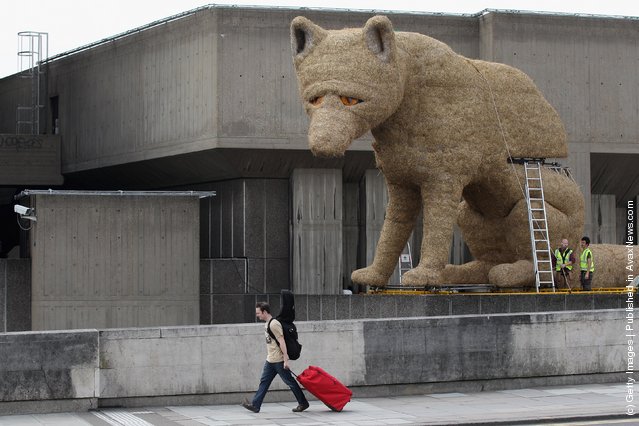
The finishing touches are made to a giant sculpture on the Hayward Gallery entitled “Urban Fox” and made from straw bales on April 18, 2011 in London, England. The sculpture features in the Southbank Centre's 60th anniversary celebration of the 1951 Festival of Britain. The celebration will feature various cultural and creative events and runs from April 22 until September 4, 2011 at London's Southbank Centre. (Photo by Oli Scarff/Getty Images)
Details
22 Apr 2011 09:45:00


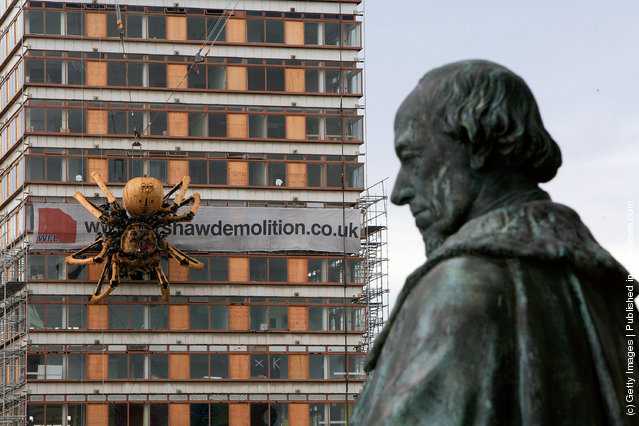
A statue of The Earl of Beaconsfield looks on as a giant mechanical spider sits on the side of the derelict Concourse tower in Liverpool city centre on September 3, 2008 in Liverpool, England. The 50ft tall spider was commissioned for the city's European Capital of Culture year and will begin moving to explore the city operated by artists from French theatre company La Machine. (Photo by Christopher Furlong/Getty Images)
Details
05 Jun 2011 11:51:00


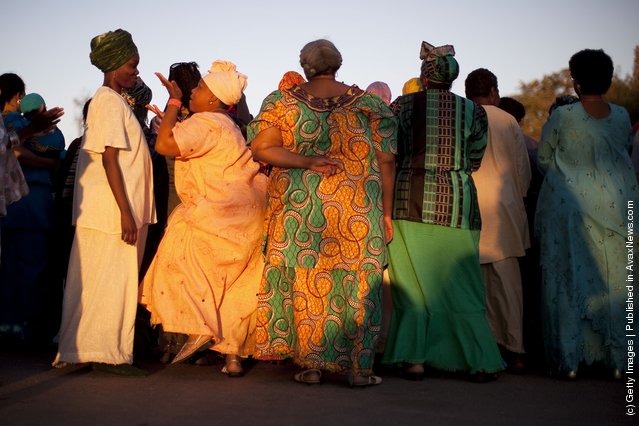
Members of the Black Hebrews community celebrate the Shavuot harvest festival on June, 19, 2011 in Dimona, Israel. The community, who call themselves the African Hebrew Israelites of Jerusalem, moved to Israel in 1969 from the United States and have since maintained a vibrant culture which includes a communal lifestyle and a vegan diet. They are not recognized as Jews by Israel despite their belief in the Torah, but were granted permanent resident status in 2003. (Photo by Uriel Sinai/Getty Images)
Details
20 Jun 2011 10:44:00
Members of the Paraguay-African cultural group Kamba Cua dance during celebrations in honor of Saint Balthazar, one of the Three Kings, on Epiphany in Fernando de la Mora, Paraguay, late Saturday, January 8, 2022, just days after the official holiday. The annual procession is a tradition that keeps Paraguay's Afro-descendants connected with their African roots through ancestral dance, drumming and customs. (Photo by Jorge Saenz/AP Photo)

Members of the Paraguay-African cultural group Kamba Cua dance during celebrations in honor of Saint Balthazar, one of the Three Kings, on Epiphany in Fernando de la Mora, Paraguay, late Saturday, January 8, 2022, just days after the official holiday. The annual procession is a tradition that keeps Paraguay's Afro-descendants connected with their African roots through ancestral dance, drumming and customs. (Photo by Jorge Saenz/AP Photo)
Details
29 Jan 2022 07:01:00
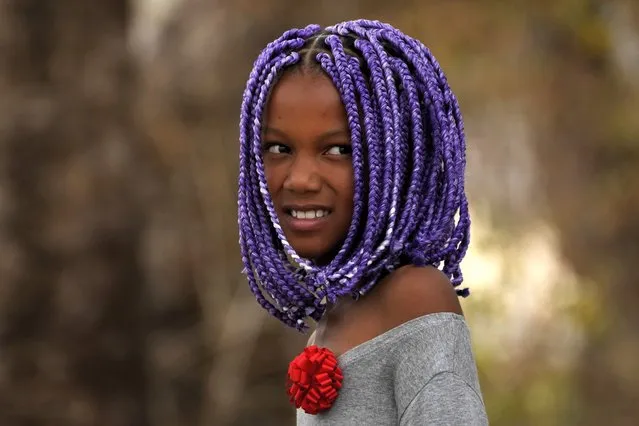
Sophia Fernandes, a member of the Kalunga quilombo, the descendants of runaway slaves, dons traditional afro braids, during the culmination of the week-long pilgrimage and celebration for the patron saint “Nossa Senhora da Abadia” or Our Lady of Abadia, in the rural area of Cavalcante in Goias state, Brazil, Saturday, August 13, 2022.  Devotees celebrate Our Lady of Abadia at this time of the year with weddings, baptisms and by crowning distinguished community members, as they maintain cultural practices originating from Africa that mix with Catholic traditions. (Photo by Eraldo Peres/AP Photo)

Sophia Fernandes, a member of the Kalunga quilombo, the descendants of runaway slaves, dons traditional afro braids, during the culmination of the week-long pilgrimage and celebration for the patron saint “Nossa Senhora da Abadia” or Our Lady of Abadia, in the rural area of Cavalcante in Goias state, Brazil, Saturday, August 13, 2022. Devotees celebrate Our Lady of Abadia at this time of the year with weddings, baptisms and by crowning distinguished community members, as they maintain cultural practices originating from Africa that mix with Catholic traditions. (Photo by Eraldo Peres/AP Photo)
Details
21 Aug 2022 03:48:00
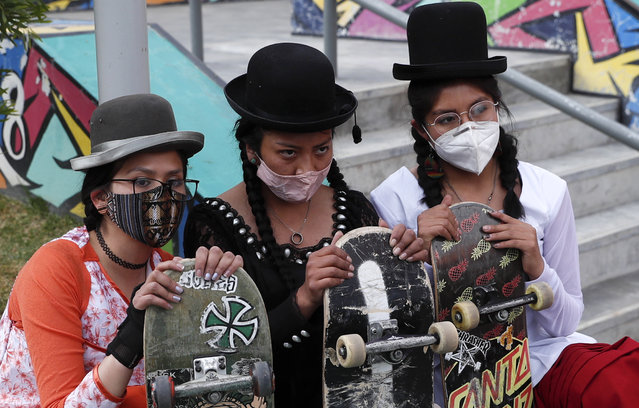
Yanira Villarreal, left, Ayde Choque, center, and Milenda Limachi, wearings masks amid the COVID-19 pandemic and dressed as a “Cholita” pose for a photo with their skateboards during a youth talent show in La Paz, Bolivia, Wednesday, September 30, 2020. Young women called “Skates Imillas”, using the Aymara word for girl Imilla, use traditional Indigenous clothing as a statement of pride of their Indigenous culture while playing riding their skateboards. (Photo by Juan Karita/AP Photo)

Yanira Villarreal, left, Ayde Choque, center, and Milenda Limachi, wearings masks amid the COVID-19 pandemic and dressed as a “Cholita” pose for a photo with their skateboards during a youth talent show in La Paz, Bolivia, Wednesday, September 30, 2020. Young women called “Skates Imillas”, using the Aymara word for girl Imilla, use traditional Indigenous clothing as a statement of pride of their Indigenous culture while playing riding their skateboards. (Photo by Juan Karita/AP Photo)
Details
02 Oct 2020 00:07:00
Bride Ana Vallejos, wearing a traditional “Caporales” Andean outfit, is escorted by her parents to her wedding celebration, in La Paz, Bolivia, Saturday, December 12, 2020. As a measure to reactivate the economy, the Bolivian government lifted restrictions to help curve the spread of the new coronavirus. Sporting, religious and cultural events may take place publicly until mid-January. (Photo by Juan Karita/AP Photo)

Bride Ana Vallejos, wearing a traditional “Caporales” Andean outfit, is escorted by her parents to her wedding celebration, in La Paz, Bolivia, Saturday, December 12, 2020. As a measure to reactivate the economy, the Bolivian government lifted restrictions to help curve the spread of the new coronavirus. Sporting, religious and cultural events may take place publicly until mid-January. (Photo by Juan Karita/AP Photo)
Details
14 Dec 2020 00:07:00