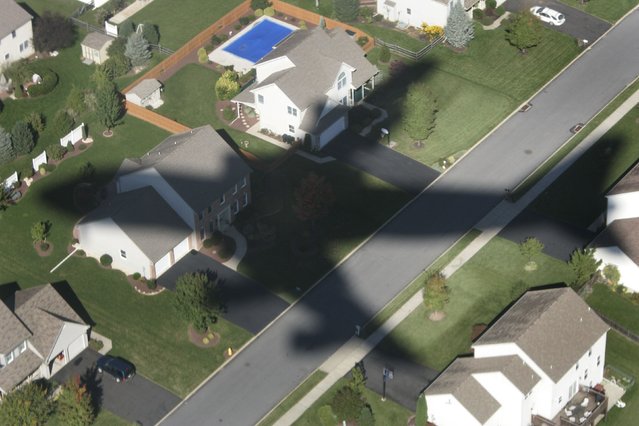
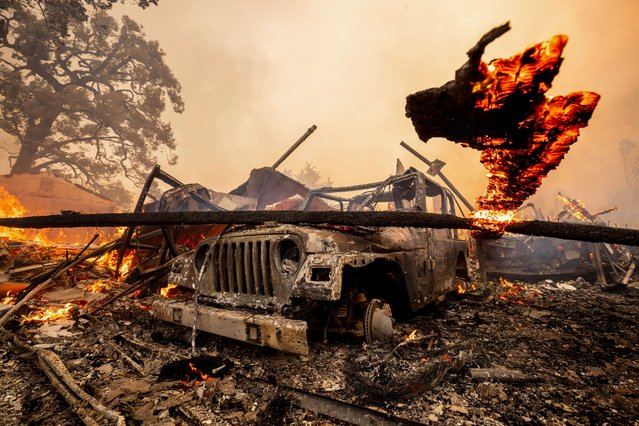
Air Force One casts its shadow over homes as it comes in to land in Allentown, Pennsylania with U.S. President George W. Bush aboard in this October 1, 2004 file photo. (Photo by Jason Reed/Reuters)
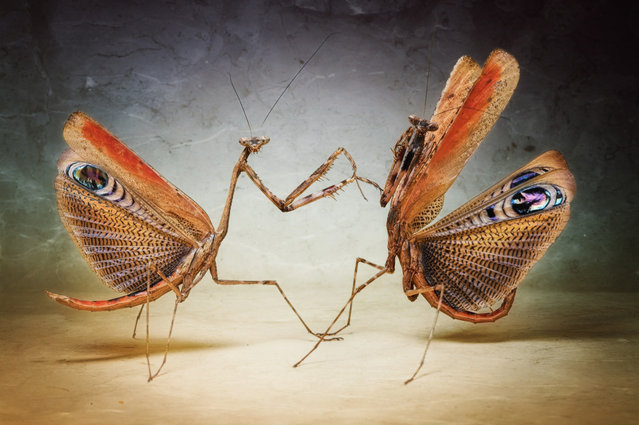
Two male African mantis Pseudempusa pinnapavonis (Peacock Mantis) show their colours in Igor's home studio in Munich, Germany. (Photo by Igor Siwanowicz/Barcroft Media)
A man pushes a tub carrying children as he gets them back home after school at a flooded area in Duchang, Jiangxi Province, China, June 27, 2016. (Photo by Reuters/Stringer)
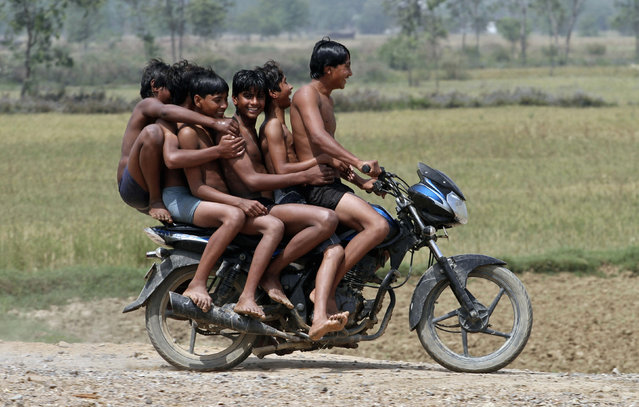
Boys ride a motorbike on their way back home after taking a bath in a canal at Chachura village, in Uttar Pradesh April 4, 2012. (Photo by Parivartan Sharma/Reuters)
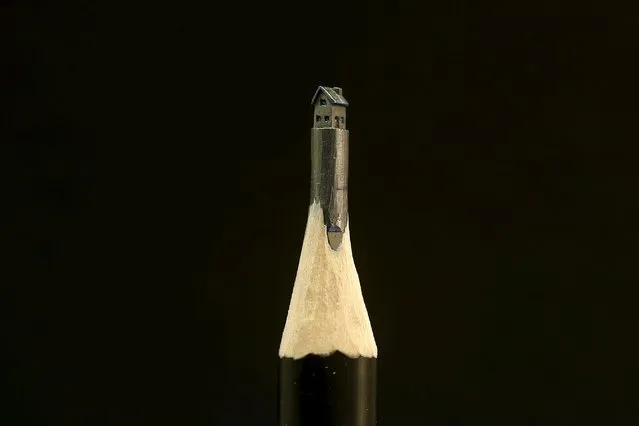
A miniature sculpture in the shape of a home, created by self-taught artist Jadranko Djordjevic on a graphite pencil, is seen in Tuzla, Bosnia and Herzegovina April 26, 2016. (Photo by Dado Ruvic/Reuters)
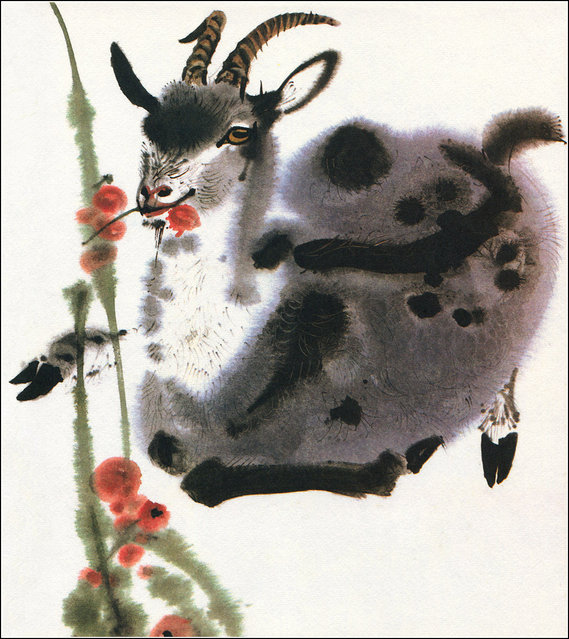
Mirko Hanák was born in 1921 in Prague, Czech Republic and worked as a painter, graphic designer and illustrator. His specialties were animals and human figures that were full of life and fun. He also had a firm grasp on composition as his paintings were so well balanced despite his casual fluid line. He was working on “Charlotte's Web” the movie when he tragically died at the height of his career from leukemia in 1971.
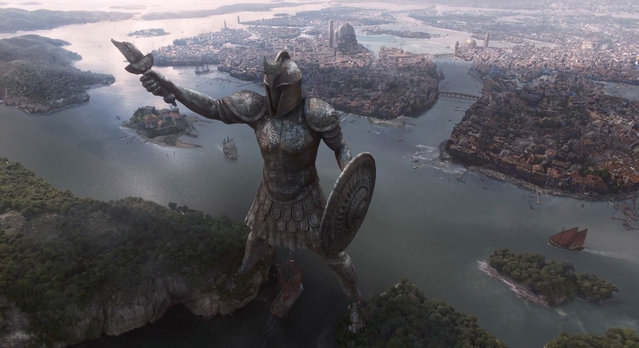
The characters fighting for Westeros in Game of Thrones are fighting mostly for CGI backdrops. Like many others TV series and movies, visual effects is a huge part of the production process as it handles details both great and small. A great credit to Game of Thrones is that the story is so good that we forget about the effects, and another great credit goes to the VFX team because their work is seamless. If you want to see the seams, you have to get a visual breakdown of how the shots are put together.