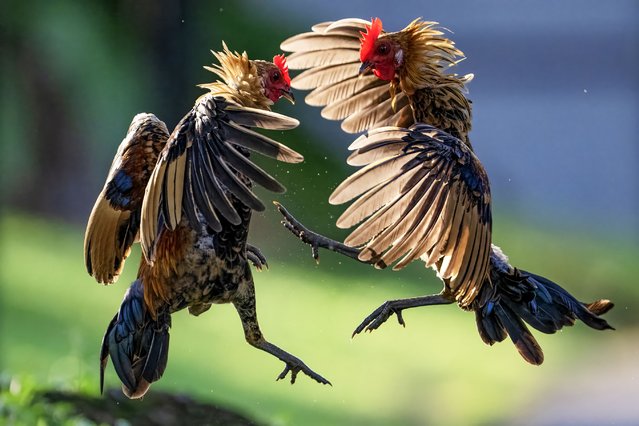
A pair of red junglefowl fight over territory in Pasir Ris Park, Singapore in the second decade of February 2025. (Photo by Liew Tong Leng/Solent News)
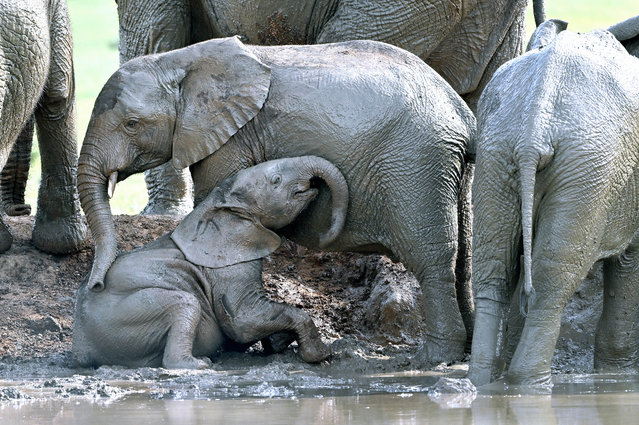
The moment baby elephant gets a helping hand to escape the slippery waterhole was caught on camera in the Addo Elephant National Park in the Eastern Cape of South Africa in the last decade of August 2025. (Photo by Anne Laing/Caters News Agency)
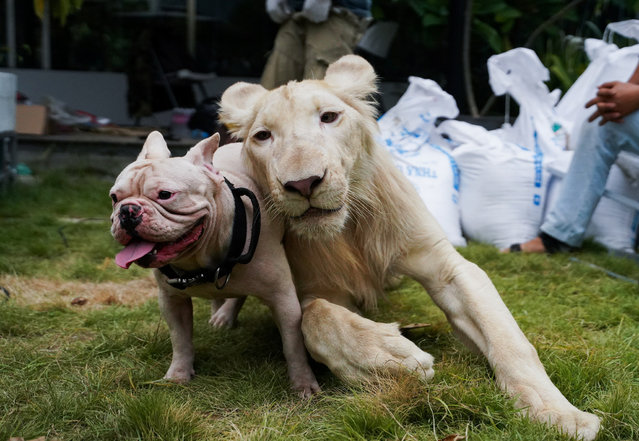
A confiscated pet lion poses with a dog as it arrived back home from the Phnom Tamao Wildlife Rescue Center after Prime Minister Hun Sen ordered authorities to return the animal in Phnom Penh, Cambodia, July 5, 2021. (Photo by Cindy Liu/Reuters)
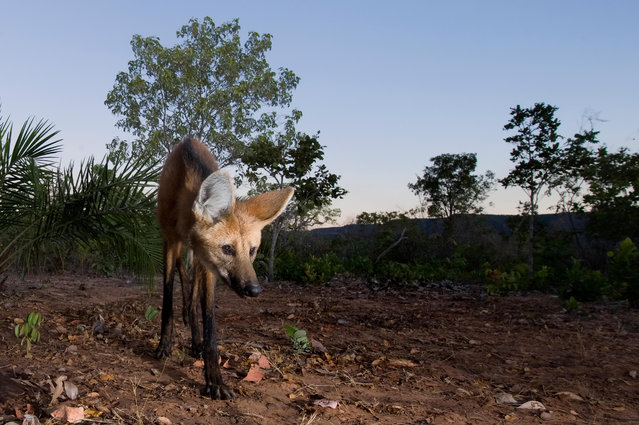
Global wildlife populations will decline by 67% by 2020 unless urgent action is taken to reduce human impact on species and ecosystems, warns the biennial Living Planet Index report from WWF (World Wide Fund for Nature) and ZSL (Zoological Society of London). From elephants to eels, here are some of the wildlife populations most affected by human activity. Here: The maned wolf is among the large mammals in the Brazilian Cerrado that are threatened by the increasing conversion of grasslands into farmland for grazing and growing crops. (Photo by Ben Cranke/Nature Picture Library/Alamy Stock Photo)
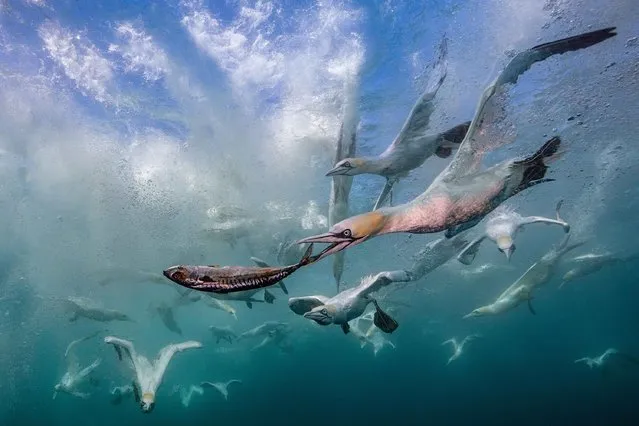
Hundreds of gannets dive for mackerel off the coast of Shetland, Northern Isles of Scotland on July 2020, where they plunge into the water from heights of up to 100ft at speeds of 60mph. (Photo by David Keep/The Times)
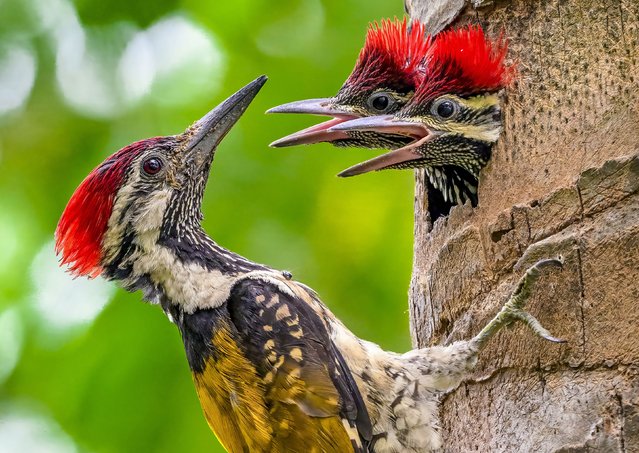
An adult black-rumped flameback woodpecker is pestered by a pair of hungry chicks in Rajarhat, India in the second decade of May 2024. (Photo by Kalyan Acharya/Solent News)
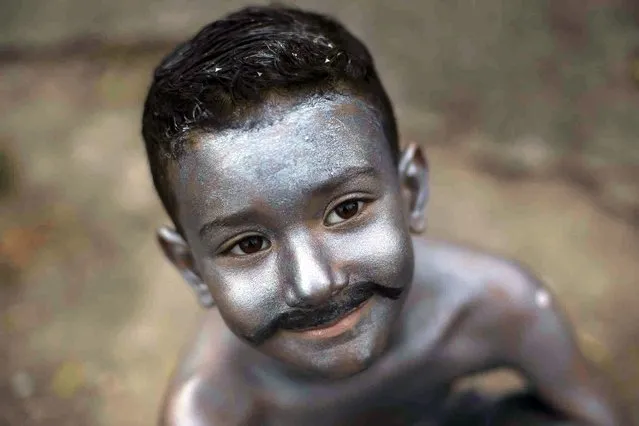
A child coated in silver body paint, smiles during the “Loucura Suburbana”, or Suburban Madness pre-Carnival parade, in Rio de Janeiro, Brazil, Thursday, February 8, 2024. (Photo by Bruna Prado/AP Photo)
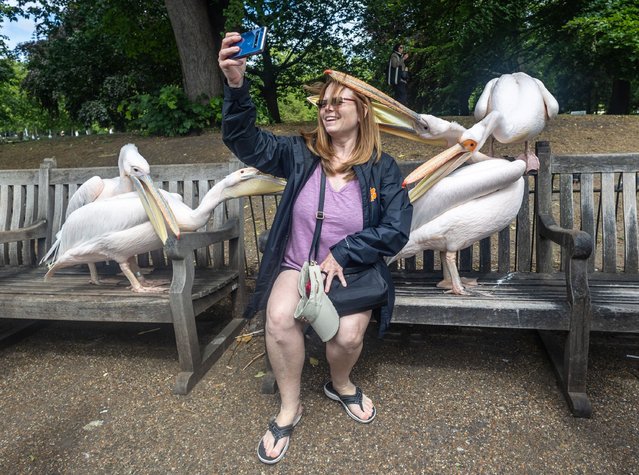
A tourist takes a selfie with pelicans on the bench in St. James's Park in Westminster, central London on June 19, 2024. (Photo by Marcin Nowak/London News Pictures)