Loading...
Done
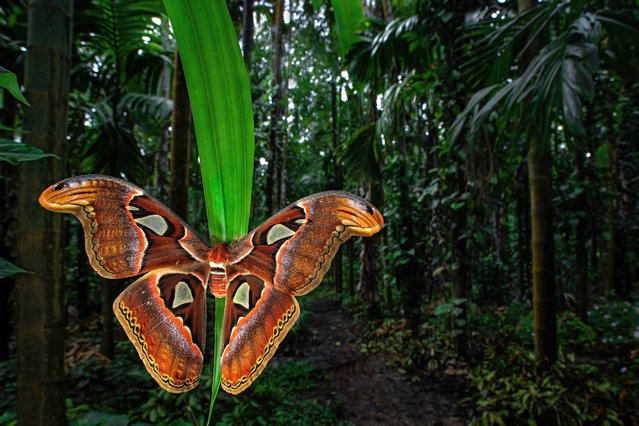
A huge atlas moth, with a wingspan of more than 9in, photographed on an areca nut plantation in Sirsi, India. (Photo by Uday Hegde/Close Up Photographer of the Year)

A huge atlas moth, with a wingspan of more than 9in, photographed on an areca nut plantation in Sirsi, India. (Photo by Uday Hegde/Close Up Photographer of the Year)
Details
09 Jan 2023 06:04:00
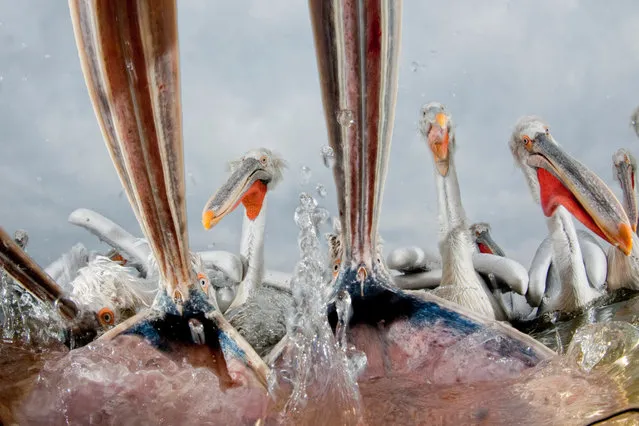
A pool ingeniously filled with clear water in the middle of Lake Kerniki in Greece enabled this shot of feeding pelicans. (Photo by Bence Mate/Close Up Photographer of the Year 2020)

A pool ingeniously filled with clear water in the middle of Lake Kerniki in Greece enabled this shot of feeding pelicans. (Photo by Bence Mate/Close Up Photographer of the Year 2020)
Details
02 Oct 2020 00:03:00
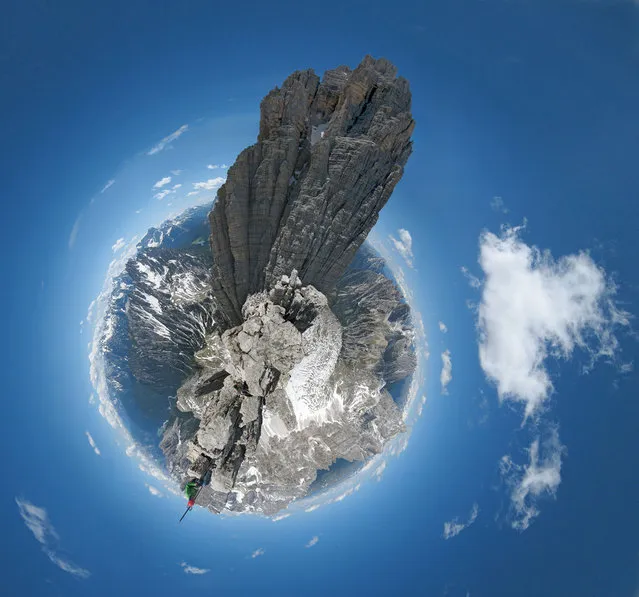
“Taken at the tiny summit of Cima Piccola in the the Tre Cima group in the Dolomites, Italy. The large peak is Cima Grande Some remote peaks have a summit register, and my climbing partner Steve can be seen signing this in the bottom of the picture”. (“Little Planets” Project. Photo and comment by Dan Arkle)

These are the amazing panoramic photographs that look like little planets. They were taken by photographer Dan Arkle, 34, from Sheffield, UK. He said: “On a sharp summit, you feel literally on top of the world, with dramatic views in all directions, including straight down. I tried using conventional photography to capture this feeling, but even with a wide angle lens I couldnt get all the view in the image”. Here: “Taken at the tiny summit of Cima Piccola in the the Tre Cima group in the Dolomites, Italy. The large peak is Cima Grande Some remote peaks have a summit register, and my climbing partner Steve can be seen signing this in the bottom of the picture”. (“Little Planets” Project. Photo and comment by Dan Arkle)
Details
06 Jun 2015 09:52:00
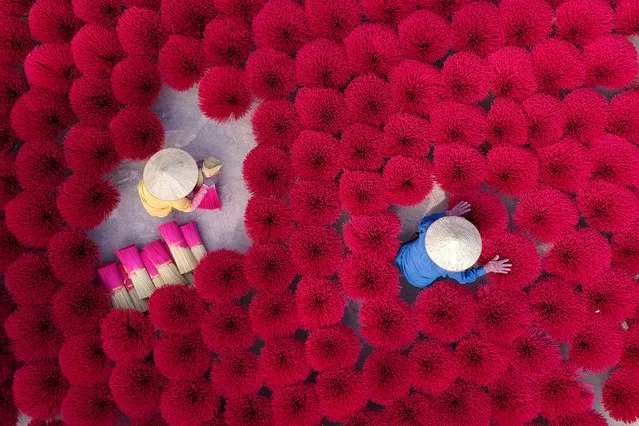
A Vietnamese woman collects dried incense sticks at a courtyard in Quang Phu Cau village on the outskirts of Hanoi on January 9, 2020 ahead of the upcoming Lunar New Year celebrations, referred to in Vietnam as Tet. (Photo by Manan Vatsyayana/AFP Photo)

A Vietnamese woman collects dried incense sticks at a courtyard in Quang Phu Cau village on the outskirts of Hanoi on January 9, 2020 ahead of the upcoming Lunar New Year celebrations, referred to in Vietnam as Tet. (Photo by Manan Vatsyayana/AFP Photo)
Details
12 Feb 2020 00:03:00
Members of security forces secure Tahrir Square in Cairo, Egypt, November 11, 2016. Egypt imposed a big security clampdown in its cities on Friday as mass demonstrations called to protest against austerity measures failed to take place. Riot police and armored vehicles filled the otherwise empty streets of central Cairo, but most people stayed at home. President Abdel Fattah al-Sisi has urged Egyptians not to protest and warned that there would be no going back on economic reforms, no matter how much pain they might cause. (Photo by Mohamed Abd El Ghany/Reuters)

Members of security forces secure Tahrir Square in Cairo, Egypt, November 11, 2016. Egypt imposed a big security clampdown in its cities on Friday as mass demonstrations called to protest against austerity measures failed to take place. Riot police and armored vehicles filled the otherwise empty streets of central Cairo, but most people stayed at home. (Photo by Mohamed Abd El Ghany/Reuters)
Details
12 Nov 2016 10:06:00


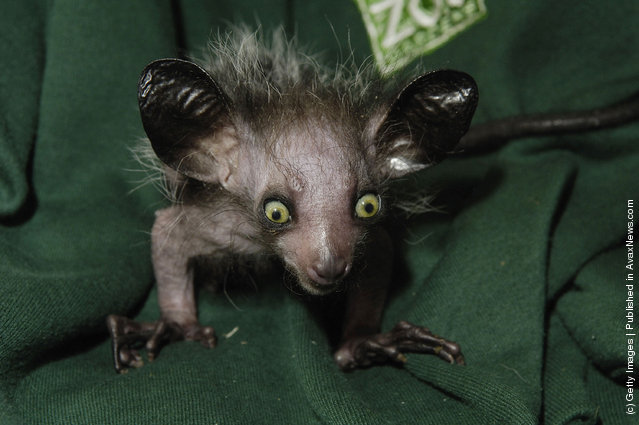
“The aye-aye (Daubentonia madagascariensis) is a lemur, a strepsirrhine primate native to Madagascar that combines rodent-like teeth and a special thin middle finger to fill the same ecological niche as a woodpecker. It is the world's largest nocturnal primate, and is characterized by its unusual method of finding food; it taps on trees to find grubs, then gnaws holes in the wood and inserts its narrow middle finger to pull the grubs out. The only other animal species known to find food in this way is the striped possum. From an ecological point of view the aye-aye fills the niche of a woodpecker as it is capable of penetrating wood to extract the invertebrates within”. – Wikipedia

Photo: In this handout image from Bristol Zoo is seen the first captive bred aye-aye in the UK named “Kintana” (meaning star in Malagasy) April 15, 2005 at Bristol Zoo Gardens, England. The zoo announced today only the second baby aye-aye to be hand-reared in the world (the first was in Jersey Zoo) and has now made his first public appearance since his birth on 11 February 2005. (Photo by Rob Cousins/Bristol Zoo via Getty Images)
Details
13 Apr 2011 13:33:00
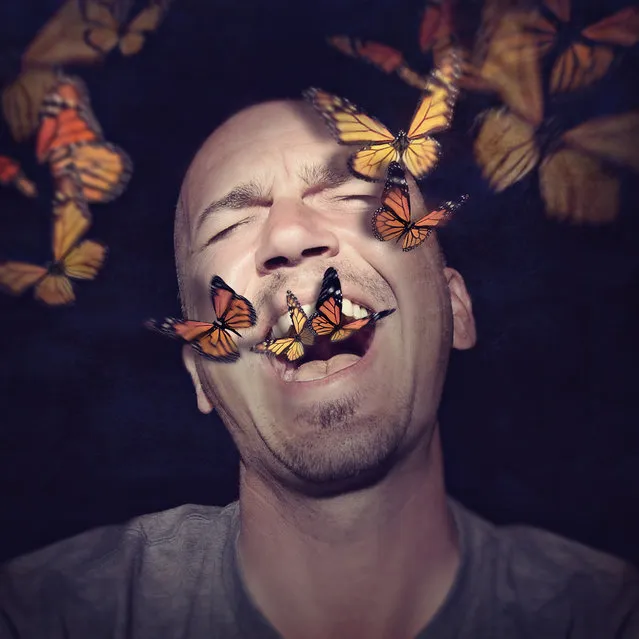
Sing

«Sing»

The story of 20 children born or living with illness or health conditions is being told by Toronto photographer and artist Shawn Van Daele, by transforming their drawings into magical photographs.
Details
26 May 2012 06:55:00
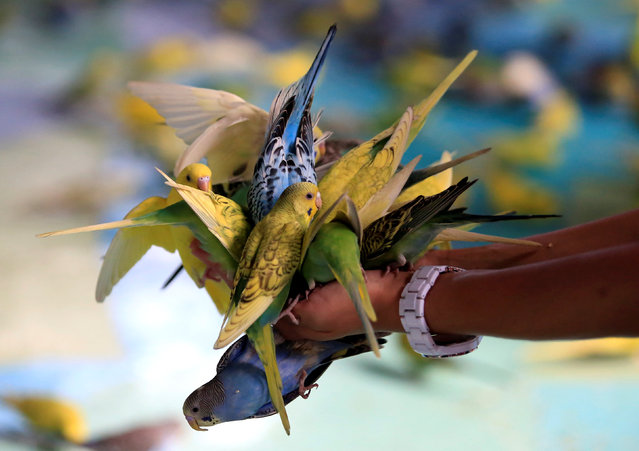
Budgies feed on seeds from a local visitor's hands at Ocean Park in metro Manila, Philippines September 10, 2016. (Photo by Romeo Ranoco/Reuters)

Budgies feed on seeds from a local visitor's hands at Ocean Park in metro Manila, Philippines September 10, 2016. (Photo by Romeo Ranoco/Reuters)
Details
11 Sep 2016 09:47:00