Loading...
Done
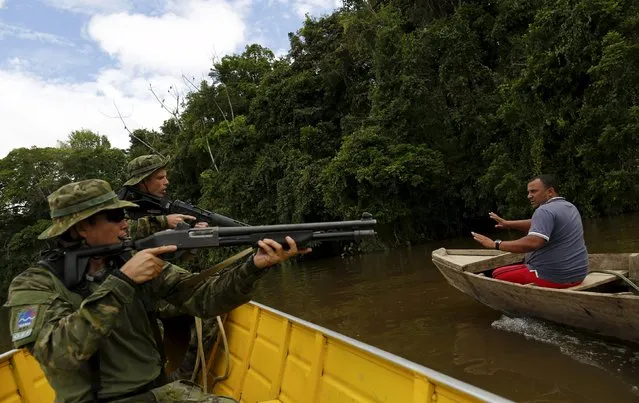
A gold prospector is detained by agents of Brazil’s environmental agency on the Uraricoera River during an operation against illegal gold mining on indigenous land, in the heart of the Amazon rainforest, in Roraima state, Brazil April 15, 2016. (Photo by Bruno Kelly/Reuters)

A gold prospector is detained by agents of Brazil’s environmental agency on the Uraricoera River during an operation against illegal gold mining on indigenous land, in the heart of the Amazon rainforest, in Roraima state, Brazil April 15, 2016. At over 9.5 million hectares, the Yanomami territory is twice the size of Switzerland and home to around 27,000 indians. The land has legally belonged to the Yanomami since 1992, but illegal miners continue to plague the area, sawing down trees and poisoning rivers with mercury in their lust for gold. (Photo by Bruno Kelly/Reuters)
Details
27 Apr 2016 10:01:00
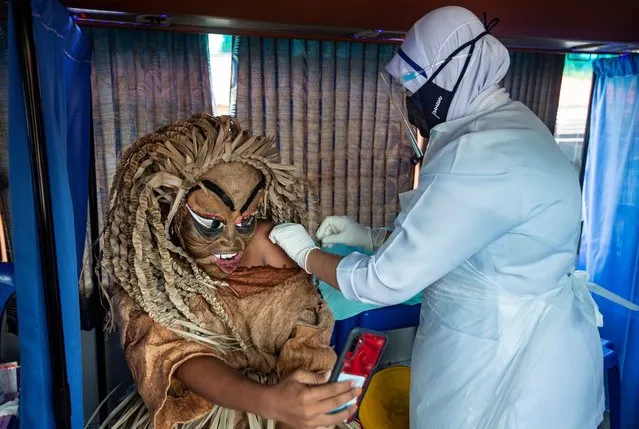
An indigenous man of Mahmeri tribe wearing a costume of Puteri Gunung Ledang character receives a dose of the vaccine against Covid-19 in Banting, near Kuala Lumpur, Malaysia,15 August 2021. Malaysia recorded another 20,670 new Covid-19 cases on 14 August, bringing the cumulative total to 1,384,353 cases. (Photo by Ahmad Yusni/EPA/EFE)

An indigenous man of Mahmeri tribe wearing a costume of Puteri Gunung Ledang character receives a dose of the vaccine against Covid-19 in Banting, near Kuala Lumpur, Malaysia,15 August 2021. Malaysia recorded another 20,670 new Covid-19 cases on 14 August, bringing the cumulative total to 1,384,353 cases. (Photo by Ahmad Yusni/EPA/EFE)
Details
03 Sep 2021 08:25:00
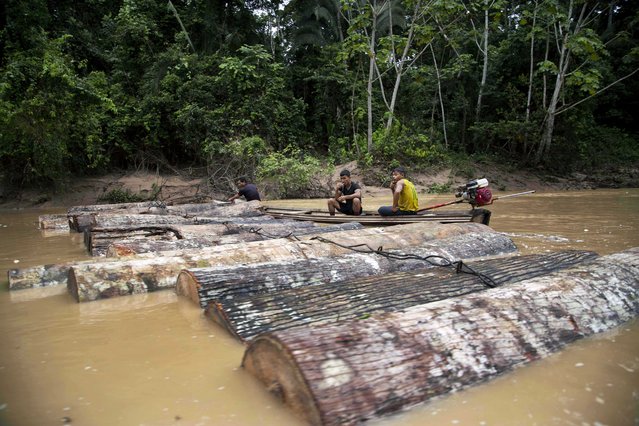
In this March 17, 2015 photo, Ashaninka Indian men, identified by locals as illegal loggers, tie tree trunks together to move them along the Putaya River near the hamlet of Saweto, Peru. Illegal logging persists unabated in this remote Amazon community where four indigenous leaders who resisted it were slain in September. The Putaya River is the waterway that transports felled trees, cut both legally and illegally, to the city of Pucallpa. (Photo by Martin Mejia/AP Photo)

In this March 17, 2015 photo, Ashaninka Indian men, identified by locals as illegal loggers, tie tree trunks together to move them along the Putaya River near the hamlet of Saweto, Peru. Illegal logging persists unabated in this remote Amazon community where four indigenous leaders who resisted it were slain in September. The Putaya River is the waterway that transports felled trees, cut both legally and illegally, to the city of Pucallpa. (Photo by Martin Mejia/AP Photo)
Details
27 Mar 2015 12:40:00
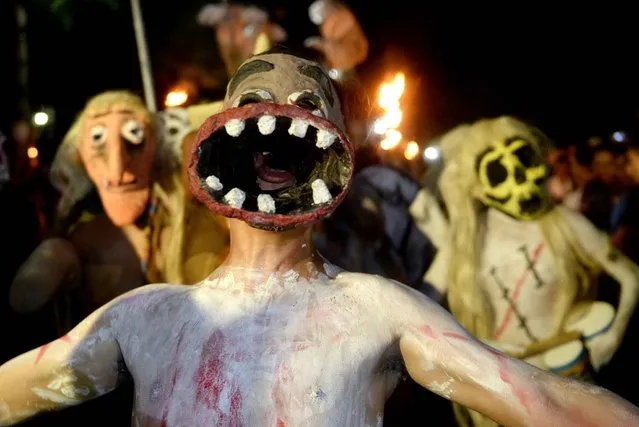
Young revelers take part in a parade called "La Calabiuza" on November 1, 2015, on the eve of the Day of the Dead in Tonacatepeque, 20 kms (13 miles) north of San Salvador. During the celebration, the residents of Tonacatepeque, originally an indigenous community, recall the characters from the mythology of Cuscatlan – pre-Columbian west and central regions of El Salvador – and their dead relatives. (Photo by Marvin Recinos/AFP Photo)

Young revelers take part in a parade called "La Calabiuza" on November 1, 2015, on the eve of the Day of the Dead in Tonacatepeque, 20 kms (13 miles) north of San Salvador. During the celebration, the residents of Tonacatepeque, originally an indigenous community, recall the characters from the mythology of Cuscatlan – pre-Columbian west and central regions of El Salvador – and their dead relatives. (Photo by Marvin Recinos/AFP Photo)
Details
04 Nov 2015 11:50:00
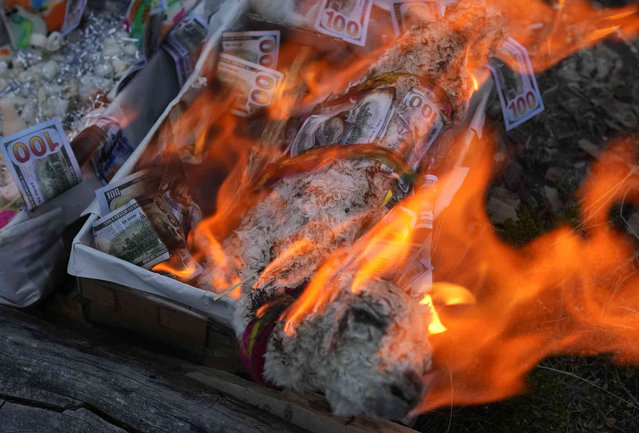
An offering of a dried baby llama and fake U.S. burn in honor of Pachamama, or Mother Earth, during a New Year ritual on Turriturrini Mountain on the outskirts of Huarina, Bolivia, Friday, June 21, 2024. Aymara Indigenous communities are celebrating the Andean New Year 5,532 or “Willka Kuti” which translates to “Return of the sun” in Aymara. (Photo by Juan Karita/AP Photo)

An offering of a dried baby llama and fake U.S. burn in honor of Pachamama, or Mother Earth, during a New Year ritual on Turriturrini Mountain on the outskirts of Huarina, Bolivia, Friday, June 21, 2024. Aymara Indigenous communities are celebrating the Andean New Year 5,532 or “Willka Kuti” which translates to “Return of the sun” in Aymara. (Photo by Juan Karita/AP Photo)
Details
31 Jul 2024 06:29:00
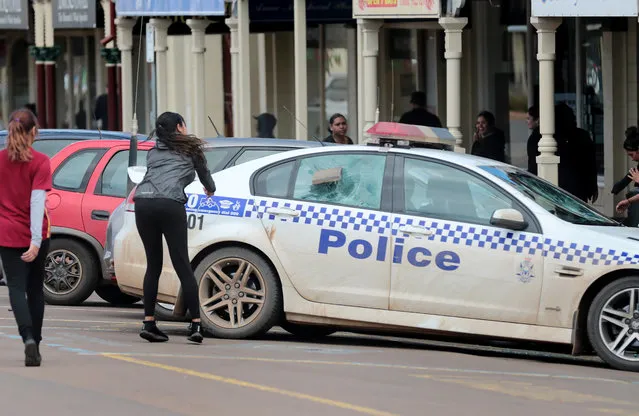
“After the death of a teenager (14-year-old Elijah Doughty), hundreds of Indigenous locals took to the streets of Kalgoorlie to vent their anger. Danella Bevis captures the grief and outrage of a family and a community. There is raw aggression in an eruption of racial tensions and violence, and in stark contrast she concludes the narrative with a moment of quiet beauty at a dusk vigil”. (Photo by Danella Bevis/The Walkley Foundation)

“After the death of a teenager (14-year-old Elijah Doughty), hundreds of Indigenous locals took to the streets of Kalgoorlie to vent their anger. Danella Bevis captures the grief and outrage of a family and a community. There is raw aggression in an eruption of racial tensions and violence, and in stark contrast she concludes the narrative with a moment of quiet beauty at a dusk vigil”. (Photo by Danella Bevis/The Walkley Foundation)
Details
17 Oct 2016 10:20:00
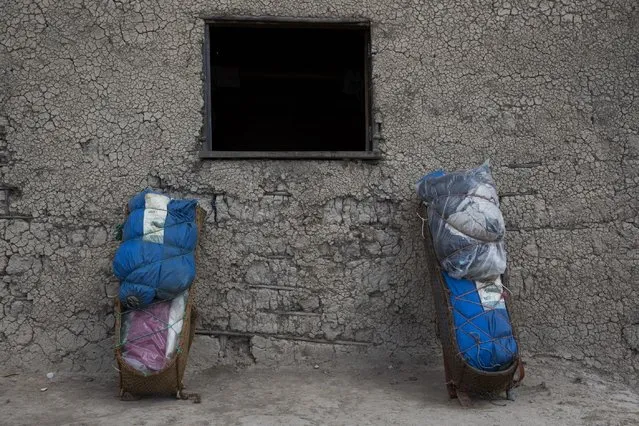
Indigenous woven backpacks called guayare are seen in front of a house in Paraitepui village, before a walking excursion to Mount Roraima, near Venezuela's border with Brazil January 13, 2015. A mysterious table-topped mountain on the Venezuela-Brazil border that perplexed 19th century explorers and inspired “The Lost World” novel is attracting ever more modern-day adventurers. (Photo by Carlos Garcia Rawlins/Reuters)

Indigenous woven backpacks called guayare are seen in front of a house in Paraitepui village, before a walking excursion to Mount Roraima, near Venezuela's border with Brazil January 13, 2015. A mysterious table-topped mountain on the Venezuela-Brazil border that perplexed 19th century explorers and inspired “The Lost World” novel is attracting ever more modern-day adventurers. (Photo by Carlos Garcia Rawlins/Reuters)
Details
04 Feb 2015 12:09:00
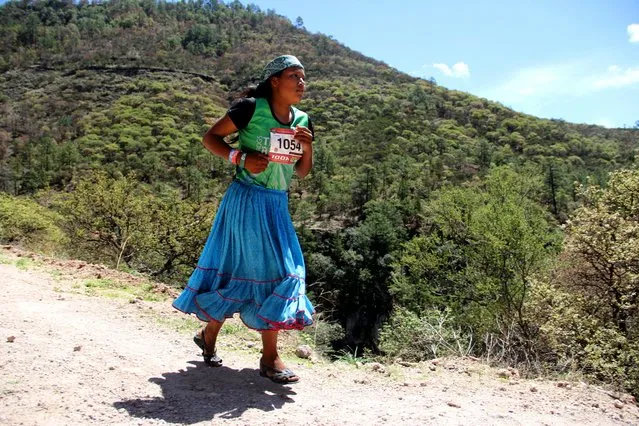
A Raramuris indigenous woman takes part in the “Ultra maraton de los Canones 2017” (Ultra marathon of the Canyons), at La Sinforosa Canyon, in Guachochi, Chihuahua state, Mexico on July 15, 2017. More than 600 participants from different countries take part in the 63 and 100 kilometers races, along the Tarahumara mountain range. (Photo by Herika Martinez/AFP Photo)

A Raramuris indigenous woman takes part in the “Ultra maraton de los Canones 2017” (Ultra marathon of the Canyons), at La Sinforosa Canyon, in Guachochi, Chihuahua state, Mexico on July 15, 2017. More than 600 participants from different countries take part in the 63 and 100 kilometers races, along the Tarahumara mountain range. (Photo by Herika Martinez/AFP Photo)
Details
17 Jul 2017 08:21:00