Loading...
Done
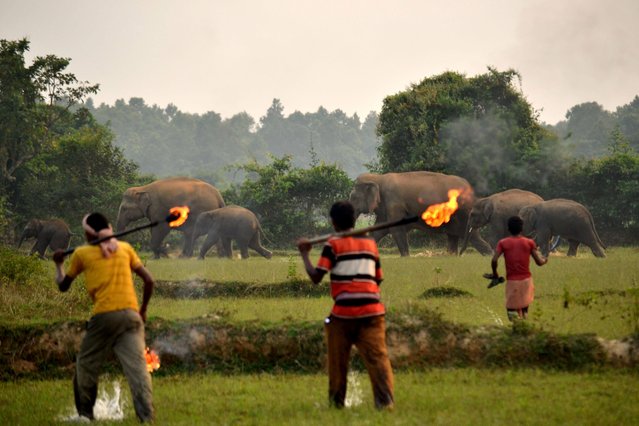
These heartbreaking photo show a confused family of elephants attempting to navigate a railway line built straight through their habitat on October 16, 2012. Taken by Biplab Hazra in Bishnupur, India, the images show the extreme lengths the inhabitants of the town go to to deter elephants from damaging their crops and property. As the images show, villagers often resort to extreme tactics in an effort to drive the elephants out  with one shocking photograph revealing firebombs being launched at a mother and calf as they cross the road. Elephants encroaching out of their habitats is an increasingly common occurrence with deforestation in much of India. (Photo by Biplab Hazra/Caters News Agency)

These heartbreaking photo show a confused family of elephants attempting to navigate a railway line built straight through their habitat on October 16, 2012. Taken by Biplab Hazra in Bishnupur, India, the images show the extreme lengths the inhabitants of the town go to to deter elephants from damaging their crops and property. As the images show, villagers often resort to extreme tactics in an effort to drive the elephants out with one shocking photograph revealing firebombs being launched at a mother and calf as they cross the road. Elephants encroaching out of their habitats is an increasingly common occurrence with deforestation in much of India. (Photo by Biplab Hazra/Caters News Agency)
Details
26 Jan 2019 00:05:00
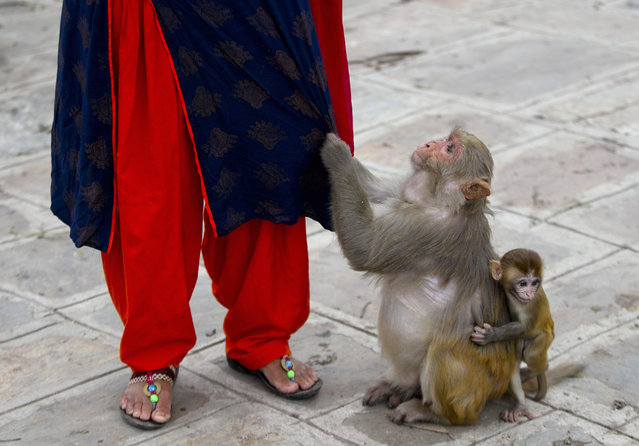
In this July 8, 2019, photo, a monkey pulls on the clothes of Saraswati Dangol as she arrives to feed monkeys in the forest near Pashupatinath temple in Kathmandu, Nepal. For the past four years, Dangol has been bringing the bread every day to feed the monkeys. As soon as they see her with her white sack, they gather around her, some patiently waiting for their turn while others less patiently snatching the bread from her hands. Many of Dangol's regulars are elderly, or are mother or baby monkeys who are unable to fight for their share of food in the wild. (Photo by Niranjan Shrestha/AP Photo)

In this July 8, 2019, photo, a monkey pulls on the clothes of Saraswati Dangol as she arrives to feed monkeys in the forest near Pashupatinath temple in Kathmandu, Nepal. For the past four years, Dangol has been bringing the bread every day to feed the monkeys. As soon as they see her with her white sack, they gather around her, some patiently waiting for their turn while others less patiently snatching the bread from her hands. Many of Dangol's regulars are elderly, or are mother or baby monkeys who are unable to fight for their share of food in the wild. (Photo by Niranjan Shrestha/AP Photo)
Details
26 Jul 2019 00:03:00


“The Red River Hog (Potamochoerus porcus), also known as the Bush Pig (but not to be confused with P. larvatus, common name “Bushpig”), is a wild member of the pig family living in Africa, with most of its distribution in the Guinean and Congolian forests. It is rarely seen away from rainforests, and generally prefers areas near rivers or swamps.

Red River Hogs eat grass, berries, roots, insects, molluscs, small vertebrates and carrion. They are capable of causing damage to plantations. Red River Hogs typically live in herds of 6-20 members led by a dominant boar. Sows rear 3-6 piglets at a time.”

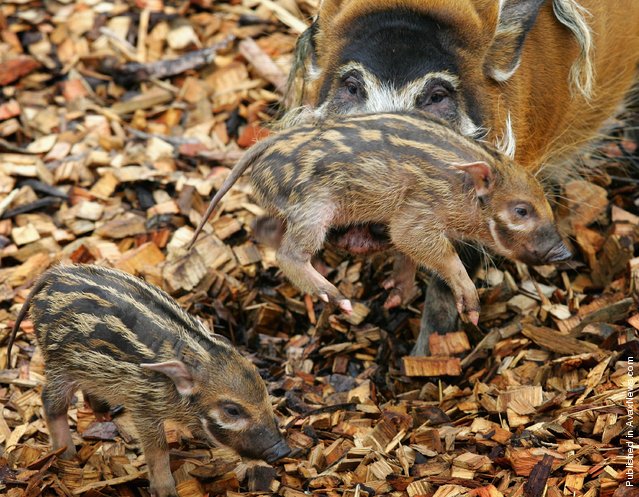
Photo: Two 17 day old red river hoglet twins forage for food next to their mother Bahiti at London Zoo on August 23, 2007 in London, England. Red River hoglets inhabit the forests and swamps of West and Central Africa. The recent additions to the London Zoo pig pen have been eagerly awaited by zoo keepers. (Photo by Chris Jackson/Getty Images)
Details
18 Mar 2011 15:15:00
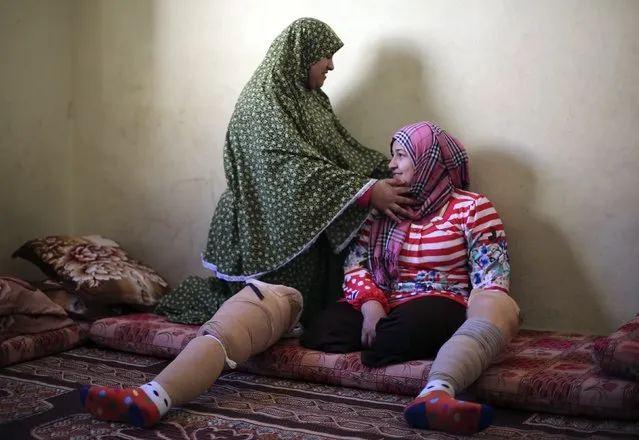
Palestinian girl Manar Al-Shinbari (R), 15, who lost her both legs by what medics said was Israeli shelling at a UN-run school where she was taking refuge during the 50-day war last summer, is helped by her sister to put on her headscarf in an apartment in Jabaliya refugee camp in the northern Gaza Strip January 13, 2015. (Photo by Mohammed Salem/Reuters)

Palestinian girl Manar Al-Shinbari (R), 15, who lost her both legs by what medics said was Israeli shelling at a UN-run school where she was taking refuge during the 50-day war last summer, is helped by her sister to put on her headscarf in an apartment in Jabaliya refugee camp in the northern Gaza Strip January 13, 2015. Manar's mother and three of her brothers were killed in the same incident. The girl's family house was destroyed by Israeli shelling during the war. (Photo by Mohammed Salem/Reuters)
Details
14 Jan 2015 12:34:00
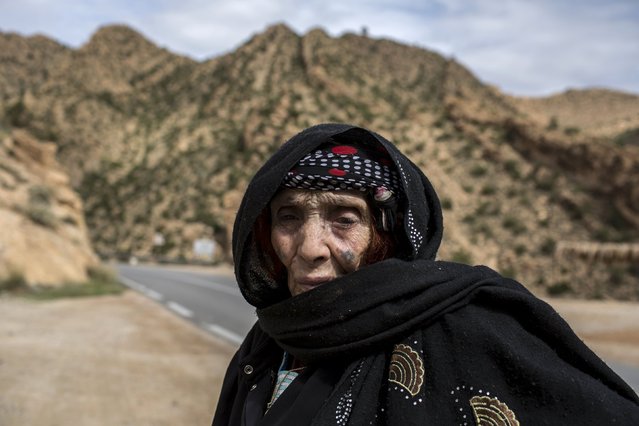
Mazouza Bouglada, 86, a berber woman from the Chaouia region, who has facial tattoos, poses for a photograph in Taghit in the Aures Mountain, Algeria October 8, 2015. Bouglada was tattooed aged 7 by a nomadic man from the Sahara region. She was advised by her mother to get tattooed. The more she got tattooed the more she showed off. Even if she still remembers the pain, she felt beautiful once it was done, Bouglada said. (Photo by Zohra Bensemra/Reuters)

Mazouza Bouglada, 86, a berber woman from the Chaouia region, who has facial tattoos, poses for a photograph in Taghit in the Aures Mountain, Algeria October 8, 2015. Bouglada was tattooed aged 7 by a nomadic man from the Sahara region. She was advised by her mother to get tattooed. The more she got tattooed the more she showed off. Even if she still remembers the pain, she felt beautiful once it was done, Bouglada said. She was very proud of her stars on her cheeks. Her eldest sister had been tattooed before her and she wanted to imitate her. Bouglada said she has now given away all her silver jewellery to atone for the sin that believers told her she had committed by being tattooed. (Photo by Zohra Bensemra/Reuters)
Details
01 Nov 2015 08:02:00
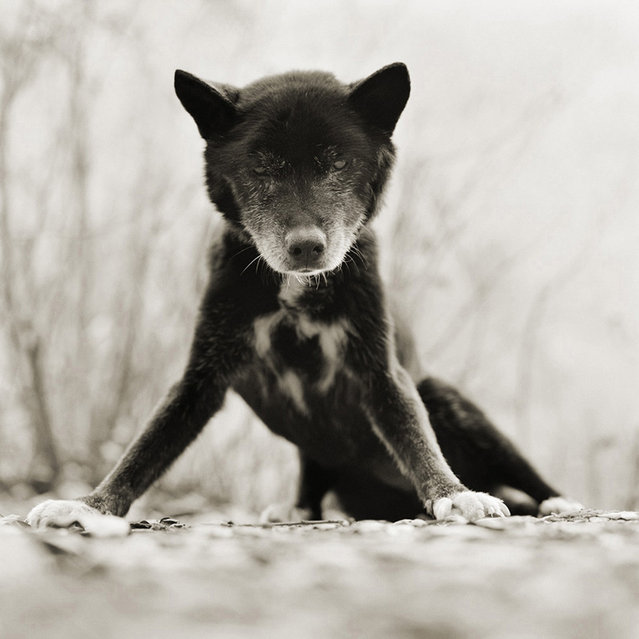
Blue, Australian Kelpie, Age 19, I

Blue, Australian Kelpie, Age 19

I am traveling to sanctuaries across the country to photograph animals that are elderly or at the end stage of their lives. I began this series shortly after I had spent a year in New Jersey helping my sister care for my mother who has Alzheimer’s disease. When mom got sick, I made a conscious decision not to photograph her. But, caring for her had a profound impact on me and I knew the experience would influence my photography. ...

Details
13 May 2012 07:33:00
Takeoka Chisaka, Hiroshima, Japan. “One morning in August 1945, I was walking home from the night shift at a factory in Hiroshima. As I reached my door, there was a huge explosion. When I came to, my head was bleeding and I had been blasted 30m away”. (Photo and caption by Sasha Maslov)

Takeoka Chisaka, Hiroshima, Japan. “One morning in August 1945, I was walking home from the night shift at a factory in Hiroshima. As I reached my door, there was a huge explosion. When I came to, my head was bleeding and I had been blasted 30m away. The atomic bomb had detonated. When I found my mother, her eyes were badly burned. A doctor said they had to come out, but he didn’t have the proper tools so used a knife instead. It was hellish. I became a peace-worker after the war. In the 1960s, at a meeting at the UN, I met one of the people who created the atomic bomb. He apologised”. (Photo and caption by Sasha Maslov)
Details
11 May 2015 11:56:00
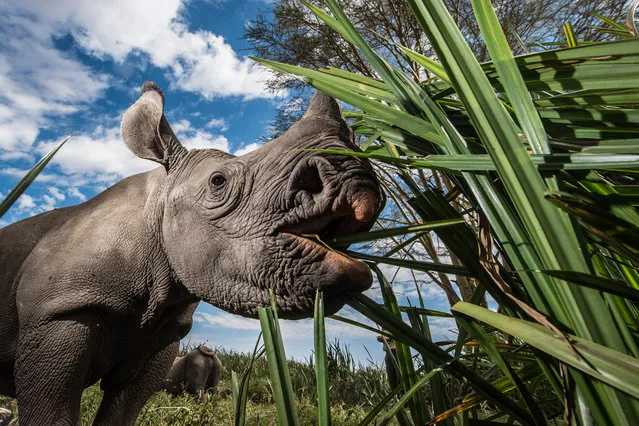
Orphaned baby rhinos seen on August 28, 2014 in Lewa Wildlife Conservancy, Ngare Ndare Forest, Kenya. (Photo by Luca Ghidoni/Barcroft Media)

Orphaned baby rhinos seen on August 28, 2014 in Lewa Wildlife Conservancy, Ngare Ndare Forest, Kenya. Lewa Wildlife Conservancy in Kenya is hand-raising three orphaned baby rhinos; Nicky, Hope and Kilifi. Baby rhino Hope was rescued by rangers when the poachers killed his mother – now he is been taken care off 24 hours-a-day at Lewa Wildlife Conservancy. The wildlife reserve hit the headlines when Prince William proposed to Kate Middleton there in 2010. Rhinos around the world are becoming extinct as a result of the brutal poaching fuelled by an illegal international market for their horns. (Photo by Luca Ghidoni/Barcroft Media)
Details
14 Sep 2014 10:27:00