Loading...
Done
What the World Eats By Peter Menzel And Faith D'Aluisio Part 1

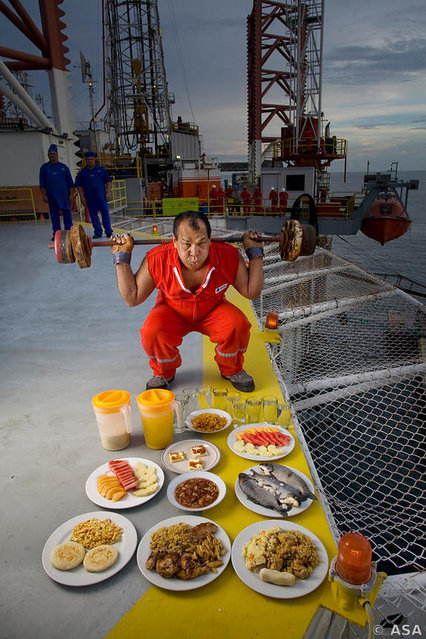
A stunning photographic collection featuring portraits of people from 30 countries and the food they eat in one day. In this fascinating study of people and their diets, 80 profiles are organized by the total number of calories each person puts away in a day. Featuring a Japanese sumo wrestler, a Massai herdswoman, world-renowned Spanish chef Ferran Adria, an American competitive eater, and more, these compulsively readable personal stories also include demographic particulars, including age, activity level, height, and weight. Essays from Harvard primatologist Richard Wrangham, journalist Michael Pollan, and others discuss the implications of our modern diets for our health and for the planet. This compelling blend of photography and investigative reportage expands our understanding of the complex relationships among individuals, culture, and food.
Details
23 Apr 2014 14:34:00
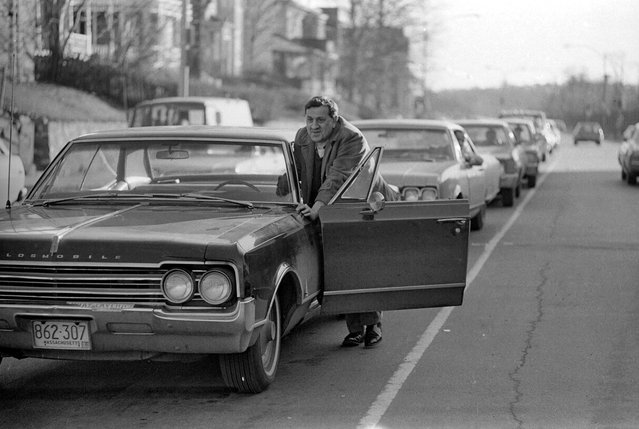
Drivers push cars to gas station during “oil crisis”, Roslindale, Boston, Massachusetts, 1973. (Photo by Spencer Grant/Getty Images)

Drivers push cars to gas station during “oil crisis”, Roslindale, Boston, Massachusetts, 1973. (Photo by Spencer Grant/Getty Images)
Details
18 Nov 2021 08:30:00


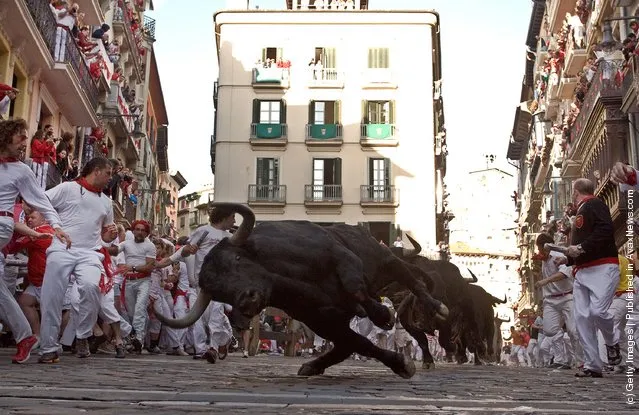
A fighting bull loses its balance during the third day of the San Fermin running-of-the-bulls on July 8, 2011 in Pamplona, Spain. Pamplona's famous Fiesta de San Fermin, which involves the running of the bulls through the historic heart of Pamplona for eight days starting July 7th, was made famous by the 1926 novel of U.S. writer Ernest Hemmingway called “The Sun Also Rises”. (Photo by Denis Doyle/Getty Images)
Details
08 Jul 2011 10:45:00
In this February 1, 2017 photo, Anjali Lama, a transgender model from Nepal, looks at her mobile phone backstage during Lakme Fashion week in Mumbai, India. (Photo by Rafiq Maqbool/AP Photo)

In this February 1, 2017 photo, Anjali Lama, a transgender model from Nepal, looks at her mobile phone backstage during Lakme Fashion week in Mumbai, India. Growing up as the fifth son in a poor farming family in rural Nepal the dream to be a fashion model came late in life.(Photo by Rafiq Maqbool/AP Photo)
Details
05 Feb 2017 01:02:00
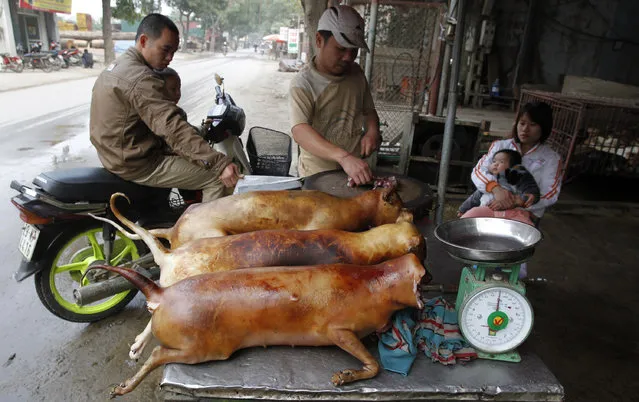
A vendor (C) cuts slaughtered dogs for sale at his roadside stall in Duong Noi village, outside Hanoi December 16, 2011. While animal rights activists have condemned eating dog meat as cruel treatment of the animals, it is still an accepted popular delicacy for some Vietnamese, as well in some other Asian countries. (Photo by Reuters/Kham)

A vendor (C) cuts slaughtered dogs for sale at his roadside stall in Duong Noi village, outside Hanoi December 16, 2011. While animal rights activists have condemned eating dog meat as cruel treatment of the animals, it is still an accepted popular delicacy for some Vietnamese, as well in some other Asian countries. Duong Noi is well-known as a dog-meat village, where hundreds of dogs are killed each day for sale as popular traditional food. Dog-eating as a custom is rooted in Vietnam and was developed as a result of poverty. One kilogram of dog meat costs about 130,000 dongs ($6.2). (Photo by Reuters/Kham)
Details
16 Jul 2013 11:40:00
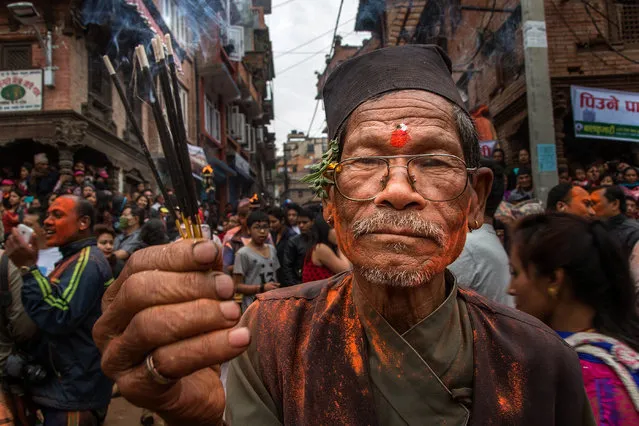
A devotee holds incense sticks while celebrating the Sindoor Jatra Festival on April 15, 2015 in Thimi, Nepal. Sindoor Jatra Festival is celebrated each year in Thimi, on the outskirts of Kathmandu, to welcome the Nepali New Year and celebrate the coming of spring. During the Festival, devotees are smeared with vermillion powder and 30 chariots containing the images of several gods and goddesses are carrying by the devotees around the town, while others sing, dance and play musical instruments. (Photo by Omar Havana/Getty Images)

A devotee holds incense sticks while celebrating the Sindoor Jatra Festival on April 15, 2015 in Thimi, Nepal. Sindoor Jatra Festival is celebrated each year in Thimi, on the outskirts of Kathmandu, to welcome the Nepali New Year and celebrate the coming of spring. During the Festival, devotees are smeared with vermillion powder and 30 chariots containing the images of several gods and goddesses are carrying by the devotees around the town, while others sing, dance and play musical instruments. (Photo by Omar Havana/Getty Images)
Details
18 Apr 2015 09:17:00


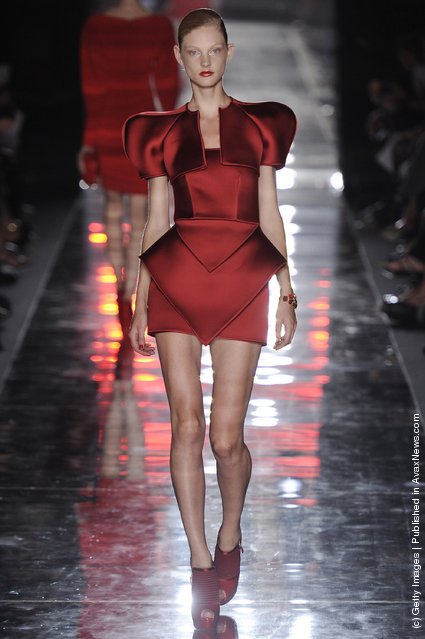
A model walks the runway at the Iris Van Herpen Haute Couture autumn winter 2011 fashion show during Paris Haute Couture Week on July 4, 2011 in Paris, France. (Photo by Nathalie Lagneau/Catwalking/Getty Images)
Details
06 Jul 2011 10:44:00
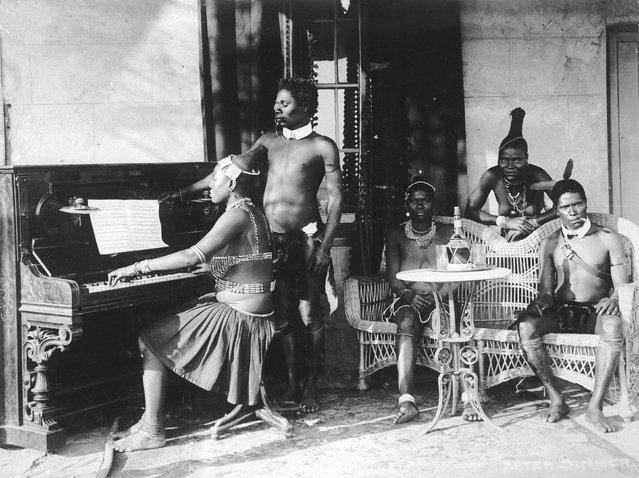
circa 1925:  A Zulu woman playing the piano while a group of others sit and listen.  (Photo by General Photographic Agency/Getty Images)

“The Zulu are the largest South African ethnic group, with an estimated 10–11 million people living mainly in the province of KwaZulu-Natal. Small numbers also live in Zimbabwe, Zambia, and Mozambique. Their language, Zulu, is a Bantu language; more specifically, part of the Nguni subgroup. The Zulu Kingdom played a major role in South African history during the 19th and 20th centuries. Under apartheid, Zulu people were classed as third-class citizens and suffered from state-sanctioned discrimination. They remain today the most numerous ethnic group in South Africa, and now have equal rights along with all other citizens”. – Wikipedia.

Photo: A Zulu woman playing the piano while a group of others sit and listen (to put it briefly, Englishmen scoff over Zulu). South Africa, circa 1925. (Photo by General Photographic Agency)

Details
03 Feb 2014 09:40:00