Loading...
Done
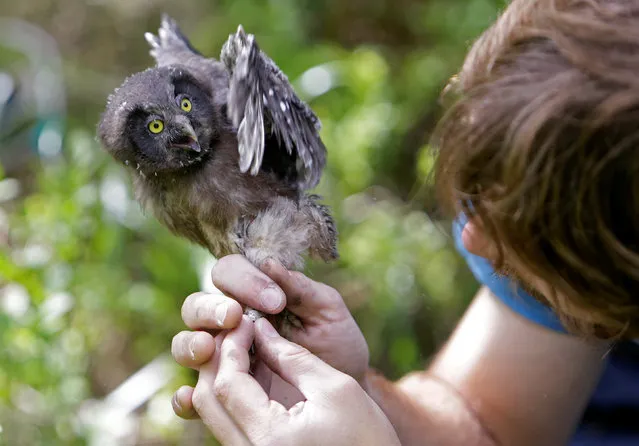
Scientist Jiri Sindelar checks a ring of a Boreal owl chick outside the “Smart Nest Box”, which allows the study of birds by using mounted cameras, in a forest near the village of Mikulov, Czech Republic, June 18, 2016. (Photo by David W. Cerny/Reuters)

Scientist Jiri Sindelar checks a ring of a Boreal owl chick outside the “Smart Nest Box”, which allows the study of birds by using mounted cameras, in a forest near the village of Mikulov, Czech Republic, June 18, 2016. (Photo by David W. Cerny/Reuters)
Details
20 Jun 2016 12:37:00
Hundreds of flamingos take flight in the Rift Valley in East Africa early September 2024. The birds gather in the region’s saline lakes to eat the blue-green algae that grows in abundance. The red-orange pigment in the algae is what gives them their distinctive pink plumage. They also use the site to breed. (Photo by Alexandre and Chloe Bes/Naturagency/Solent News)

Hundreds of flamingos take flight in the Rift Valley in East Africa early September 2024. The birds gather in the region’s saline lakes to eat the blue-green algae that grows in abundance. The red-orange pigment in the algae is what gives them their distinctive pink plumage. They also use the site to breed. (Photo by Alexandre and Chloe Bes/Naturagency/Solent News)
Details
23 Sep 2024 02:54:00
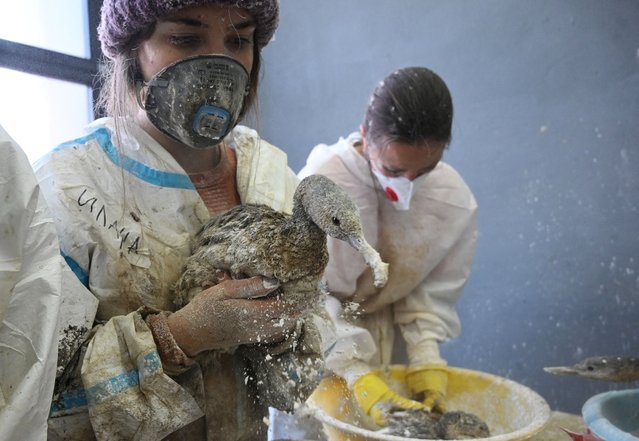
Volunteers use flour to clean birds following an oil spill caused by an incident involving two tankers damaged in a storm in the Kerch Strait, in the village of Vityazevo near the Black Sea resort of Anapa, Russia on December 20, 2024. (Photo by Sergey Pivovarov/Reuters)

Volunteers use flour to clean birds following an oil spill caused by an incident involving two tankers damaged in a storm in the Kerch Strait, in the village of Vityazevo near the Black Sea resort of Anapa, Russia on December 20, 2024. (Photo by Sergey Pivovarov/Reuters)
Details
24 Dec 2024 04:11:00
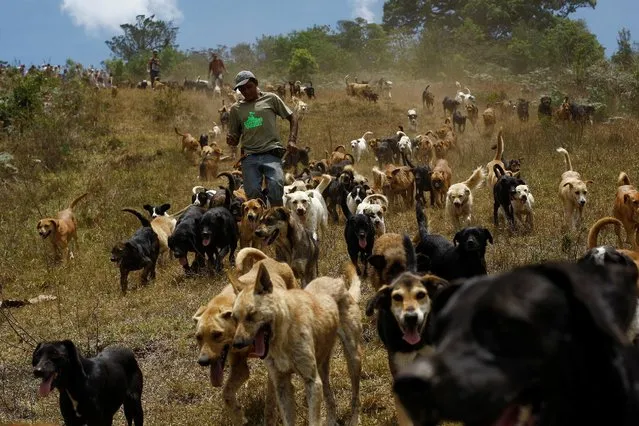
Stray dogs run at dog sanctuary Territorio de Zaguates or “Land of the Strays” in Carrizal de Alajuela, Costa Rica, April 20, 2016. In a lush, sprawling corner of Costa Rica, hundreds of dogs roam freely on a hillside – among the luckiest strays on earth. Fed, groomed and cared for by vets, more than 750 dogs rescued from the streets of Costa Rica inhabit Territorio de Zaguates or “Land of the Strays”, a pooch paradise. The 152-hectare sanctuary in the centre of the Central American country is funded by donations. Around 8,000 dogs have passed through the refuge. There are more than a million stray dogs in Costa Rica, where the government outlawed putting animals down in 2003. (Photo by Juan Carlos Ulate/Reuters)

Stray dogs run at dog sanctuary Territorio de Zaguates or “Land of the Strays” in Carrizal de Alajuela, Costa Rica, April 20, 2016. In a lush, sprawling corner of Costa Rica, hundreds of dogs roam freely on a hillside – among the luckiest strays on earth. Fed, groomed and cared for by vets, more than 750 dogs rescued from the streets of Costa Rica inhabit Territorio de Zaguates or “Land of the Strays”, a pooch paradise. (Photo by Juan Carlos Ulate/Reuters)
Details
30 Apr 2016 09:41:00
mirror man

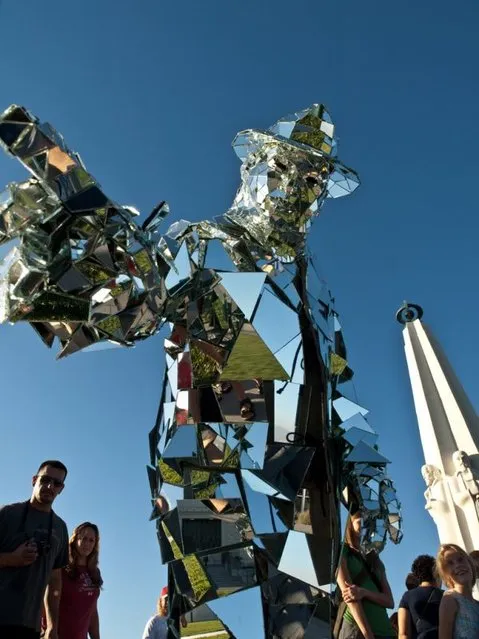
“The ‘mirror man’ aka ‘The Collector‘ is by the artist Gustav Troger of San Francisco & Vienna. He is in North America now on another ‘The Collector’ tour.”
Details
04 Jun 2012 12:52:00
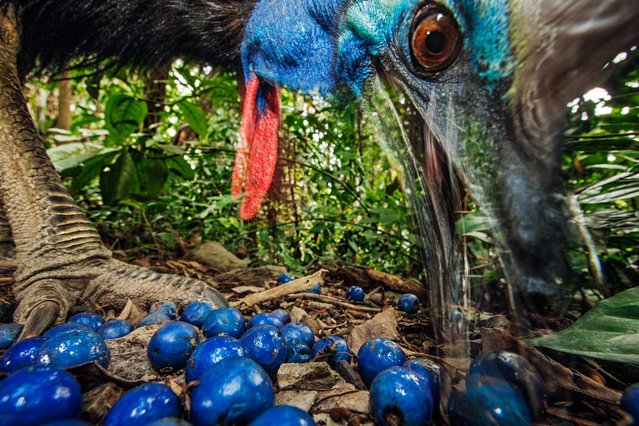
“Cassowaries are large, flightless birds related to emus and (more distantly) to ostriches, rheas, and kiwis”, writes Olivia Judson in the September issue of National Geographic magazine. (Photo by Christian Ziegler/National Geographic)

“Cassowaries are large, flightless birds related to emus and (more distantly) to ostriches, rheas, and kiwis”, writes Olivia Judson in the September issue of National Geographic magazine. How large? People-size: Adult males stand well over five foot five and top 110 pounds. Females are even taller, and can weigh more than 160 pounds. Dangerous when roused, they’re shy and peaceable when left alone. But even birds this big and tough are prey to habitat loss. The dense New Guinea and Australia rain forests where they live have dwindled. Today cassowaries might number 1,500 to 2,000. And because they help shape those same forests – by moving seeds from one place to another – “if they vanish”, Judson writes, “the structure of the forest would gradually change” too. (Photo by Christian Ziegler/National Geographic)

Details
06 Jan 2014 12:21:00
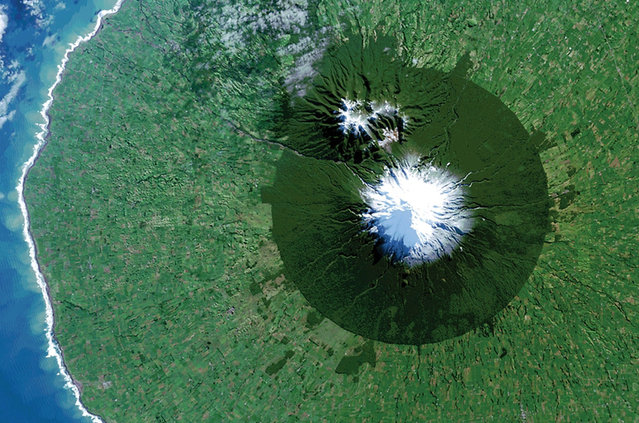
Egmont National Park in New Zealand with Mt. Taranaki at its center is seen in a Landsat 8 satellite image. (Photo by Reuters/NASA/USGS)

Egmont National Park in New Zealand with Mt. Taranaki at its center is seen in a Landsat 8 satellite image taken July 3, 2014 and released by NASA November 14, 2014. The image is from the book “Sanctuary: Exploring the World's Protected Areas from Space”, published by the Institute for Global Environmental Strategies with support from NASA, which was released this week. (Photo by Reuters/NASA/USGS)
Details
16 Nov 2014 12:15:00


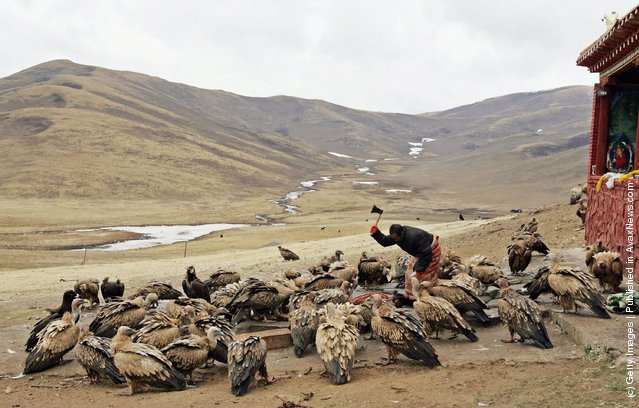
“Sky burial or ritual dissection was once a common funerary practice in Tibet wherein a human corpse is cut in specific locations and placed on a mountaintop, exposing it to the elements or the mahabhuta and animals – especially to birds of prey. The location of the sky burial preparation and place of execution are understood in the Vajrayana traditions as charnel grounds. In Tibet the practice is known as jhator, which literally means, «giving alms to the birds»”. – Wikipedia

Photo: A burial master chops bones of a body to feed vultures during a celestial burial ceremony on April 19, 2006 in Dari County of Guoluo Prefecture, Qinghai Province, northwest China. Celestial burial is a traditional funeral of Tibetan people, which began in the 7th century. (Photo by China Photos/Getty Images)
Details
18 Jun 2011 12:12:00