Loading...
Done
A police officer sings as a hearse drives along a street as part of a campaign sponsored by the Colombian police and a funerary home to raise awareness during the new coronavirus pandemic in Envigado, Antioquia, Colombia, on April 1, 2020. More than 20,000 cases of COVID-19 were registered in Latin America and the Caribbean by Wednesday, according to an AFP tally using information provided by national health authorities and the World Health Organization. (Photo by Joaquin Sarmiento/AFP Photo)

A police officer sings as a hearse drives along a street as part of a campaign sponsored by the Colombian police and a funerary home to raise awareness during the new coronavirus pandemic in Envigado, Antioquia, Colombia, on April 1, 2020. More than 20,000 cases of COVID-19 were registered in Latin America and the Caribbean by Wednesday, according to an AFP tally using information provided by national health authorities and the World Health Organization. (Photo by Joaquin Sarmiento/AFP Photo)
Details
04 Apr 2020 00:01:00
Attendee Ana Niebla arrives in costume as Princess Penny Wise for opening night of the pop culture festival Comic Con International in San Diego, California, U.S., July 17, 2019. (Photo by Mike Blake/Reuters)

Attendee Ana Niebla arrives in costume as Princess Penny Wise for opening night of the pop culture festival Comic Con International in San Diego, California, U.S., July 17, 2019. (Photo by Mike Blake/Reuters)
Details
22 Jul 2019 00:01:00
“Locusts & Men”. Oppression, interaction, collaboration. In the life cycle of nature nothing is lost, but the coexistence of different species is sometimes difficult. In Madagascar periodically returns the archaic antagonism between man and the migratory locust, in a circle of life where the two species are looking for space and food for their survival. Photo location: Madagascar, 2013. (Photo and caption by Michele Martinelli/National Geographic Photo Contest)

“Locusts & Men”. Oppression, interaction, collaboration. In the life cycle of nature nothing is lost, but the coexistence of different species is sometimes difficult. In Madagascar periodically returns the archaic antagonism between man and the migratory locust, in a circle of life where the two species are looking for space and food for their survival. At the end of the day a man walks home carrying on his shoulders the heavy bag which contains the locusts captured during the day. The insects provide nutritious meals for the man and his family. Photo location: Madagascar, 2013. (Photo and caption by Michele Martinelli/National Geographic Photo Contest)

ATTENTION! All pictures are presented in high resolution. To see Hi-Res images – just TWICE click on any picture. In other words, click small picture – opens the BIG picture. Click BIG picture – opens VERY BIG picture.
Details
03 Dec 2013 10:59:00
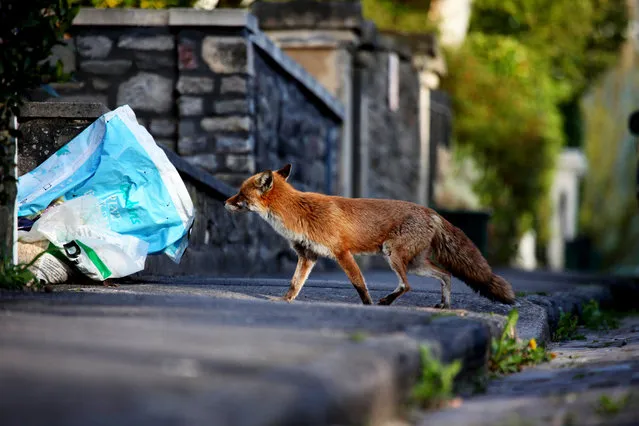
Urban Fox Project by Photographer Ian Wade

“I have been photographing this group of urban foxes in Bristol for over 12 months; what started off as a chance encounter has become an obsession for me and has changed my feelings and attitudes towards urban foxes forever...”. – Ian Wade. (Photo by Ian Wade)
Details
30 Jun 2013 12:36:00
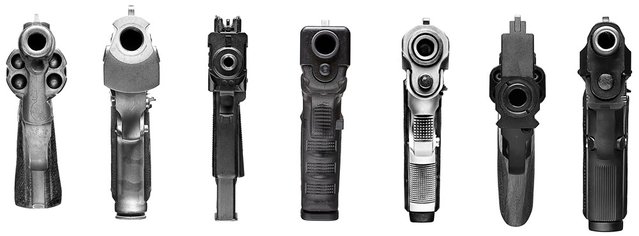
“Point Blank” – Gun Series by Peter Andrew. (Photo by Peter Andrew)

“Guns have a massive amount of power associated with them. They are designed to kill. We decided to photograph portraits of them in a similar way you might photograph a powerful person. Like powerful people, pistols have this “perfect” quality that we wanted to explore. As we started shooting them, we could see flaws in their design. Metal burring around the barrels, scratches in the metal. This imperfection and detail were very interesting to us; connecting us back to these images as portraits”. – Peter Andrew. (Photo by Peter Andrew/Simon Duffy/Derek Blais)
Details
26 Aug 2013 10:03:00
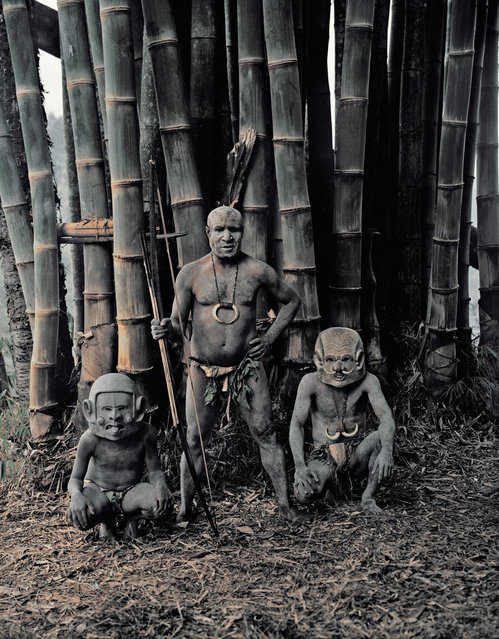
“Asaro from the Eastern Highlands”. The mudmen could not cover their faces with mud because the people of Papua New Guinea thought that the mud from the Asaro river was poisonous. So instead of covering their faces with this alleged poison, they made masks from pebbles that they heated and water from the waterfall, with unusual designs such as long or very short ears either going down to the chin or sticking up at the top, long joined eyebrows attached to the top of the ears, horns and sideways mouths. (Jimmy Nelson)

“Asaro from the Eastern Highlands”. The mudmen could not cover their faces with mud because the people of Papua New Guinea thought that the mud from the Asaro river was poisonous. So instead of covering their faces with this alleged poison, they made masks from pebbles that they heated and water from the waterfall, with unusual designs such as long or very short ears either going down to the chin or sticking up at the top, long joined eyebrows attached to the top of the ears, horns and sideways mouths. (Photo and caption by Jimmy Nelson)
Details
20 Oct 2013 08:54:00
“All Love Is Equal” Project by Photographer Braden Summers

“A photo series representing many cultures by illustrating romance in the LGBTQ community. “All Love Is Equal” is a campaign that I envision being seen on a global scale to raise awareness and build compassion. I, along with my producer/assistant, would like to travel to different countries throughout the world to create photos of LGBT members in love within culturally diverse settings”. (Photo and caption by Braden Summers)
Details
23 Feb 2014 12:07:00
England's Longest Zip Wire Opens At The Eden Project

Marco Fiera from NoFit State Circus tries out the SkyWire, the new zip wire attraction which opens to the public this week at The Eden Project on July 17, 2012 in St Austell, England. The new 740m zip wire, currently the longest in England, allows the public a bird's eye view of the iconic Rainforest and Mediterranean Biome structures as well as the Cornish attractions outdoor gardens. The Eden Project – which opened in 2001 and has attracted over one million visitors – showcases 100,000 plants from around the world in two giant transparent domes, one of which is the world's largest greenhouse, each recreating different climate conditions. (Photo by Matt Cardy)
Details
19 Jul 2012 10:00:00