Loading...
Done
A resident reacts as a health worker collects a swab sample to test for the Covid-19 coronavirus in Colombo on July 27, 2021. (Photo by Ishara S.  Kodikara/AFP Photo)

A resident reacts as a health worker collects a swab sample to test for the Covid-19 coronavirus in Colombo on July 27, 2021. (Photo by Ishara S. Kodikara/AFP Photo)
Details
28 Jul 2021 10:12:00
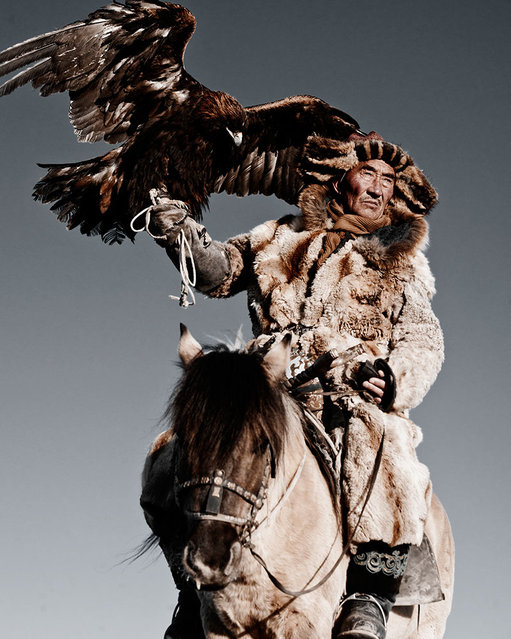
Fine Horses And Fierce Eagles Are The wings Of The Kazakh

The Kazakhs are the descendants of Turkic, Mongolic and Indo-Iranian tribes and Huns that populated the territory between Siberia and the Black Sea. They are a semi-nomadic people and have roamed the mountains and valleys of western Mongolia with their herds since the 19th century. The ancient art of eagle hunting is one of many traditions and skills that the Kazakhs have, in recent decades, been able to hold on to. They rely on their clan and herds, believing in pre-Islamic cults of the sky, the ancestors, fire and the supernatural forces of good and evil spirits.
Details
20 Feb 2014 12:12:00


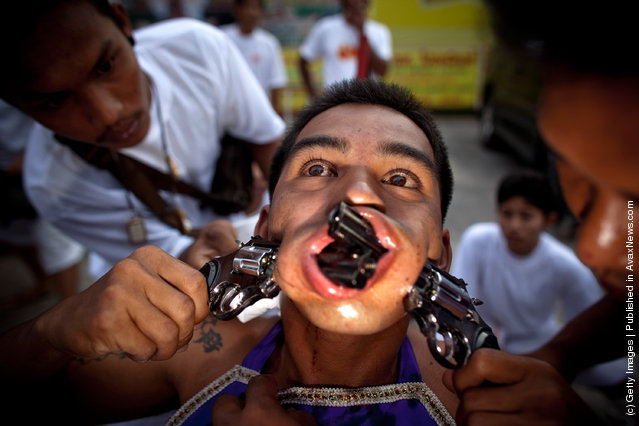
A devotee of the Chinese shrine of Samkong, pierces his cheeks with toy guns during a procession of Vegetarian Festival on October 11, 2010 in Phuket, Thailand. Ritual Vegetarianism in Phuket Island traces it roots back to the early 1800's. The festival begins on the first evening of the ninth lunar month and lasts for nine days. Participants in the festival perform acts of body piercing as a means of shifting evil spirits from individuals onto themselves and bring the community good luck. (Photo by Athit Perawongmetha/Getty Images)
Details
09 Jul 2011 11:55:00
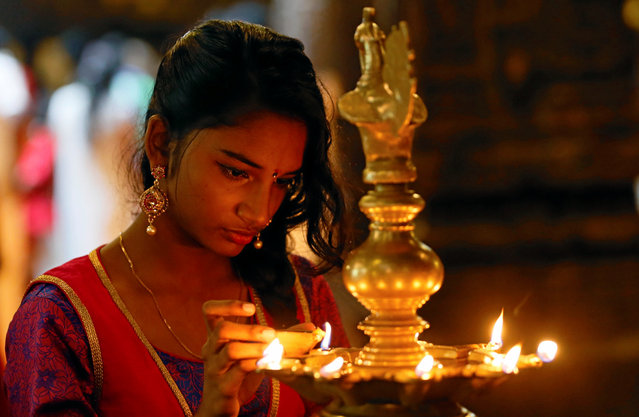
A devotee lights oil lamps at a religious ceremony during the Diwali or Deepavali festival at a Hindu temple in Colombo, Sri Lanka October 18, 2017. (Photo by Dinuka Liyanawatte/Reuters)

A devotee lights oil lamps at a religious ceremony during the Diwali or Deepavali festival at a Hindu temple in Colombo, Sri Lanka October 18, 2017. Diwali, the Hindu festival of lights, marks the triumph of good over evil, and commemorates the return of Hindu deity Rama to his birthplace Ayodhya after victory against the demon king Ravana. (Photo by Dinuka Liyanawatte/Reuters)
Details
20 Oct 2017 06:26:00
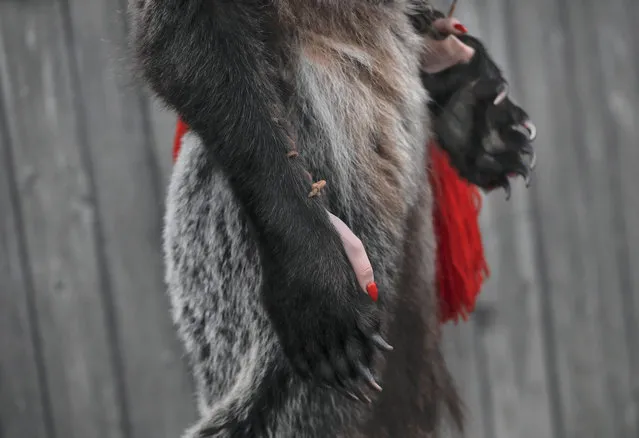
In this Saturday, December 30, 2017, picture a girl wearing a bear fur costume takes part in an annual bear parade in Comanesti, Romania. (Photo by Vadim Ghirda/AP Photo)

In this Saturday, December 30, 2017, picture a girl wearing a bear fur costume takes part in an annual bear parade in Comanesti, Romania. It's a tradition that originated in pre-Christian times, when dancers wearing colored costumes or animal furs went from house to house in villages, singing and dancing to ward off evil. (Photo by Vadim Ghirda/AP Photo)
Details
08 Jan 2018 07:05:00
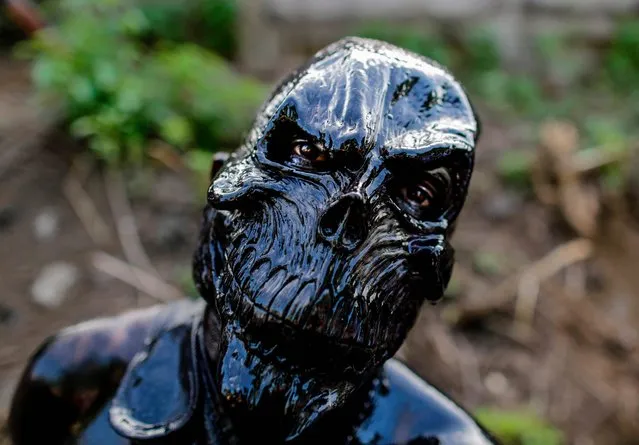
A catholic faithful smeared in burnt oil, takes part in the opening of the ten-day celebration of the Santo Domingo de Guzman festival in Managua, on August 1, 2019. (Photo by Inti Ocon/AFP Photo)

A catholic faithful smeared in burnt oil, takes part in the opening of the ten-day celebration of the Santo Domingo de Guzman festival in Managua, on August 1, 2019. In Central America the black devil, or El Cadejo, is an evil dog-like spirit with glowing red eyes that locals believe eats new born puppies. (Photo by Inti Ocon/AFP Photo)
Details
06 Aug 2019 00:01:00
Zappa Dog With A Floppy Tongue

Zappa, a toothless 15-year-old Italian greyhound that looks surprisingly like Sid the Sloth from the animated movie Ice Age, is redefining dog beauty. Owners Sadie and Rosalie Millen, of Pewaukee, Wisconsin, say that Zappa started sticking her tongue out a few years ago when she lost her teeth.
Details
10 Jun 2015 10:16:00
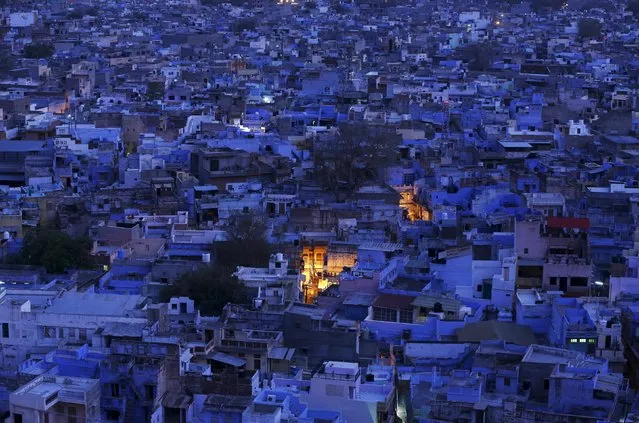
A general view of the residential area is pictured during dusk at Jodhpur in Rajasthan, April 5, 2015. Jodhpur, also known as the blue city in the desert Indian state of Rajasthan, which residents say originally, was used to show where the highest caste of priestly Hindus live, who wanted to set them apart from the rest of the population. Later the rest of the population followed suit. Another reason for the city to be blue is to keep the buildings cool during the summers, local residents said. (Photo by Adnan Abidi/Reuters)


A general view of the residential area is pictured during dusk at Jodhpur in Rajasthan, April 5, 2015. Jodhpur, also known as the blue city in the desert Indian state of Rajasthan, which residents say originally, was used to show where the highest caste of priestly Hindus live, who wanted to set them apart from the rest of the population. Later the rest of the population followed suit. Another reason for the city to be blue is to keep the buildings cool during the summers, local residents said. (Photo by Adnan Abidi/Reuters)
Details
12 Apr 2015 08:27:00