The driver of a Maerlitram (fairy tram), dressed as a Santa Claus, walks past a car which crashed into the tram in Zurich, Switzerland December 7, 2017. (Photo by Angelika Gruber/Reuters)
Devotees of Santa Muerte visit her shrine in the Tepito neighborhood on the eve of the Day of the Dead in Mexico City, Mexico on October 31, 2022. (Photo by Gustavo Graf/Reuters)
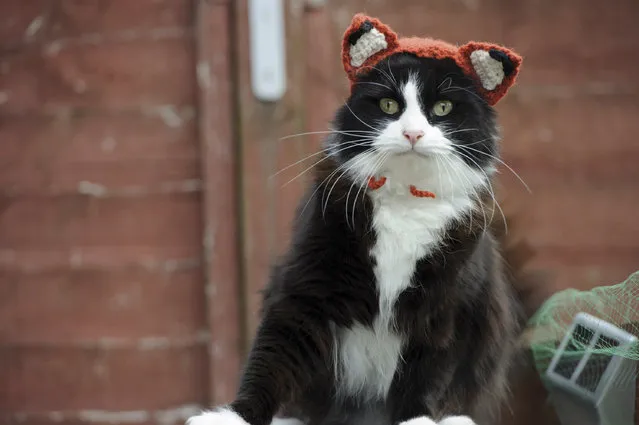
This photo provided by Running Press and Quarto, Inc. shows Feline Fox from the book, “Cats in Hats”, published by Running Press. The book released on March 24, 2015. (Photo by Liz Coleman/Running Press/Quarto, Inc. via AP Photo)
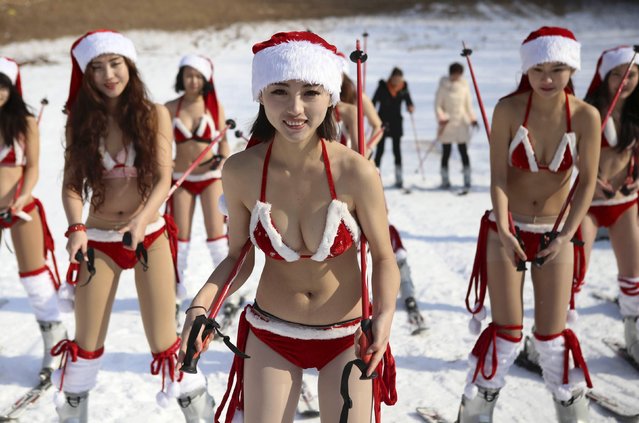
Women wearing bikinis and Santa Claus hats participate in a promotional event to celebrate the upcoming Christmas at a ski resort in Xuchang, Henan province, December 23, 2014. Ten women wore Santa Claus-themed bikinis to welcome the coming Christmas in temperatures below zero Celsius. (Photo by Reuters/Stringer)
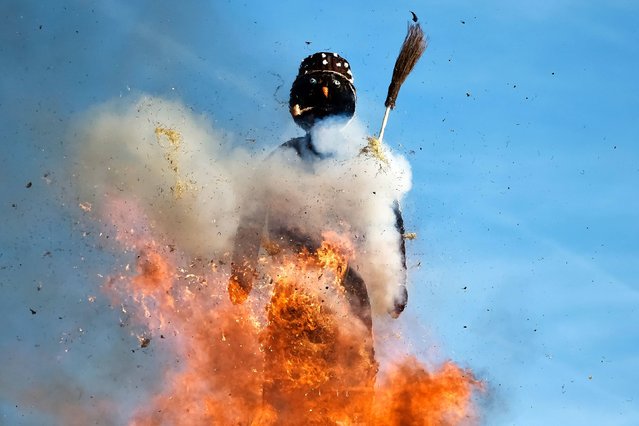
The Boeoegg, a giant symbolic snowman made of wadding and and filled with firecrackers burns on top of a bonfire in Sechselaeuten square on April 24, 2017 in Zurich. When the bells of the Saint Peter's church chime six o'clock, the bonfire under the snowman is set in fire and the guildsmen wearing historical costumes ride around the bonfire. The faster the head of the snowman explods the warmer and more beautiful the summer will be. (Photo by Michael Buholzer/AFP Photo)
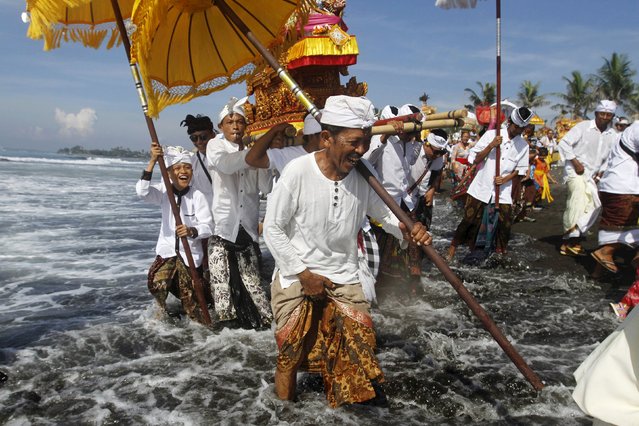
Balinese Hindus carry Pratimas, or symbols of God, on the beach during Melasti, a purification ceremony, ahead of the holy day of Nyepi, in Gianyar on the Indonesian resort island of Bali, March 6, 2016. Nyepi is a day of silence to celebrate the Balinese new year, reserved for self-reflection, where people are not allowed to use lights, light fires, work, travel or enjoy entertainment. (Photo by Roni Bintang/Reuters)
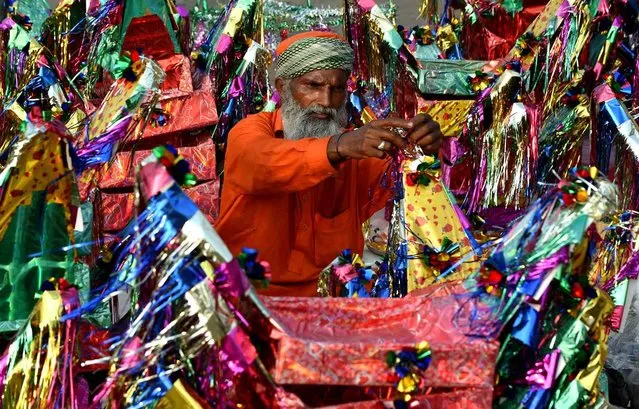
In this photograph taken on September 22, 2016, a Pakistani devotee decorates symbolic paper boats, an offering to Muslim saint Abdulqadir Jilani as a way of giving thanks after their desire to give birth to a son was fulfilled, before dropping it into the water during an annual ceremony on the banks of the River Ravi in Lahore. The ceremony commemorates a centuries-old tale that Muslim saint Abdulqadir Jilani raised a sunken ship carrying a wedding party, at the pleading of the groom's mother, saving all the occupants. (Photo by Arif Ali/AFP Photo)
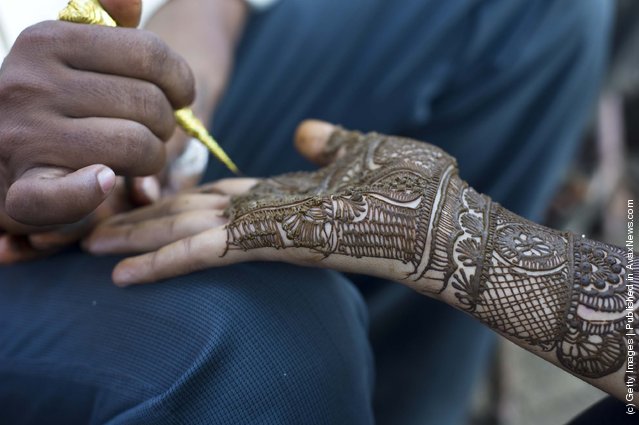
“Mehndi or menhdi is the application of henna as a temporary form of skin decoration in India, as well as by expatriate communities from the country. The word mehndi is derived from the Sanskrit word mendhikā. The use of mehndi and turmeric is described in the earliest Vedic ritual books. Haldi (Staining oneself with turmeric paste) as well as mehndi are important Vedic customs as a symbolic representation of the Outer and the Inner Sun. Vedic customs are meant to awaken the “inner light” and so the gold of the inner Sun has an important symbolic function”. – Wikipedia
Photo: Application of henna or “Mehndi” to a girls hand in a market on October 18, 2010 in Jaipur, India. (Photo by Simon de Trey-White/Getty Images)