Loading...
Done
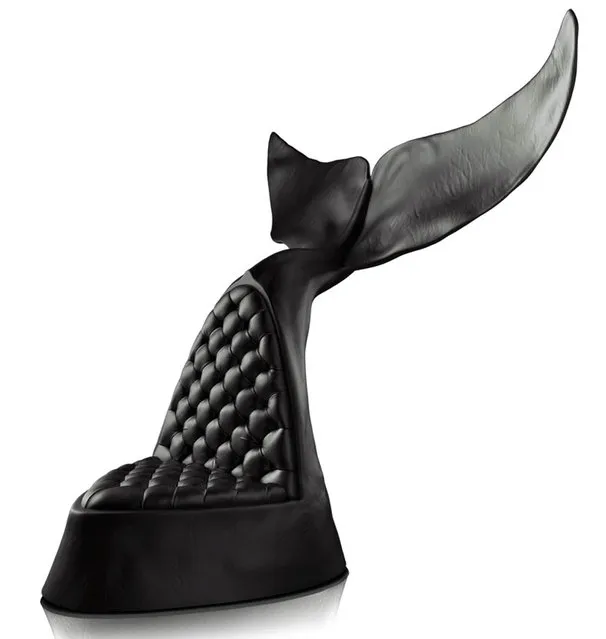
Animal Chair By Maximo Riera

Spanish artist Maximo Riera has produced a miniature series of his animal chair collection. The models are created entirely using nylon and a type of 3D printing called SLS (selective laser sintering).The process enables the small objects to achieve the best possible quality, resistance and lightest weight. based on the large-scale designs that combined animals and furniture into one item, the unconventional and peculiar compositions are still apparent in these latest versions.
Details
24 Jul 2014 06:44:00
Adonna Khare and her Pencil

Originally hailing from a small town in Iowa, Adonna Khare was this year’s recipient of the Art Prize 2012 for her amazingly detailed large-scale pencil on paper works. All of Khare’s work evolve naturally without much pre-planning, essentially building her pieces as she continues to work.
Details
29 May 2015 15:02:00
A dog rides a wave during the Surf City Surf Dog competition in Huntington Beach, California, U.S., September 25, 2016. (Photo by Lucy Nicholson/Reuters)

A dog rides a wave during the Surf City Surf Dog competition in Huntington Beach, California, U.S., September 25, 2016. The dogs compete in contest categories ranging from small to extra large, to two dogs on a board, as well as owner and dog. (Photo by Lucy Nicholson/Reuters)
Details
27 Sep 2016 09:43:00
The Wuppertal Suspension Railway in Wuppertal, Germany

The Wuppertal Suspension Railways is one a kind elevated railway located in Wuppertak, Germany. It is the oldest elevated railway in the world, though it doesn’t look like it. It is kept in great condition by the government and provides for a great attraction for the tourists. It provides a great overview, as it runs above a number of city streets and a small river. Moreover, since it is powered by electricity, it proves an ecologically clean method of travel for the residents of the city.
Details
03 Apr 2015 11:38:00
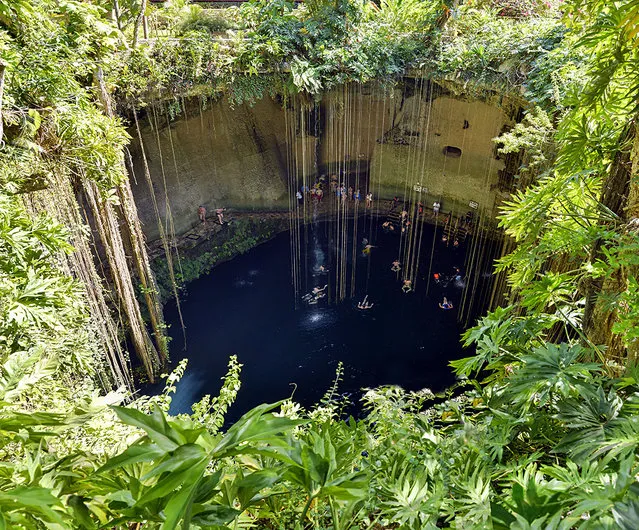
Cenote In Mexico

A cenote is a natural phenomenon, a sinkhole in the Earth’s surface. The Yucatan Peninsula in Mexico has an estimated 7,000 cenotes because it is primarily made up of porous limestone. For millions of years, rainfall slowly ate away at the limestone and a huge system of underground caves and caverns was formed. Many filled with water from rain or from the underground water table. When the roof of a water filled cave collapses, a cenote is born. The water found in a cenote may be fresh water, salt water, or both. Structurally it may be completely open, like a lake, almost completely closed with just a small opening at the top, or somewhere in between.
Details
06 Oct 2013 09:45:00
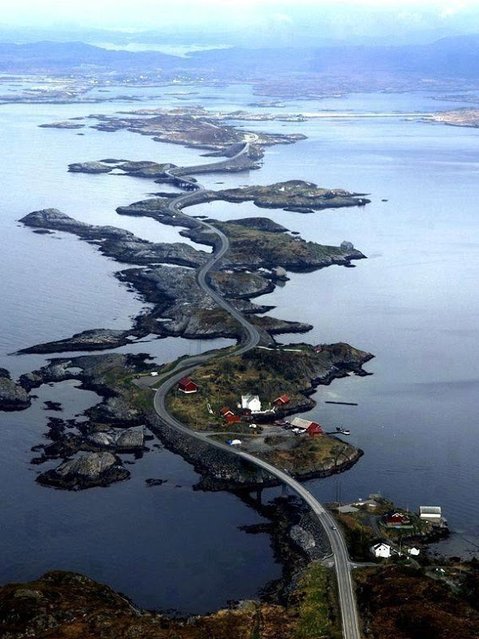
The Atlantic Road, Norway

The Atlantic Ocean Road or the Atlantic Road (Norwegian: Atlanterhavsveien) is a 8.3-kilometer (5.2 mi) long section of County Road 64 that runs through an archipelago in Eide and Averøy in Møre og Romsdal, Norway. It passes by Hustadvika, an unsheltered part of the Norwegian Sea, connecting the island of Averøy with the mainland and Romsdalshalvoya peninsula. It runs between the villages of Karvag on Averoy and Vevang in Eida. It is built on several small islands and skerries, which are connected by several causeways, viaducts and eight bridges – the most prominent being Storseisundet Bridge.
Details
18 Jan 2014 11:42:00
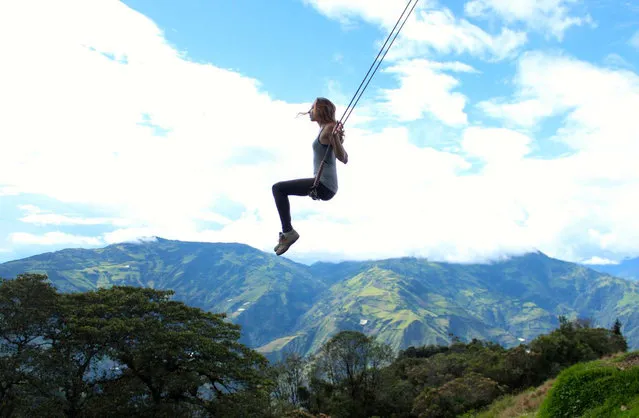
The Crazy Swing At Casa Del Arbol in Ecuador

Located at La Casa Del Arbol or “The Treehouse” in Baños, Ecuador, this small house was built for the stunning view on the Tungurahua Volcano it offers. But the real attraction is the swing attached to one of the tree's branches. It is far from your average swing, and it is surnamed the "Swing at the End of the World" for a good reason. Located off a giant cliff at over 2,600 meters above sea level and with absolutely no safety features, this swing promises a serious thrill to whoever is brave enough to ride it.
Details
10 Mar 2014 13:49:00
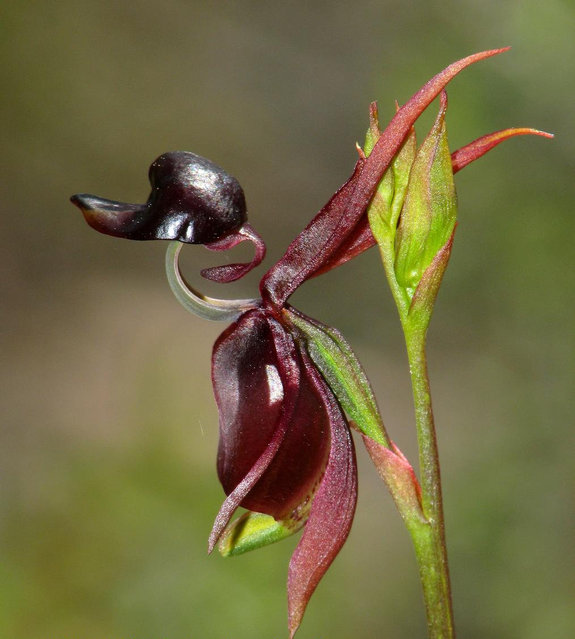
The Flying Duck Orchid

Caleana major, the Flying Duck Orchid is a small orchid found in eastern and southern Australia. This terrestrial plant features a remarkable flower, resembling a duck in flight. The flower is an attractant to insects, such as male sawflies which pollinate the flower in a process known as pseudocopulation. In 1986 this orchid was featured on an Australian postage stamp.


See Also: Monkey Orchid
Details
22 Apr 2013 10:56:00