Loading...
Done
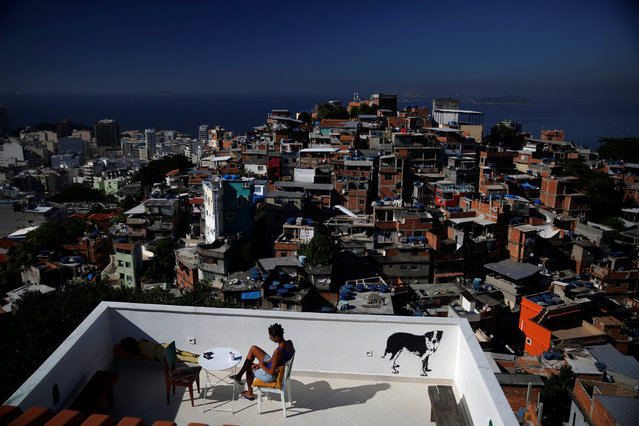
A woman sits on a terrace at Tiki hostel in Cantagalo favela, in Rio de Janeiro, Brazil, April 16, 2016. (Photo by Pilar Olivares/Reuters)

A woman sits on a terrace at Tiki hostel in Cantagalo favela, in Rio de Janeiro, Brazil, April 16, 2016. Hostels in a few of Rio's more than 1,000 slums serve not only as a cheap housing alternative for the more adventurous among the estimated 500,000 foreign tourists expected to arrive for the Olympics in August. The establishments also open up the rich culture of the city's shantytowns for travellers, giving them a glimpse into once “no-go” areas where about one-fifth of Rio's population lives. (Photo by Pilar Olivares/Reuters)
Details
04 May 2016 12:18:00
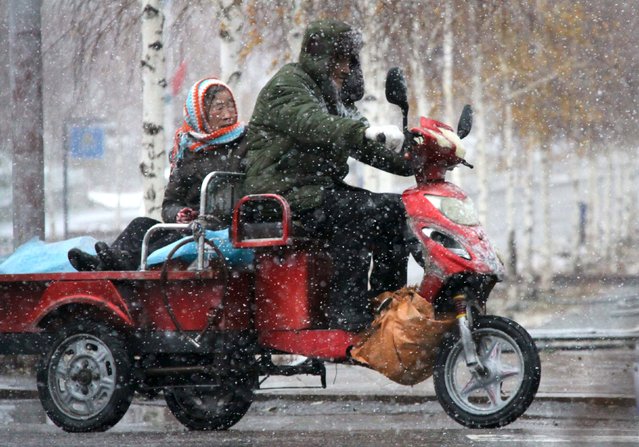
A couple ride a motorcycle along a street during snow in Altay, Xinjiang Uighur Autonomous Region, China, November 8, 2015. Picture taken November 8, 2015. (Photo by Reuters/Stringer)

A couple ride a motorcycle along a street during snow in Altay, Xinjiang Uighur Autonomous Region, China, November 8, 2015. Picture taken November 8, 2015. (Photo by Reuters/Stringer)
Details
23 Nov 2015 08:05:00
A student protester throws a stone against a riot police vehicle during a demonstration to demand changes in the education system in Santiago, Chile, April 21, 2016. (Photo by Ivan Alvarado/Reuters)

A student protester throws a stone against a riot police vehicle during a demonstration to demand changes in the education system in Santiago, Chile, April 21, 2016. (Photo by Ivan Alvarado/Reuters)
Details
22 Apr 2016 13:05:00
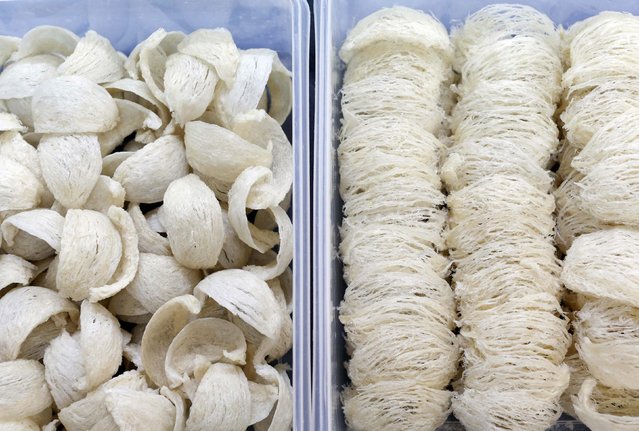
Two styles of cleaned bird's nest, Yan Zhan (L) and Su Zhan (R) await repacking at a processing plant in Kuala Lumpur, February 17, 2015. Prized in China for is alleged health benefits for hundreds of years, nests made from swiftlets' saliva are being mixed into coffee and cereal as the Southeast Asian producers of the delicacy seek to broaden its appeal, and their profit margins. (Photo by Olivia Harris/Reuters)

Two styles of cleaned bird's nest, Yan Zhan (L) and Su Zhan (R) await repacking at a processing plant in Kuala Lumpur, February 17, 2015. Prized in China for is alleged health benefits for hundreds of years, nests made from swiftlets' saliva are being mixed into coffee and cereal as the Southeast Asian producers of the delicacy seek to broaden its appeal, and their profit margins. The nests are among the world's most expensive foods, selling for up to $2,500 a kg and the swiftlets that weave them are indigenous to Indonesia, Malaysia, Thailand and Vietnam. (Photo by Olivia Harris/Reuters)
Details
24 Feb 2015 13:57:00
A woman stands next to a giant jandal  on Tamarama Beach as giant sculptures are installed ahead of the “Sculpture by the Sea” exhibition in Sydney on October 19, 2016. Celebrating it's 20th anniversary, Sculpture by the Sea is the world's largest annual, free-to-the-public, outdoor sculpture exhibition. (Photo by William West/AFP Photo)

A woman stands next to a giant jandal on Tamarama Beach as giant sculptures are installed ahead of the “Sculpture by the Sea” exhibition in Sydney on October 19, 2016. Celebrating it's 20th anniversary, Sculpture by the Sea is the world's largest annual, free-to-the-public, outdoor sculpture exhibition. (Photo by William West/AFP Photo)
Details
21 Oct 2016 12:42:00
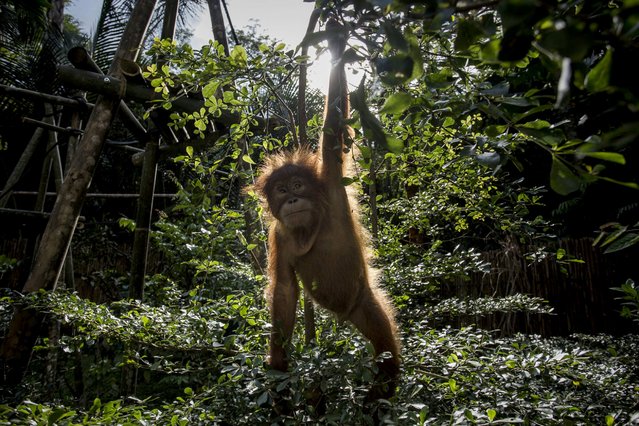
A Baby sumatran orangutan (Pongo abelii) plays around in a tree as they train at Sumatran Orangutan Conservation Programme's rehabilitation center on November 12, 2016 in Kuta Mbelin, North Sumatra, Indonesia. The Orangutans in Indonesia have been known to be on the verge of extinction as a result of deforestation and poaching. Found mostly in South-East Asia, where they live on the islands of Sumatra and Borneo, the endangered species continue to lose their habitat as a result of corporate expansion in a developing economy. Indonesia approved palm oil concessions on nearly 15 million acres of peatlands over the past years and thousands of square miles have been cleared for plantations, including the lowland areas that are the prime habitat for orangutans. (Photo by Ulet Ifansasti/Getty Images)

A Baby sumatran orangutan (Pongo abelii) plays around in a tree as they train at Sumatran Orangutan Conservation Programme's rehabilitation center on November 12, 2016 in Kuta Mbelin, North Sumatra, Indonesia. The Orangutans in Indonesia have been known to be on the verge of extinction as a result of deforestation and poaching. Found mostly in South-East Asia, where they live on the islands of Sumatra and Borneo, the endangered species continue to lose their habitat as a result of corporate expansion in a developing economy. Indonesia approved palm oil concessions on nearly 15 million acres of peatlands over the past years and thousands of square miles have been cleared for plantations, including the lowland areas that are the prime habitat for orangutans. (Photo by Ulet Ifansasti/Getty Images)
Details
16 Nov 2016 11:14:00
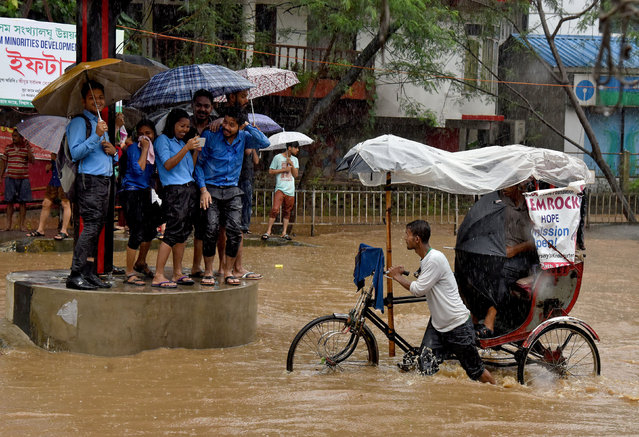
College students take shelter at a traffic point as a man paddles his rickshaw through a flooded road during heavy rain in Guwahati, India, June 13, 2017. (Photo by Anuwar Hazarika/Reuters)

College students take shelter at a traffic point as a man paddles his rickshaw through a flooded road during heavy rain in Guwahati, India, June 13, 2017. (Photo by Anuwar Hazarika/Reuters)
Details
18 Jun 2017 03:31:00
Puryanti, a 29-year-old woman, and her 15-year-old nephew Raffi, cover themselves from head to toe in silver paint to become “manusia silver” (silver people), as part of their act to make a living, in Depok, on the outskirts of Jakarta, Indonesia, February 6, 2021. (Photo by Adi Kurniawan/Reuters)

Puryanti, a 29-year-old woman, and her 15-year-old nephew Raffi, cover themselves from head to toe in silver paint to become “manusia silver” (silver people), as part of their act to make a living, in Depok, on the outskirts of Jakarta, Indonesia, February 6, 2021. (Photo by Adi Kurniawan/Reuters)
Details
12 Feb 2021 09:44:00