Loading...
Done
People walk on the Patriarch's bridge decorated for Christmas and New Year celebrations with the Christ the Savior Cathedral in the background in Moscow, Russia, Monday, December 16, 2019. (Photo by Alexander Zemlianichenko/AP Photo)

People walk on the Patriarch's bridge decorated for Christmas and New Year celebrations with the Christ the Savior Cathedral in the background in Moscow, Russia, Monday, December 16, 2019. (Photo by Alexander Zemlianichenko/AP Photo)
Details
24 Dec 2019 00:03:00
Spectacular images offering insight into the lives of the Huaorani people in the Ecuadorian Amazon have been revealed showing how they use traditional methods to hunt monkeys for food. The stunning pictures were taken by conservation photographer Pete Oxford from Torquay, Devon in the Ecuadorian Amazon. “The Huaorani Indians are a forest people highly in tune with their environment. Many are now totally acculturated since the 1950s by missionaries”, said Pete. “Today they face radical change to their culture to the proximity of oil exploration within their territory and the Yasuni National Park and Biosphere Reserve, they are vastly changed. Some still live very traditionally and for this shoot, through my Huaorani friend, a direct relative of those photographed he wanted to depict them as close to their original culture as possible. They still largely hunt with blow pipes and spears eating a lot of monkeys and peccaries”. The Huaorani are also known as the Waorani, Waodani or the Waos and are native Amerindians. Their lands are located between the Curaray and Napo rivers and speak the Huaorani language. Pete says that during his visit he was welcomed into the group and hopes that ancient cultures can be saved. Here: The tribe were seen celebrating after a hunter returned to camp with a wild pig. (Photo by Pete Oxford/Mediadrumworld.com)

Spectacular images offering insight into the lives of the Huaorani people in the Ecuadorian Amazon have been revealed showing how they use traditional methods to hunt monkeys for food. The stunning pictures were taken by conservation photographer Pete Oxford from Torquay, Devon in the Ecuadorian Amazon. Here: The tribe were seen celebrating after a hunter returned to camp with a wild pig. (Photo by Pete Oxford/Mediadrumworld.com)
Details
20 Jan 2017 07:58:00
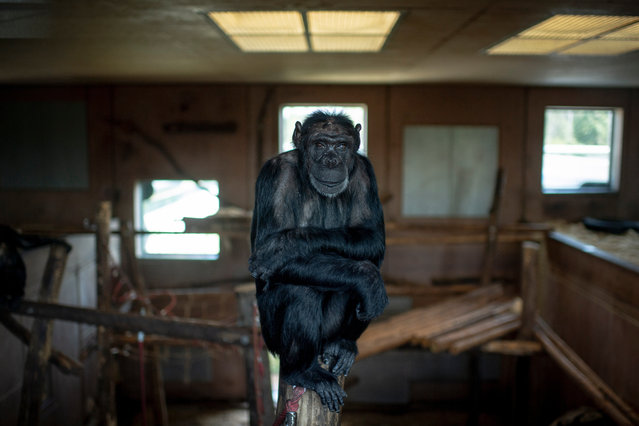
A chimpanzee looks in the direction of a camera at the Gut Aiderbichl Sanctuary for Traumatized Chimpanzees and other Primates in Gaenserndorf, near Vienna, 17 September 2018. 34 former laboratory chimpanzees of former Austrian pharmaceutical company Immuno AG spend their lives at the Gut Aiderbichl Sanctuary for Traumatized Chimpanzees and other Primates since 2009. U.S.-based Baxter International Inc. took over the Immuno AG in 1996, banned experiments with primates and rebuilt a former safari park for the Gut Aiderbichl Sanctuary for Traumatized Chimpanzees and other Primates. After three decades in captivity in too small cages, the chimpanzees, most of them came from Sierra Leone as cubs, have species-appropriate indoor and outdoor enclosures. The financial support by Baxter International Inc. and Austrian officials will end by 2019. (Photo by Christian Bruna/EPA/EFE)

A chimpanzee looks in the direction of a camera at the Gut Aiderbichl Sanctuary for Traumatized Chimpanzees and other Primates in Gaenserndorf, near Vienna, 17 September 2018. 34 former laboratory chimpanzees of former Austrian pharmaceutical company Immuno AG spend their lives at the Gut Aiderbichl Sanctuary for Traumatized Chimpanzees and other Primates since 2009. (Photo by Christian Bruna/EPA/EFE)
Details
23 Sep 2018 00:03:00
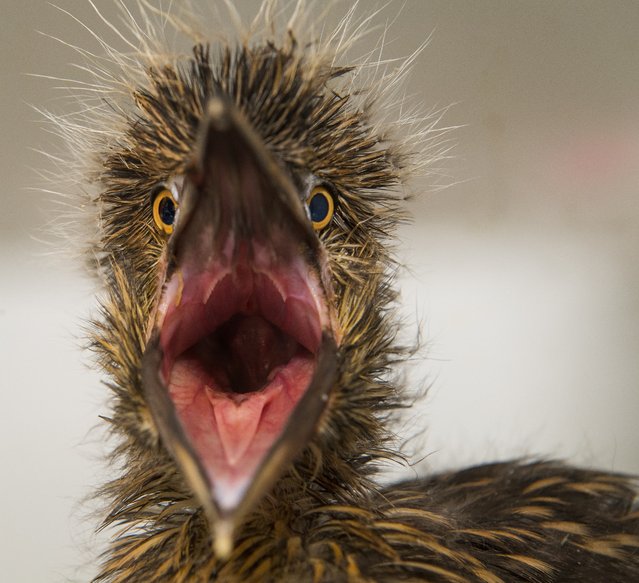
A baby Black-crowned Night Heron squawks in its incubator while being cared for at City Wildlife rescue and rehabilitation center in Washington, DC on May 31, 2017. The heron is one of several that have been brought to CW by the staff at The National Zoo over the past few years. The heron is a native bird and has made an established rookery inside the zoo grounds over a hundred years ago.  Every year at this time, some of the chicks get pushed or fall out of the nest and require human care.  Because the birds are native and not part of the Smithsonian collection, they partnered with CW to rehabilitate the herons for re-release back to the flock inside Zoo. They're reintroduced back to their flock so that they can migrate together in the Fall. The Black-crowned heron usually migrates from the DC area down to southeast North Carolina, some going as far as Jacksonville, FL in winter. The Black-crowned heron is the species of greatest conservation need in the District of Columbia because their numbers are in such rapid decline due to habitat loss. (Photo Linda Davidson/The Washington Post)

A baby Black-crowned Night Heron squawks in its incubator while being cared for at City Wildlife rescue and rehabilitation center in Washington, DC on May 31, 2017. The heron is one of several that have been brought to CW by the staff at The National Zoo over the past few years. (Photo Linda Davidson/The Washington Post)
Details
04 Jun 2017 08:04:00
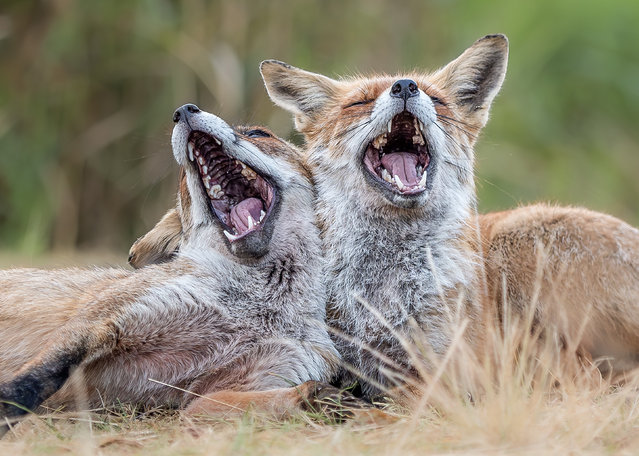
A pair of foxes seem happy to see each other in Zandvoort, the Netherlands in the last decade of September 2024. (Photo by Anna Stelloo/Solent News)

A pair of foxes seem happy to see each other in Zandvoort, the Netherlands in the last decade of September 2024. (Photo by Anna Stelloo/Solent News)
Details
06 Oct 2024 03:57:00
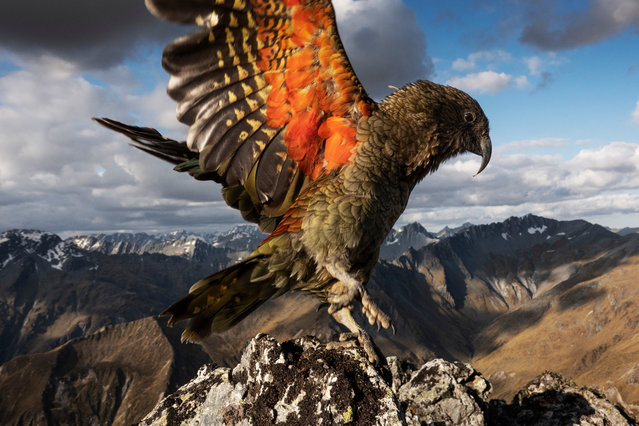
The endangered kea is the world’s only alpine parrot, and one of the most intelligent birds. They show no fear of humans and are thieves and pranksters. The parrot is seen in the Whakaari conservation area, near Glen Orchy in the Otago region of New Zealand, a place where historic huts and mining relics are surrounded by stunning mountains covered in tussock. (Photo by Murdo MacLeod/The Guardian)

The endangered kea is the world’s only alpine parrot, and one of the most intelligent birds. They show no fear of humans and are thieves and pranksters. The parrot is seen in the Whakaari conservation area, near Glen Orchy in the Otago region of New Zealand, a place where historic huts and mining relics are surrounded by stunning mountains covered in tussock. (Photo by Murdo MacLeod/The Guardian)
Details
15 Jun 2020 00:05:00
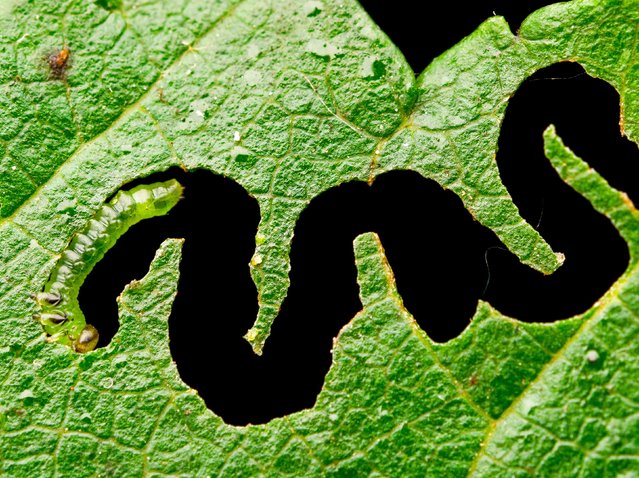
Miniscule larvae carve winding tunnels as they eat through small leaves in a small forest near the town of Velbert in western Germany in July 2022. The hungry green sawfly larvae measure just three millimetres in length and are difficult to spot on the leaves of the beech tree unless up close. (Photo by Christian Brockes/Solent News)

Miniscule larvae carve winding tunnels as they eat through small leaves in a small forest near the town of Velbert in western Germany in July 2022. The hungry green sawfly larvae measure just three millimetres in length and are difficult to spot on the leaves of the beech tree unless up close. (Photo by Christian Brockes/Solent News)
Details
24 Dec 2022 04:05:00
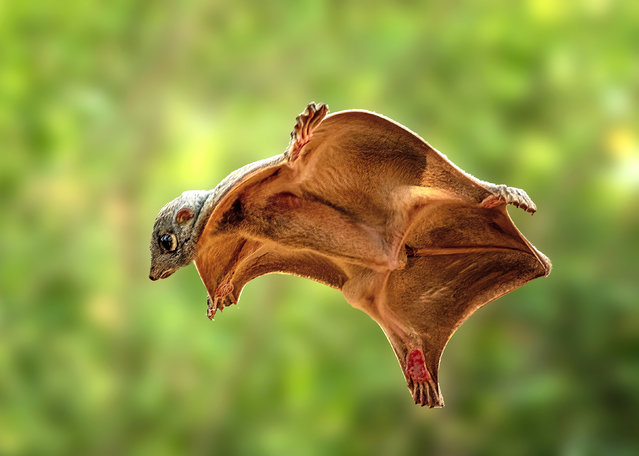
The Sunda lemur uses a special membrane to “fly” between trees while on the lookout for food in Java, Indonesia in the last decade of June 2024. (Photo by Dzulfikri/Solent News)

The Sunda lemur uses a special membrane to “fly” between trees while on the lookout for food in Java, Indonesia in the last decade of June 2024. (Photo by Dzulfikri/Solent News)
Details
14 Jul 2024 03:56:00