A woman reacts with Samoyed puppies as she performs yoga on International Yoga Day, in Bangkok, Thailand, on June 21, 2025. (Photo by Chalinee Thirasupa/Reuters)
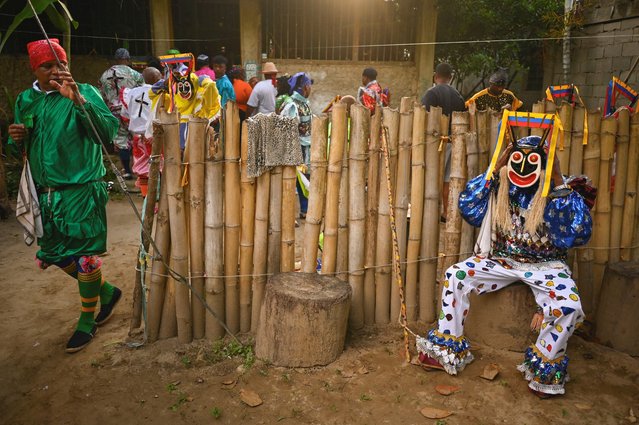
A member of the Brotherhood of the Diablos Danzantes de Chuao (Dancing Devils of Chuao) arranges his mask during the Corpus Christi festival in the town of Chuao, Aragua state, Venezuela on June 18, 2025. (Photo by Maxwell Briceno/Reuters)
Crews paddle fast towards the turning mark during the annual Great Salem Maritime Cardboard Boat Regatta in Salem, Massachusetts on August 9, 2025. (Photo by Joseph Prezioso/Anadolu via Getty Images)
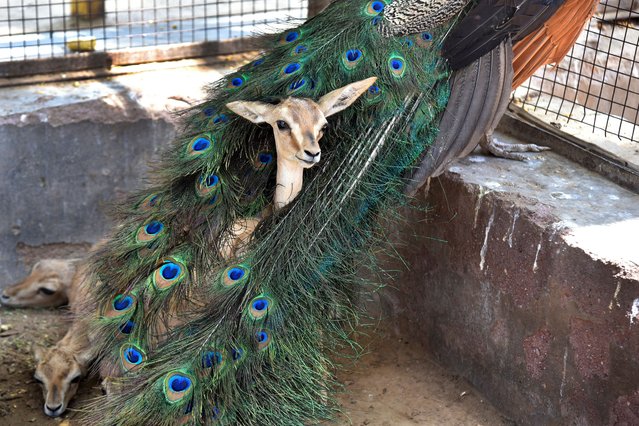
A Chinkara gazelle fawn rests in the plumage of a peacock at an animal rescue center on a hot summer day in Bikaner, Rajasthan, India, Thursday, May 23, 2024. (Photo by Dinesh Gupta/AP Photo)
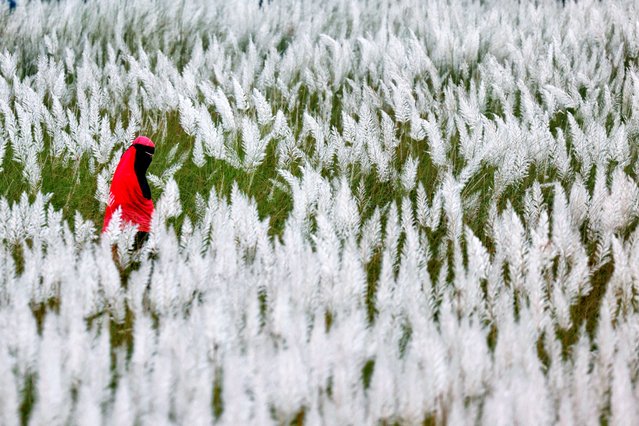
A woman wearing a burka, walks along a kans grass flower field, at Sarighat area in Dhaka, Bangladesh, on September 19, 2025. (Photo by Mohammad Ponir Hossain/Reuters)
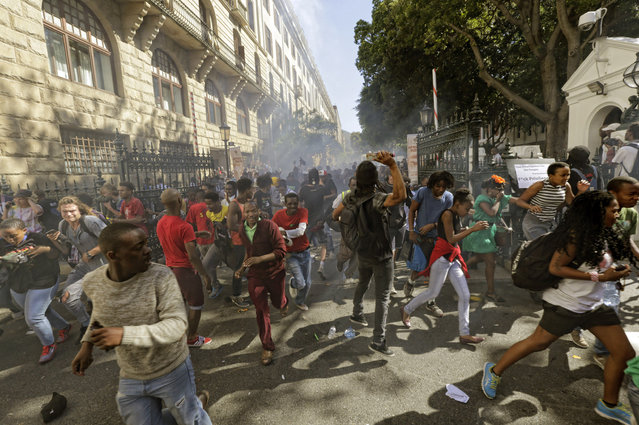
Protesting university students flee as police fire stun grenades outside Parliament in Cape Town, South Africa, Wednesday October 21, 2015. The protests are part of a wave of nationwide protests that have shut down many South Africa universities, which say they are struggling with higher operational costs as well as inadequate state subsidies. (Photo by AP Photo)
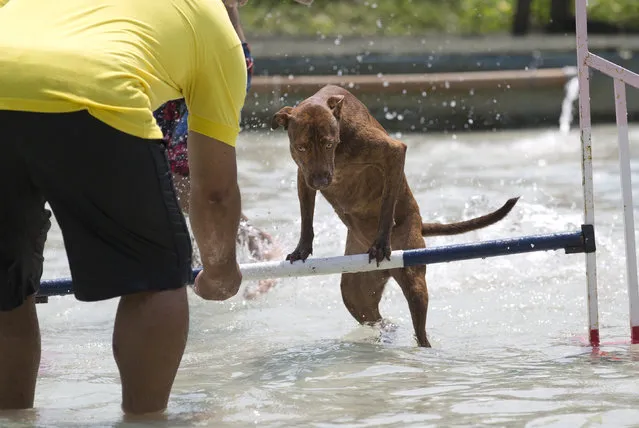
A trainer tries to convince a dog to jump over an obstacle during the Dog Olympic Games in Rio de Janeiro, Brazil, Sunday, September 18, 2016. Owner of the dog park and organizer of the animal event Marco Antonio Toto says his goal is to socialize humans and their pets while celebrating sports. (Photo by Silvia Izquierdo/AP Photo)
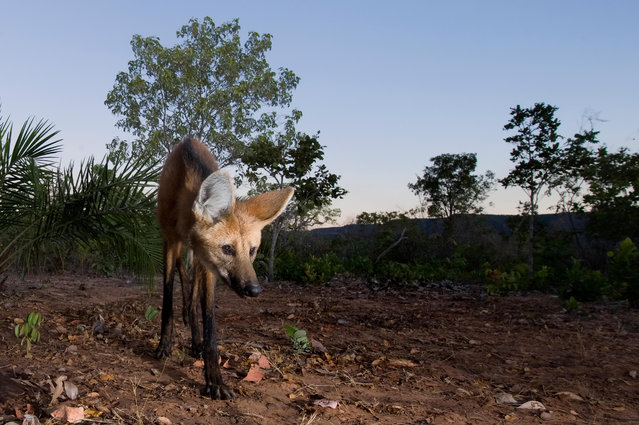
Global wildlife populations will decline by 67% by 2020 unless urgent action is taken to reduce human impact on species and ecosystems, warns the biennial Living Planet Index report from WWF (World Wide Fund for Nature) and ZSL (Zoological Society of London). From elephants to eels, here are some of the wildlife populations most affected by human activity. Here: The maned wolf is among the large mammals in the Brazilian Cerrado that are threatened by the increasing conversion of grasslands into farmland for grazing and growing crops. (Photo by Ben Cranke/Nature Picture Library/Alamy Stock Photo)