Loading...
Done
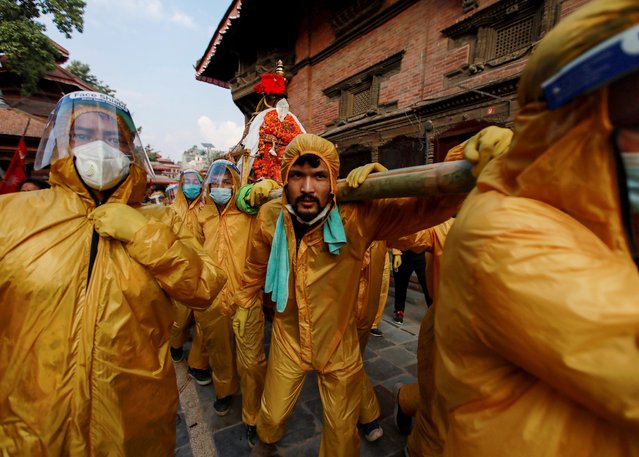
Devotees wearing personal protective equipment (PPE), carry a chariot of Pachali Bhairab amid the spread of coronavirus disease (COVID-19), in Kathmandu, Nepal on October 21, 2020. (Photo by Navesh Chitrakar/Reuters)

Devotees wearing personal protective equipment (PPE), carry a chariot of Pachali Bhairab amid the spread of coronavirus disease (COVID-19), in Kathmandu, Nepal on October 21, 2020. (Photo by Navesh Chitrakar/Reuters)
Details
29 Oct 2020 00:03:00
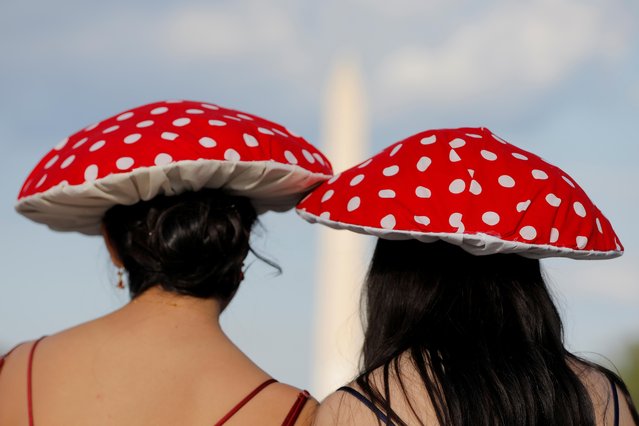
People wearing mushroom hats stand in front of the Washington Monument in Washington, D.C., U.S., May 14, 2021. (Photo by Andrew Kelly/Reuters)

People wearing mushroom hats stand in front of the Washington Monument in Washington, D.C., U.S., May 14, 2021. (Photo by Andrew Kelly/Reuters)
Details
24 May 2021 08:17:00
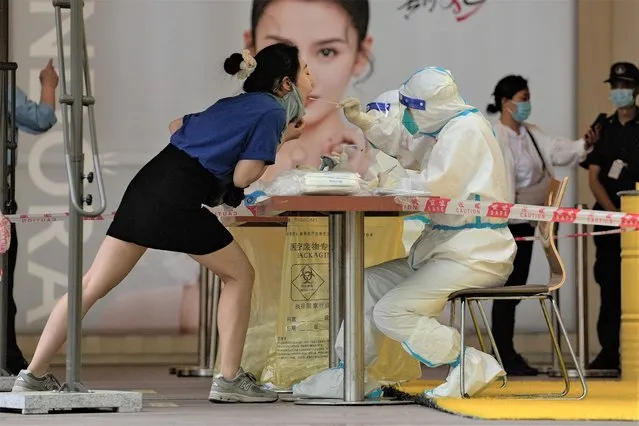
A woman gets a throat swab during a public COVID testing outside a shopping mall on Sunday, May 22, 2022, in Beijing. (Photo by Andy Wong/AP Photo)

A woman gets a throat swab during a public COVID testing outside a shopping mall on Sunday, May 22, 2022, in Beijing. (Photo by Andy Wong/AP Photo)
Details
23 May 2022 04:58:00
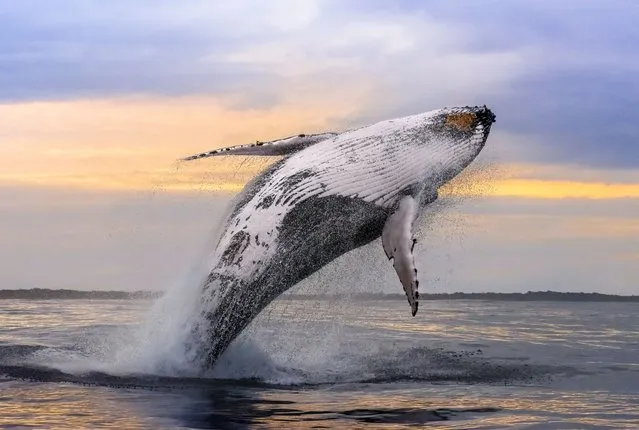
A 40-tonne humpback launching out of the water in an incredible breach in New South Wales, Australia on October 2022 in front of a sunset. The humpback whale can grow up to 56 feet long and typically covers 9,900 miles a year as it travels through the oceans of the world. Humpback whales are a species of Baleen whale, meaning they don't have teeth. Instead, they have baleen which helps them to filter feed. Their main source of food is krill or tiny bait fish. (Photo by Jodie Lowe/Media Drum Images)

A 40-tonne humpback launching out of the water in an incredible breach in New South Wales, Australia on October 2022 in front of a sunset. The humpback whale can grow up to 56 feet long and typically covers 9,900 miles a year as it travels through the oceans of the world. Humpback whales are a species of Baleen whale, meaning they don't have teeth. Instead, they have baleen which helps them to filter feed. Their main source of food is krill or tiny bait fish. (Photo by Jodie Lowe/Media Drum Images)
Details
30 Oct 2022 04:28:00
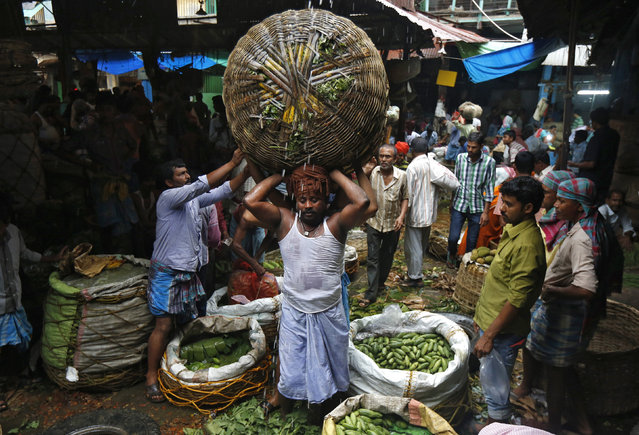
Labourers carry a basket packed with vegetables through a wholesale market in Kolkata, India, February 26, 2016. (Photo by Rupak De Chowdhuri/Reuters)

Labourers carry a basket packed with vegetables through a wholesale market in Kolkata, India, February 26, 2016. (Photo by Rupak De Chowdhuri/Reuters)
Details
27 Feb 2016 10:34:00
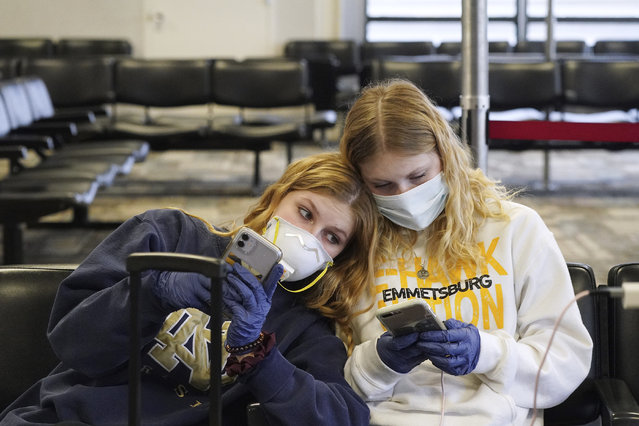
Rachel Miner, 15, left, of Emmetsburg, Iowa, sits with Carlotta Haas, 15, a foreign exchange student from Duesseldorf, Germany, who had been living with Miner and her family but was called home, as they waited for her flight Wednesday, March 25, 2020, in at Minneapolis-St. Paul International Airport in Minneapolis. (Photo by Anthony Souffle/Star Tribune via AP Photo)

Rachel Miner, 15, left, of Emmetsburg, Iowa, sits with Carlotta Haas, 15, a foreign exchange student from Duesseldorf, Germany, who had been living with Miner and her family but was called home, as they waited for her flight Wednesday, March 25, 2020, in at Minneapolis-St. Paul International Airport in Minneapolis. (Photo by Anthony Souffle/Star Tribune via AP Photo)
Details
09 Apr 2020 00:05:00
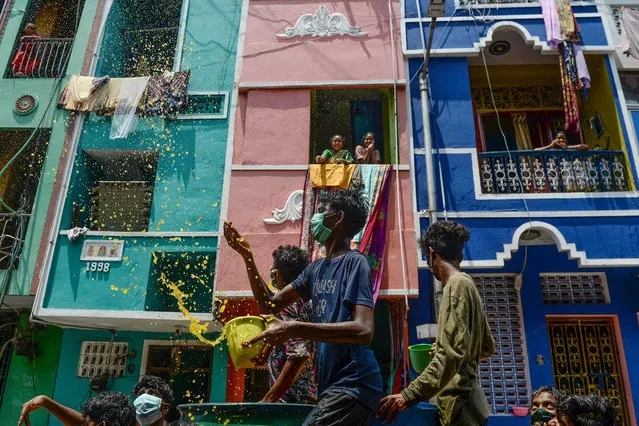
Volunteers throw a mixture of water, neem herb and turmeric as an alleged natural disinfectant on a street in a residential area during a government-imposed nationwide lockdown as a preventive measure against the COVID-19 coronavirus, in Chennai on April 7, 2020. (Photo by Arun Sankar/AFP Photo)

Volunteers throw a mixture of water, neem herb and turmeric as an alleged natural disinfectant on a street in a residential area during a government-imposed nationwide lockdown as a preventive measure against the COVID-19 coronavirus, in Chennai on April 7, 2020. (Photo by Arun Sankar/AFP Photo)
Details
20 Apr 2020 00:03:00
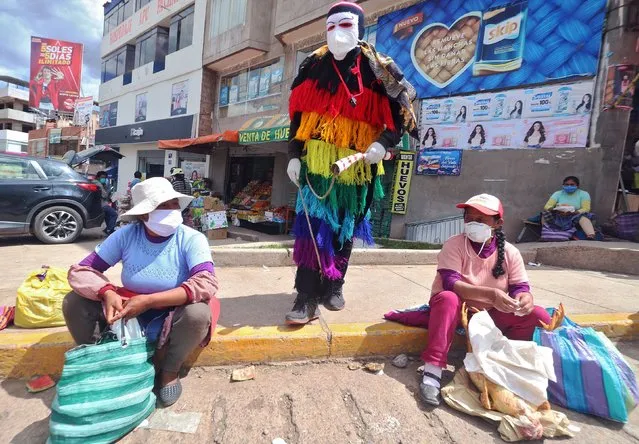
A man dressed in Andean attire as “Ukukus” or “Pabluchas”, a traditional character that acts as a vigilante imposing social order, uses a whip as a threat to force people to maintain their distance and remind them to wear face masks and gloves as a preventive measure against the novel coronavirus COVID-19, in the Vinocanchon market area in San Jeronimo district, close to the Peruvian Andean city of Cusco, on May 2, 2020. The government has identified public markets as major hotspots of the new coronavirus in Peru, where 40,459 confirmed cases and 1,124 deaths were reported on May 1. (Photo by Jose Carlos Angulo/AFP Photo)

A man dressed in Andean attire as “Ukukus” or “Pabluchas”, a traditional character that acts as a vigilante imposing social order, uses a whip as a threat to force people to maintain their distance and remind them to wear face masks and gloves as a preventive measure against the novel coronavirus COVID-19, in the Vinocanchon market area in San Jeronimo district, close to the Peruvian Andean city of Cusco, on May 2, 2020. The government has identified public markets as major hotspots of the new coronavirus in Peru, where 40,459 confirmed cases and 1,124 deaths were reported on May 1. (Photo by Jose Carlos Angulo/AFP Photo)
Details
04 May 2020 00:07:00