Loading...
Done
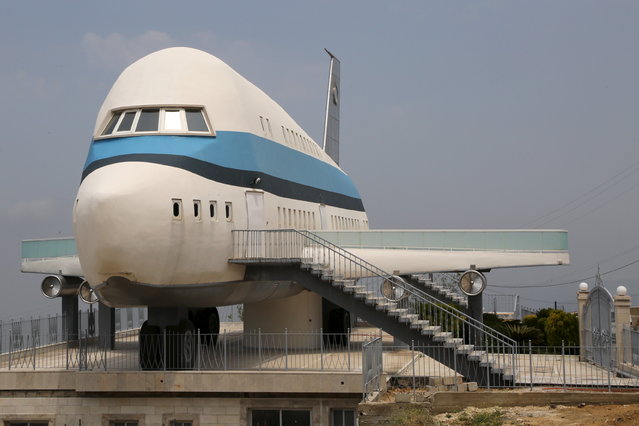
An airplane house is pictured in the village of Miziara, northern Lebanon May 12, 2015. Miziara prides itself on building residential homes that resemble ancient Greek temples and Egyptian ruins, one is even built in the shape of an Airbus A380. (Photo by Aziz Taher/Reuters)

An airplane house is pictured in the village of Miziara, northern Lebanon May 12, 2015. Miziara prides itself on building residential homes that resemble ancient Greek temples and Egyptian ruins, one is even built in the shape of an Airbus A380. (Photo by Aziz Taher/Reuters)
Details
22 May 2015 12:40:00
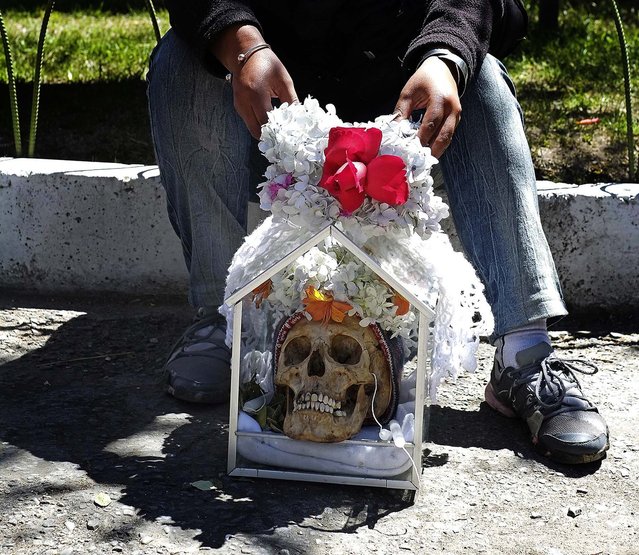
A woman holds a skull during a “Dia de los natitas” (Day of the Skull) ceremony at the Cementerio General of La Paz. (Photo by David Mercado/Reuters)

A woman holds a skull during a “Dia de los natitas” (Day of the Skull) ceremony at the Cementerio General of La Paz. (Photo by David Mercado/Reuters)
Details
10 Nov 2013 06:59:00
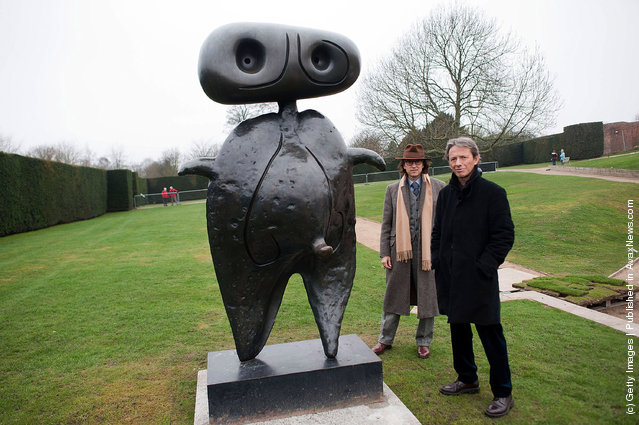
Joan Miro's, grandsons, Emilio Fernandez Miro and Joan Punyet Miro pose beside Personnage (1970) in the Yorkshire Sculpture park

“Joan Miro i Ferra (April 20, 1893 – December 25, 1983) was a Spanish Catalan painter, sculptor, and ceramicist born in Barcelona. Earning international acclaim, his work has been interpreted as Surrealism, a sandbox for the subconscious mind, a re-creation of the childlike, and a manifestation of Catalan pride. In numerous interviews dating from the 1930s onwards, Miro expressed contempt for conventional painting methods as a way of supporting bourgeois society, and famously declared an “assassination of painting” in favour of upsetting the visual elements of established painting”. – Wikipedia

Photo: Joan Miro's, grandsons, Emilio Fernandez Miro and Joan Punyet Miro pose beside Personnage (1970) in the Yorkshire Sculpture park on March 14, 2012 in Wakefield, England. Yorkshire Sculpture Park stages the first major UK survey of sculpture by Spanish artist Joan Miro. (Photo by Bethany Clarke/Getty Images)

Details
15 Mar 2012 13:47:00
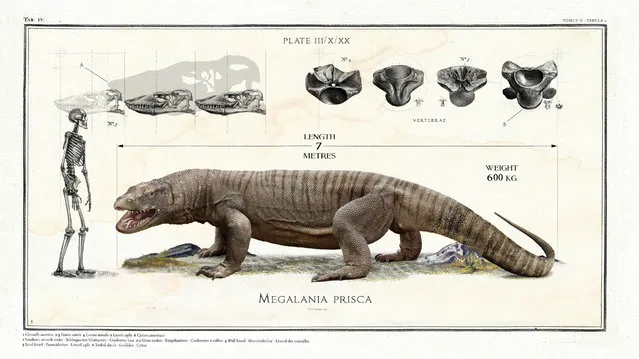
Fossil records indicate that this early lizard, Megalina prisca, was a whopping seven metres in length. (Photo by Sky TV/The Guardian)

Fossil records indicate that this early lizard, Megalania (Megalania prisca or Varanus priscus), was a whopping seven metres in length. They were part of a megafaunal assemblage that inhabited southern Australia during the Pleistocene. The youngest fossil remains date to around 50,000 years ago. The first aboriginal settlers of Australia might have encountered them and been a factor in their extinction. (Photo by Sky TV/The Guardian)
Details
12 Jun 2018 00:05:00
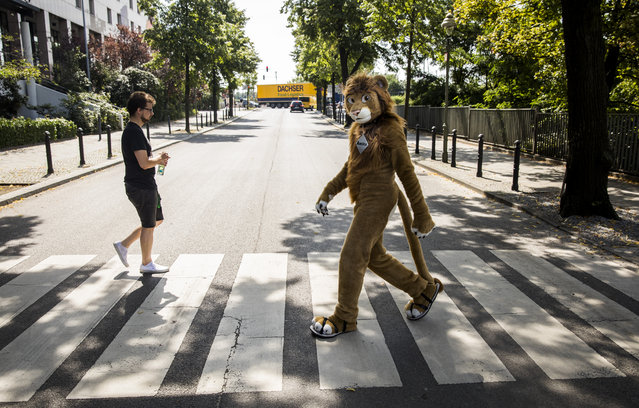
A delegate dressed in a furry Lion costume walks across a Zebra crossing to the convention centre at the Eurofurence convention in Berlin on August 17, 2017. Some 2700 delegates are taking part in the 3-day-long Eurofurence in the German capital, the worlds oldest active Furry-convention for people dressing up in furry costumes. (Photo by Odd Andersen/AFP Photo)

A delegate dressed in a furry Lion costume walks across a Zebra crossing to the convention centre at the Eurofurence convention in Berlin on August 17, 2017. Some 2700 delegates are taking part in the 3-day-long Eurofurence in the German capital, the worlds oldest active Furry-convention for people dressing up in furry costumes. (Photo by Odd Andersen/AFP Photo)
Details
18 Aug 2017 08:57:00
Office s*x. (Photo by Orange-Melody/Getty Images)

Office sеx. (Photo by Orange-Melody/Getty Images)
Details
09 Sep 2017 08:30:00
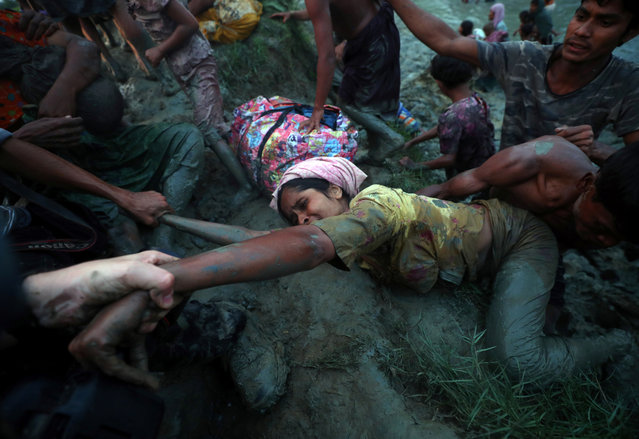
Photographers help a Rohingya refugee to climb out of Naf River as they cross the Myanmar-Bangladesh border in Palong Khali, near Cox's Bazar, Bangladesh on November 1, 2017. (Photo by Hannah McKay/Reuters)

Photographers help a Rohingya refugee to climb out of Naf River as they cross the Myanmar-Bangladesh border in Palong Khali, near Cox's Bazar, Bangladesh on November 1, 2017. (Photo by Hannah McKay/Reuters)
Details
02 Nov 2017 08:24:00
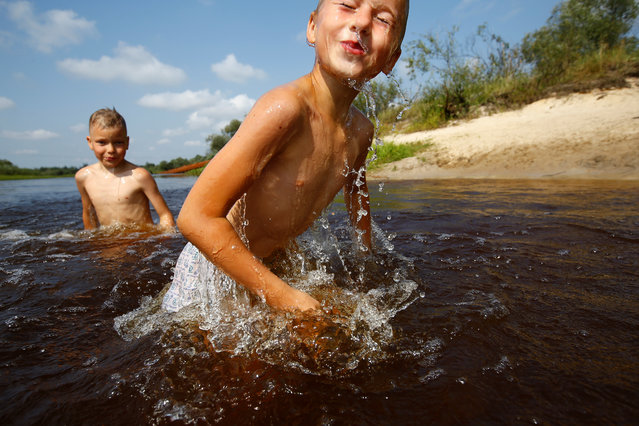
Boys play in the Stviga River on a hot summer day near the village of Pogost, Belarus, August 16, 2017. (Photo by Vasily Fedosenko/Reuters)

Just a few hours’ drive from the Belarus capital of Minsk, many villagers still live off the land. Nearly 80% of the country’s 9.5 million citizens live in urban areas, but for the rest, being close to nature can outweigh the hardships of country life. Here: Boys play in the Stviga River on a hot summer day near the village of Pogost, Belarus, August 16, 2017. (Photo by Vasily Fedosenko/Reuters)
Details
30 Nov 2017 08:28:00