Loading...
Done
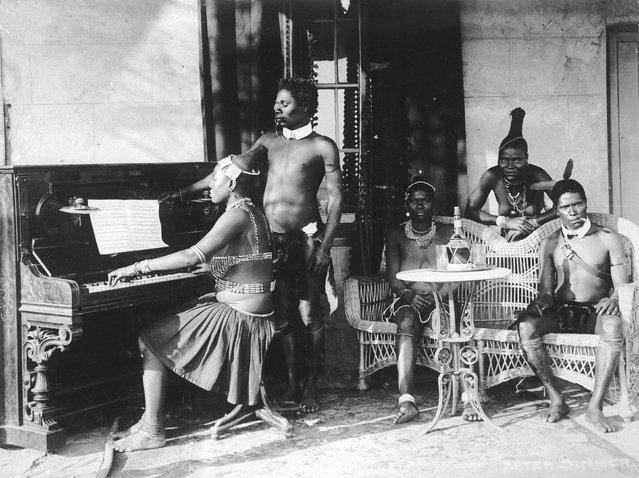
circa 1925:  A Zulu woman playing the piano while a group of others sit and listen.  (Photo by General Photographic Agency/Getty Images)

“The Zulu are the largest South African ethnic group, with an estimated 10–11 million people living mainly in the province of KwaZulu-Natal. Small numbers also live in Zimbabwe, Zambia, and Mozambique. Their language, Zulu, is a Bantu language; more specifically, part of the Nguni subgroup. The Zulu Kingdom played a major role in South African history during the 19th and 20th centuries. Under apartheid, Zulu people were classed as third-class citizens and suffered from state-sanctioned discrimination. They remain today the most numerous ethnic group in South Africa, and now have equal rights along with all other citizens”. – Wikipedia.

Photo: A Zulu woman playing the piano while a group of others sit and listen (to put it briefly, Englishmen scoff over Zulu). South Africa, circa 1925. (Photo by General Photographic Agency)

Details
03 Feb 2014 09:40:00
A visitor looks at a creation by Russian artist Irina Nakhova presented at the Russia's pavilion during the 56th International Art Exhibition (Biennale d'Arte) titled “All the Worlds Futures” on May 5, 2015 in Venice. (Photo by Gabriel Bouys/AFP Photo)

A visitor looks at a creation by Russian artist Irina Nakhova presented at the Russia's pavilion during the 56th International Art Exhibition (Biennale d'Arte) titled “All the Worlds Futures” on May 5, 2015 in Venice. (Photo by Gabriel Bouys/AFP Photo)
Details
09 May 2015 11:25:00
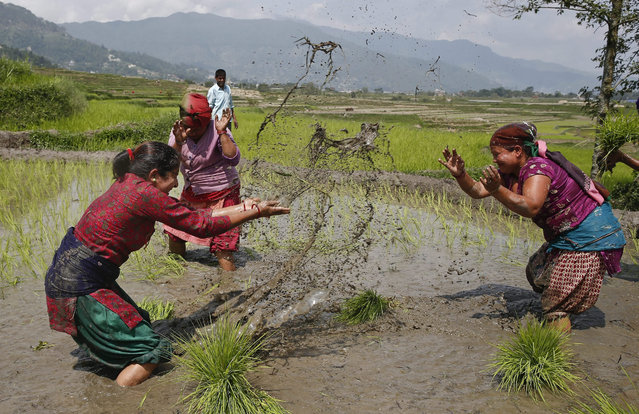
Nepalese women farmers spray mud water at each other while planting rice in a paddy field during the National Paddy Day in the village of Jitpur in Kathmandu, Nepal, 30 June 2015. On this day, known as Asar Pandra, farmers begin the annual rice planting season and mark the day with various festivities such as preparing rice meals with muddy water, spreads mud among farmers. (Photo by Narendra Shrestha/EPA)

Nepalese women farmers spray mud water at each other while planting rice in a paddy field during the National Paddy Day in the village of Jitpur in Kathmandu, Nepal, 30 June 2015. On this day, known as Asar Pandra, farmers begin the annual rice planting season and mark the day with various festivities such as preparing rice meals with muddy water, spreads mud among farmers. The Mud being a symbol for a prosperous season. The agricultural sector contributes about 60 per cent to Nepal's gross domestic product. (Photo by Narendra Shrestha/EPA)
Details
01 Jul 2015 13:16:00
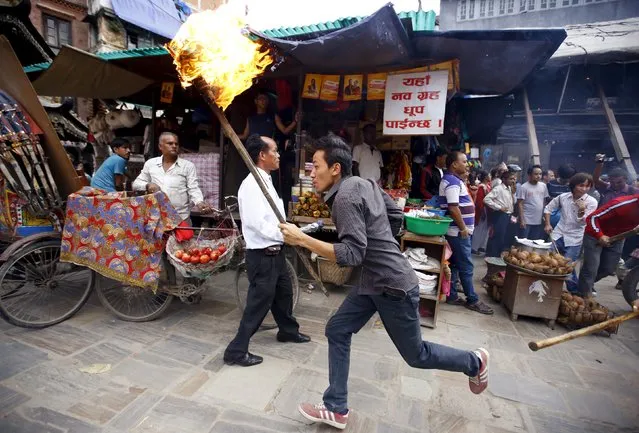
A protester holding a torch runs past police (not pictured) trying to stop the protesters from marching in a rally organised by a 30-party alliance led by a hardline faction of former Maoist rebels, who are protesting against the draft of the new constitution, in Kathmandu August 15, 2015. (Photo by Navesh Chitrakar/Reuters)

A protester holding a torch runs past police (not pictured) trying to stop the protesters from marching in a rally organised by a 30-party alliance led by a hardline faction of former Maoist rebels, who are protesting against the draft of the new constitution, in Kathmandu August 15, 2015. The group says that the draft is not inclusive and does not protect the rights of the marginalised and underprivileged groups in the country. (Photo by Navesh Chitrakar/Reuters)

Details
16 Aug 2015 13:24:00
In this December 19, 2014 photo, a man stands beside his 1957 Chevrolet Bel-Air car in Havana, Cuba.  U.S. car sales have been banned in Cuba since 1959. Cubans have been have been forced to patch together Fords, Chevrolets and Chryslers that date back to before Fidel Castro's revolution which can make it appear like the country is stuck in a 1950s time warp. (Photo by Desmond Boylan/AP Photo)

In this December 19, 2014 photo, a man stands beside his 1957 Chevrolet Bel-Air car in Havana, Cuba. U.S. car sales have been banned in Cuba since 1959. Cubans have been have been forced to patch together Fords, Chevrolets and Chryslers that date back to before Fidel Castro's revolution which can make it appear like the country is stuck in a 1950s time warp. Since the Communist economic system isn't likely to change soon, many of those cars will have to stay on the road for years. (Photo by Desmond Boylan/AP Photo)
Details
26 Dec 2014 15:35:00
Boys play basketball in the facilities of Belarus' Republican Clinic of Speleotherapy within a salt mine, as part of their treatment, near the town of Soligorsk, south of Minsk, February 19, 2015. According to the state clinic, more than 7,000 children and adults seek medical treatment for respiratory illness each year in the subsurface chambers of its facilities, located 420 metres underground between layers of potassium and stone salts in an operational salt mine. (Photo by Vasily Fedosenko/Reuters)

Boys play basketball in the facilities of Belarus' Republican Clinic of Speleotherapy within a salt mine, as part of their treatment, near the town of Soligorsk, south of Minsk, February 19, 2015. According to the state clinic, more than 7,000 children and adults seek medical treatment for respiratory illness each year in the subsurface chambers of its facilities, located 420 metres underground between layers of potassium and stone salts in an operational salt mine. (Photo by Vasily Fedosenko/Reuters)
Details
20 Feb 2015 13:17:00
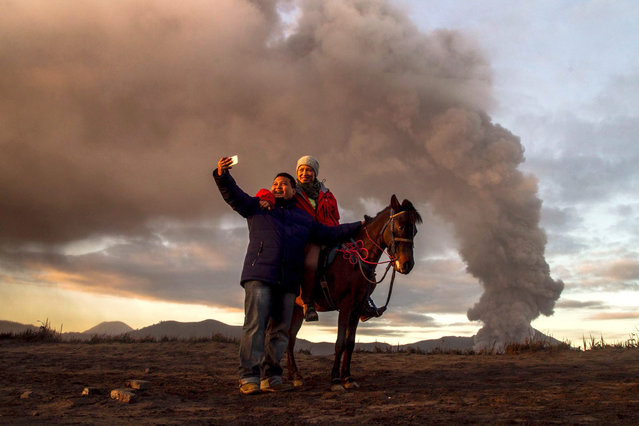
Indonesian tourists take a selfie as Mount Bromo spews volcanic material and ash into the air during an eruption in Probolinggo, East Java, Indonesia, 31 December 2015. Indonesia's Mount Bromo is on the second highest alert level as its activity has increased in the last two months. (Photo by Fully Handoko/EPA)

Indonesian tourists take a selfie as Mount Bromo spews volcanic material and ash into the air during an eruption in Probolinggo, East Java, Indonesia, 31 December 2015. Indonesia's Mount Bromo is on the second highest alert level as its activity has increased in the last two months. (Photo by Fully Handoko/EPA)
Details
13 Jan 2016 08:06:00
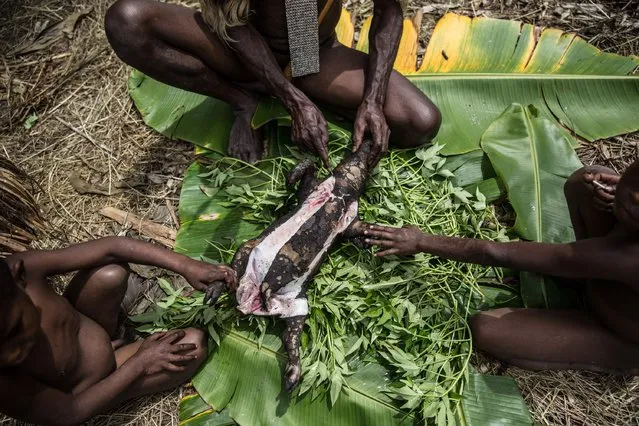
A man from the Dani tribe cuts the head of a pig after cooked by traditional way which is use burned hot stones at Obia Village on August 9, 2014 in Wamena, Papua, Indonesia. The stone-age Dani tribe live a traditional existence in the Baliem Valley, which is situated 1600 metres above sea level in the heart of the Cyclops Mountains. (Photo by Agung Parameswara/Getty Images)

A man from the Dani tribe cuts the head of a pig after cooked by traditional way which is use burned hot stones at Obia Village on August 9, 2014 in Wamena, Papua, Indonesia. The stone-age Dani tribe live a traditional existence in the Baliem Valley, which is situated 1600 metres above sea level in the heart of the Cyclops Mountains. (Photo by Agung Parameswara/Getty Images)
Details
14 Aug 2014 10:30:00