Loading...
Done
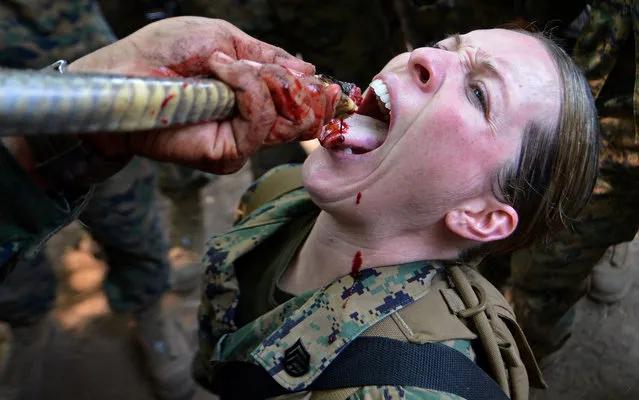
In a military base in the Thai province of Chon Buri February 20 U.S. Marines Navy with Thailand began their studies in jungle survival. The event is held in joint military exercises “Cobra Gold 2013”. During a jungle survival program February 20, 2013 taught by Royal Thai Special Forces in Sannapit, Thailand, U.S. Marines learned to catch cobras and drink their fresh blood, not to mention eat forest insects and pull the heads off of chicken. The training was part of Operation Cobra Gold 13, the 32nd edition of international military exercises hosted by the Thai. According to a U.S. Marines press release, Cobra Gold is the largest exercise of its kind in Asia and incorporates troops from five other nations in addition to the U.S. and Thailand. The Daily Mail reports that the Marines were invited to experience the local custom of drinking cobra blood after being taught to catch and kill cobras in the wild. As CNN notes, Cobra blood is believed to be a panacea and aphrodiasic in parts of Southeast Asia. In Jakarta, vendors can earn over $100 a night selling shots of cobra blood mixed with liquor. (Photo by Pornchai Kittiwongsakul/AFP Photo)

During a jungle survival program February 20, 2013 taught by Royal Thai Special Forces in Sannapit, Thailand, U.S. Marines learned to catch cobras and drink their fresh blood, not to mention eat forest insects and pull the heads off of chicken. The training was part of Operation Cobra Gold 13, the 32nd edition of international military exercises hosted by the Thai. According to a U.S. Marines press release, Cobra Gold is the largest exercise of its kind in Asia and incorporates troops from five other nations in addition to the U.S. and Thailand. The Daily Mail reports that the Marines were invited to experience the local custom of drinking cobra blood after being taught to catch and kill cobras in the wild. As CNN notes, Cobra blood is believed to be a panacea and aphrodiasic in parts of Southeast Asia. In Jakarta, vendors can earn over $100 a night selling shots of cobra blood mixed with liquor. (Photo by Pornchai Kittiwongsakul/AFP Photo)
Details
23 Feb 2013 11:52:00
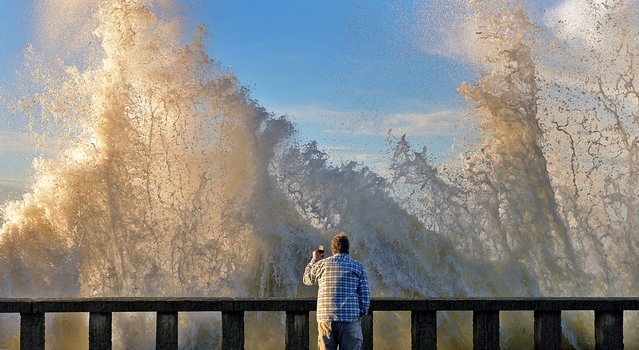
A man watches as high surf crashes into the wall and spills onto Channel Drive in Montecito, Calif., January 7, 2016. Bacteria levels can increase significantly during and after rainstorms as contaminants in the runoff enter the ocean via storm drains, creeks and rivers. (Photo by Mike Eliason/AP Photo)

A man watches as high surf crashes into the wall and spills onto Channel Drive in Montecito, Calif., January 7, 2016. Bacteria levels can increase significantly during and after rainstorms as contaminants in the runoff enter the ocean via storm drains, creeks and rivers. (Photo by Mike Eliason/AP Photo)
Details
08 Jan 2016 09:49:00
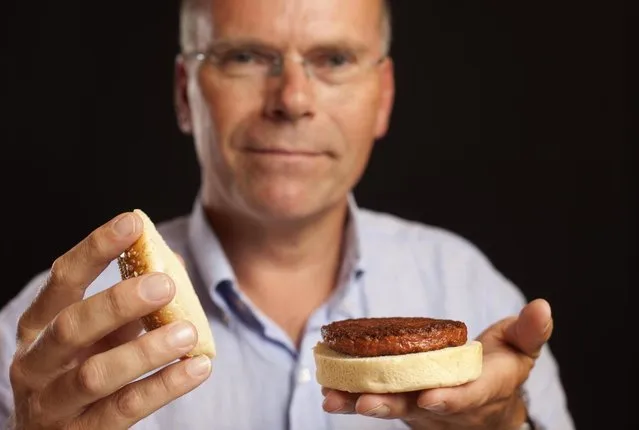
In this handout image provided by Ogilvy, a burger made from cultured beef, which has been developed by Professor Mark Post of Maastricht University in the Netherlands (pictured) is shown to the media during a press conference on August 5, 2013 in London, England. Cultured Beef could help solve the coming food crisis and combat climate change with commercial production of Cultured Beef beginning within ten to twenty years. (Photo by David Parry via Getty Images)

In this handout image provided by Ogilvy, a burger made from cultured beef, which has been developed by Professor Mark Post of Maastricht University in the Netherlands (pictured) is shown to the media during a press conference on August 5, 2013 in London, England. The in-vitro burger, cultured from cattle stem cells, the first example of what its creator says could provide an answer to global food shortages and help combat climate change, was fried in a pan and tasted by two volunteers. The burger is the result of years of research by Dutch scientist Mark Post, a vascular biologist at the University of Maastricht, who is working to show how meat grown in petri dishes might one day be a true alternative to meat from livestock.The meat in the burger has been made by knitting together around 20,000 strands of protein that has been cultured from cattle stem cells in Post's lab. (Photo by David Parry)
Details
06 Aug 2013 08:48:00
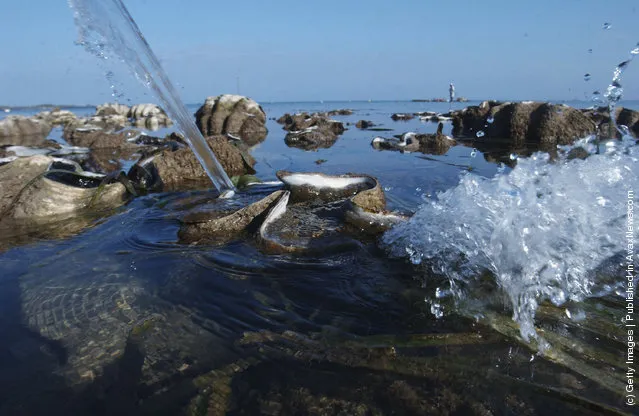
Tridacna Gigas, or Giant Clams

“The giant clam, Tridacna gigas (known as pā’ua in Cook Islands Māori), is the largest living bivalve mollusc. T. gigas is one of the most endangered clam species. It was mentioned as early as 1825 in scientific reports. One of a number of large clam species native to the shallow coral reefs of the South Pacific and Indian oceans, they can weigh more than 200 kilograms (440 lb) measure as much as 120 cm (47 in) across, and have an average lifespan in the wild of 100 years or more”. – Wikipedia

Photo: Tridacna Gigas, or Giant Clams spew water as a traditional fisherman passes by a small sanctuary on January 23, 2004 near Bolinao in the Northern Philippines. The clams, prime builders for coral reefs and providing shelter for spawning fish and other marine life, are exposed by low tides in the sanctuary. Overfishing and pollution throughout the country are not only threatening food security, but are also starting to choke one of the few working clam sanctuaries in the world. (Photo by David Greedy/Getty Images)
Details
01 Oct 2011 13:10:00
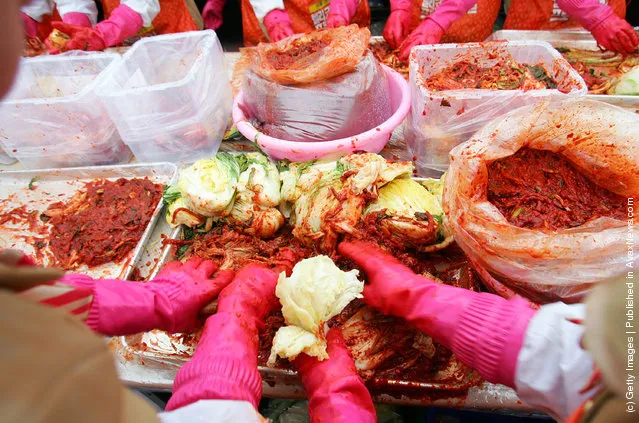
Kimchi

“Kimchi, also spelled gimchi, kimchee, or kim chee, is a traditional fermented Korean dish made of vegetables with varied seasonings. There are hundreds of varieties of kimchi made with a main vegetable ingredient such as napa cabbage, radish, green onions or cucumber. It is the most common banchan, or side dish, in Korean cuisine. Kimchi is also a main ingredient for many popular Korean dishes such as kimchi stew (kimchi jjigae), kimchi soup (kimchiguk), and kimchi fried rice (kimchi bokkeumbap)”. – Wikipedia

Photo: South Korean housewives, among more than two thousand who gathered for an event sponsored by state officials to help the needy, make kimchi, the traditional pungent vegetable dish on the grounds in front of Seoul City Hall on November 20 in Seoul, South Korea. (Photo by Chung Sung-Jun/Getty Images)
Details
21 Dec 2011 13:24:00
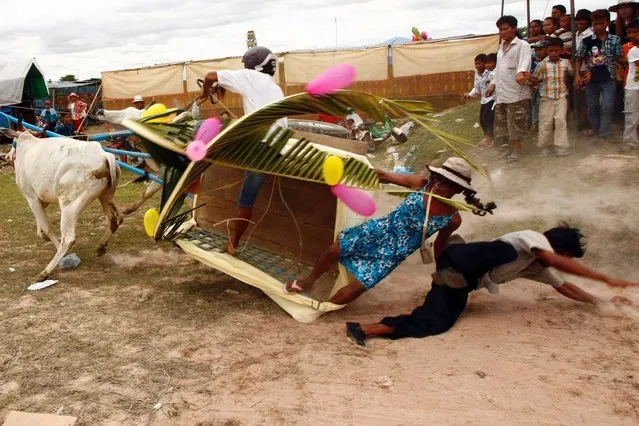
Local villagers fall onto the ground from an ox-cart as they ride to rid evil spirits from their village at Pring Ka-ek village, Cambodi. (Photo by Heng Sinith/AP Photo)

Local villagers fall onto the ground from an ox-cart as they ride to rid evil spirits from their village at Pring Ka-ek village, Cambodi. (Photo by Heng Sinith/AP Photo)
Details
30 Mar 2014 08:57:00
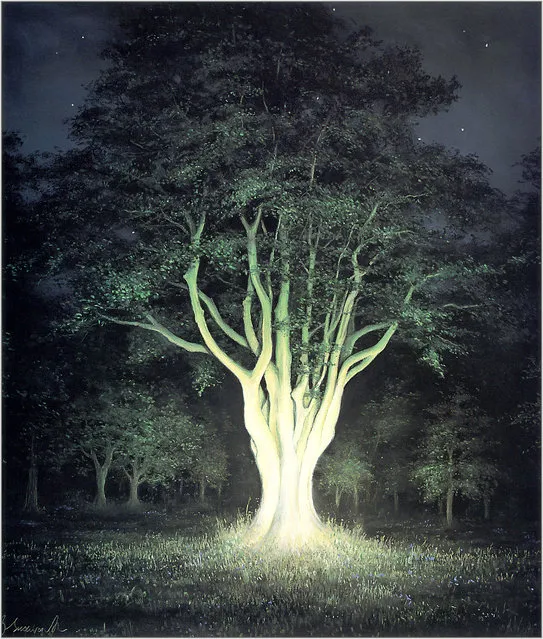
Anne Sudworth – Gowrim Idhree

“Anne Sudworth is a British artist internationally known for her paintings of magical trees and haunting moonlit landscapes”. – Wikipedia. Photo: Anne Sudworth – “Gowrim Idhree”.
Details
20 Jan 2013 10:01:00
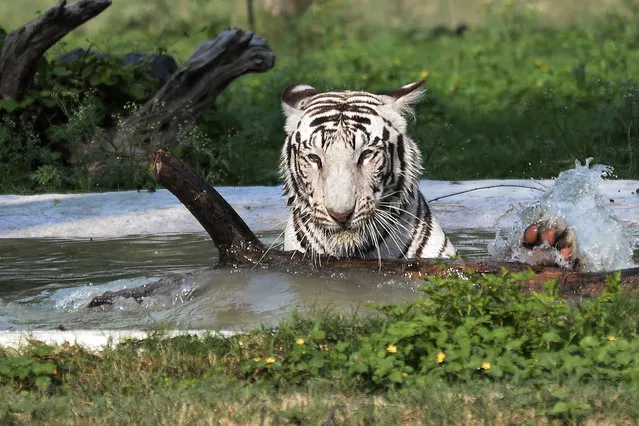
An Indian white tiger cools off in a pond in its enclosure at Chhat Bir Zoo on the outskirts of Chandigarh on May 22, 2016. Temperatures have soared to a scorching 51 degrees Celsius in one Indian city, meteorologists said, with the ferocious heat setting a new national record. Northern Phalodi wilted as the mercury reached a new high on May 20, equivalent to 123.8 Fahrenheit, beating a 60-year-old record. (Photo by Shammi Mehra/AFP Photo)

An Indian white tiger cools off in a pond in its enclosure at Chhat Bir Zoo on the outskirts of Chandigarh on May 22, 2016. Temperatures have soared to a scorching 51 degrees Celsius in one Indian city, meteorologists said, with the ferocious heat setting a new national record. Northern Phalodi wilted as the mercury reached a new high on May 20, equivalent to 123.8 Fahrenheit, beating a 60-year-old record. (Photo by Shammi Mehra/AFP Photo)
Details
29 May 2016 09:27:00