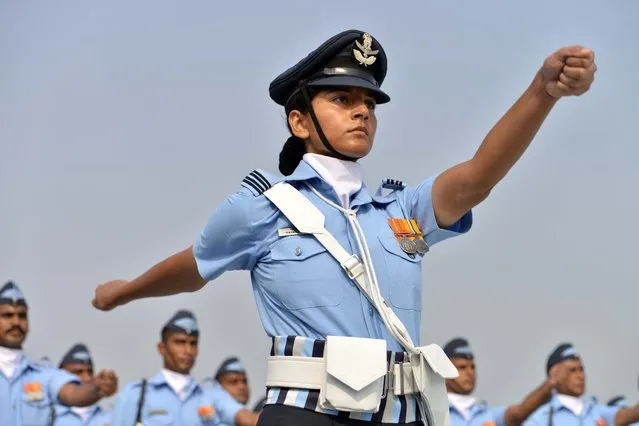
Indian Air Force personnel parade during the 85th Air Force Day celebrations at Hindon Air Force base in Ghaziabad on October 8, 2017. (Photo by AFP Photo/Stringer)
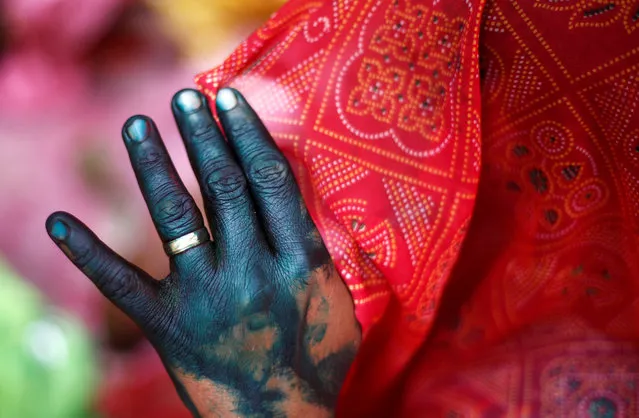
A woman holds her veil as she takes part in Huranga, a game played between men and women a day after Holi, at Dauji temple near Mathura, March 3, 2018. (Photo by Adnan Abidi/Reuters)
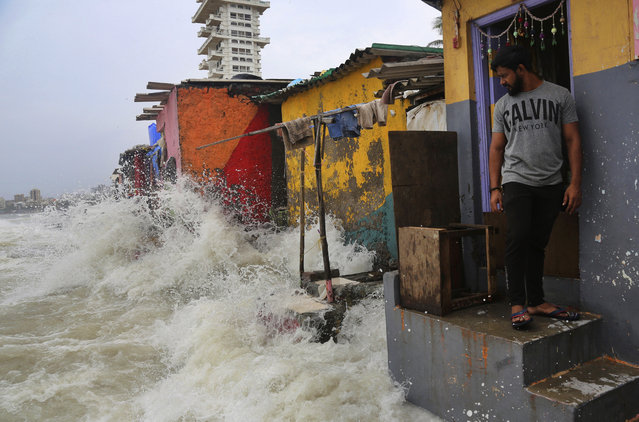
An Indian man stands near his house as waves caused by high tide hits the huts on the shore of the Arabian Sea in Mumbai, India, Wednesday, July 3, 2019. Heavy monsoon rains in Maharashtra have led to more than 30 deaths since Monday night, from collapsed walls, drownings and other causes. Dozens of others have been injured. (Photo by Rafiq Maqbool/AP Photo)
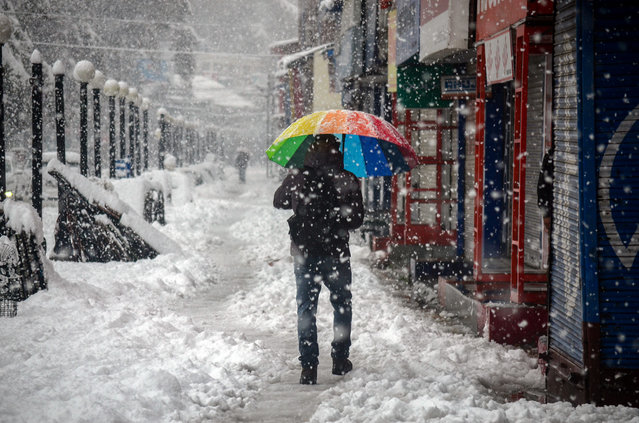
A resident walks through heavy snowfall in the Kashmiri city, India on November 11, 2019. There have been several fatalities as the winter weather arrives in the region. (Photo by Saqib Majeed/Barcroft Media)
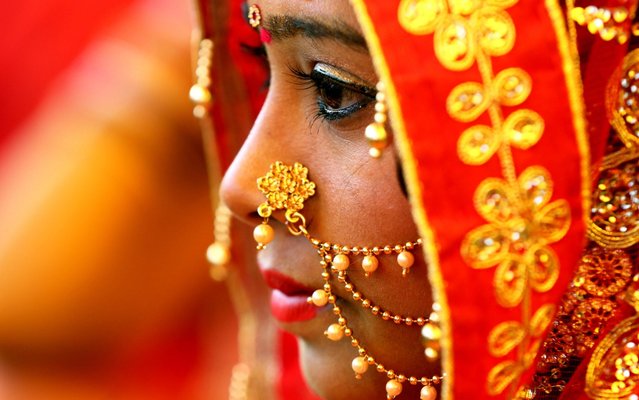
Indian bride takes part in a mass marriage ceremony under chief minister's welfare scheme (Mukhyamantri Kanyadan Yojna) on the occasion of the Basant Panchami festival, in Bhopal, India, 30 January 2020. (Photo by Sanjeev Gupta/EPA/EFE/Rex Features/Shutterstock)
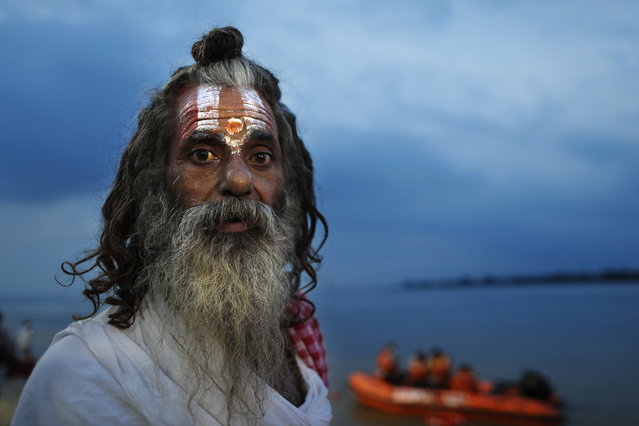
A Hindu holy man looks at a decoration on the ghats of the river Saryu as part of preparations for the groundbreaking ceremony of a temple to the Hindu god Ram in Ayodhya, in the Indian state of Uttar Pradesh, Monday, August 3, 2020. As Hindus prepare to celebrate the groundbreaking of a long-awaited temple at a disputed ground in northern India, Muslims say they have no firm plans yet to build a new mosque at an alternative site they were granted to replace the one torn down by Hindu hard-liners decades ago. (Photo by Rajesh Kumar Singh/AP Photo)
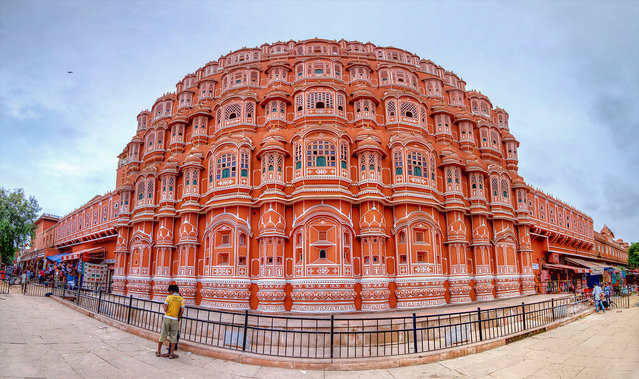
Hawa Mahal, which translates as the Palace of Winds, was built in 1799 by Maharaja Sawai Pratap Singh. The design of the palace was created by Shreyansh Jain to resemble the crown of Krishna. The design of this unique five-story building is akin to a honeycomb. The main purpose of this building was to allow royal ladies to watch the street below while remaining unseen, since during those times they had a strict code of dressing, which meant covering their faces. The palace was designed to produce the Venturi effect, which created natural air conditioning and kept the interior relatively cool during hot summers.