Loading...
Done


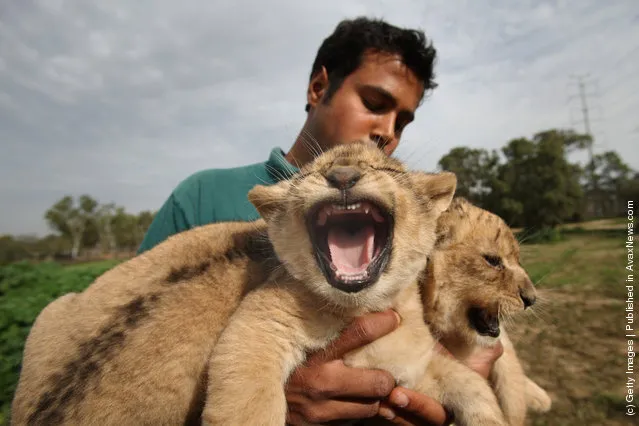
Three one-month-old lioness cubs are held by a keeper as they take their first outing on February 21, 2010 at the Ramat Gan Safari Park near Tel Aviv, Israel. The still unnamed cubs are the first triplet females to be born at the safari park and officials say their birth will ensure the continuity of the park's pride of lions. (Photo by David Silverman/Getty Images)
Details
06 Apr 2011 08:42:00
Cute Paper Cutouts By Lowra

Paper cutouts of cartoon characters have evolved into a meme known as Paper Child with a community on deviantART by the name of #paperchildREVOLUTION dedicated to the craft.
Details
06 Jul 2014 23:59:00
What Ali Wore By Zoe Spawton

Every morning at 9:05 AM sharp, a strikingly dapper octogenarian saunters by Zoe Spawton's coffee shop on his way to work in the Berlin borough of Neukölln. That man's name is Ali. He is an 83-year-old Turkish tailor who has been living in Germany for the past 44 years. He has 18 kids, and an impeccable sense of style.
Details
05 Apr 2013 10:44:00
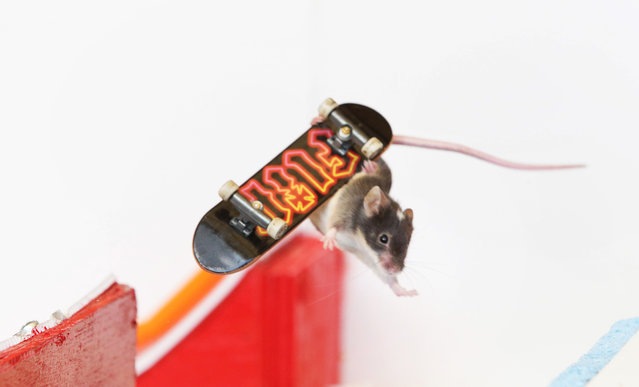
Skateboarding Mice By Shane Willmott

Three years ago, Shane Willmott wowed the world with his surfing mice. Now, the Australian has taken on a new challenge - training his radical rodents to skateboard. Mr Willmott, who lives in the Gold Coast area of eastern Australia, near Brisbane, has even built his furry friends a mini skate park. Fearless mice Harvey and Pedro take on ramps, half-pipes and even a deadly ring of fire.
Details
14 Aug 2013 12:54:00
The Daily Life Of Darth Vader By Pawel Kadysz

If you want to be Dart Vader, you will have to deal with his everyday problems, too. That’s what Paweł Kadysz is doing with his new photo project. He aims to take a picture every day for a year – and each one of them should show the Dark Lord of the Sith tackling everyday life. Washing dishes, ironing clothes, eating breakfast – all those little things that heroes do off screen.
Details
25 Nov 2015 10:06:00
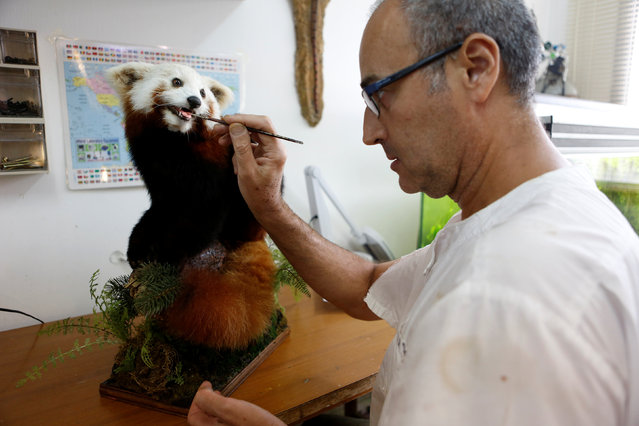
Igor Gavrilov, the main taxidermist of the Zoological centre at Tel Aviv University, works on a taxidermied animal, part of a collection which will be housed at the Steinhardt Museum of Natural History, a new Israeli natural history museum set to open next year in Tel Aviv, Israel June 8, 2016. Legions of insects, sea creatures and ancient fossils are lining up in a new museum shaped liked a giant Noah's Ark, telling the story of a crucial evolutionary byway across Israel. Experts say all humans and other animals had to pass through Israel on their first journey out of Africa into Europe and Asia. (Photo by Nir Elias/Reuters)

Igor Gavrilov, the main taxidermist of the Zoological centre at Tel Aviv University, works on a taxidermied animal, part of a collection which will be housed at the Steinhardt Museum of Natural History, a new Israeli natural history museum set to open next year in Tel Aviv, Israel June 8, 2016. Legions of insects, sea creatures and ancient fossils are lining up in a new museum shaped liked a giant Noah's Ark, telling the story of a crucial evolutionary byway across Israel. (Photo by Nir Elias/Reuters)
Details
25 Aug 2016 09:42:00
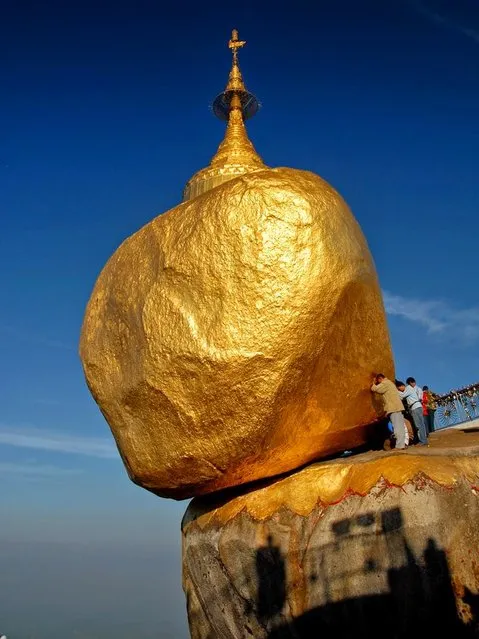
 Kyaiktiyo Pagoda AKA  Golden Rock In Burma

Kyaiktiyo Pagoda, also known as Golden Rock is a well-known Buddhist pilgrimage site in Mon State, Burma. It is a small pagoda (7.3 metres (24 ft)) built on the top of a granite boulder covered with gold leaves pasted on by devotees. According to legend, the Golden Rock itself is precariously perched on a strand of the Buddha's hair. The balancing rock seems to defy gravity, as it perpetually appears to be on the verge of rolling down the hill. The rock and the pagoda are at the top of Mt. Kyaiktiyo. It is the third most important Buddhist pilgrimage site in Burma after the Shwedagon Pagoda and the Mahamuni Pagoda. A glimpse of the "gravity defying" Golden Rock is believed to be enough of an inspiration for any person to turn to Buddhism.
Details
04 Jun 2015 11:42:00
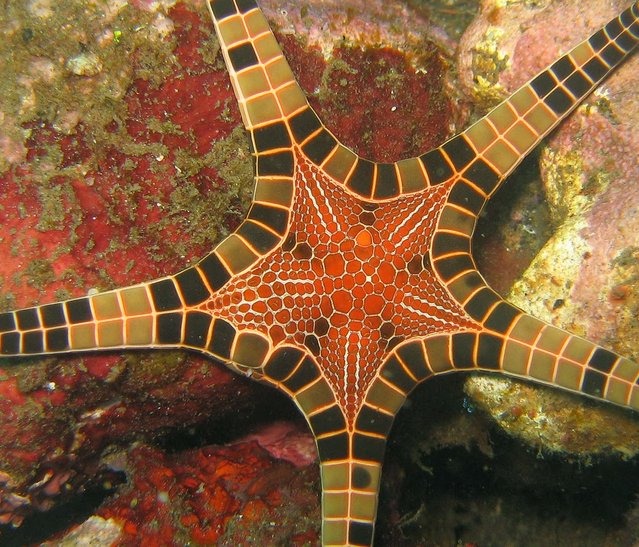
Conaster Iongimanus AKA The Icon Star Or Double Star

Iconaster longimanus, the icon star or double star, is a species of starfish in the family Goniasteridae. It is found in the west and central Indo-Pacific Ocean. The genus name comes from the Greek eikon, meaning portrait or image and possibly referring to the way the marginal plates frame the disc, and aster, meaning star. The specific name comes from the Latin longus manus and refers to the long, slender arms.
Details
14 Jul 2014 12:50:00