Loading...
Done
Is it a leaf? Is it tree bark? No, it’s the Satanic leaf-tailed gecko. Cleverly disguised as a rotting leaf, Madagascar’s camouflage king has red eyes, pointy horns and a taste for night hunting: it’s nature’s most devilish deceiver. (Photo by Thomas Marent/ARDEA)

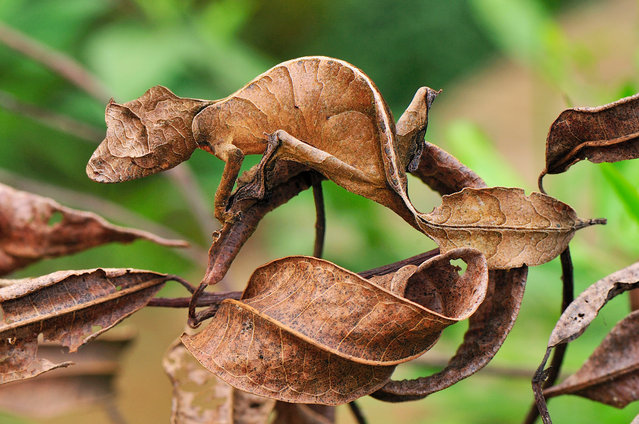
Is it a leaf? Is it tree bark? No, it’s the Satanic leaf-tailed gecko. Cleverly disguised as a rotting leaf, Madagascar’s camouflage king has red eyes, pointy horns and a taste for night hunting: it’s nature’s most devilish deceiver. The twisted body and veiny skin echo the detail of a dry leaf, which ensures the gecko blends in with its forest home. The mottled tail appears to have sections missing, as though it has withered over time. This mini-monster epitomises survival of the fittest, having adapted gradually to become today’s extraordinary leaf impersonator. (Photo by Thomas Marent/ARDEA)
Details
20 Nov 2015 08:03:00
A member of the “Sibspas” Siberian search and rescue group dressed as Santa Claus (R), waits for his team mate, dressed as Father Frost, the Russian equivalent of Santa Claus, as he climbs the rock named “The Fourth Stolb” (the Fourth Pillar) at the Stolby national nature reserve during a training session of the Russian Emergencies Ministry, outside the Siberian city of Krasnoyarsk, Russia December 15, 2015. (Photo by Ilya Naymushin/Reuters)

A member of the “Sibspas” Siberian search and rescue group dressed as Santa Claus (R), waits for his team mate, dressed as Father Frost, the Russian equivalent of Santa Claus, as he climbs the rock named “The Fourth Stolb” (the Fourth Pillar) at the Stolby national nature reserve during a training session of the Russian Emergencies Ministry, outside the Siberian city of Krasnoyarsk, Russia December 15, 2015. (Photo by Ilya Naymushin/Reuters)
Details
16 Dec 2015 12:32:00
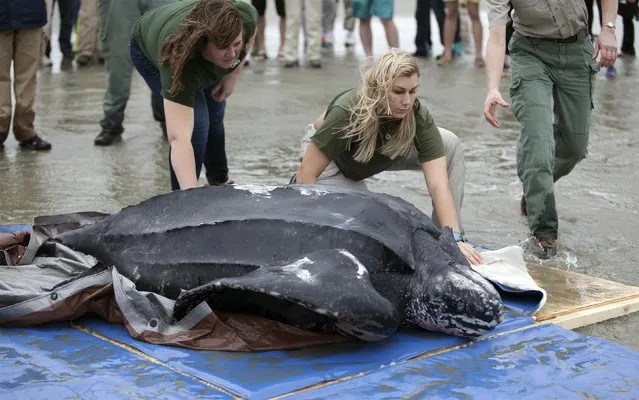
Biologists Jenna Cormany (L) and Lauryn Wright of the South Carolina Department of Natural Resources help to release a leatherback turtle in Isle of Palms, South Carolina March 12, 2015. (Photo by Randall Hill/Reuters)

Biologists Jenna Cormany (L) and Lauryn Wright of the South Carolina Department of Natural Resources help to release a leatherback turtle in Isle of Palms, South Carolina March 12, 2015. The 475-pound turtle was the first living leatherback turtle to be recovered in South Carolina and one of only a handful ever treated at rehabilitation facilities in the United States. It was found March 7 on the beach on Yawkey-South Island Reserve, a 3.5-mile-long (5.6-km-long) barrier island and wildlife preserve near Georgetown, South Carolina. (Photo by Randall Hill/Reuters)
Details
14 Mar 2015 13:32:00
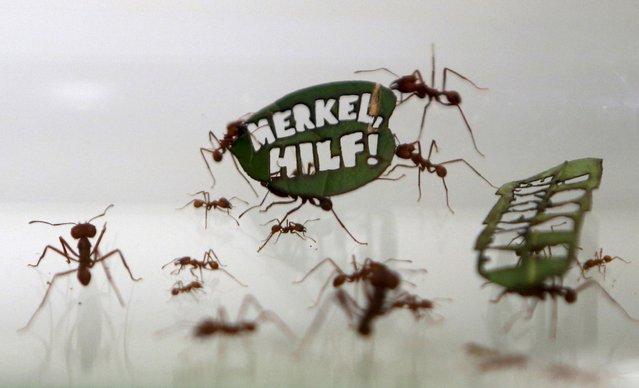
Ants carry a leaf with a slogan reading “Merkel, Help!”, a reference of German Chancellor Angela Merkel, at the zoo in Cologne, Germany August 18, 2015. Some of the zoo's 500,000 leaf-cutting ants carry laser-cut leaves with slogans during a campaign to protect the Amazon rain forest, organised by the German branch of World Wild Fund for Nature (WWF) and Cologne Zoo. Picture taken through the glass of the display case. (Photo by Ina Fassbender/Reuters)

Ants carry a leaf with a slogan reading “Merkel, Help!”, a reference of German Chancellor Angela Merkel, at the zoo in Cologne, Germany August 18, 2015. Some of the zoo's 500,000 leaf-cutting ants carry laser-cut leaves with slogans during a campaign to protect the Amazon rain forest, organised by the German branch of World Wild Fund for Nature (WWF) and Cologne Zoo. Picture taken through the glass of the display case. (Photo by Ina Fassbender/Reuters)
Details
19 Aug 2015 12:14:00
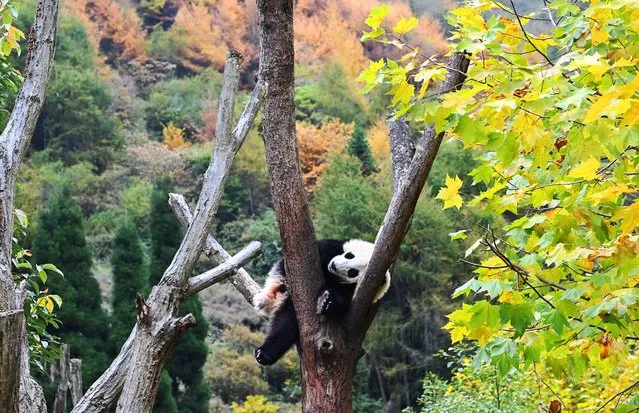
Giant pandas are playing and foraging inside the Shenshuping base of China Conservation and Research Center for the Giant Panda in Wolong National Nature Reserve on November 3, 2021 in Aba Tibetan and Qiang Autonomous Prefecture, Sichuan Province of China. Shenshuping base sits in Aba Tibetan and Qiang Autonomous Prefecture and is committed to the panda's breeding and reproduction. It is the largest conservation and research center for giant pandas along with the bases in Dujiangyan and Ya'an cities in Sichuan. (Photo by An Yuan/China News Service via Getty Images)

Giant pandas are playing and foraging inside the Shenshuping base of China Conservation and Research Center for the Giant Panda in Wolong National Nature Reserve on November 3, 2021 in Aba Tibetan and Qiang Autonomous Prefecture, Sichuan Province of China. (Photo by An Yuan/China News Service via Getty Images)
Details
09 Nov 2021 07:23:00
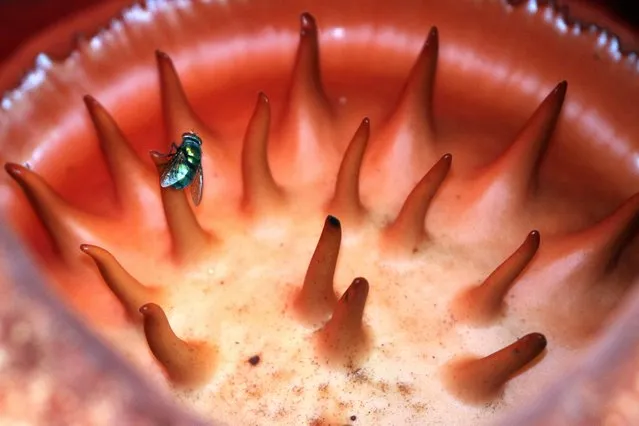
The Rafflesia Arnoldi flower (Amarphophallus titanum) which has been cultivated is seen in Palupuah Village, Agam District, West Sumatra, Indonesia, on April 13, 2022. The West Sumatera Nature Conservation Agency (BKSDA) estimates around seven Rafflesia Arnoldi flowers will bloom in Palupuah Village this year. (Photo by Adi Prima/Anadolu Agency via Getty Images)

The Rafflesia Arnoldi flower (Amarphophallus titanum) which has been cultivated is seen in Palupuah Village, Agam District, West Sumatra, Indonesia, on April 13, 2022. The West Sumatera Nature Conservation Agency (BKSDA) estimates around seven Rafflesia Arnoldi flowers will bloom in Palupuah Village this year. (Photo by Adi Prima/Anadolu Agency via Getty Images)
Details
11 Mar 2023 03:36:00
Natural world and wildlife shortlist. Lop Buri in Thailand is home to hundreds of macaques, which local residents consider to be disciples of the Hindu god Hanuman. While some people love them, others fear or even hate them. Despite the inconvenience they often cause, the macaques are generally respected and considered sacred. (Photo by Joan de la Malla/Sony World Photography Awards)

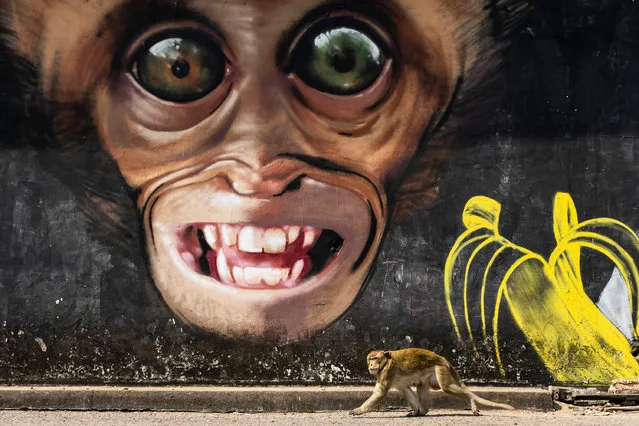
Natural world and wildlife shortlist. Lop Buri in Thailand is home to hundreds of macaques, which local residents consider to be disciples of the Hindu god Hanuman. While some people love them, others fear or even hate them. Despite the inconvenience they often cause, the macaques are generally respected and considered sacred. (Photo by Joan de la Malla/Sony World Photography Awards)
Details
15 Feb 2020 00:05:00
A river otter (lontra longicaudis) of 6-weeks-old looks in the mirror during a bath in the Animal Welfare Unit of the Zoo in Cali, Colombia, on October 22, 2019. The baby otter was found abandoned brought to the Cali Zoo for breeding, for its extensive experience in raising these species. According to the International Union for Conservation of Nature the river otter (lontra longicaudis) are in danger of extinction, because of mining, agriculture, pollution of rivers and housing construction in their habitat. (Photo by Luis Robayo/AFP Photo)

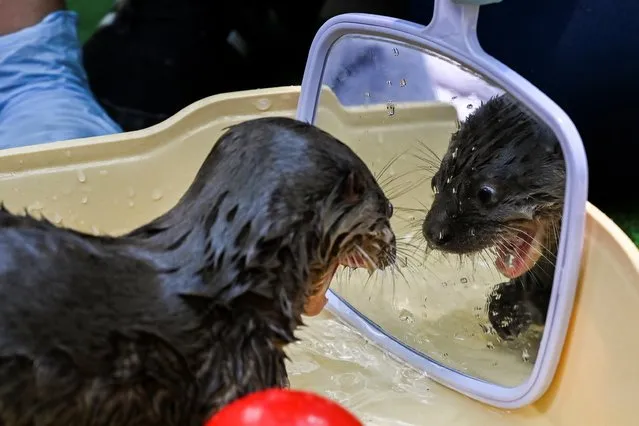
A river otter (lontra longicaudis) of 6-weeks-old looks in the mirror during a bath in the Animal Welfare Unit of the Zoo in Cali, Colombia, on October 22, 2019. The baby otter was found abandoned brought to the Cali Zoo for breeding, for its extensive experience in raising these species. According to the International Union for Conservation of Nature the river otter (lontra longicaudis) are in danger of extinction, because of mining, agriculture, pollution of rivers and housing construction in their habitat. (Photo by Luis Robayo/AFP Photo)
Details
27 Oct 2019 00:03:00