Loading...
Done
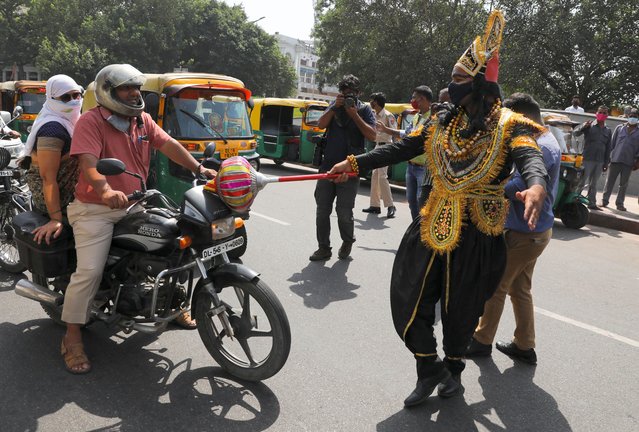
A volunteer of District Magistrate (DM) office dressed as Yamraj, or Hindu God of death, stops people for not wearing masks, amidst the spread of the coronavirus(COVID-19) disease, in New Delhi, India, September 28, 2020. (Photo by Anushree Fadnavis/Reuters)

A volunteer of District Magistrate (DM) office dressed as Yamraj, or Hindu God of death, stops people for not wearing masks, amidst the spread of the coronavirus(COVID-19) disease, in New Delhi, India, September 28, 2020. (Photo by Anushree Fadnavis/Reuters)
Details
06 Oct 2020 00:05:00
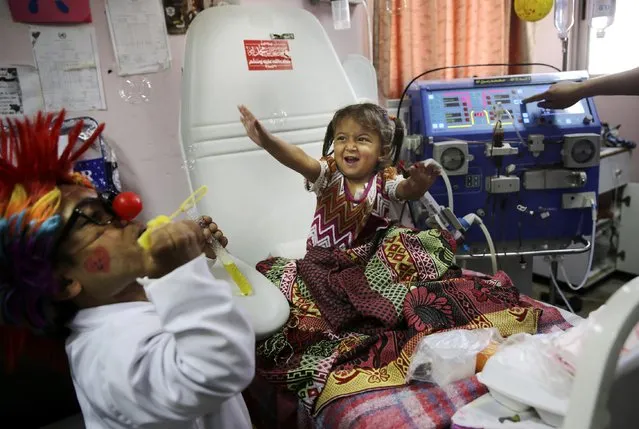
In this Thursday, March 17, 2016 photo, 33-year-old Palestinian clown doctor Alaa Miqdad, left, entertains 3-year-old patient Yaqin Shawaf, who suffers from dialysis, in the department of kidney diseases at Al-Rantisi children's hospital in Gaza City. (Photo by Adel Hana/AP Photo)

In this Thursday, March 17, 2016 photo, 33-year-old Palestinian clown doctor Alaa Miqdad, left, entertains 3-year-old patient Yaqin Shawaf, who suffers from dialysis, in the department of kidney diseases at Al-Rantisi children's hospital in Gaza City. (Photo by Adel Hana/AP Photo)
Details
24 Mar 2016 11:52:00
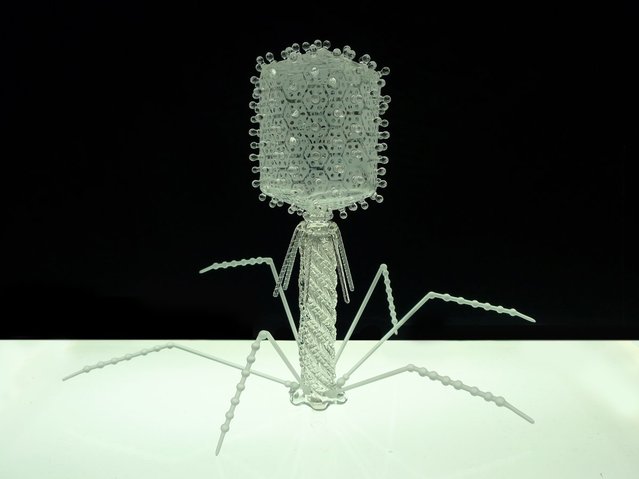
Luke Jerram’s Glass Microbiology Sculptures

British artist Luke Jerram’s glass sculptures represent a variety of viruses, such as Smallpox and HIV, and are made to encourage viewers to contemplate the global impact of each disease.
Details
18 Feb 2013 10:59:00
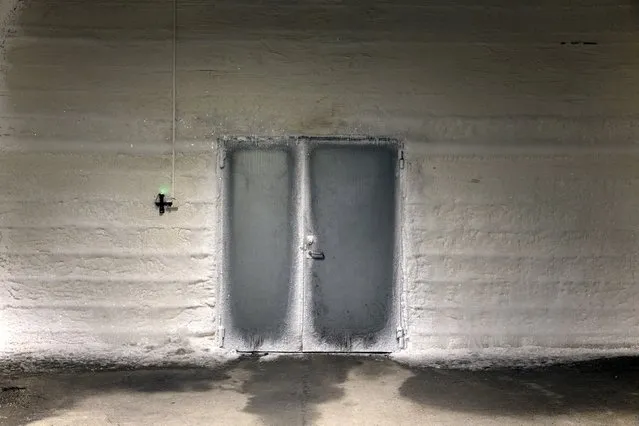
An ice covered entrance door to the international gene bank Svalbard Global Seed Vault (SGSV) near Longyearbyen on Spitsbergen, Norway, October 20, 2015. (Photo by Anna Filipova/Reuters)

An ice covered entrance door to the international gene bank Svalbard Global Seed Vault (SGSV) near Longyearbyen on Spitsbergen, Norway, October 20, 2015. Two consignments of crop seeds will be deposited next year in a “doomsday vault” built in an Arctic mountainside to safeguard global supplies. The vault, which opened on the Svalbard archipelago in 2008, is designed to protect crop seeds, such as beans, rice and wheat against the worst cataclysms of nuclear war or disease. (Photo by Anna Filipova/Reuters)
Details
17 Dec 2015 08:01:00
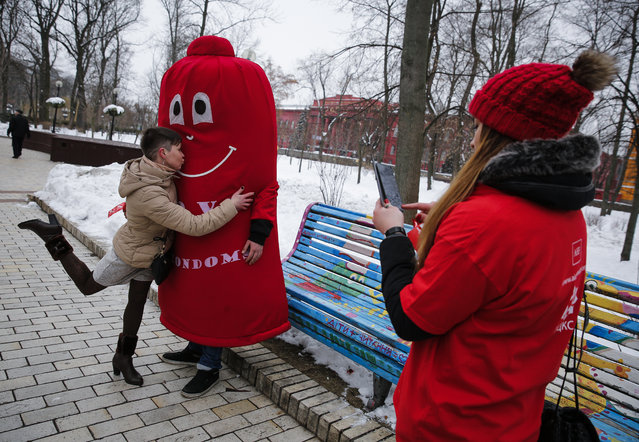
A volunteer photographs a woman as she kisses a volunteer wearing a condom costume during marking the International Condom Day in Kiev, Ukraine, 13 February 2015. The event was organized to promote and create awareness towards “Safe s*x” and the use of condoms to control and prevent Human Immunodeficiency Virus (HIV) and other sexually transmitted diseases on the occasion of the International Condom day. (Photo by Roman Pilipey/EPA)

A volunteer photographs a woman as she kisses a volunteer wearing a condom costume during marking the International Condom Day in Kiev, Ukraine, 13 February 2015. The event was organized to promote and create awareness towards “Safe s*x” and the use of condoms to control and prevent Human Immunodeficiency Virus (HIV) and other sexually transmitted diseases on the occasion of the International Condom day. (Photo by Roman Pilipey/EPA)
Details
14 Feb 2015 12:20:00
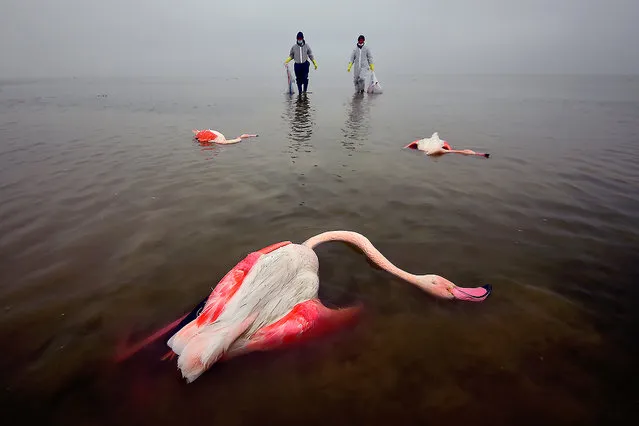
Grand title winner: Environmental photographer of the year. The Bitter Death Of Birds by Mehdi Mohebi Pour. This photo shows the efforts of the environmental forces to collect the bodies and prevent the spread of this disease. The Miankaleh wetland is being destroyed by changes in the climate and it is my duty as a photographer to highlight these problems and create a record for history. I want to prevent the complete destruction of the wetland and the potential environmental disaster by showing the issues and threats to these beautiful natural places. (Photo by Mehdi Mohebi Pour/Environmental Photographer of the Year)

Grand title winner: Environmental photographer of the year. The Bitter Death Of Birds by Mehdi Mohebi Pour. This photo shows the efforts of the environmental forces to collect the bodies and prevent the spread of this disease. The Miankaleh wetland is being destroyed by changes in the climate and it is my duty as a photographer to highlight these problems and create a record for history. I want to prevent the complete destruction of the wetland and the potential environmental disaster by showing the issues and threats to these beautiful natural places. (Photo by Mehdi Mohebi Pour/Environmental Photographer of the Year)
Details
05 Dec 2022 04:27:00
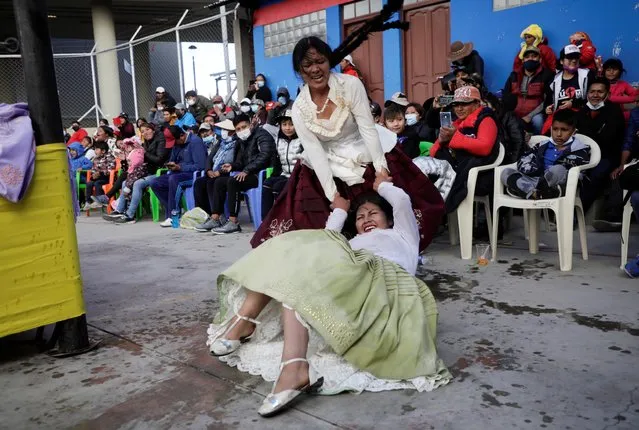
Barbara Quisbert and Susana La Bonita, cholitas wrestlers, fight during their return to the ring after the coronavirus disease (COVID-19) restrictions, in El Alto outskirts of La Paz, November 29, 2020. (Photo by David Mercado/Reuters)

The Fighting Cholitas are a group of female wrestlers who perform in El Alto, Bolivia. Tickets to the exhibitions cost $1. Like the general population of El Alto, which consists almost entirely of Aymara and Quechua residents, the Cholitas are indigenous. They wear braided hair, bowler hats and multilayered skirts in the ring. Here: Barbara Quisbert and Susana La Bonita, cholitas wrestlers, fight during their return to the ring after the coronavirus disease (COVID-19) restrictions, in El Alto outskirts of La Paz, November 29, 2020. (Photo by David Mercado/Reuters)
Details
12 Dec 2020 00:03:00
Vogue dancer Xiong Daiki, 22, takes a video of his team to promote vogue dancing, almost a year after the global outbreak of the coronavirus disease (COVID-19) in Wuhan, Hubei province, China on December 15, 2020. During lockdown, Daiki, his students and friends practiced at home in their bedrooms, staying in touch by sharing videos of new dance routines. (Photo by Aly Song/Reuters)

Vogue dancer Xiong Daiki, 22, takes a video of his team to promote vogue dancing, almost a year after the global outbreak of the coronavirus disease (COVID-19) in Wuhan, Hubei province, China on December 15, 2020. During lockdown, Daiki, his students and friends practiced at home in their bedrooms, staying in touch by sharing videos of new dance routines. (Photo by Aly Song/Reuters)
Details
28 Dec 2020 00:01:00