Loading...
Done
Beauty_By_Fulani

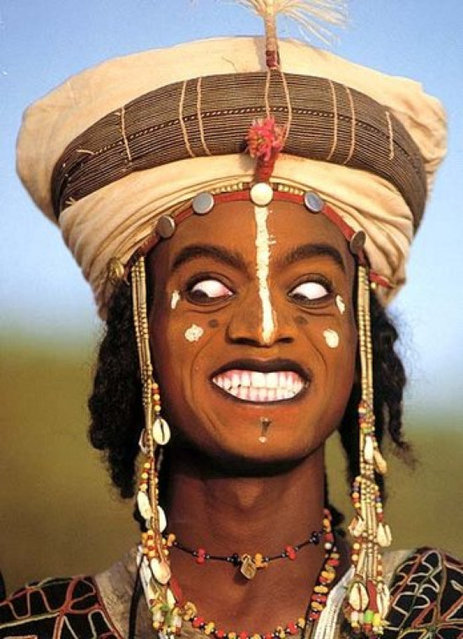
Fula people or Fulani or Fulbe are an ethnic group spread over many countries, predominantly in West Africa, but found also in Central Africa and Sudanese North Africa. African countries where they are present include Mauritania, Ghana, Senegal, Guinea, The Gambia, Mali, Nigeria, Sierra Leone, Benin, Burkina Faso, Guinea Bissau, Cameroon, Côte d'Ivoire, Niger, Chad, Togo, the Central African Republic, Liberia, and as far as Sudan and Egypt in the East. Fula people form a minority in every country they inhabit, but in Guinea they represent a plurality of the population (40%).
Details
25 Sep 2012 10:17:00
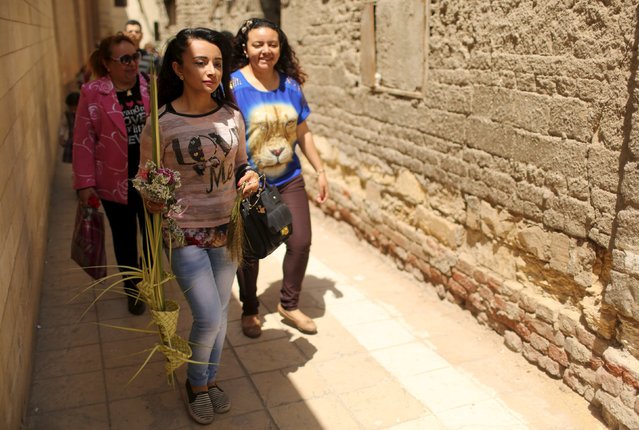
An Egyptian Coptic Christian girl carries palm decoration during Palm Sunday inside a church in Old Cairo, April 5, 2015. (Photo by Asmaa Waguih/Reuters)

An Egyptian Coptic Christian girl carries palm decoration during Palm Sunday inside a church in Old Cairo, Egypt, April 5, 2015. For Christians worldwide, Palm Sunday marks Jesus Christ's entrance into Jerusalem, when his followers laid palm branches in his path, prior to his crucifixion. Western Christian churches and most Orthodox Christian churches follow different calendars and observe Easter on different dates. (Photo by Asmaa Waguih/Reuters)
Details
06 Apr 2015 09:20:00
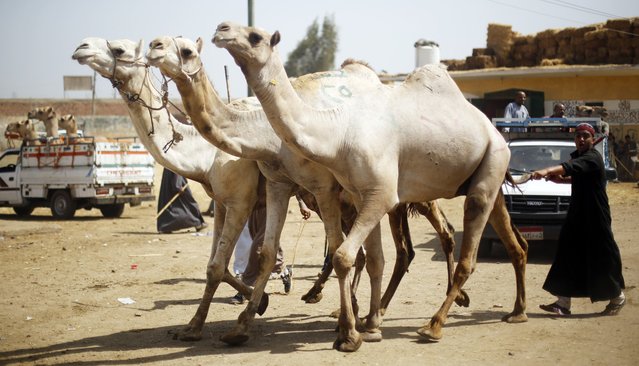
A man walks behind camels at the Birqash Camel Market, ahead of Eid al-Adha or Festival of Sacrifice, on the outskirts of Cairo September 29, 2014. (Photo by Amr Abdallah Dalsh/Reuters)

A man walks behind camels at the Birqash Camel Market, ahead of Eid al-Adha or Festival of Sacrifice, on the outskirts of Cairo September 29, 2014. Birqash Camel Market, one of the biggest markets for camel meat in Africa, draws sellers from Libya, Sudan, Somalia and other regions in Egypt. The camels sold at the market are also used in tourism. Traders say that the selling rate for a camel in 2014 is anywhere between 5,000 and 20,000 Egyptian pounds (700 – 2800 USD). (Photo by Amr Abdallah Dalsh/Reuters)
Details
02 Oct 2014 10:20:00


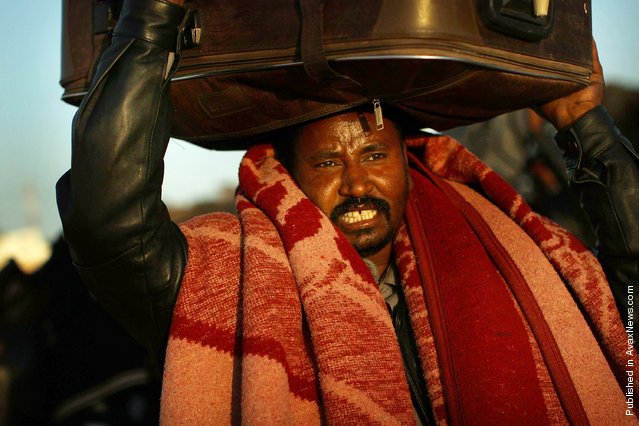
A Sudanese man walks to a United Nations displacement camp after crossing into Tunisia from Libya on March 06, 2011 in Ras Jdir, Tunisia. As fighting continues in and around the Libyan capital of Tripoli, tens of thousands of guest workers from Egypt, Tunisia, Bangladesh and other countries are fleeing to the border of Tunisia to escape the violence. The situation has turned into a humanitarian emergency as fledgling Tunisia is overwhelmed with the workers. Libyan leader Muammar Gaddafi has vowed to fight to the end. (Photo by Spencer Platt/Getty Images). RAS JDIR, TUNISIA – MARCH 06 2011
Details
10 Mar 2011 11:44:00
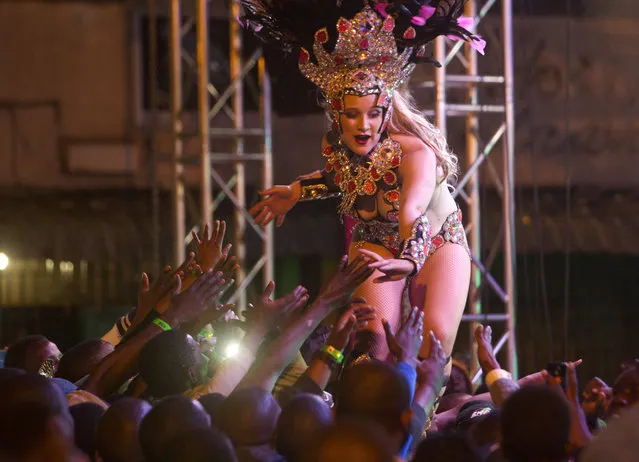
In this picture taken Friday, September 8, 2017, Brazilan Samba dancers perform on stage during the Harare International Carnival in the capital. (Photo by Tsvangirayi Mukwazhi/AP Photo)

In this picture taken Friday, September 8, 2017, Brazilan Samba dancers perform on stage during the Harare International Carnival in the capital. An international carnival aimed at boosting the local tourism industry has ended in economically troubled Zimbabwe. Some viewed the Harare festivities, which ended Sunday and featured artists and dancers from Brazil, Cuba, Egypt and elsewhere, as a relief from the struggle to get by in the southern African country. (Photo by Tsvangirayi Mukwazhi/AP Photo)
Details
14 Sep 2017 08:13:00
Oresund Bridge

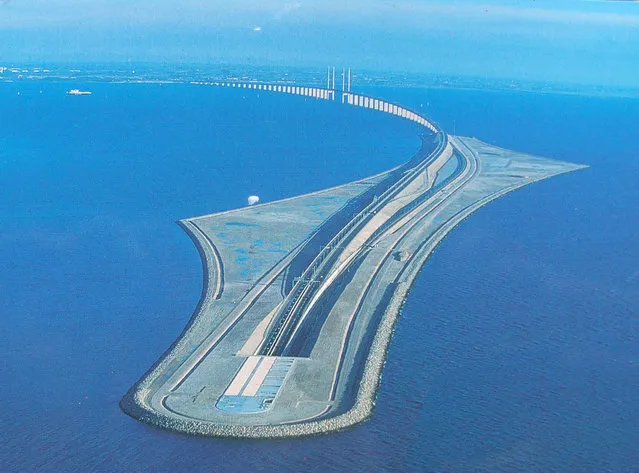
The Öresund or Øresund Bridge is a double-track railway and dual carriageway bridge-tunnel across the Øresund strait between Scania (southernmost Sweden) and Denmark. The bridge runs nearly 8 km (5 miles) from the Swedish coast to the artificial island of Peberholm, which lies in the middle of the strait. The remainder of the link is by a 4 km (2.5 mile) tunnel from Peberholm to the Danish island of Amager. The Øresund Bridge is the longest combined road and rail bridge in Europe, and connects two major metropolitan areas: Copenhagen, the Danish capital city, and the major Swedish city of Malmö. It connects the road and rail networks of Scandinavia with those of Central and Western Europe.
Details
10 Sep 2013 11:23:00
Moscow Metro

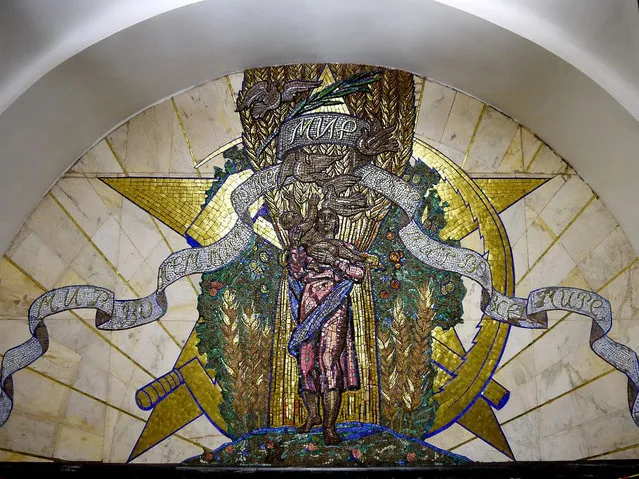
The is a rapid transit system serving Moscow and the neighbouring town of Krasnogorsk. Opened in 1935 with one 11-kilometre (6.8 mi) line and 13 stations, it was the first underground railway system in the Soviet Union. As of 2011, the Moscow Metro has 185 stations and its route length is 305.7 kilometres (190.0 mi). The system is mostly underground, with the deepest section 84 metres (276 ft) at the Park Pobedy station. The Moscow Metro is the world's second most heavily used rapid transit system after Tokyo's twin subway.
Details
13 Jun 2012 09:17:00
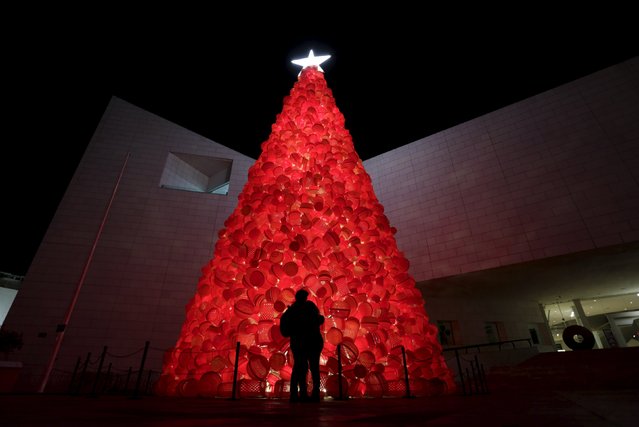
A couple hugs while standing near a Christmas tree made out of plastic bins and plastic hampers outside the Museum of History in Monterrey, Mexico, December 4, 2015. (Photo by Daniel Becerril/Reuters)

A couple hugs while standing near a Christmas tree made out of plastic bins and plastic hampers outside the Museum of History in Monterrey, Mexico, December 4, 2015. The humble Christmas tree has a rich history, from evergreen trees used to symbolise eternal life in Ancient Egypt to tree worship among pagan Europeans. The modern version has its origins in Germany, where the song “O Tannenbaum” is still a festive favourite. Today the traditional tree with lights and decorations appears in cities including Washington, Moscow and Beirut. Alternative constructions range from recycled rubbish in Mexico City to old window frames in Rakvere, Estonia. Whatever the shape or size, the message is the same: Merry Christmas. (Photo by Neil Hall/Reuters)
Details
23 Dec 2015 08:01:00