Loading...
Done
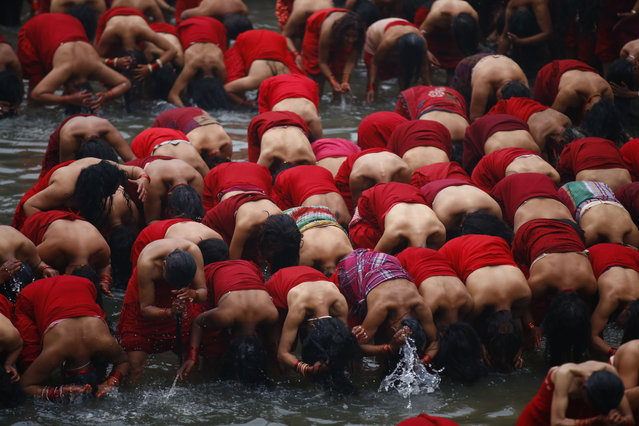
Nepalese devotee women take a holy bath after offering prayers in Pashupathinath Temple premise during the month-long Swasthani Bratakatha festival, devoted to goddess Shree Swasthani in Kathmandu on February 8, 2016. Devotees recite Holy Scripture and women pray for wellbeing of their spouses throughout the month-long fast. (Photo by Skanda Gautam via ZUMA Wire)

Nepalese devotee women take a holy bath after offering prayers in Pashupathinath Temple premise during the month-long Swasthani Bratakatha festival, devoted to goddess Shree Swasthani in Kathmandu on February 8, 2016. Devotees recite Holy Scripture and women pray for wellbeing of their spouses throughout the month-long fast. (Photo by Skanda Gautam via ZUMA Wire)
Details
09 Feb 2016 13:34:00
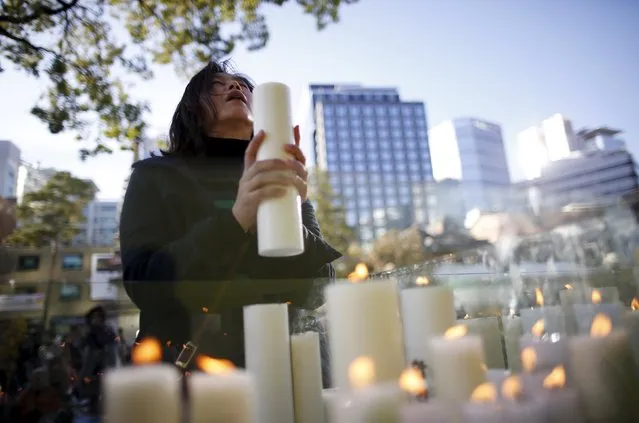
A mother prays for success for her child in the college entrance examinations at a Buddhist temple in Seoul, South Korea, November 12, 2015. About 630,000 students on Thursday sat for the annual exams that could lead them to one of the country's top universities. In South Korea, there is no higher achievement than to be accepted by a prestigious university. (Photo by Kim Hong-Ji/Reuters)

A mother prays for success for her child in the college entrance examinations at a Buddhist temple in Seoul, South Korea, November 12, 2015. About 630,000 students on Thursday sat for the annual exams that could lead them to one of the country's top universities. In South Korea, there is no higher achievement than to be accepted by a prestigious university. As a result, many students prepare for these entrance exams from an early age, often studying up to 16 hours a day for years to take this test. (Photo by Kim Hong-Ji/Reuters)
Details
14 Nov 2015 09:01:00
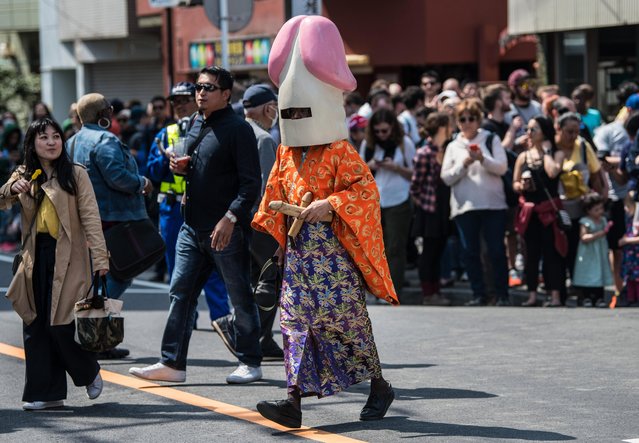
A man wear a phallic-shaped hat during Kanamara Matsuri (Festival of the Steel Phallus) on April 1, 2018 in Kawasaki, Japan. The Kanamara Festival is held annually on the first Sunday of April. The pen*s is the central theme of the festival, focused at the local pen*s-venerating shrine which was once frequented by prostitutes who came to pray for business prosperity and protection against sexually transmitted diseases. Today the festival has become a popular tourist attraction and is used to raise money for HIV awareness and research. (Photo by Carl Court/Getty Images)

A man wear a phallic-shaped hat during Kanamara Matsuri (Festival of the Steel Phallus) on April 1, 2018 in Kawasaki, Japan. The Kanamara Festival is held annually on the first Sunday of April. The pen*s is the central theme of the festival, focused at the local pen*s-venerating shrine which was once frequented by prostitutes who came to pray for business prosperity and protection against sexually transmitted diseases. Today the festival has become a popular tourist attraction and is used to raise money for HIV awareness and research. (Photo by Carl Court/Getty Images)
Details
04 Apr 2018 09:41:00
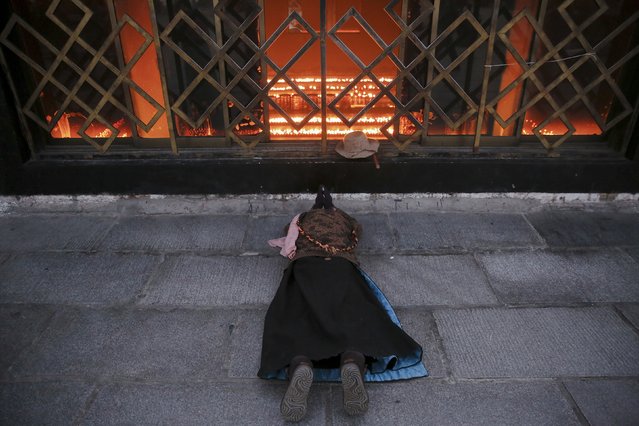
A Tibetan pilgrim prostrates herself at the Jokhang Temple in central Lhasa, Tibet Autonomous Region, China early November 20, 2015. (Photo by Damir Sagolj/Reuters)

A Tibetan pilgrim prostrates herself at the Jokhang Temple in central Lhasa, Tibet Autonomous Region, China early November 20, 2015. Every day thousands of Tibetans visit and pray at Jokhang Temple, considered one of the most sacred places of worship. (Photo by Damir Sagolj/Reuters)
Details
22 Nov 2015 08:03:00
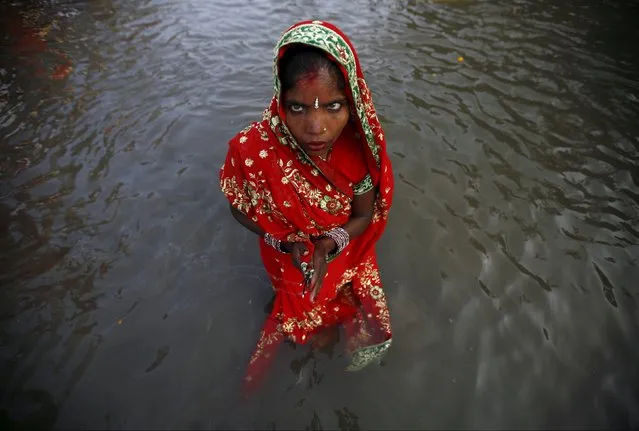
A devotee offers prayers to the setting sun during the "Chhat" festival at Bagmati river in Kathmandu, Nepal November 17, 2015. (Photo by Navesh Chitrakar/Reuters)

A devotee offers prayers to the setting sun during the "Chhat" festival at Bagmati river in Kathmandu, Nepal November 17, 2015. Hindus in Nepal celebrate "Chhat", a four-day festival that honours the sun god, by praying at sunrise and sunset, and seek blessings for one's family by giving offerings. (Photo by Navesh Chitrakar/Reuters)
Details
19 Nov 2015 08:01:00
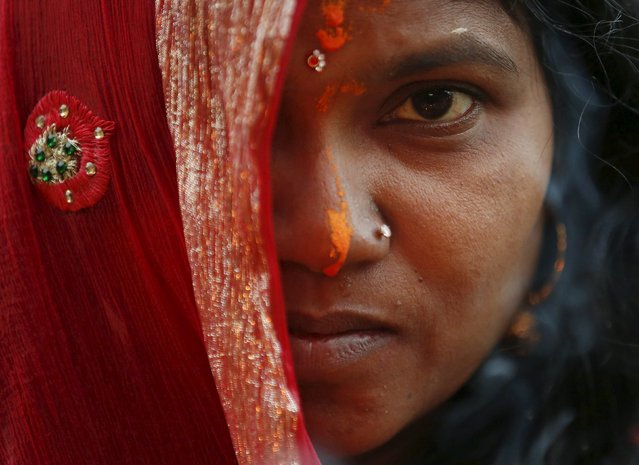
A face of a devotee covered with her cloth is pictured as she offers prayers to the rising sun during the "Chhat" festival in Kathmandu, Nepal November 18, 2015. (Photo by Navesh Chitrakar/Reuters)

A face of a devotee covered with her cloth is pictured as she offers prayers to the rising sun during the "Chhat" festival in Kathmandu, Nepal November 18, 2015. Hindus in Nepal celebrate "Chhat", a four-day festival that honours the sun god by praying at sunrise and sunset and seeking blessings for ones family by giving offerings. (Photo by Navesh Chitrakar/Reuters)
Details
20 Nov 2015 08:00:00
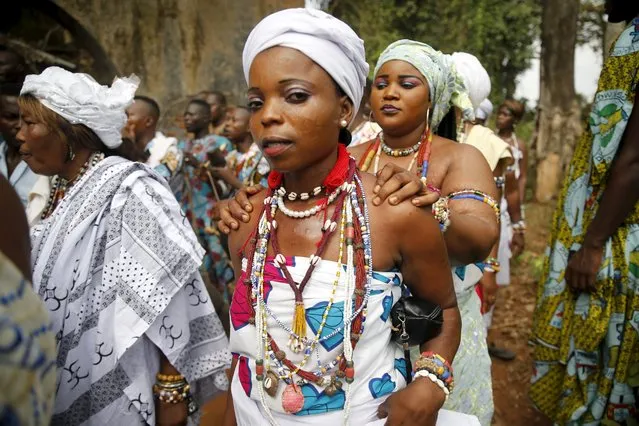
Devotees attend the annual voodoo festival in Ouidah January 10, 2016. (Photo by Akintunde Akinleye/Reuters)

Devotees attend the annual voodoo festival in Ouidah January 10, 2016. The national voodoo holiday in the West African country of Benin had a distinctively political accent this year as practitioners from Africa and the Americas gathered on Sunday to offer prayers and sacrifices for peace. Hundreds of followers of the traditional religion gathered in the Atlantic coast town of Ouidah, once an important port in the slave trade, to pray for calm during the tiny country's presidential election scheduled for February. (Photo by Akintunde Akinleye/Reuters)
Details
12 Jan 2016 08:05:00
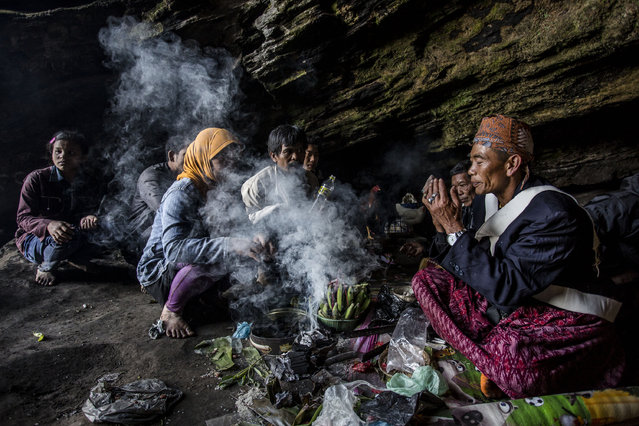
A Tenggerese shaman praying for worshippers at Widodaren cave during the Tenggerese Hindu Yadnya Kasada festival on July 31, 2015 in Probolinggo, East Java, Indonesia. The festival is the main festival of the Tenggerese people and lasts about a month. On the fourteenth day, the Tenggerese make the journey to Mount Bromo to make offerings of rice, fruits, vegetables, flowers and livestock to the mountain gods by throwing them into the volcano's caldera. (Photo by Ulet Ifansasti/Getty Images)

A Tenggerese shaman praying for worshippers at Widodaren cave during the Tenggerese Hindu Yadnya Kasada festival on July 31, 2015 in Probolinggo, East Java, Indonesia. The festival is the main festival of the Tenggerese people and lasts about a month. On the fourteenth day, the Tenggerese make the journey to Mount Bromo to make offerings of rice, fruits, vegetables, flowers and livestock to the mountain gods by throwing them into the volcano's caldera. The origin of the festival lies in the 15th century when a princess named Roro Anteng started the principality of Tengger with her husband Joko Seger, and the childless couple asked the mountain Gods for help in bearing children. The legend says the Gods granted them 24 children but on the provision that the 25th must be tossed into the volcano in sacrifice. The 25th child, Kesuma, was finally sacrificed in this way after initial refusal, and the tradition of throwing sacrifices into the caldera to appease the mountain Gods continues today. (Photo by Ulet Ifansasti/Getty Images)

Details
01 Aug 2015 12:07:00