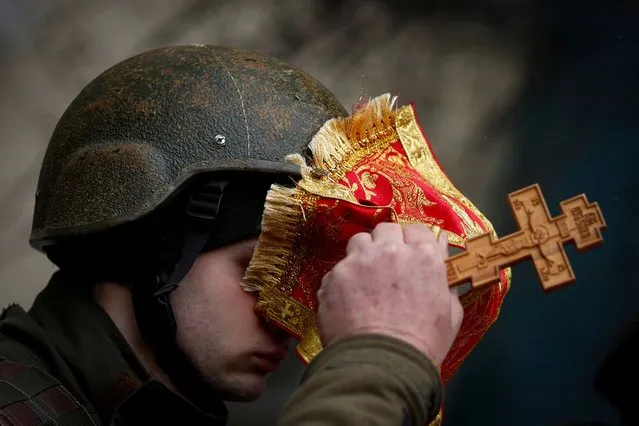
Military Chaplain Nikolay Medynsky blesses a Ukrainian soldier before he goes into battle, as Russia's attack on the Ukraine continues, in Kyiv, Ukraine, March 13, 2022. (Photo by Thomas Peter/Reuters)
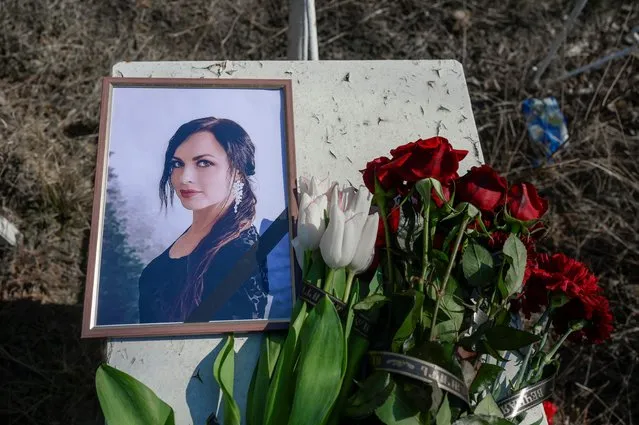
A portrait of a young woman who died during a Russian attack is pictured with flowers next to her fresh grave in the cemetery of in Mykolaiv, southern Ukraine, on March 21, 2022. (Photo by Bulent Kilic/AFP Photo)
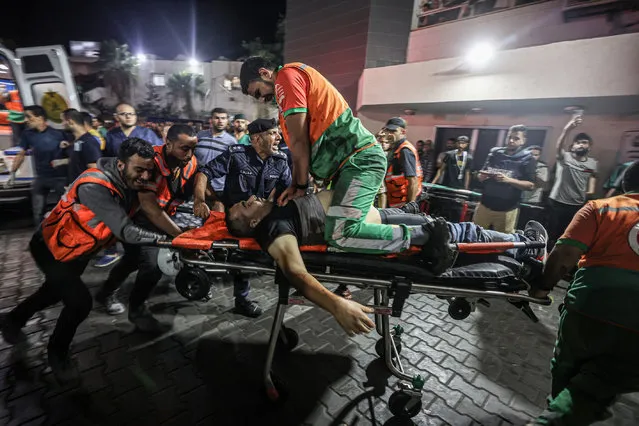
A Palestinian civil defence officer injured in Israeli attacks is given CPR on a stretcher at Al-Shifa Hospital in Gaza Strip, Gaza on October 16, 2023. (Photo by Ali Jadallah/Anadolu via Getty Images)
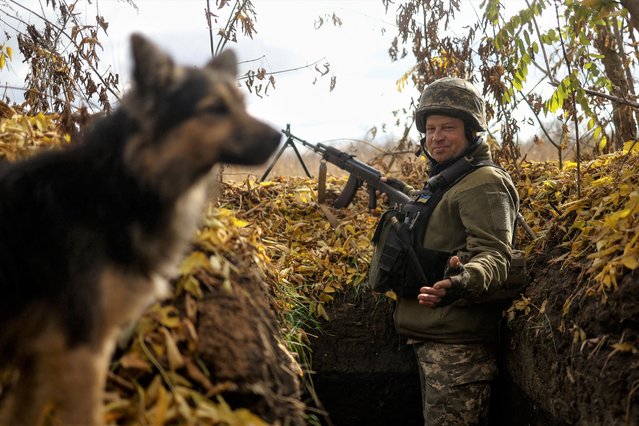
Ukrainian serviceman Valerii looks on at a position in a frontline, amid Russia's attack on Ukraine, in Mykolaiv region, Ukraine on October 26, 2022. (Photo by Valentyn Ogirenko/Reuters)
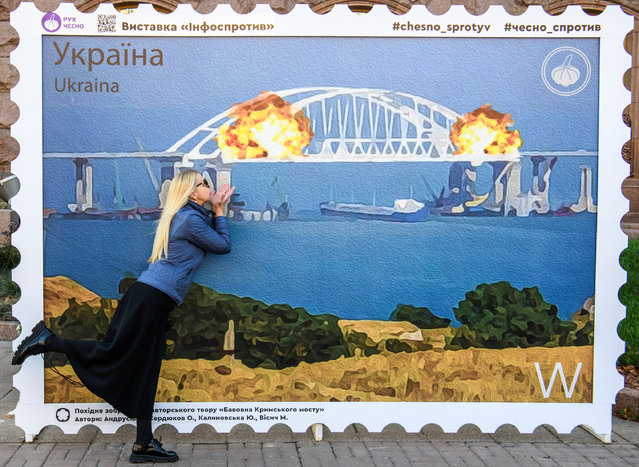
A woman poses next to an artwork depicting Kerch bridge on fire, amid Russia's attack on Ukraine, in central Kyiv, Ukraine on October 8, 2022. (Photo by Vladyslav Musiienko/Reuters)
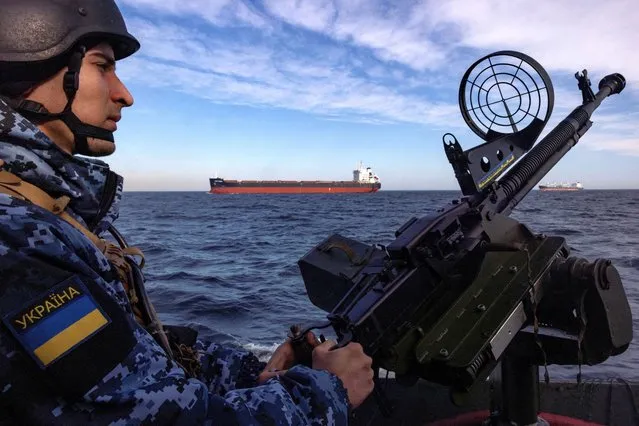
A serviceman of Ukraine's coast guard mans a gun on a patrol boat as a cargo ship passes by in the Black Sea, amid Russia’s attack on Ukraine, on February 7, 2024. (Photo by Thomas Peter/Reuters)
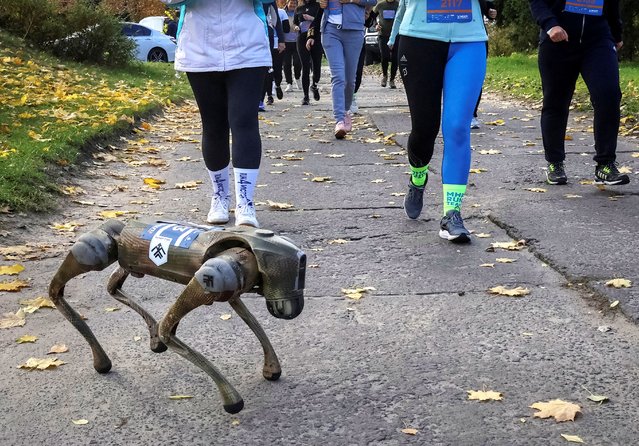
A robotic dog of the National Guard of Ukraine takes part in the Run4Victory charity marathon, amid Russia's attack on Ukraine, in Kyiv, Ukraine on October 27, 2024. (Photo by Oleksandr Klymenko/Reuters)
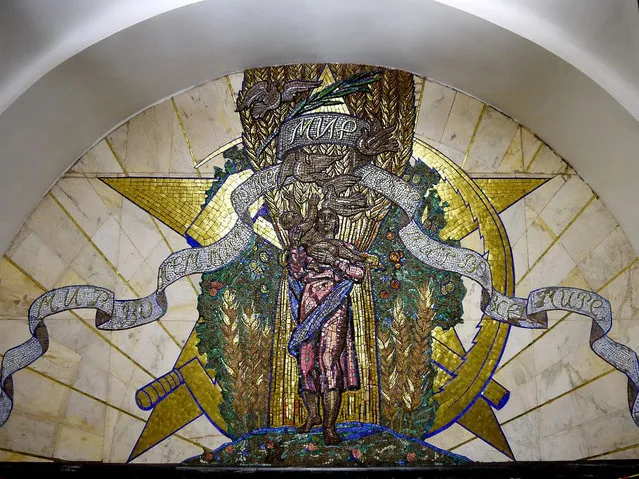
The is a rapid transit system serving Moscow and the neighbouring town of Krasnogorsk. Opened in 1935 with one 11-kilometre (6.8 mi) line and 13 stations, it was the first underground railway system in the Soviet Union. As of 2011, the Moscow Metro has 185 stations and its route length is 305.7 kilometres (190.0 mi). The system is mostly underground, with the deepest section 84 metres (276 ft) at the Park Pobedy station. The Moscow Metro is the world's second most heavily used rapid transit system after Tokyo's twin subway.